There is more to a reef than the seabed
On land, the ground provides a surface to push against and a reference for the body. A fish moves through water above and below the surfaces it uses. A fish can swim over a reef, follow a vertical wall, slip beneath a rock, or hover close to the ceiling of a cavity. Buoyancy supports its body, and its fins help it control position and direction.
Most fish still swim with their backs toward the surface and their bellies toward the bottom. That posture reflects their anatomy, their sense of balance, and the sensory cues they use to move. Fish can also adopt other orientations. Some fish turn to keep their bodies aligned with a rock face.
Follow one from a wall onto the underside of a ledge and it may roll until its belly faces up. This behaviour is especially striking in small fish that use rock surfaces for shelter or to find food. These fish live amid a network of walls, cracks, ceilings and openings. The rock gives the fish a reference that changes angle as it swims.
Some fish even make upside-down swimming part of their everyday behaviour.
Fish that live along the ceiling
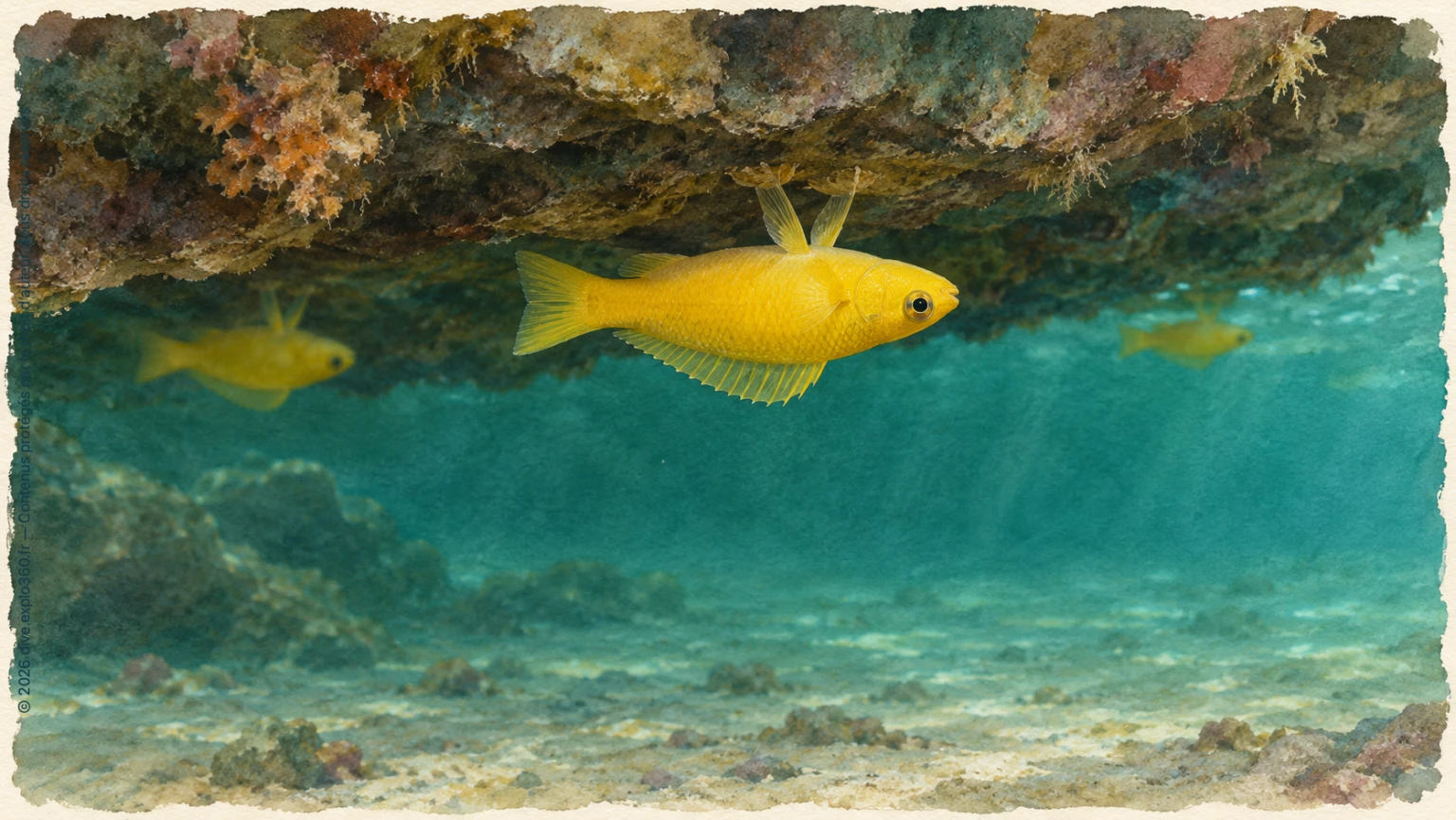
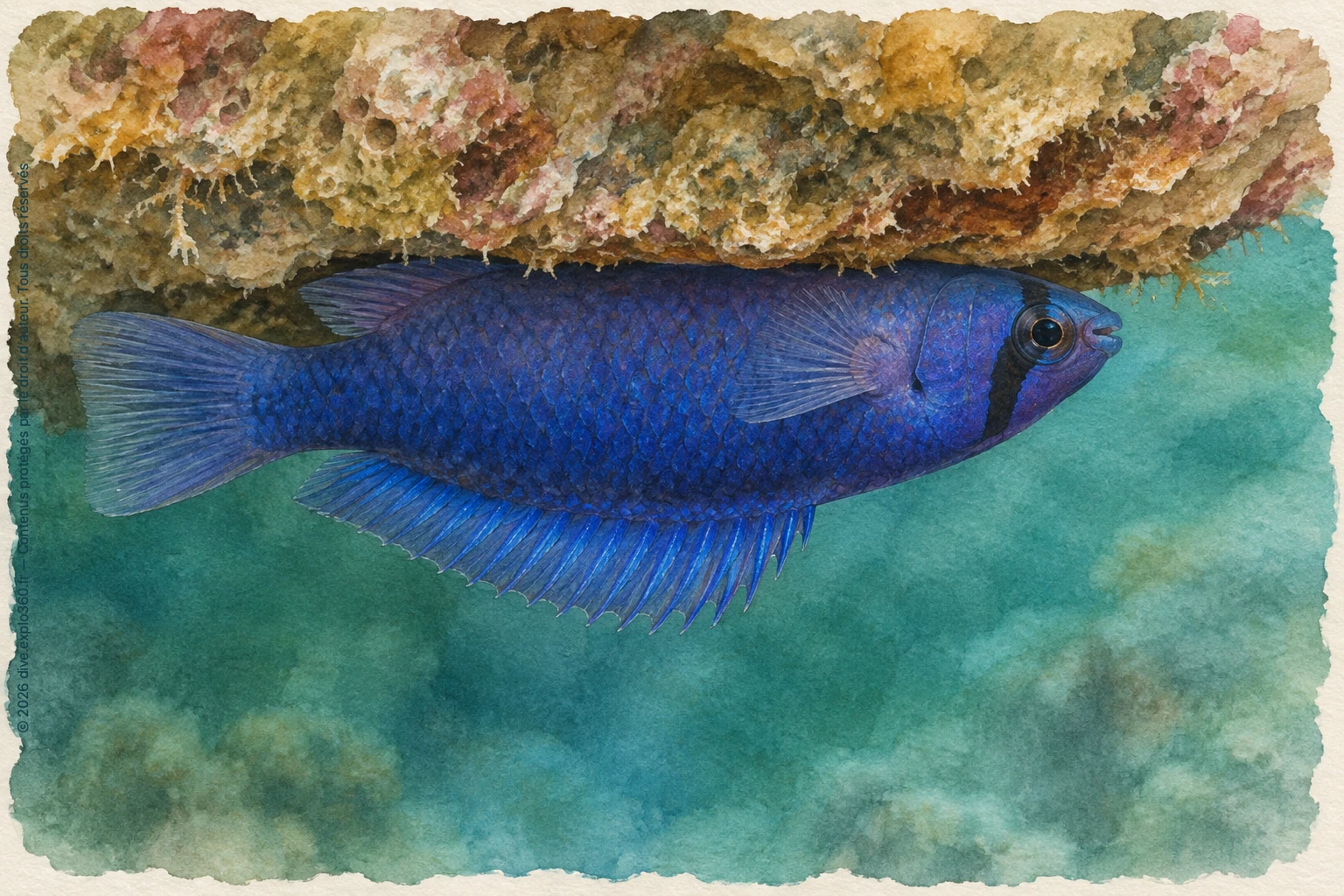
On Australia’s Great Barrier Reef, a small dark blue fish lives in caves and beneath overhangs. The blue assessor, Assessor macneilli, belongs to the family Plesiopidae and grows to about six centimetres. Its body is dark blue, with lighter edges on several fins. Several dozen may gather inside a cave, swimming close to its ceiling with their bellies towards the rock.
They can hold position a short distance below the rock as other fish do above the seabed. In that position, they can still move, change direction, and hold their place. At the edge of the cavity, a fish can roll back as it moves into open water. A close relative, Assessor flavissimus, behaves in much the same way.
It is bright yellow, with an orange mark near the eye. It also lives in caves, cracks, and beneath rocky overhangs in the western Pacific. The two species can share some habitats. For these fish, swimming upside down is a regular part of life in reef cavities.
Why do they stay close to the ceiling?
The underside of the ledge is a habitat in its own right.
A different place under the rock
The underside of a ledge gets less light than the reef above it. Its underside supports a distinctive community. Sponges, bryozoans and sea squirts can colonise the sheltered rock. These habitats also have patterns of water circulation that differ from those around exposed surfaces.
A deep pocket may be shielded from strong flow, while water moving past an opening can carry plankton close to the rock. For small fish, the ceilings and walls of these cavities offer shelter and opportunities to feed. Assessor flavissimus feeds on small planktonic crustaceans. A fish can intercept prey in the water and stay within reach of a crevice.
A fish swimming upside down beneath a rock may be feeding or simply sheltering. Its next move may reveal whether it is feeding or using the rock as shelter. The cavities limit the directions by which a predator can approach and give the fish ways to retreat quickly. The benefits vary with the species, the size of the fish and the shape of the shelter.
What is established, on the other hand, is that some fish regularly exploit the lower face of the rocks as a habitat in their own right. The same surface can offer a place to forage and a short route into cover.
Young fish can change their orientation as they grow
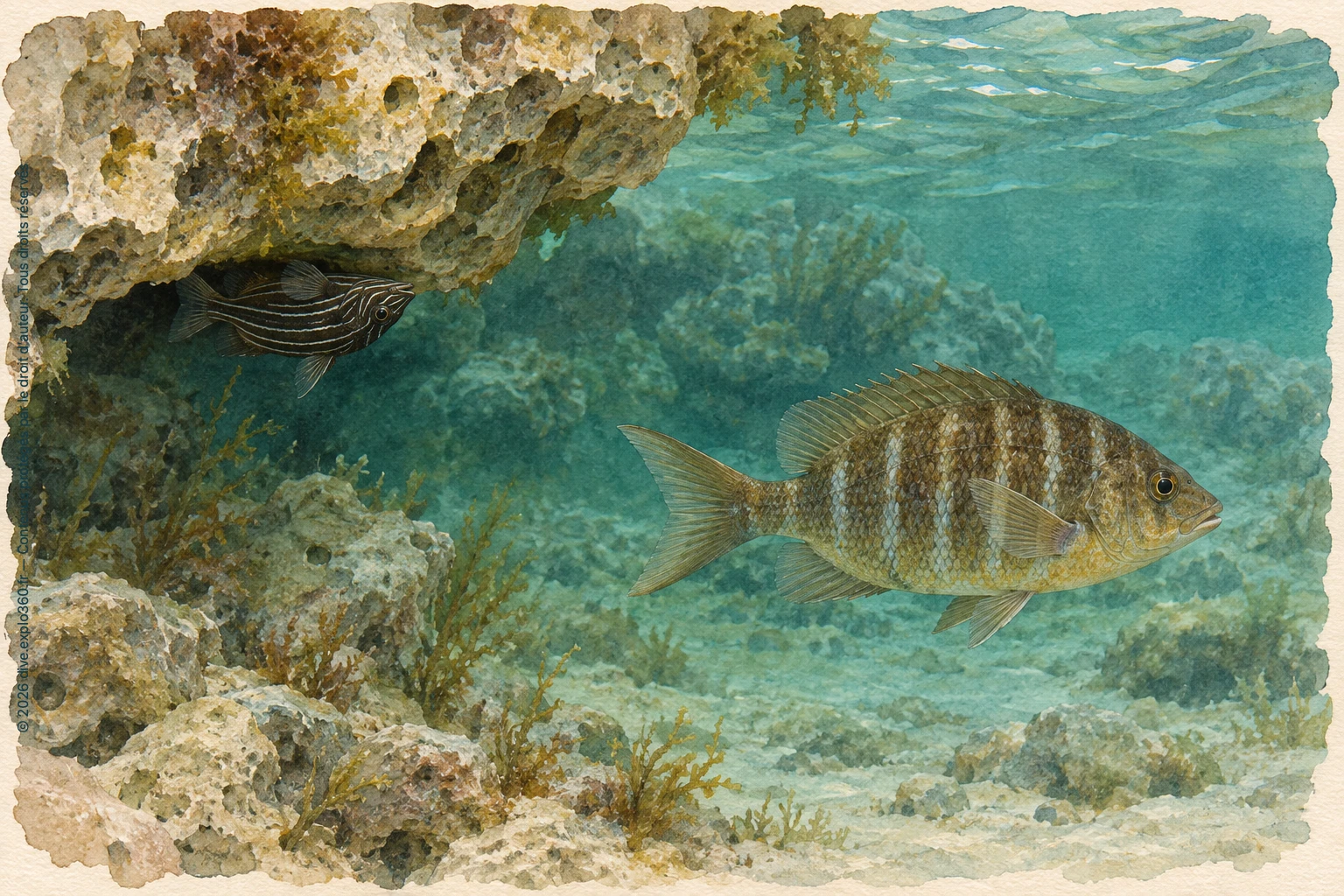
In temperate waters off Western Australia, juveniles of two distantly related species use rocky ceilings. Two fish belonging to different families exhibit almost the same behaviour during their youth. Epinephelides armatus is a grouper relative. Bodianus frenchii is a wrasse.
Juveniles of both species can live beneath cave ceilings and rocky overhangs when they are less than ten centimetres long. The juveniles swim belly-up beneath ledges where sponges and small algae grow. This behaviour was observed regularly in juveniles of both species. However, adults do not maintain this habit in the same way.
Researchers also saw fish more than 15 centimetres long in caves, beneath ledges and on open reef. Swimming belly-up is therefore typical of a particular stage in their development.
Why do young fish use the ceiling while large individuals occupy other positions?
Surfaces covered with sponges and small algae can provide juveniles with prey adapted to their size, as well as potential refuges from predators. Use of this habitat could also limit encounters with larger individuals of their own species. The observations leave open how much food and avoidance of larger fish each contribute to the behaviour.
The most remarkable point is what these fish have in common. At the same stage in their lives, two distantly related species use an unusual posture to make use of similar habitats. For these two species, inverted swimming is associated with a particular stage of life.
A goby on the ceiling of a cave
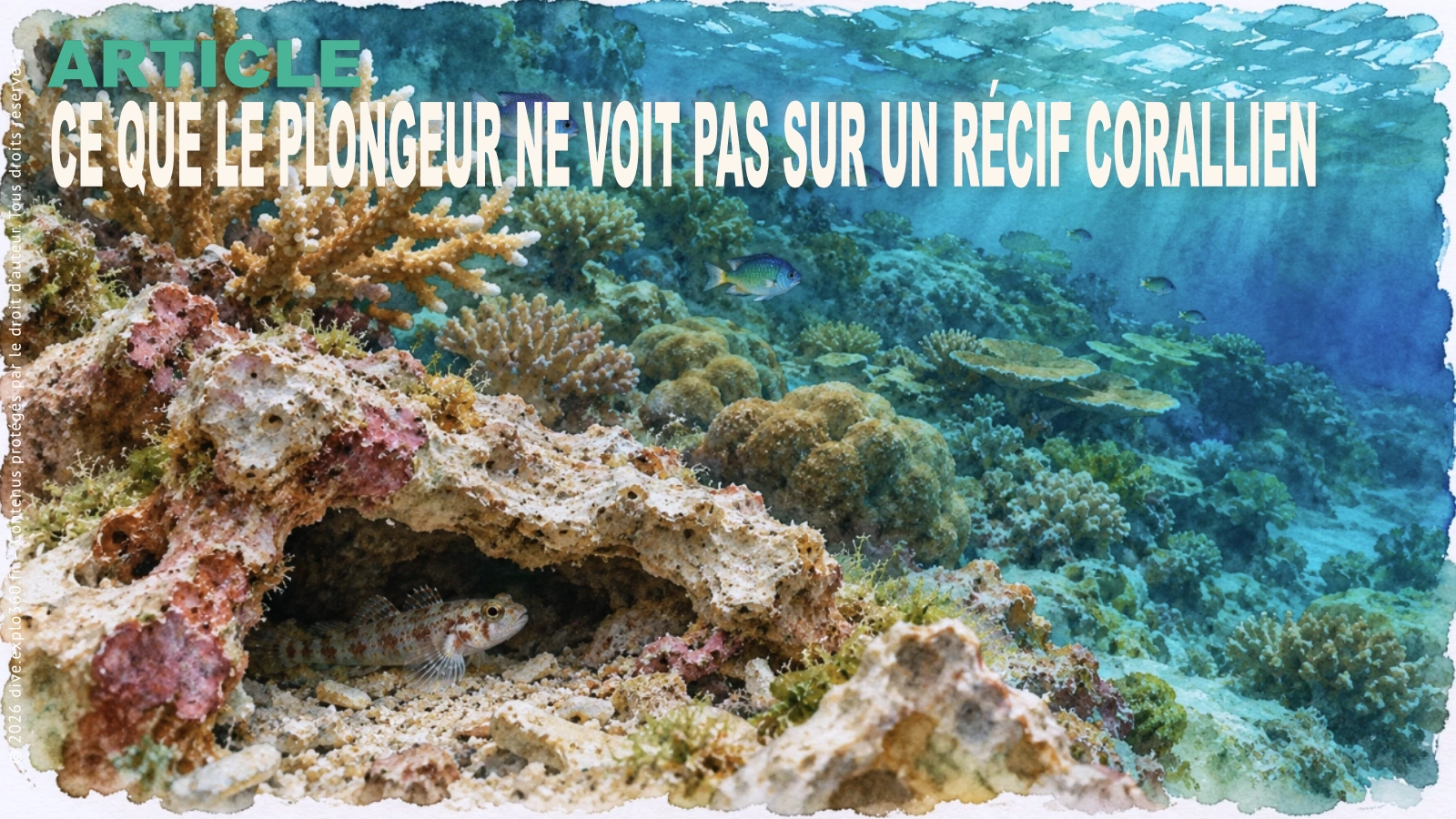
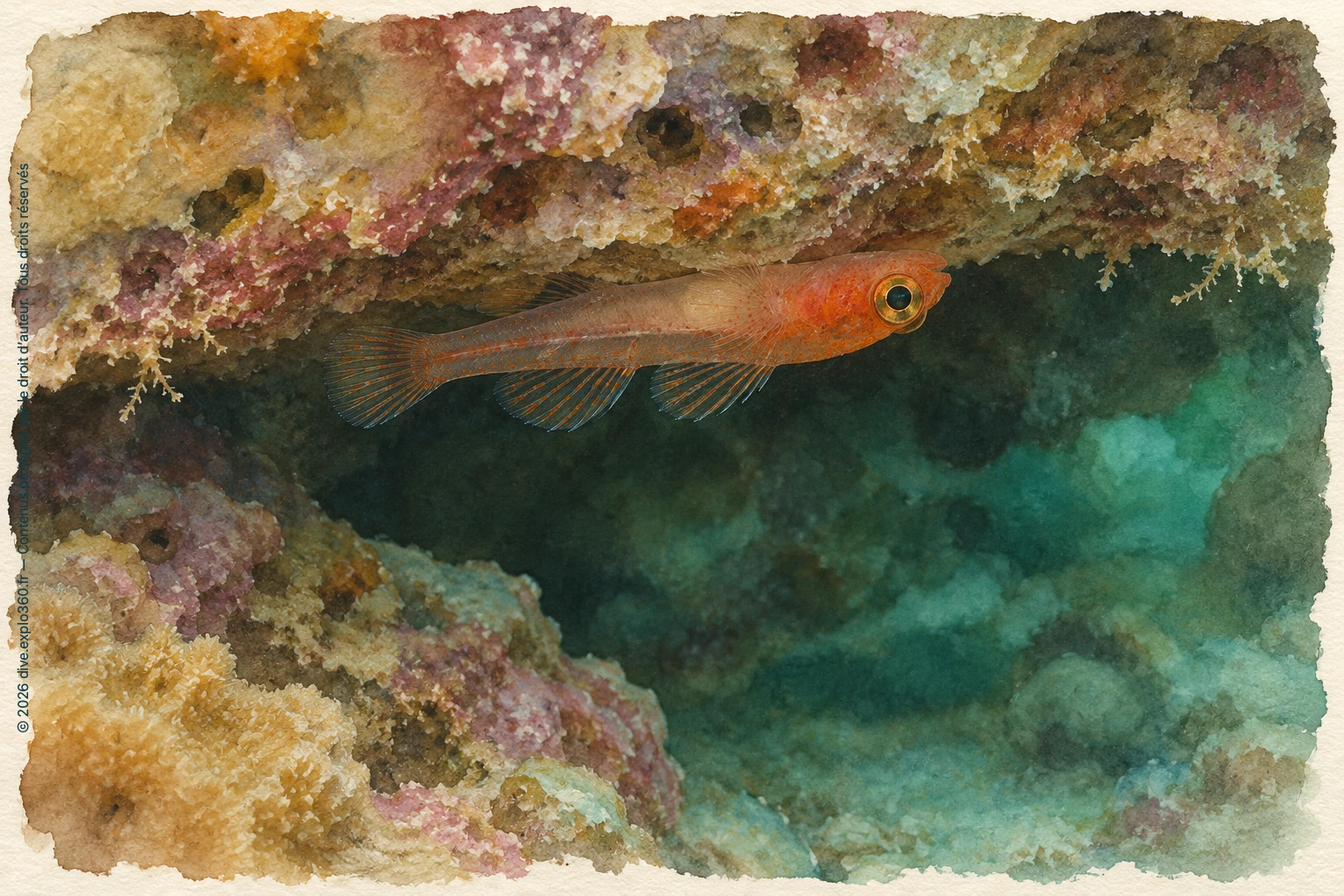
Small gobies offer other examples. In marine caves and reef cavities, several species live in the immediate vicinity of rocky surfaces. Some remain on the walls. Others remain a few centimetres from the substrate. Observers recorded the small Indo-Pacific goby Trimma hayashii upside down on cave ceilings.
Trimma flavatrum can swim in small groups close to rock, adjusting its posture to the angle of the surface. Beneath a ceiling, the group ends up belly-up. This distinction is important. A fish can maintain an inverted orientation in the open water, regardless of whether a surface is nearby. Another can follow the contours of the rock with its belly facing the surface.
A diver can see the same orientation in open water, where a fish may hold it without a nearby surface. In the second case, the orientation of the body depends directly on the position of the substrate. A wall may prompt a tilt. Following the wall round an overhang can bring the body into a full roll.
As they move, the fish keep their bellies facing the surface they are using. The shape of the cavity then helps explain how the fish is oriented at each point. In Raja Ampat, inventories targeting caves and overhangs identified several species of gobies of the genus Trimma.