From solar heating to stratification
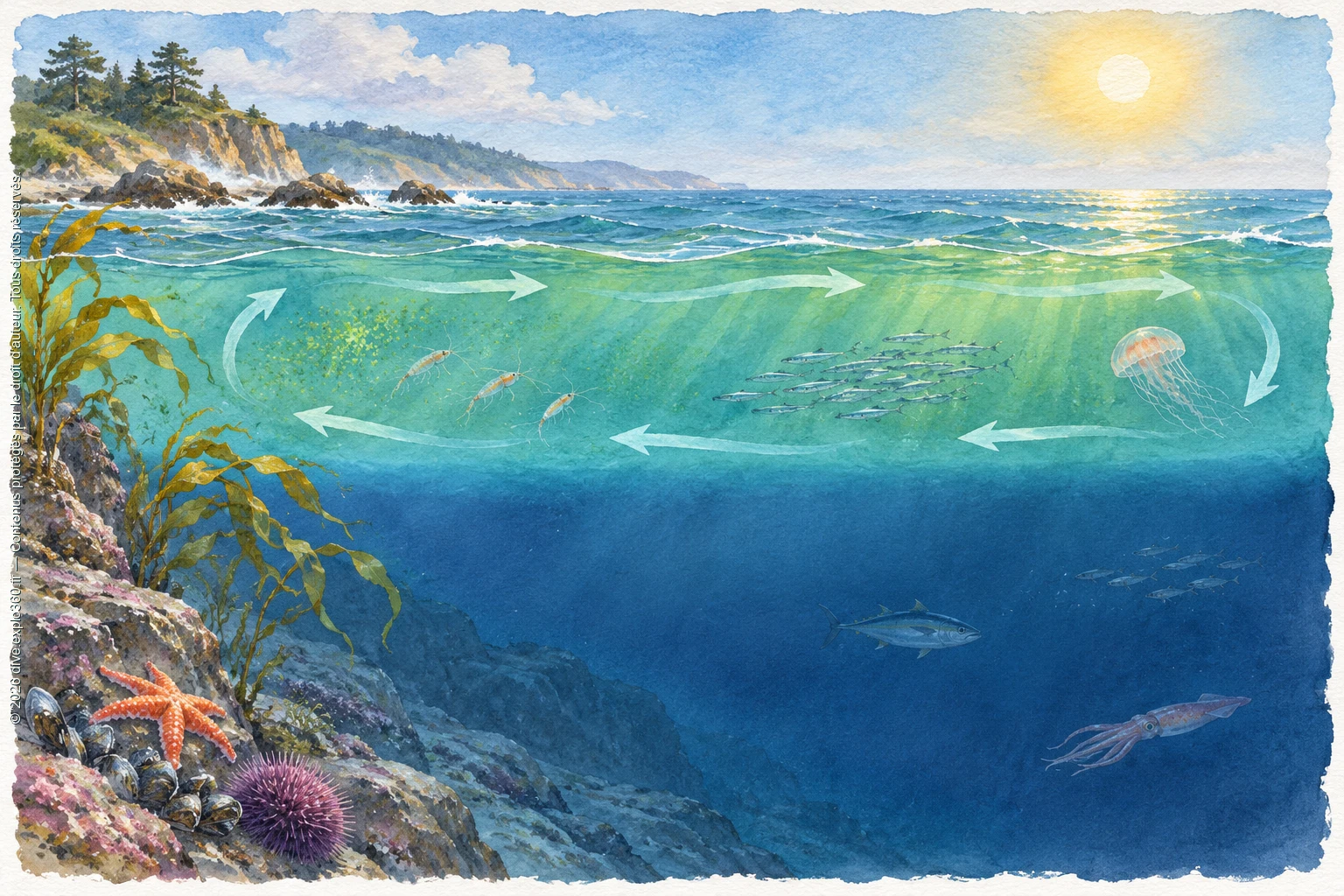
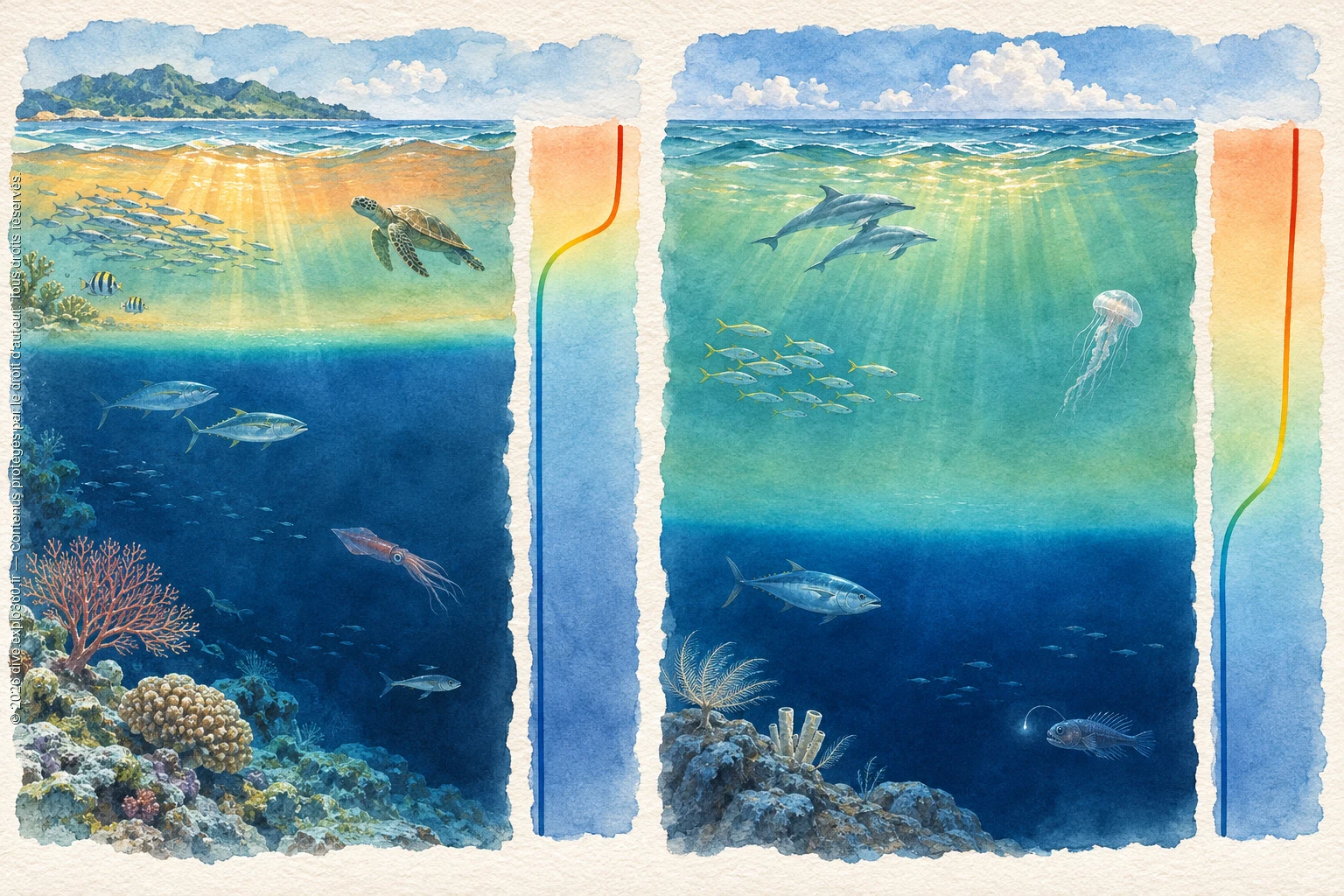
Sunlight warms the upper water column. At comparable salinity, warmer water is less dense than cooler water. Wind and waves stir the surface waters into a layer with a fairly uniform temperature. At its lower edge, the density contrast limits mixing and a seasonal thermocline can develop.
A changing summer thermocline
In the Mediterranean, stratification develops in spring. In summer, heat builds up at the surface and, if winds are light, the gradient can sharpen. Water at 25 °C above and 17 to 18 °C below is one possible example. The depth of the gradient depends on the site, weather and circulation. It can shift within hours.
Wind, upwelling and internal waves
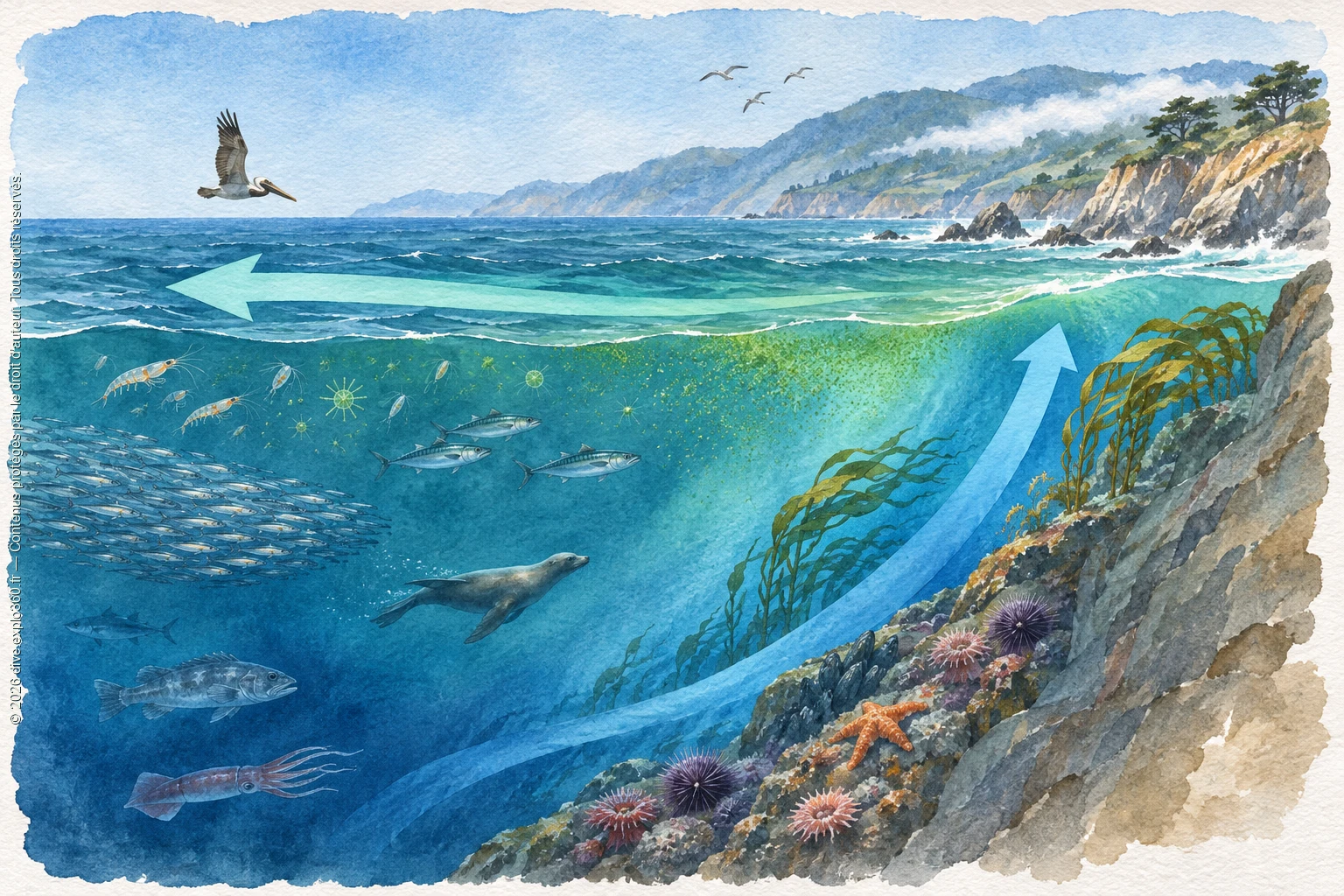
Wind can drive surface water offshore, depending on its direction and the local circulation. Cooler water then rises along the coast in a process called upwelling. Where wind drives surface water towards the shore, the thermocline can deepen. Internal waves also lift and lower it, changing the temperature that a diver feels at a fixed depth.