
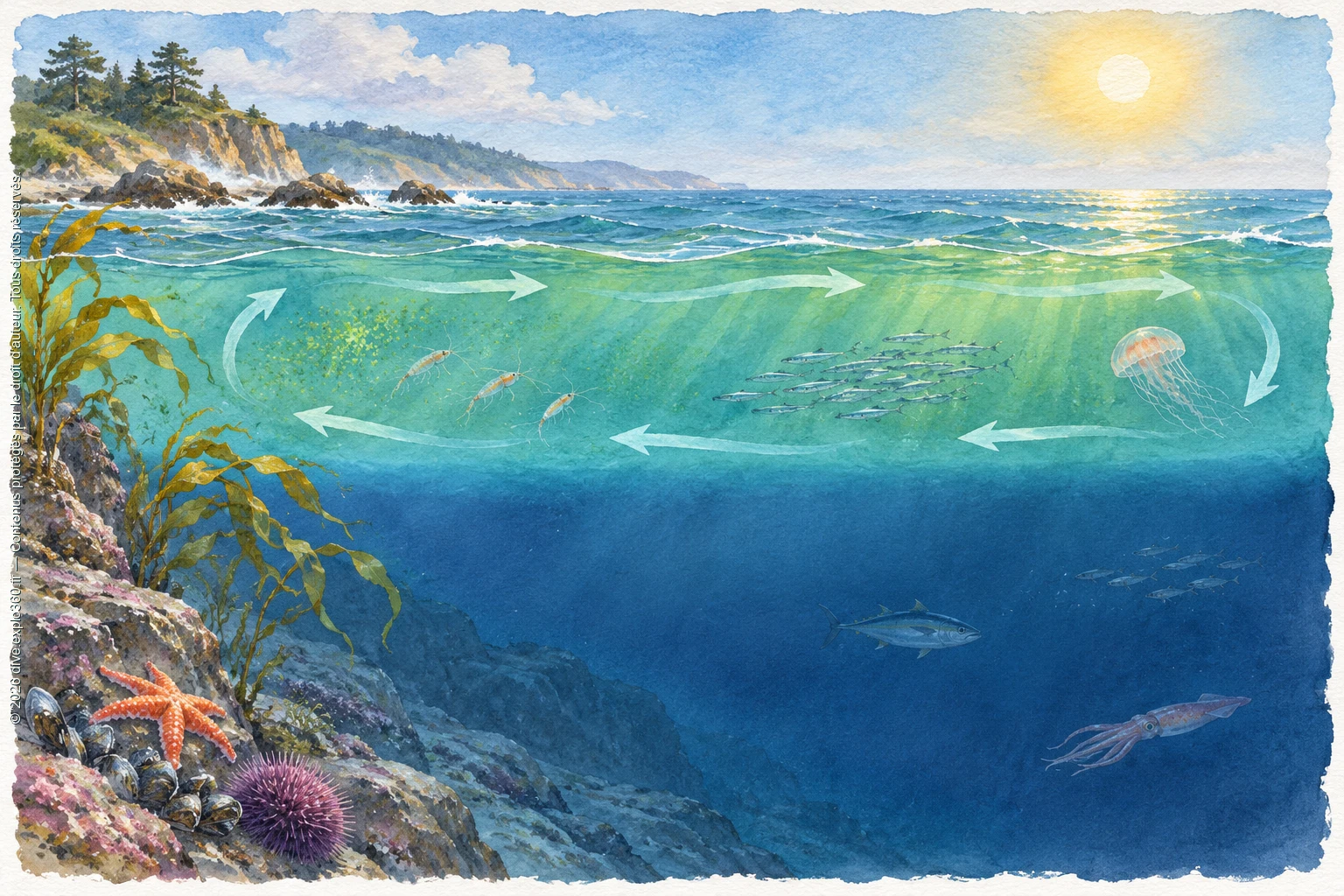
Sunshine warms the top of the sea first
In spring, sunshine warms the top of the sea. If the water is equally salty, a litre of warm water weighs a little less than a litre of cold water. The warmer water usually stays on top. Wind and waves stir that top layer, while the water farther down stays cooler.
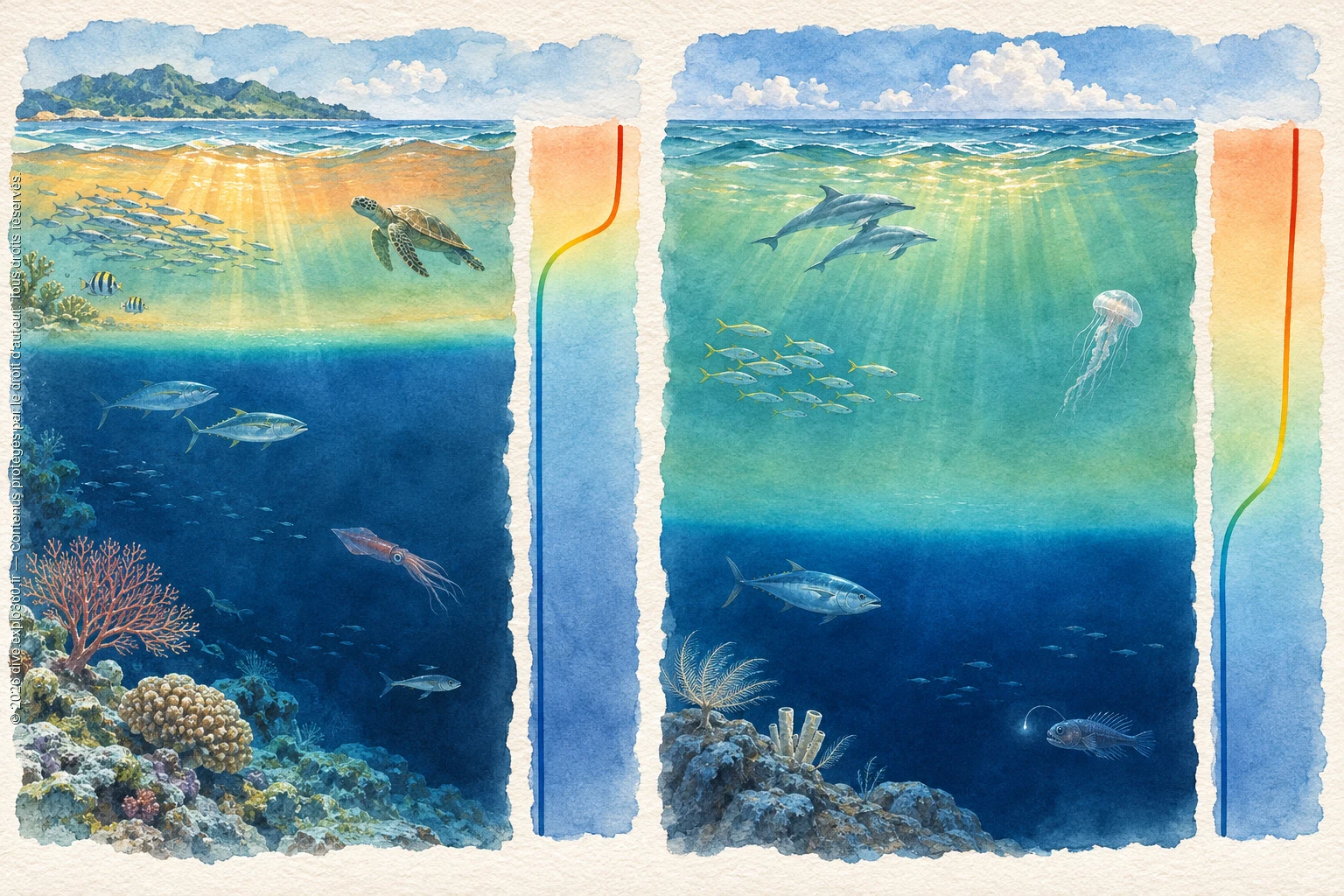
The difference can grow in summer
The top of the Mediterranean can get warmer all summer, especially when there’s little wind. On one dive, the water might drop from 25 °C to 17 or 18 °C. Those are example temperatures. On your next dive, you might feel the change at a different depth.
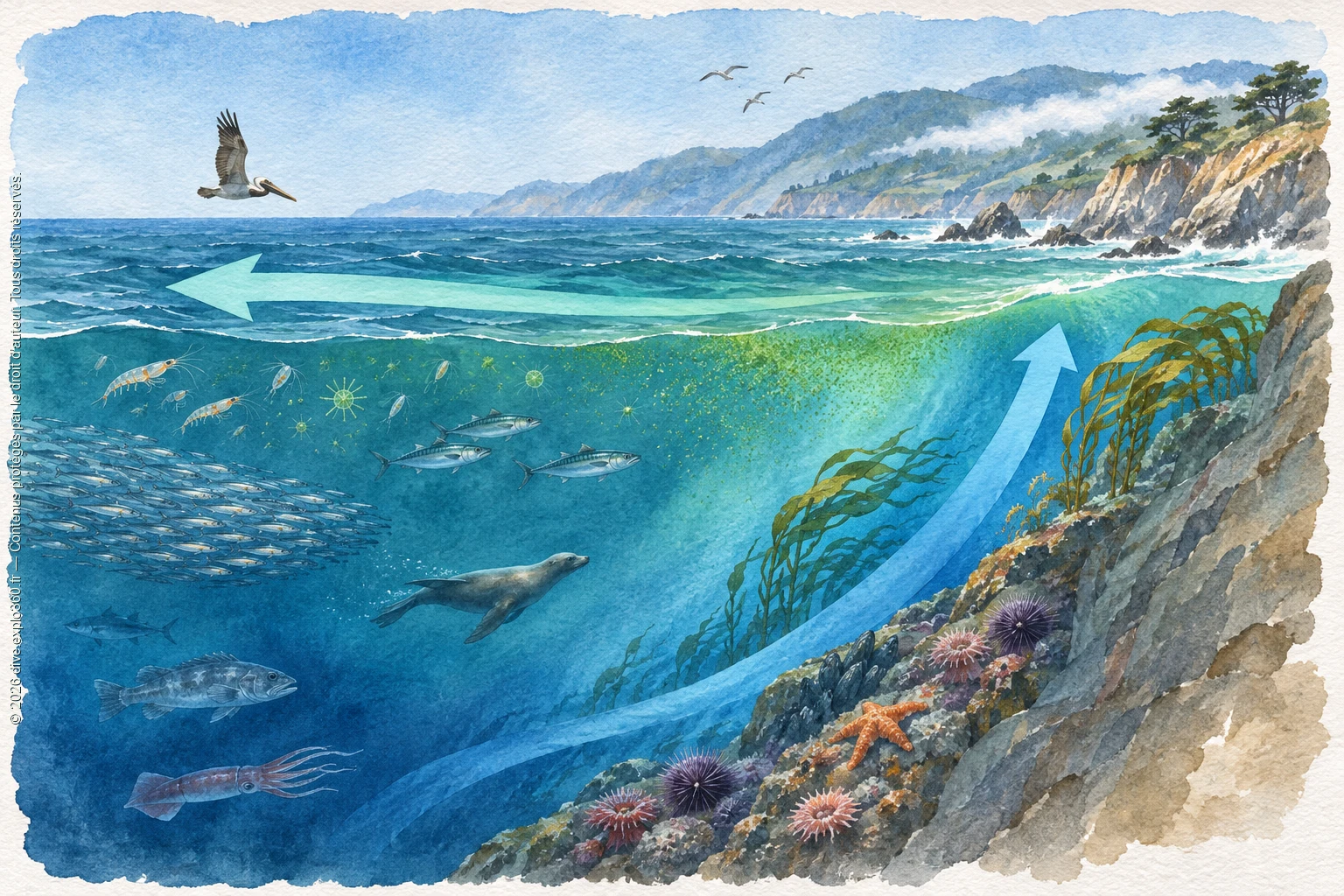
Wind can move the layers
Wind can push warm water away from the coast. Cold water can rise to take its place. This is called upwelling. Wind can also push warm water towards the shore. Waves deep in the water can lift or lower the layers, so cold water can reach a diver who hasn’t moved.