How water moves
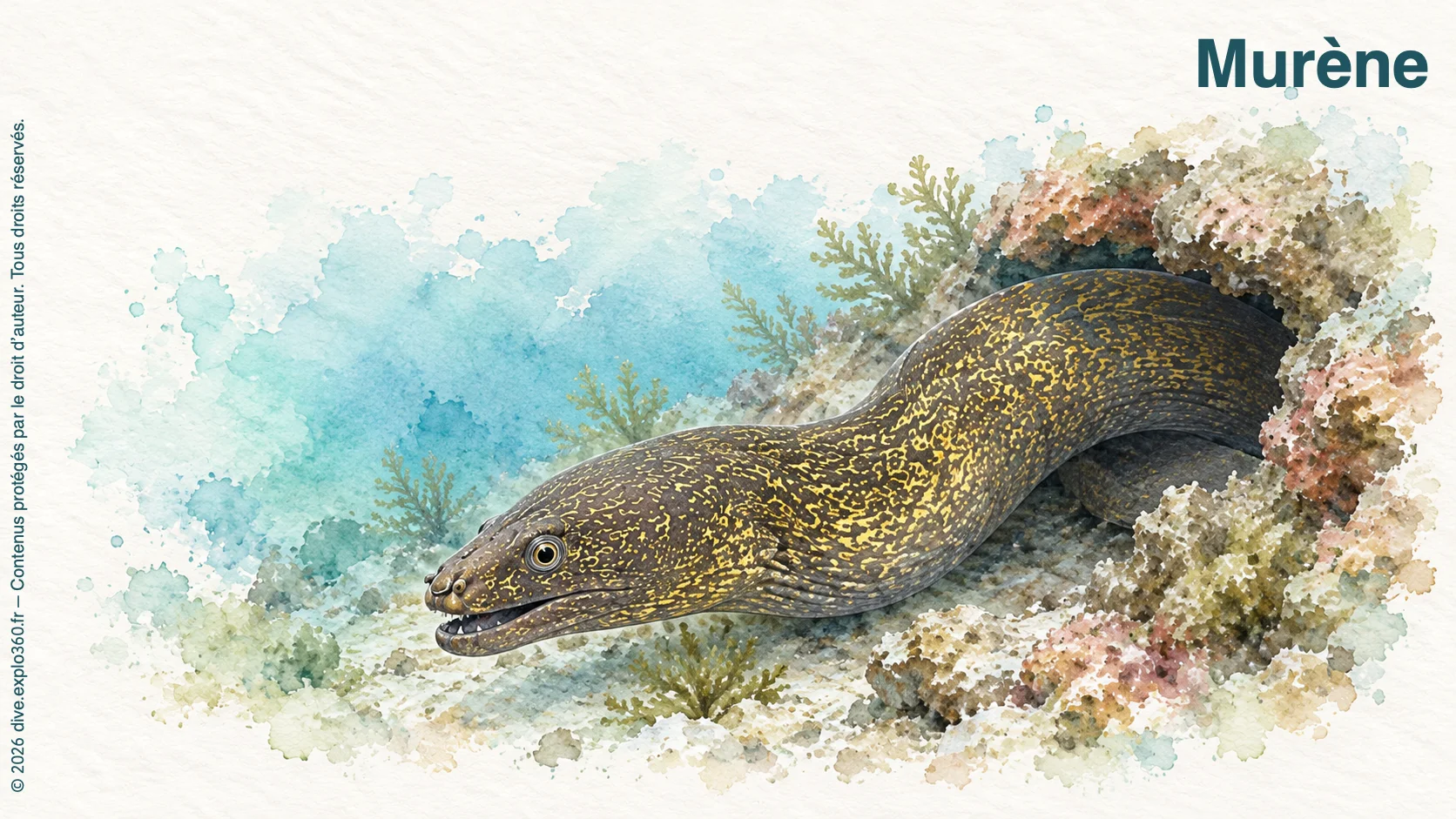
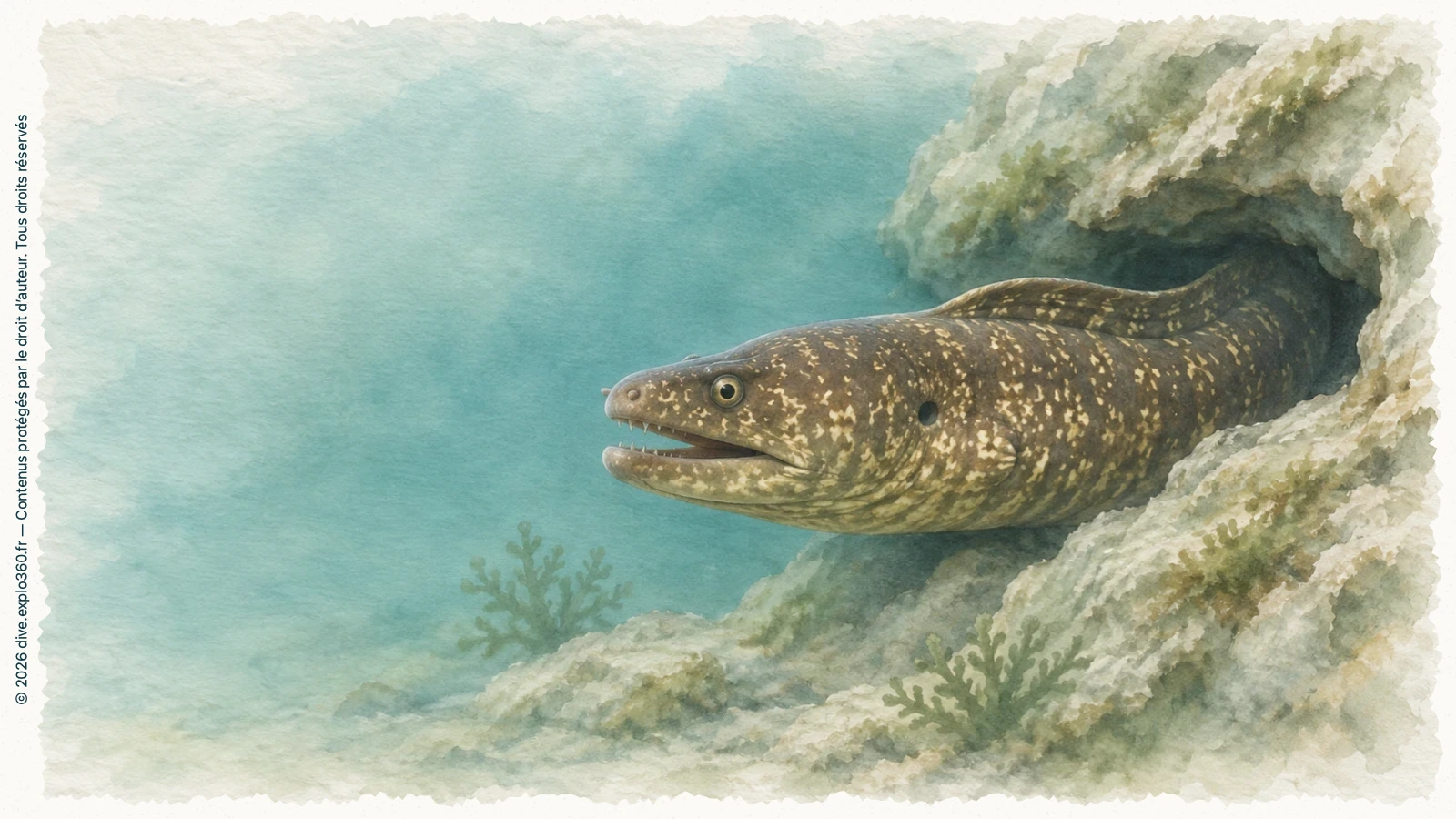
As the jaws open and close, they help pump water in through the mouth and over the gills. The gills take up oxygen from the water, which then flows out on either side of the head.
Openings behind the head
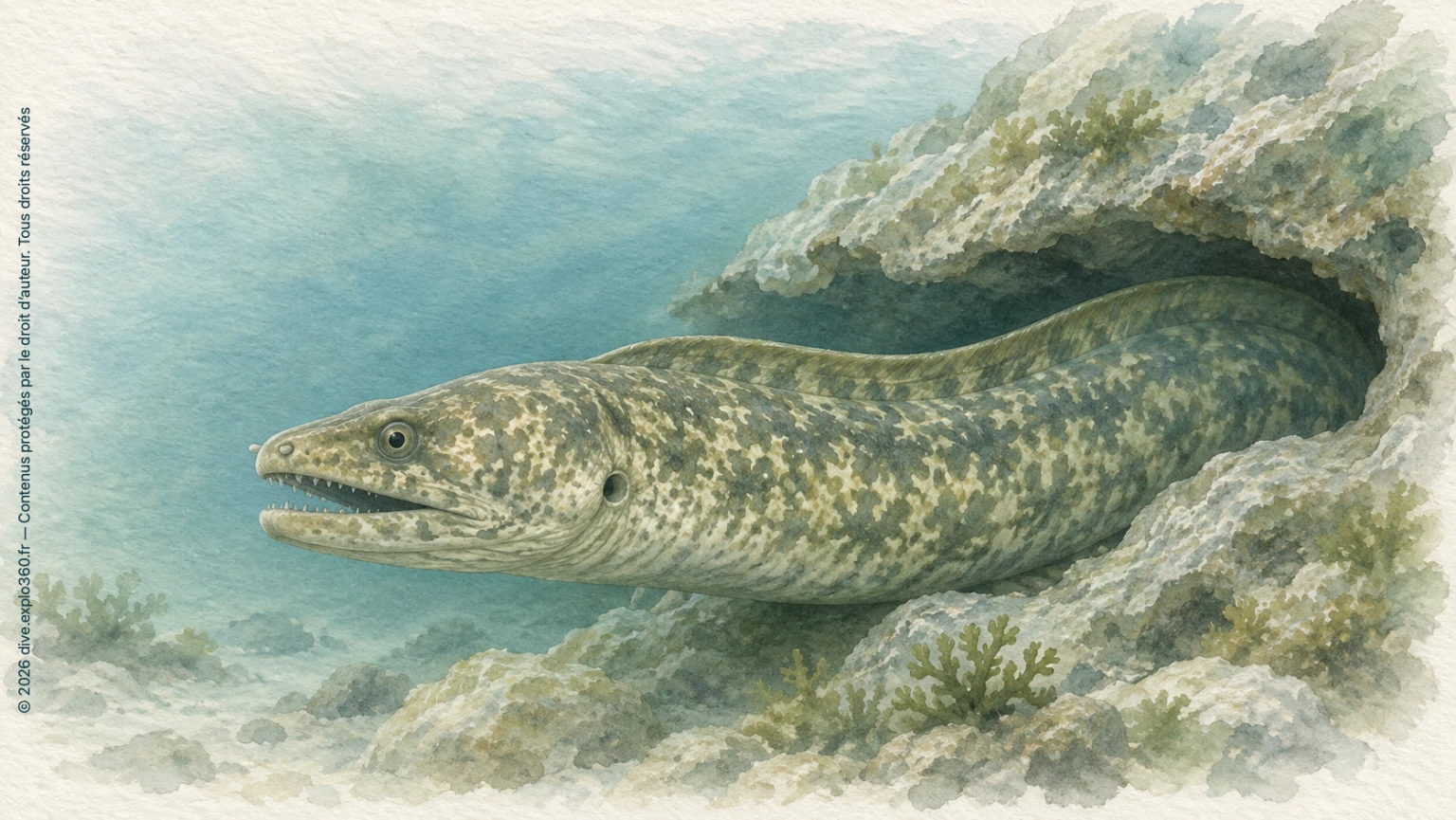
Look just behind the head for a small opening on each side. That’s where the water comes out after it has passed over the gills.
Breathing from shelter
A moray can tuck its long body into a crack and leave just its head sticking out. As long as it can pump water over its gills, it can breathe right there in its shelter.
The jaws in the throat
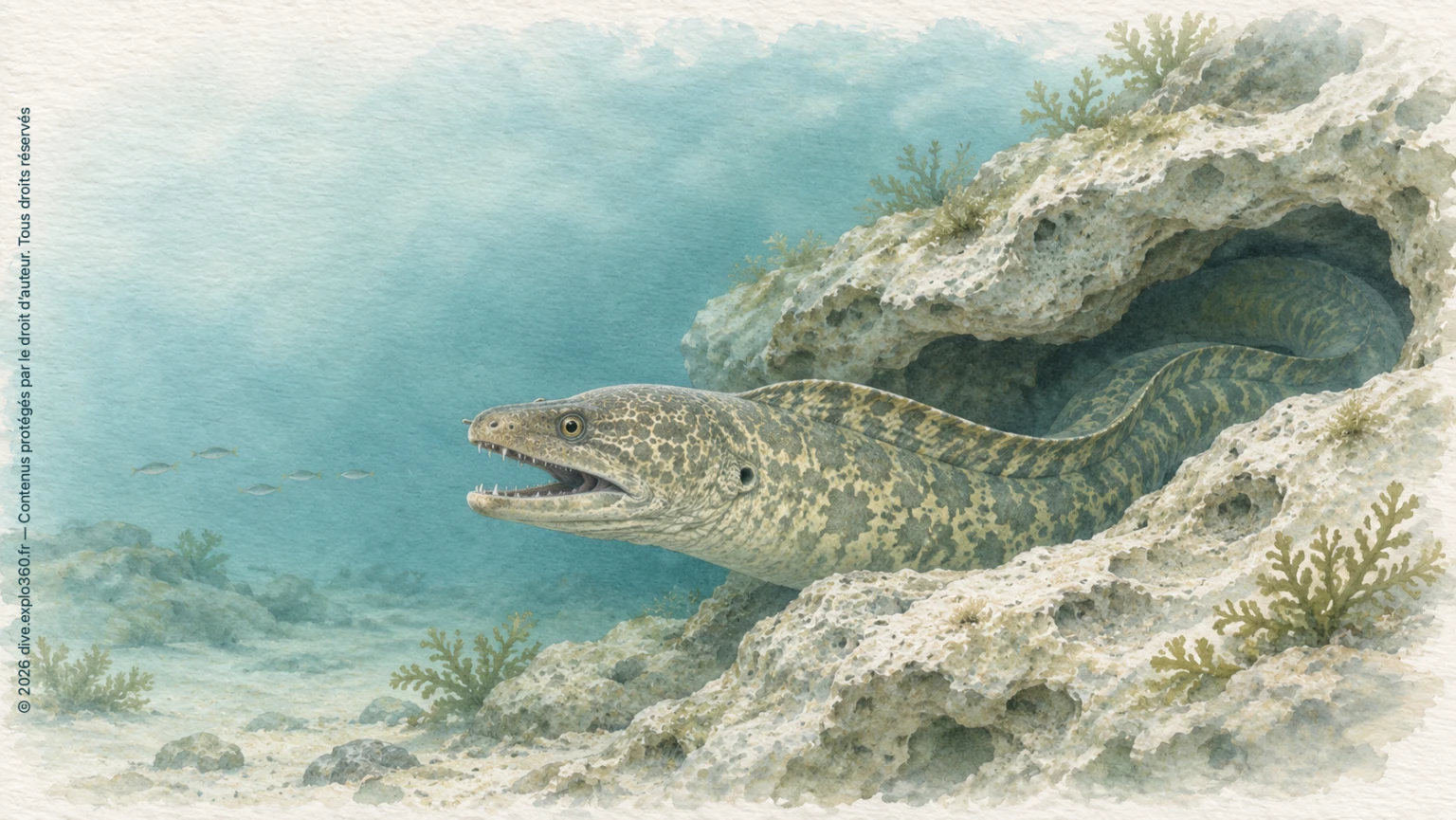
The front jaws catch the prey. Then a second set of jaws reaches into the mouth from the throat. These are the pharyngeal jaws. They take hold of the food and pull it back so the moray can swallow.
GO FURTHER WITH AMIGANSEAU
Continue reading
Discover full species guides, in-depth content and interactive tools available with your licence.
Dive.Explo360 is an independent, self-funded nonprofit. Every licence helps us create new content, improve our teaching tools and keep some of our resources free and ad-free.
Choose a licence that suits your needs for personal, educational or professional use.
Open-access resources remain available without a subscription.
Explore the same world