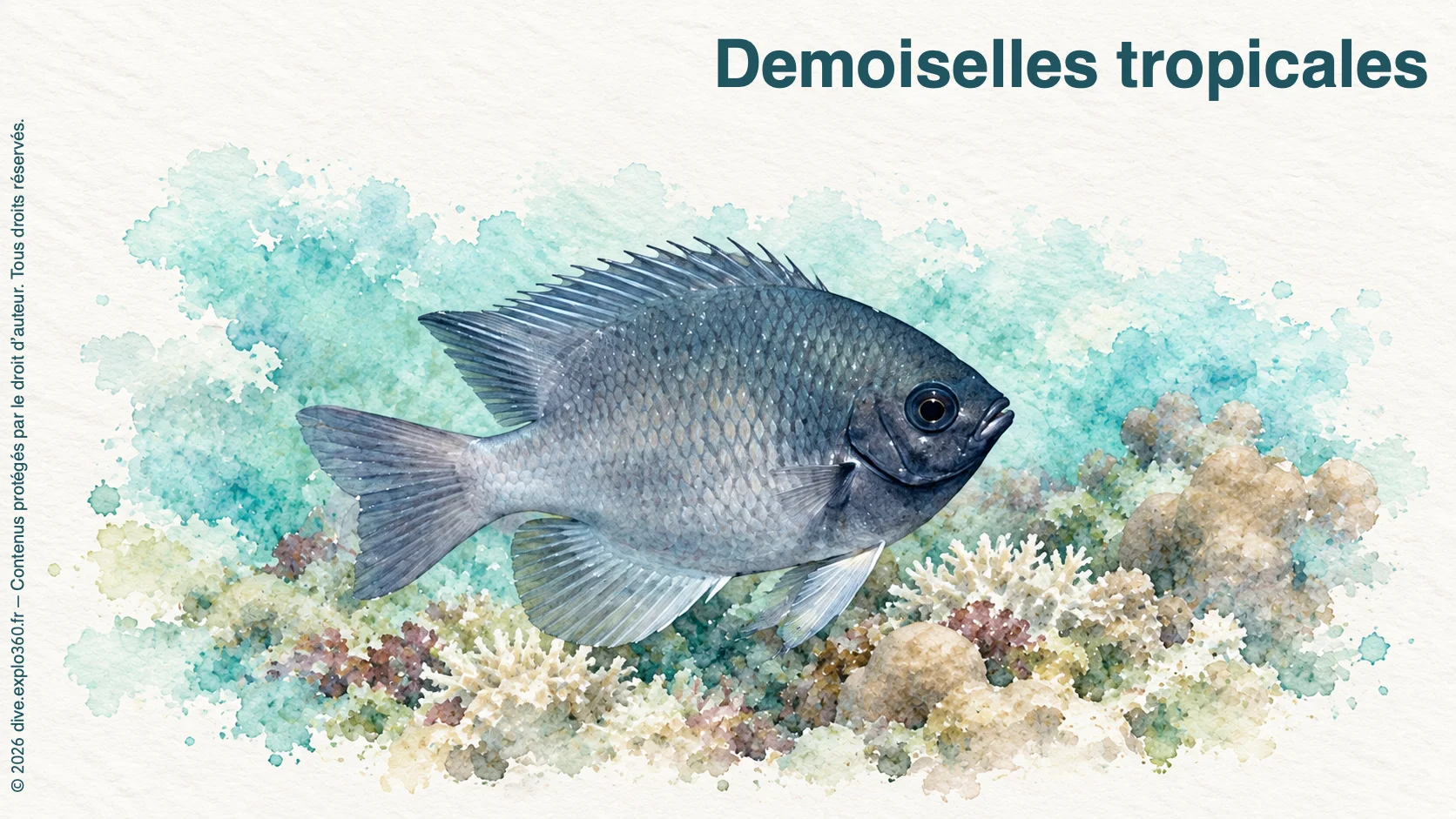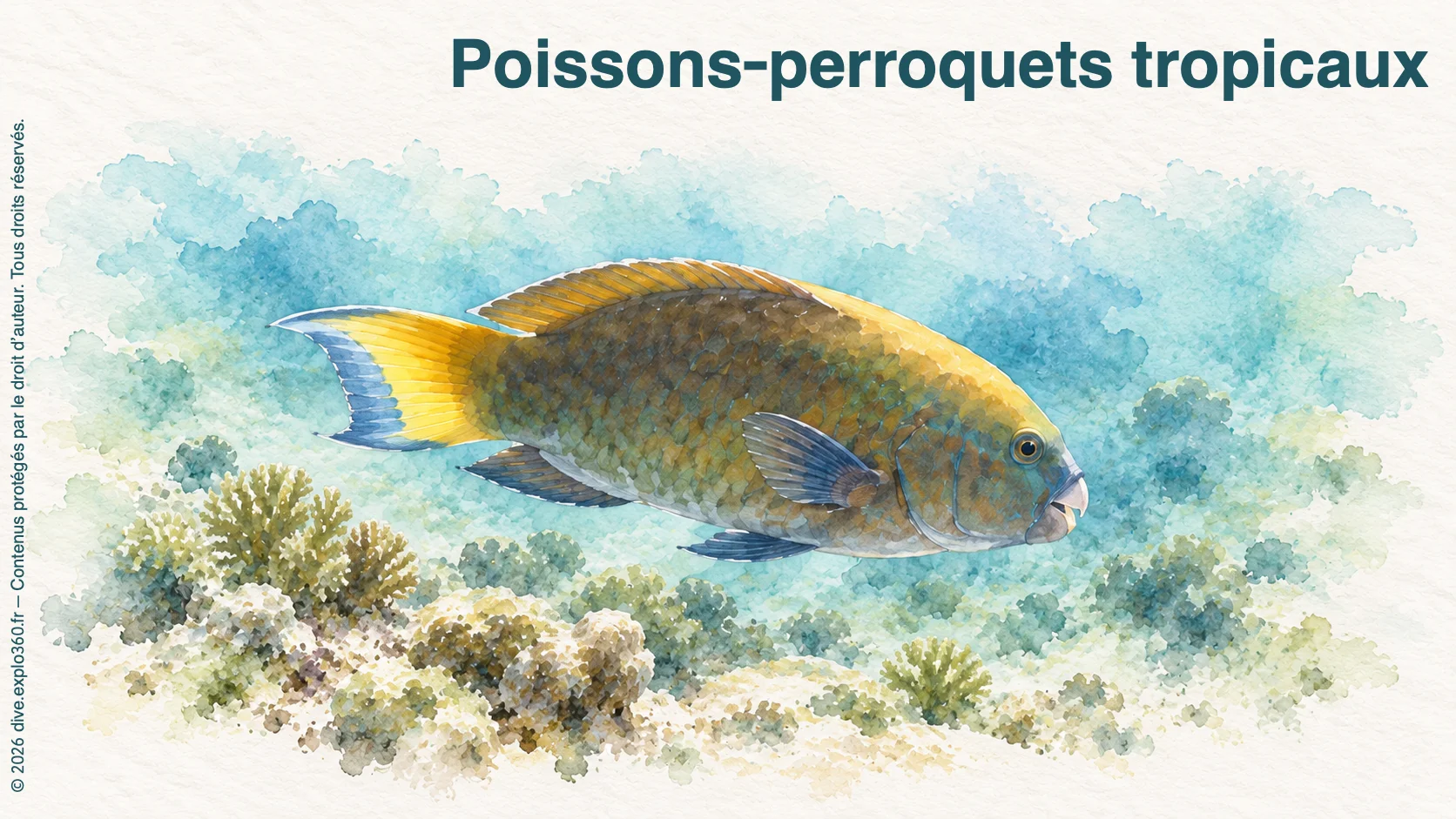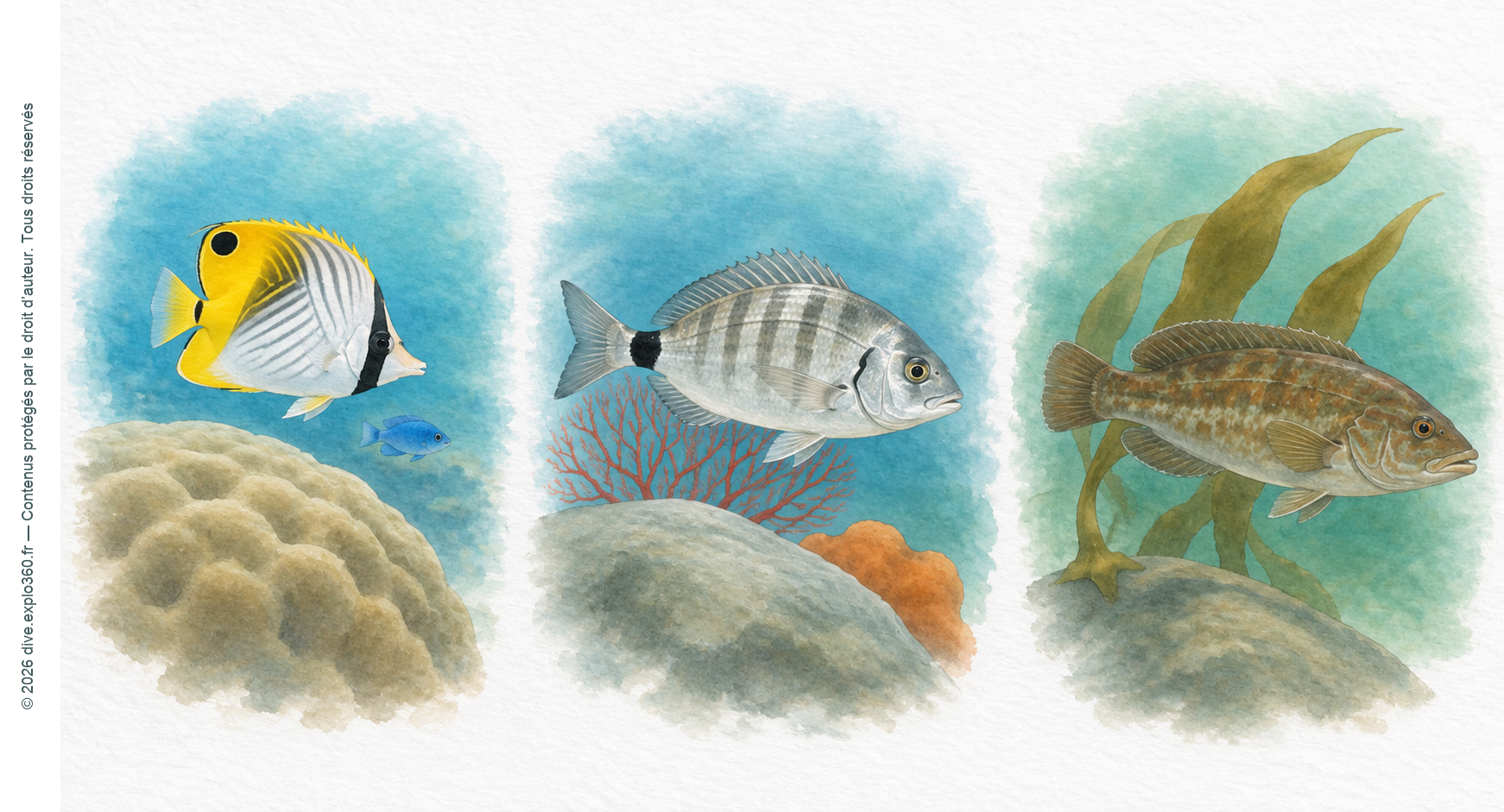
Bright fish over beige coral
Many reef-building corals look brown or beige in sunlight, while the fish above them may be yellow, blue or orange. To understand those colours, watch what the fish do when they meet.
Recognising a member of the same species
Dozens of kinds of fish may share the same part of a reef. In some species, stripes and spots help fish recognise their own kind, which can matter when they are looking for a mate or facing a rival. Movements and the situation also give clues.
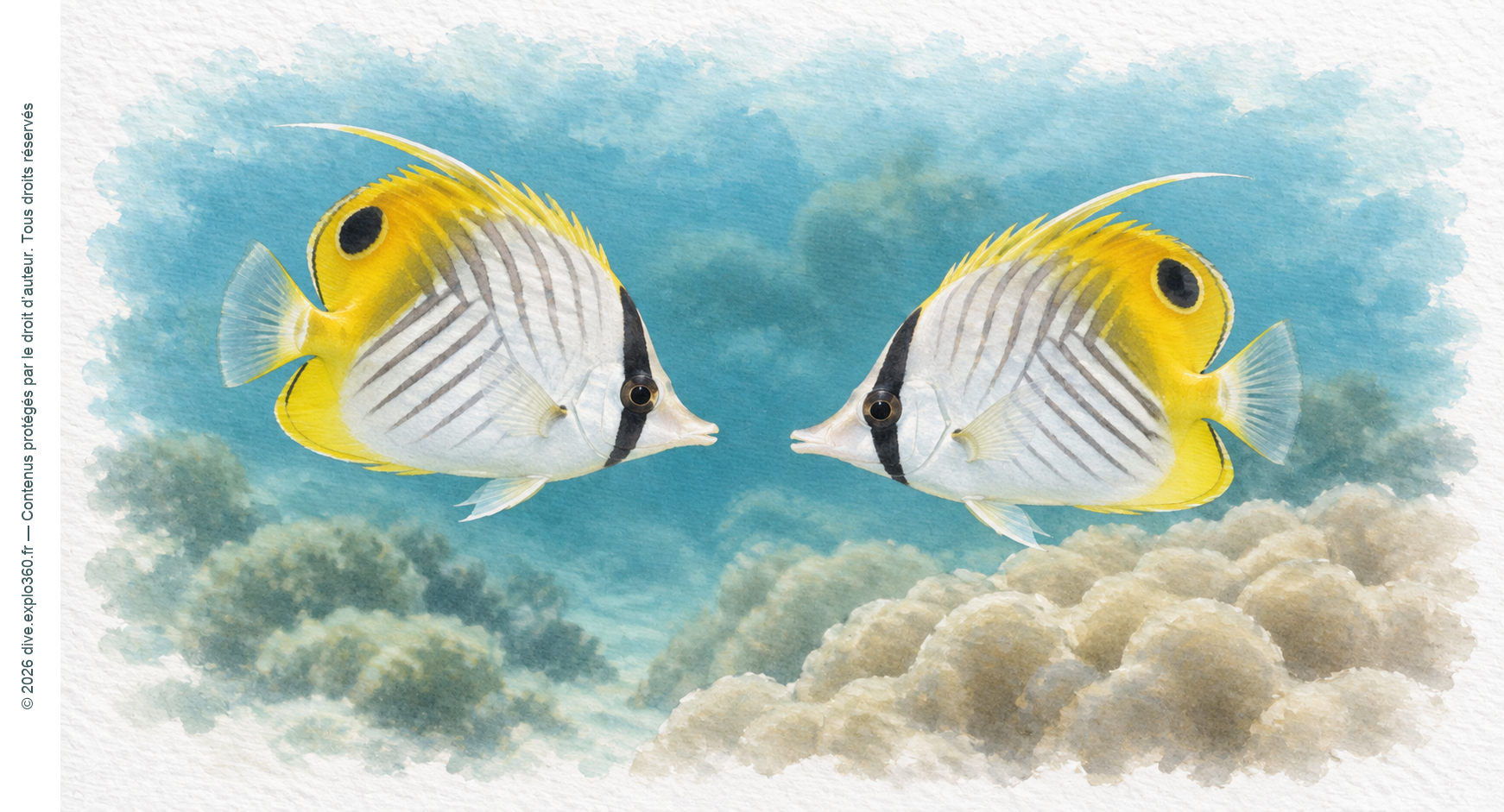
Courting a mate and defending a territory
Some wrasses change colour as they grow or change sex. During courtship a fish may show off its colours as it swims in front of a possible mate. In an encounter with a rival, it may display its colours while defending its patch of reef.
GO FURTHER WITH AMIGANSEAU
Continue reading
Discover full species guides, in-depth content and interactive tools available with your licence.
Dive.Explo360 is an independent, self-funded nonprofit. Every licence helps us create new content, improve our teaching tools and keep some of our resources free and ad-free.
Choose a licence that suits your needs for personal, educational or professional use.
Open-access resources remain available without a subscription.
Explore the same world