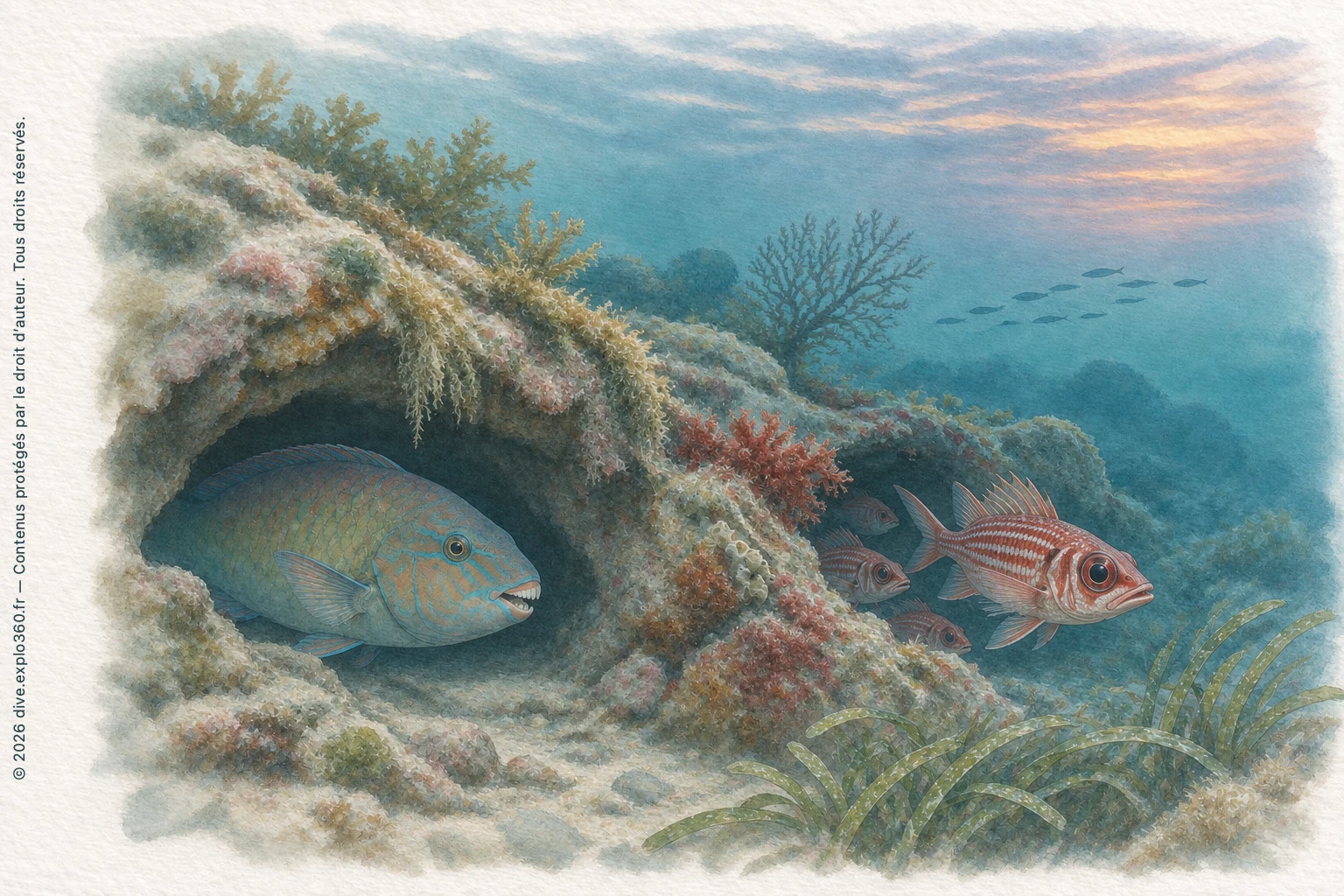
The reef at sunset

When the light fades, many parrotfish look for a place to rest. Some make a soft coat of mucus around themselves for the night. Squirrelfish are just coming out of hiding to look for food.

One shelter, two visits. Imagine watching a cavity just before sunset and again an hour later. Which animals went in? Which came out?
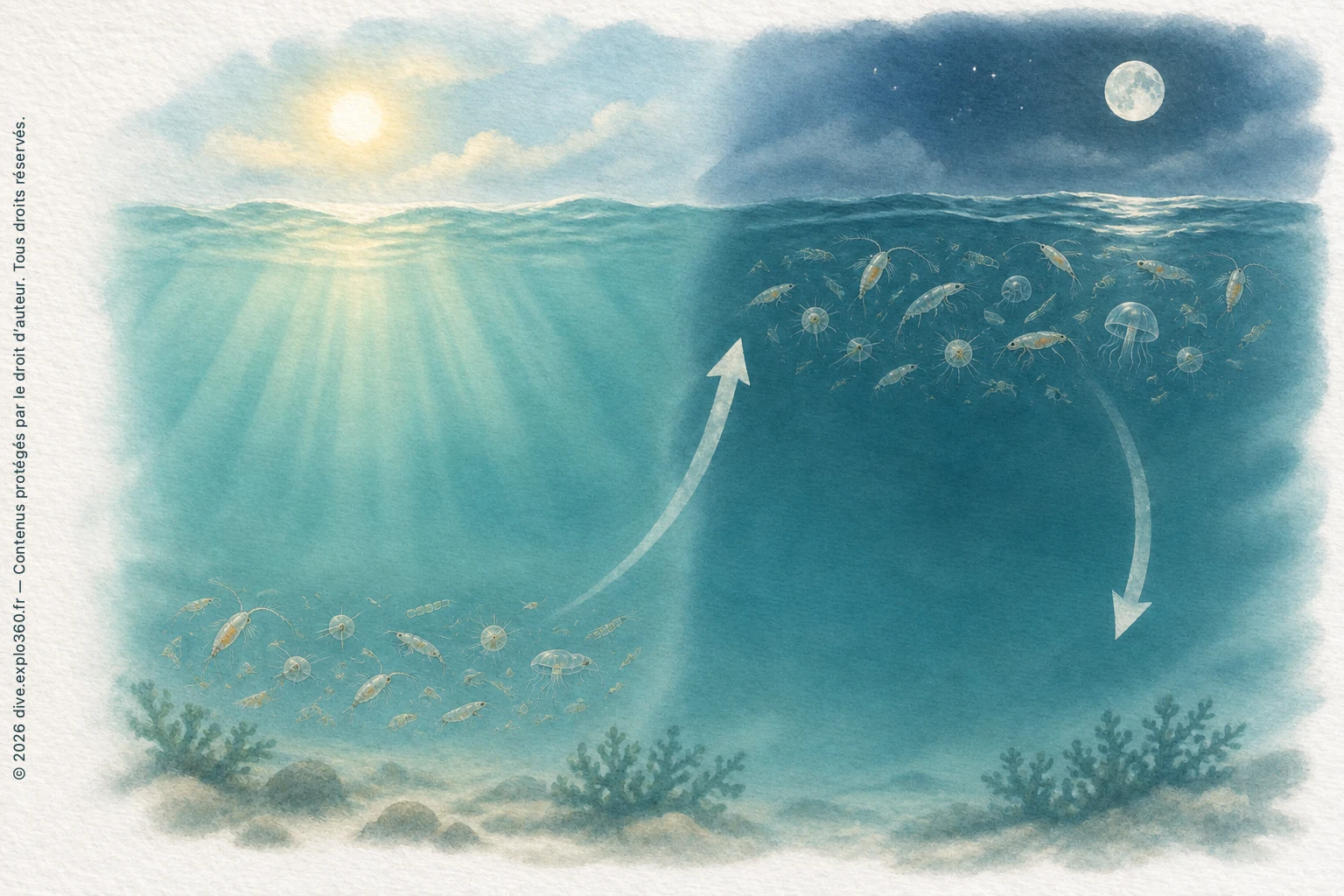
Day–night diagram: zooplankton deeper by day and near the surface by night.
Some small animals rise in the evening and descend in the morning. © dive.explo360.fr — All rights reserved. Reproduction requires permission.

A journey towards the surface

Some of the tiny animals we call plankton spend the day deep in the water. In the evening, they swim up to find food.

A meal carried into deep water

Near the surface, some plankton animals eat tiny algae. They take some of that meal with them when they swim back down. If a bigger animal eats them there, part of the meal passes to it.
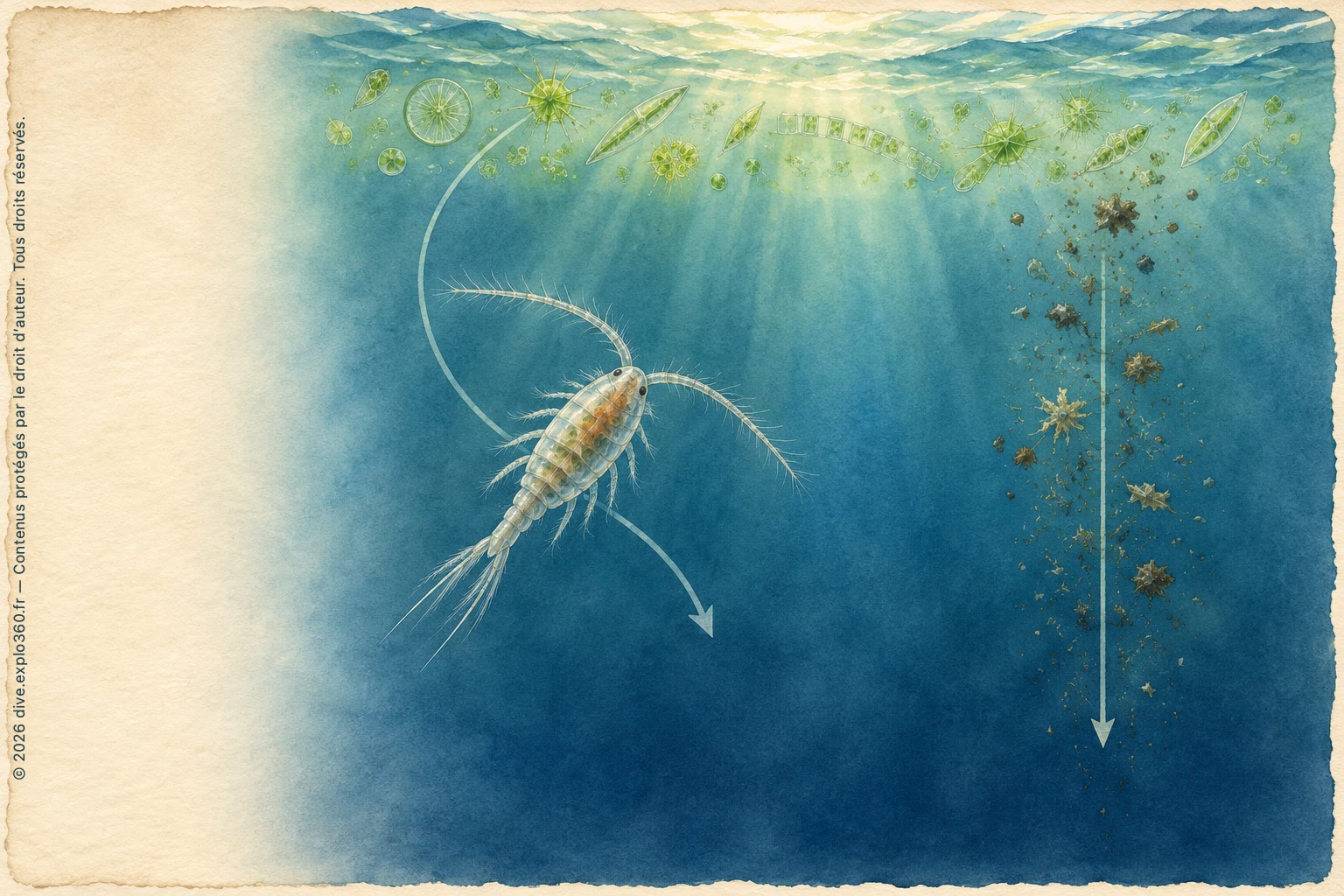
A copepod swims towards deeper water as particles sink beside it.
Small animals carry their food downwards. Leftover material also sinks through the water. © dive.explo360.fr — All rights reserved. Reproduction requires permission.

Hunters follow their prey

Follow a copepod. As it swims up, it leaves dark water, reaches a rich feeding area and may encounter a different set of hunters.

When small prey swim up, fish and squid can follow. In dark water, some prey are harder to see, but other hunters can still find them.

GO FURTHER WITH AMIGANSEAU

Continue reading

Discover full species guides, in-depth content and interactive tools available with your licence.

Your subscription helps preserve our independence.

Dive.Explo360 is an independent, self-funded nonprofit. Every licence helps us create new content, improve our teaching tools and keep some of our resources free and ad-free.

Licences from €80 per year

Choose a licence that suits your needs for personal, educational or professional use.

Open-access resources remain available without a subscription.