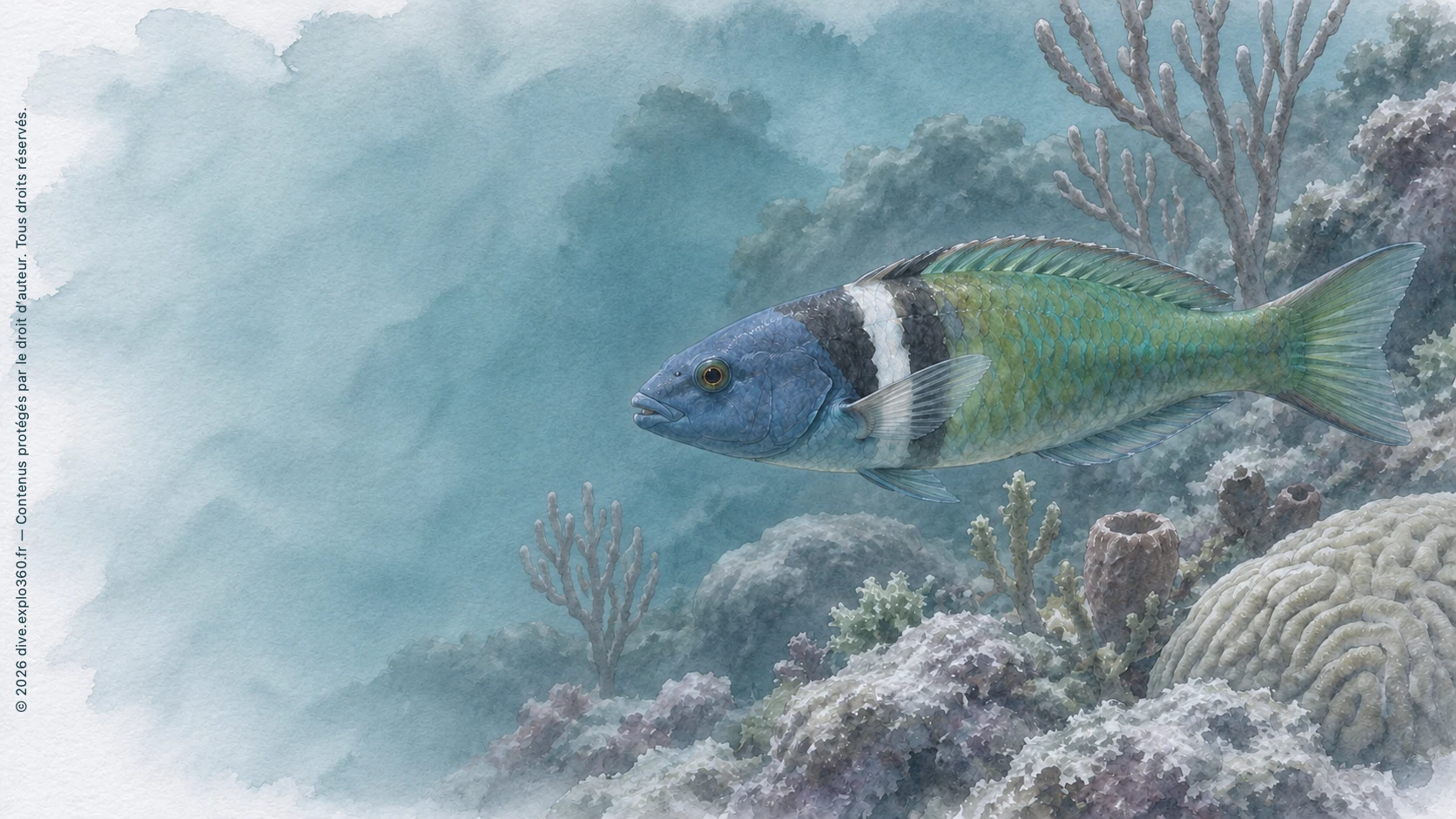
The dominant male has gone. What happens next?
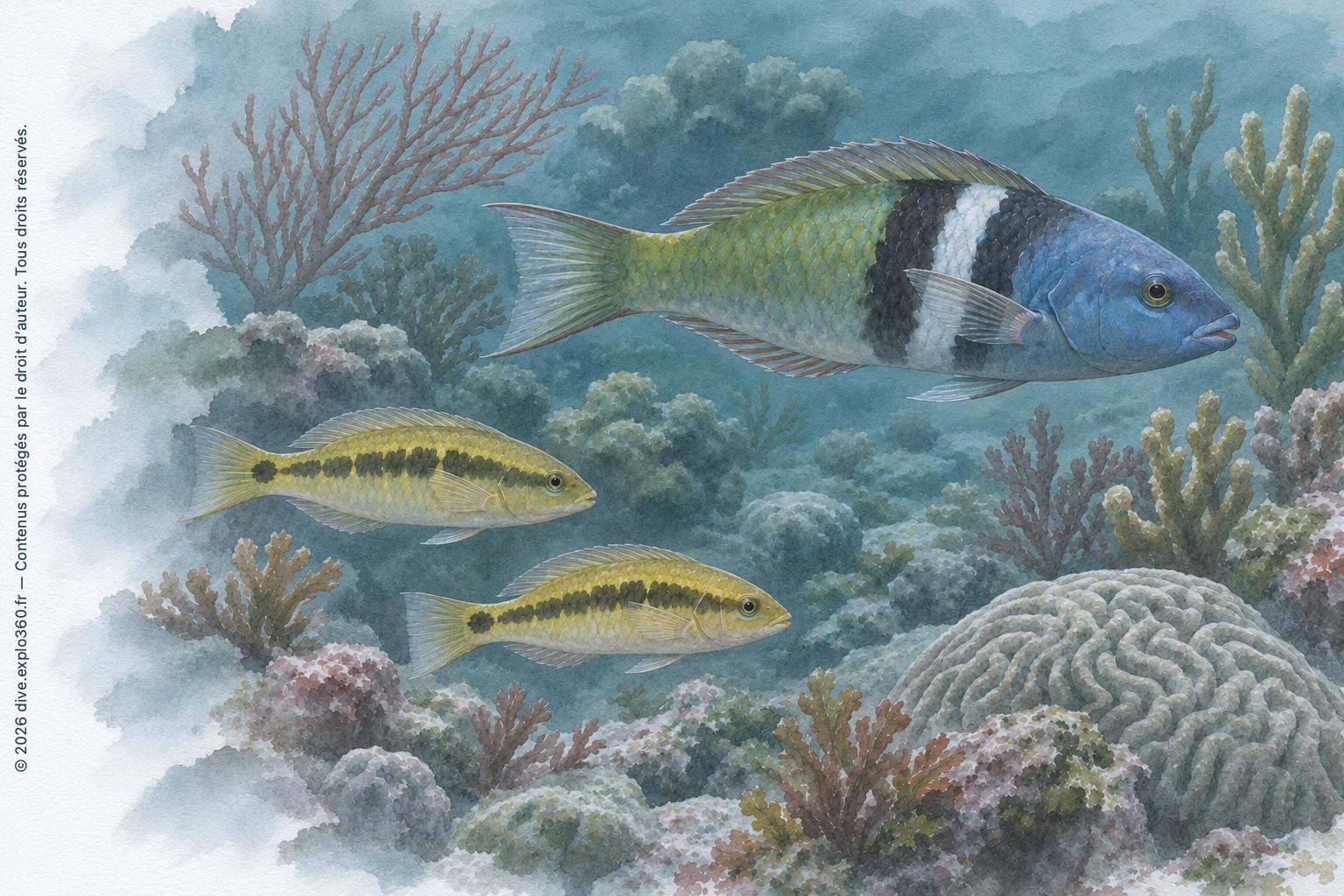
Biologists followed wrasses after removing dominant males. Within minutes, some large females began showing behaviour typical of males. Their colours began changing later. Some produced mature sperm in as little as eight days.
Two directions, two stories
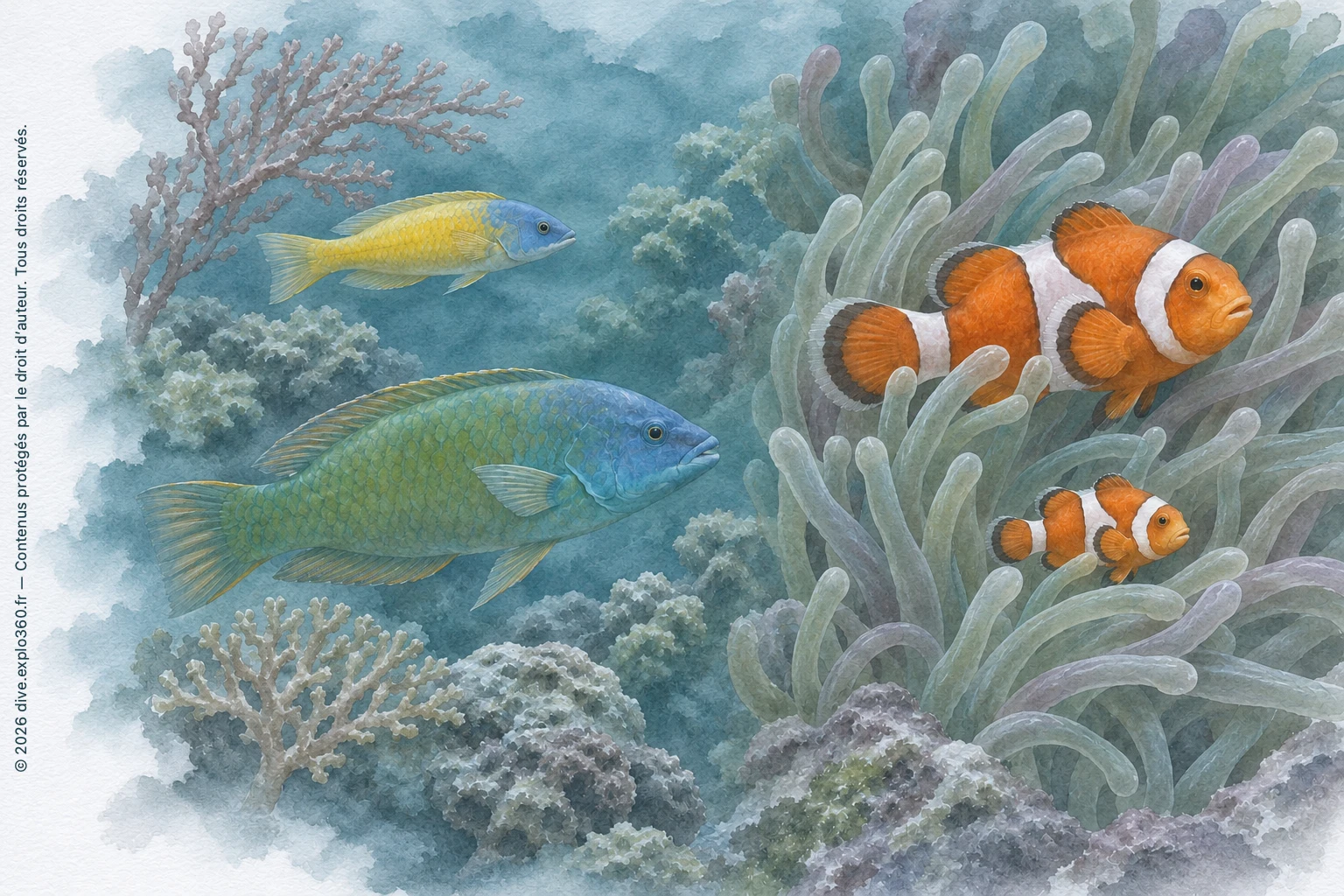
A change from female to male is called protogyny. That can happen in bluehead wrasses. Clownfish can change from male to female, which is called protandry. In both cases, the same fish can reproduce in two different roles during its lifetime.
The clownfish that waits its turn
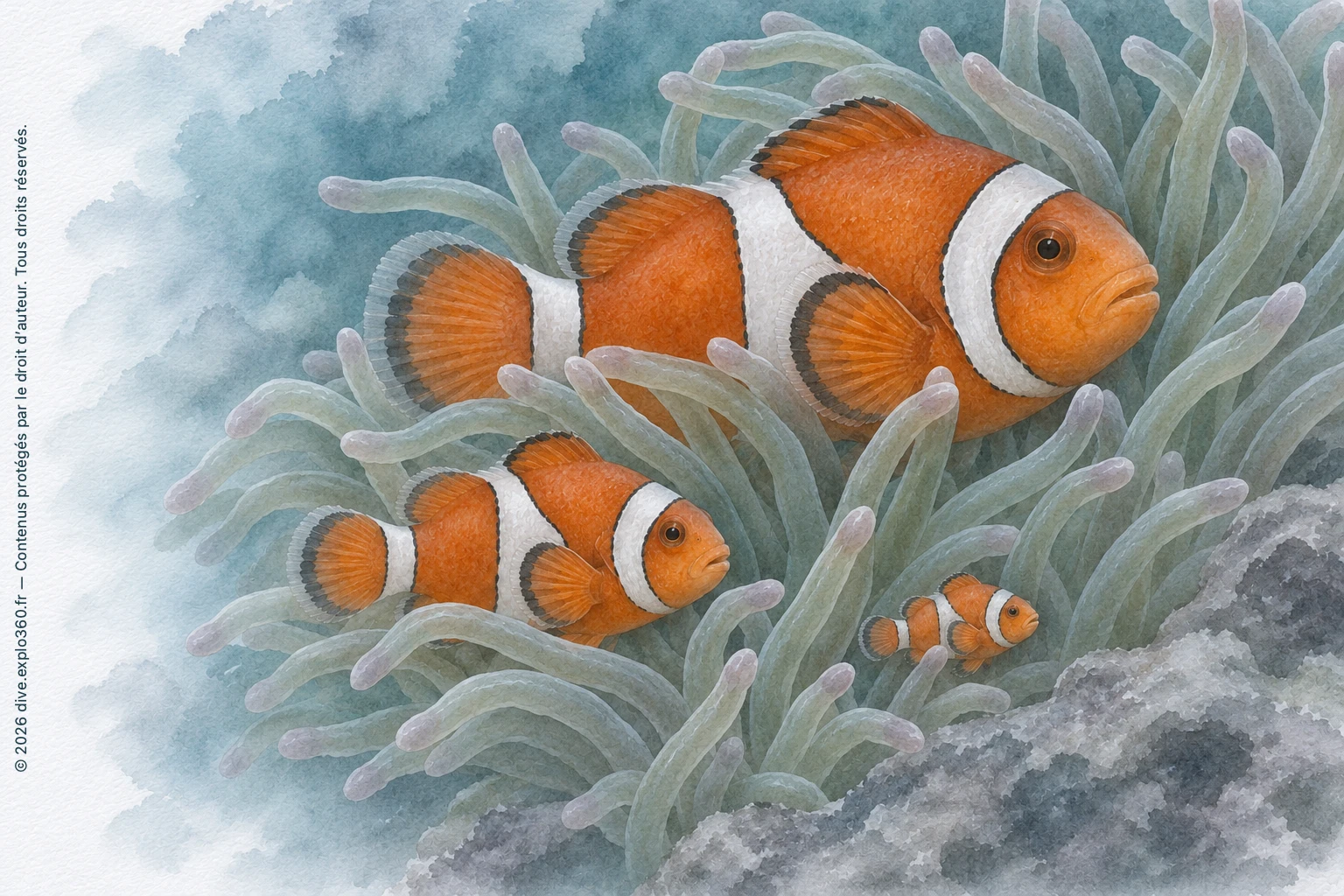
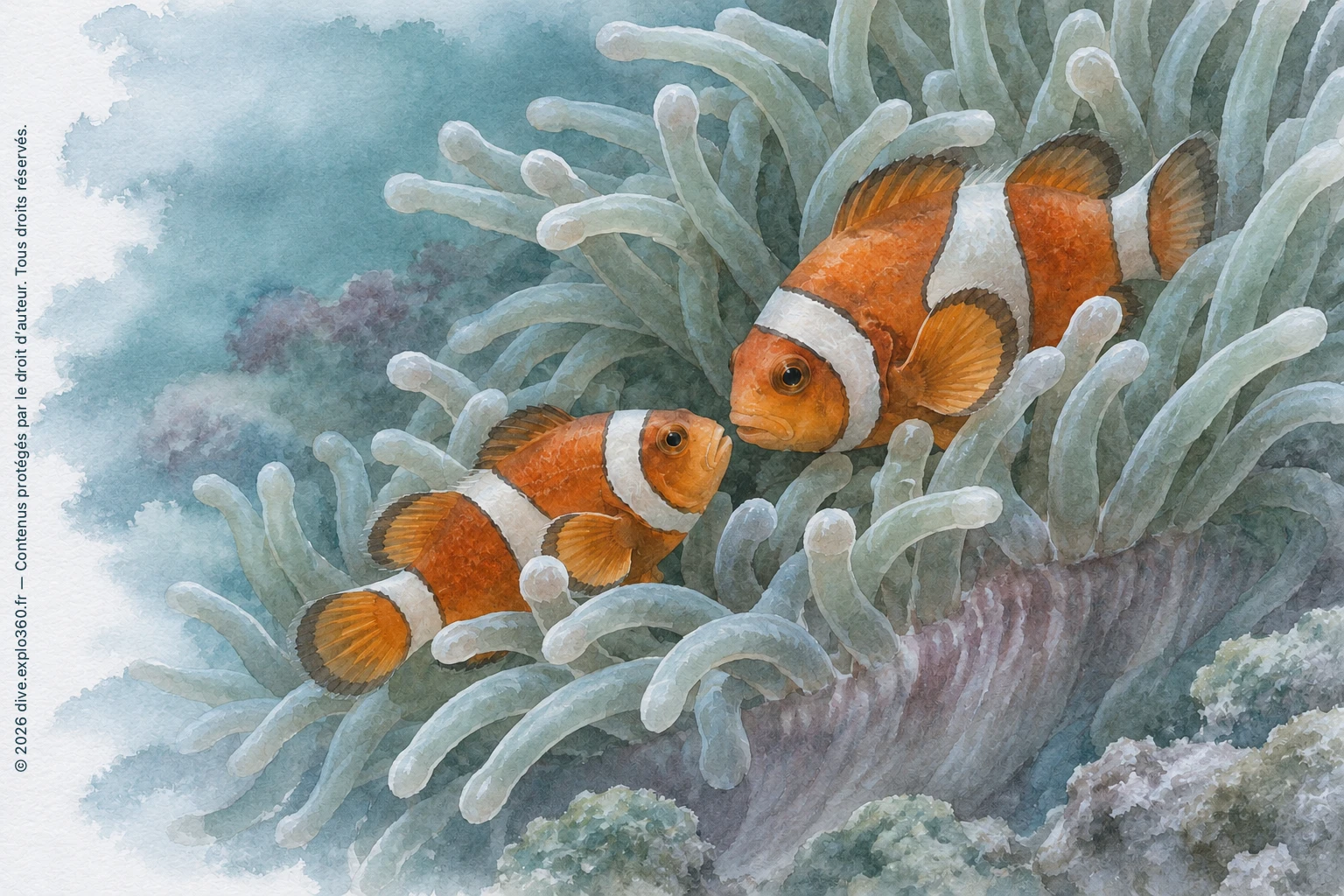
In an anemone, size often indicates rank. The largest fish is the breeding female. The next largest is the breeding male. If the female disappears, the male can become female and a lower-ranking fish can become the new breeding male.
Behaviour and body change at different rates
A wrasse can start behaving like a male before its reproductive organs have finished changing. In the clownfish researchers studied, behaviour typical of males lasted even after the organs had changed considerably.
GO FURTHER WITH AMIGANSEAU
Continue reading
Discover full species guides, in-depth content and interactive tools available with your licence.
Dive.Explo360 is an independent, self-funded nonprofit. Every licence helps us create new content, improve our teaching tools and keep some of our resources free and ad-free.
Choose a licence that suits your needs for personal, educational or professional use.
Open-access resources remain available without a subscription.