The electricity of living bodies
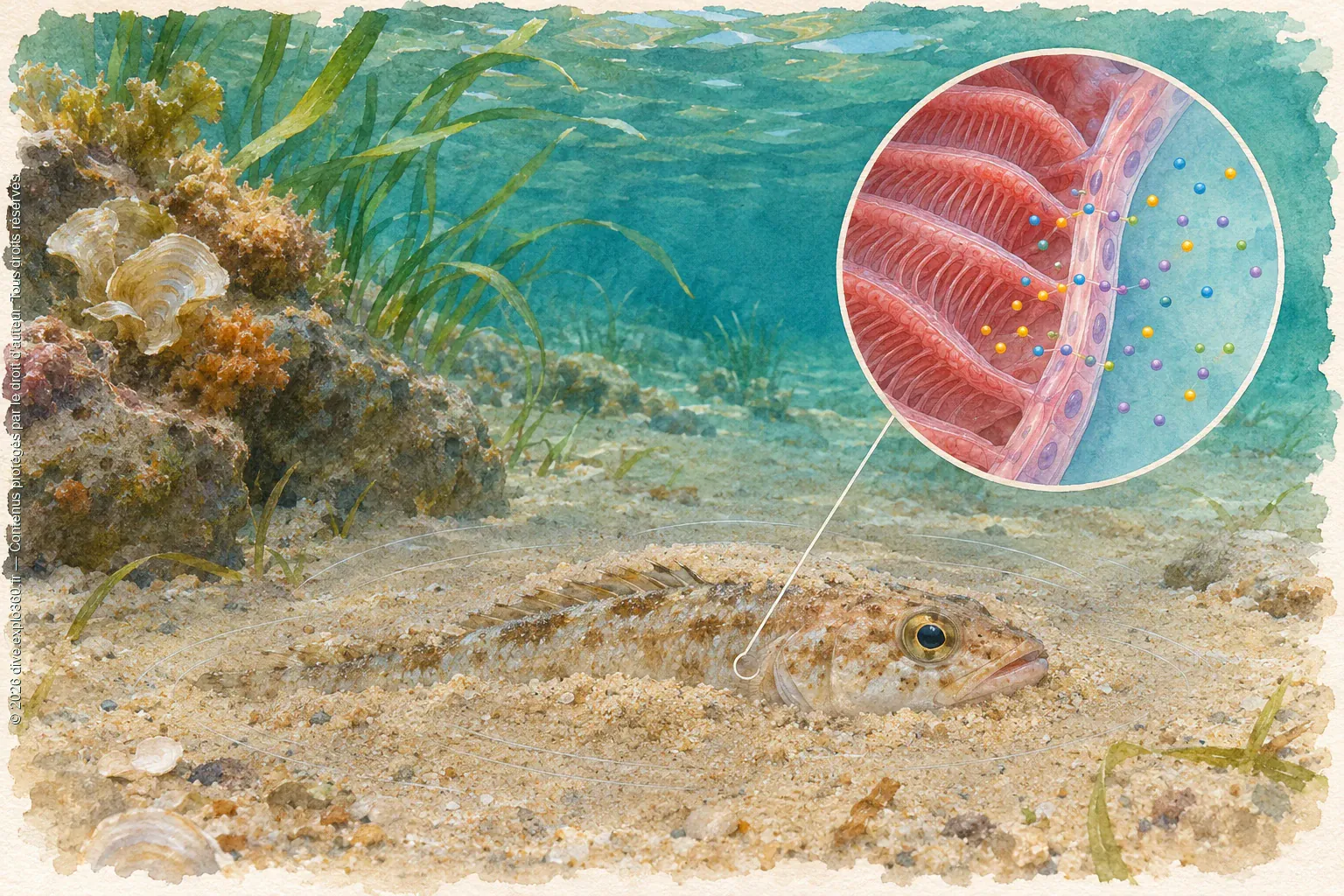
Electricity is part of everyday life inside a body. Charged particles called ions, including sodium, potassium, calcium and chloride, move through tissues and across cell membranes.
Those movements help nerves send signals, muscles contract and the heart and breathing work.
Ion exchanges between an animal and the water also generate weak fields. Gills, where extensive exchanges take place, can offer particularly useful clues.
We cannot feel these tiny fields. Some marine animals can detect them.
Seawater: a natural conductor
Dissolved salts provide the ions that make seawater a much better electrical conductor than pure water.
Small differences in electrical potential around an animal create a field. It weakens rapidly with distance, and its pattern depends on the water’s conductivity, the body’s shape and the surrounding sediment.
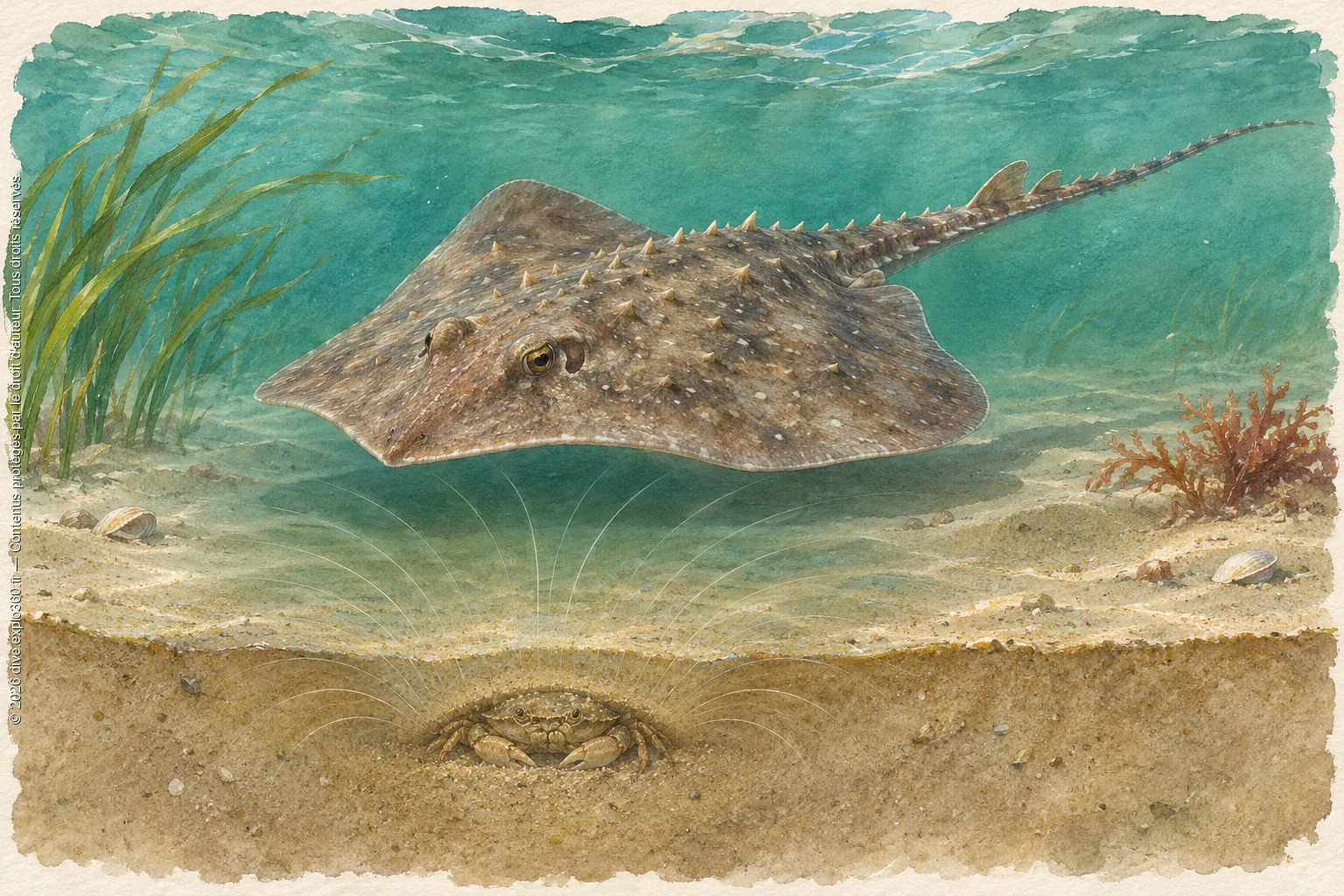
Sand soaked in seawater is not a perfect insulator. A buried animal can still give itself away.
For a feeding shark or ray, this is chiefly a close-range sense. It works alongside smell, sight and hearing, rather than taking their place.
Other clues may lead the hunter to a promising patch. Electricity can help pinpoint the last few centimetres.
Pores that open onto another sense
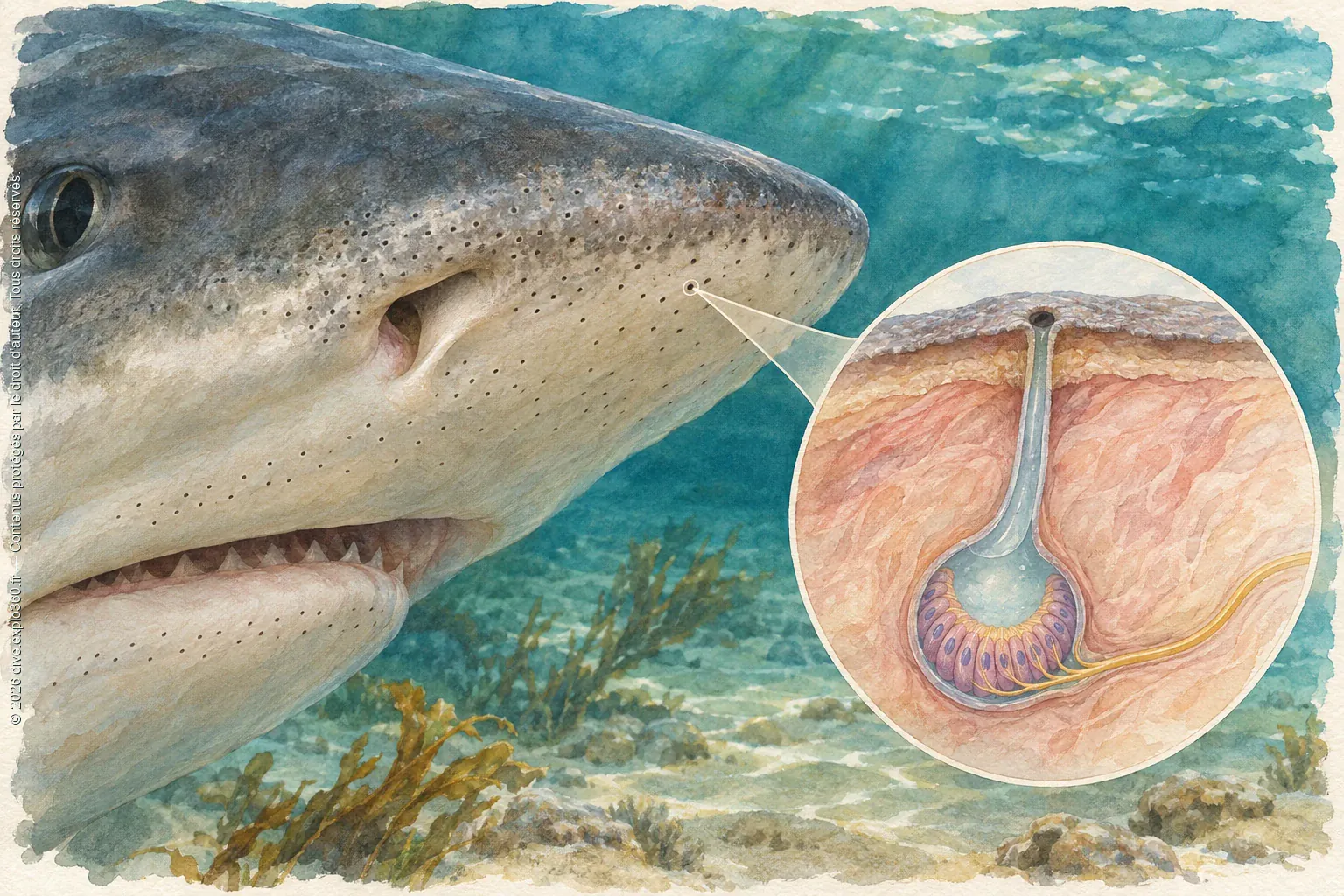
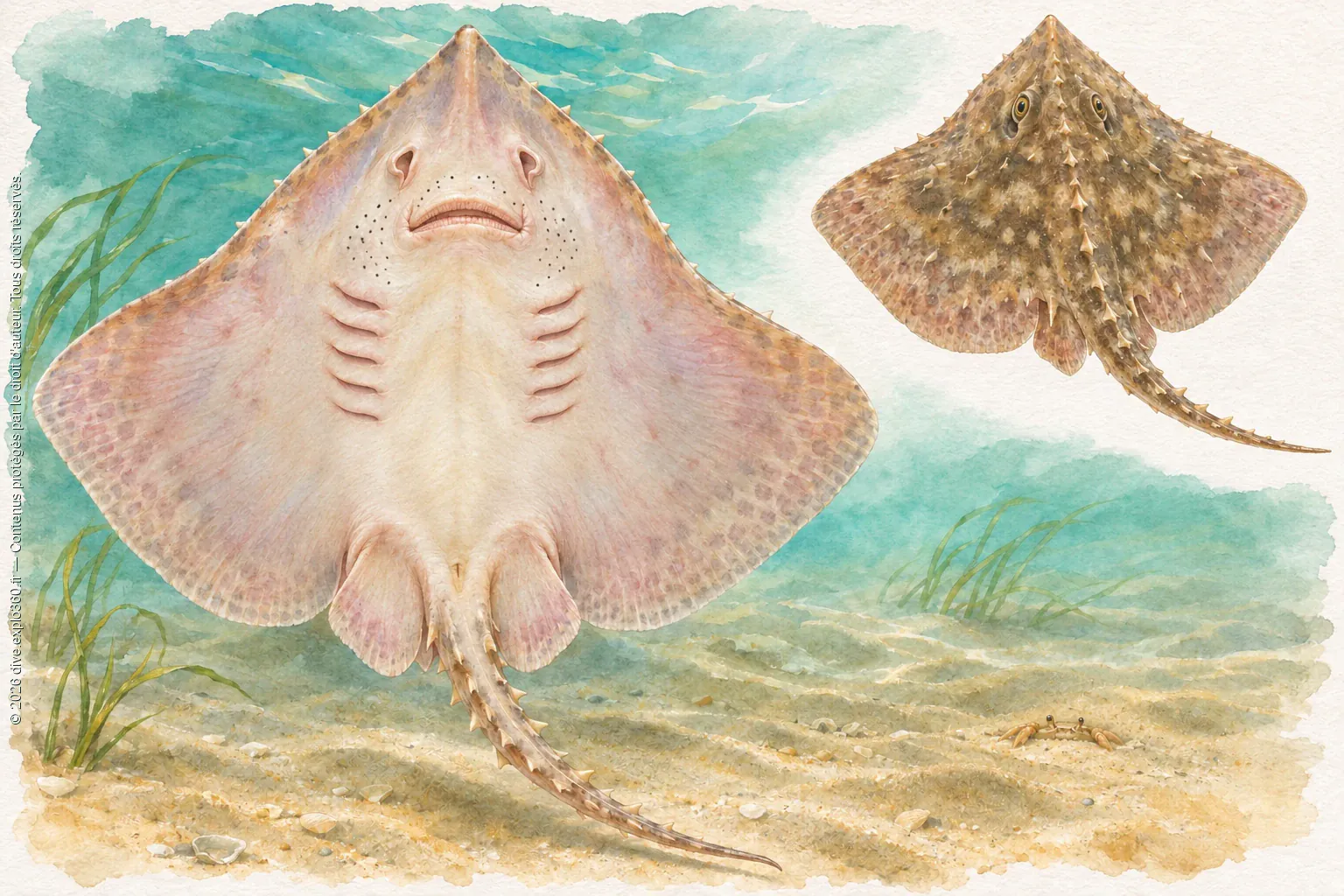
The small dark dots around a shark’s snout, mouth and nostrils are openings to a remarkable sensory system. They lead to the ampullae of Lorenzini, named after Stefano Lorenzini, the Italian naturalist who described them in the seventeenth century.
Each pore opens into a canal of conducting jelly. At the inner end lies a small chamber containing specialised sensory cells.
The cells respond to tiny differences in electrical potential between the pore and internal tissues, then pass information to the nervous system.
Pores in different positions receive different signals according to the source’s location. Together, they help reveal where it is.
In some laboratory tests, sharks and rays respond to fields of just a few nanovolts per centimetre. These remarkable thresholds vary with species and test conditions.
Testing an invisible clue
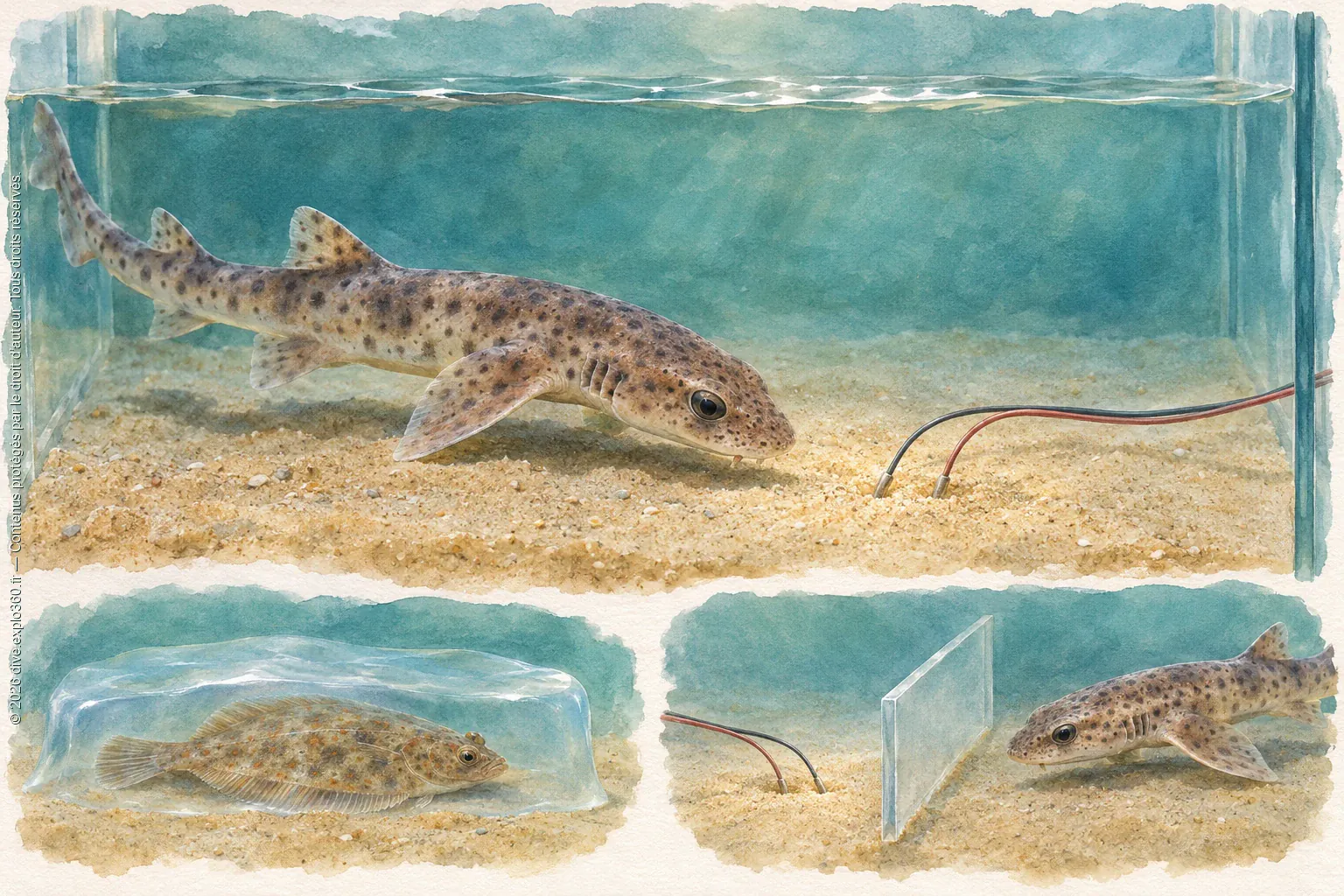
In 1971, Adrianus Kalmijn published experiments with the small-spotted catshark, Scyliorhinus canicula, and thornback ray, Raja clavata.
Both could find a living plaice hidden beneath sand. A jelly-based barrier then restricted chemical clues while allowing electrical signals through. The predators still located the fish.
An electrically insulating membrane changed the outcome. With transmission of the field blocked, capture responses disappeared.
Kalmijn also buried electrodes that produced a prey-like field. The animals approached and tried to dig up the artificial source.
Searching just above the sand
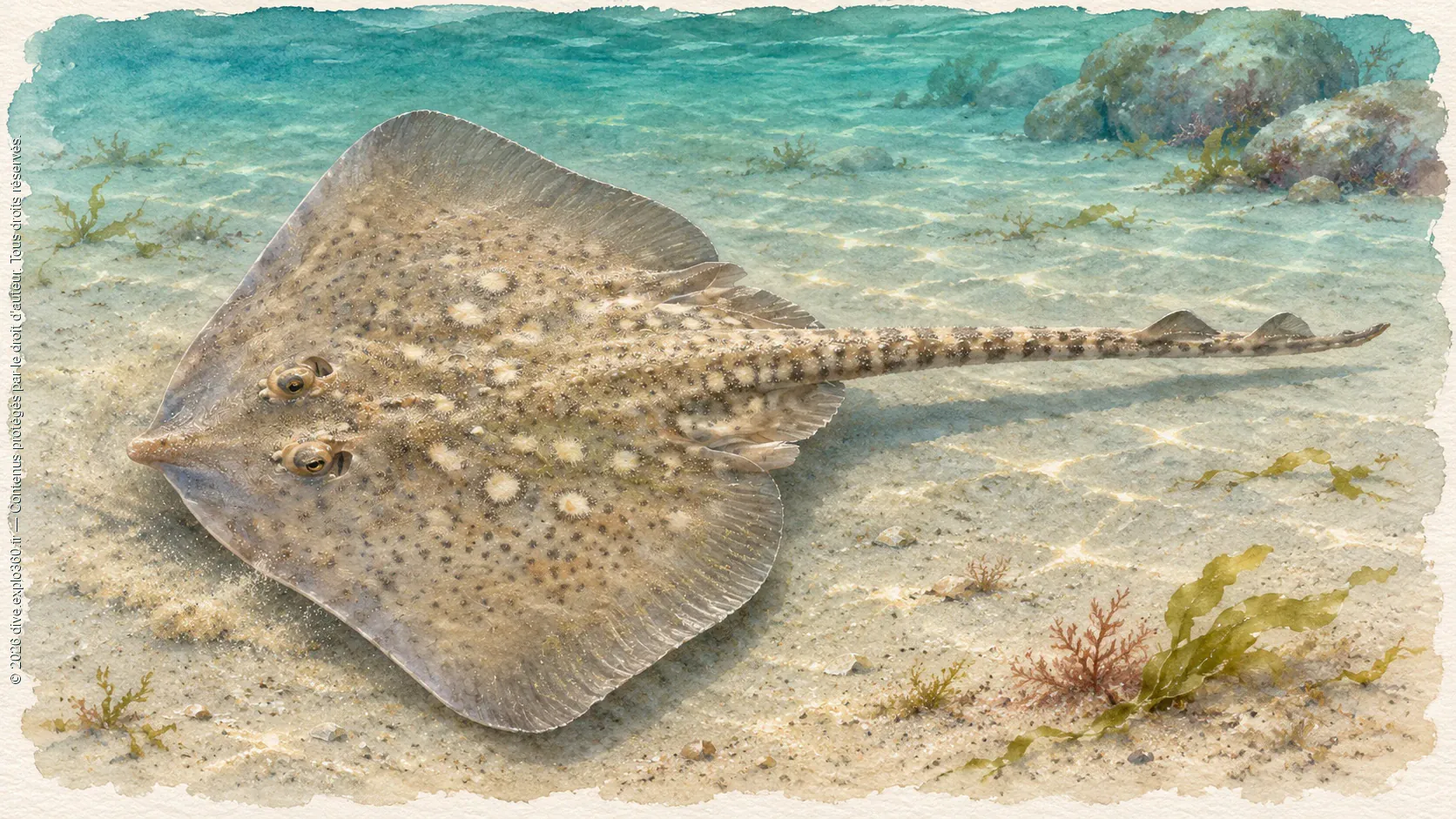
For many bottom-dwelling rays, eyes above and a mouth below create a problem: prey directly underneath may be out of sight.
As the ray glides low, pores around its snout and underside mouth pass close to buried animals.
Once it locates a meal, the ray can shift sediment with its pectoral fins or with water movements associated with its mouth. Some species draw prey in by suction.
Crustaceans, worms, molluscs and fish become accessible.
The flat body, underside mouth and position of the receptors work together in a search close to the seabed.
GO FURTHER WITH AMIGANSEAU
Continue reading
Discover full species guides, in-depth content and interactive tools available with your licence.
Dive.Explo360 is an independent, self-funded nonprofit. Every licence helps us create new content, improve our teaching tools and keep some of our resources free and ad-free.
Choose a licence that suits your needs for personal, educational or professional use.
Open-access resources remain available without a subscription.