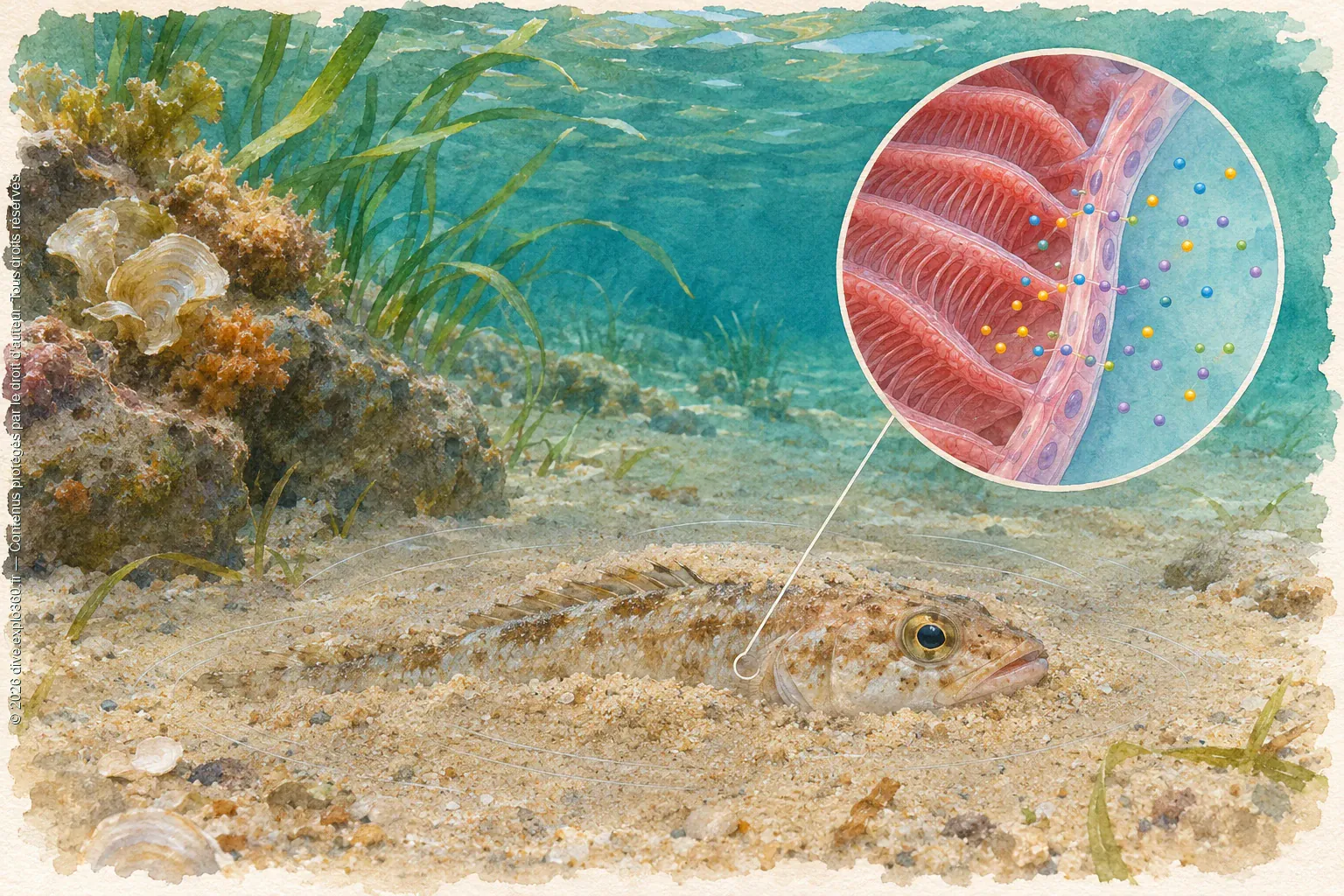
A still animal continues to produce weak fields through body activity and ion exchanges. The gills are shown enlarged. Lines and particles explain the idea; they are not visible light or a measured field.
A still animal continues to produce weak fields through body activity and ion exchanges. The gills are shown enlarged. Lines and particles explain the idea; they are not visible light or a measured field. © 2026 dive.explo360.fr — Contenus protégés par le droit d’auteur. Tous droits réservés.

The electricity of living bodies

Movements of ions, including sodium, potassium, calcium and chloride, are central to cell function. Nerve signalling, muscle contraction, heartbeat and breathing involve electrical activity.

Conductivity and a weakening field

Dissolved salts make seawater far more conductive than pure water. Potential differences associated with a body produce a field shaped by the source, conductivity and sediment.

Field strength falls rapidly with distance. Sand saturated with seawater does not necessarily screen buried prey. During feeding, electrical sensing chiefly refines location at close range, alongside information from smell, sight and hearing.
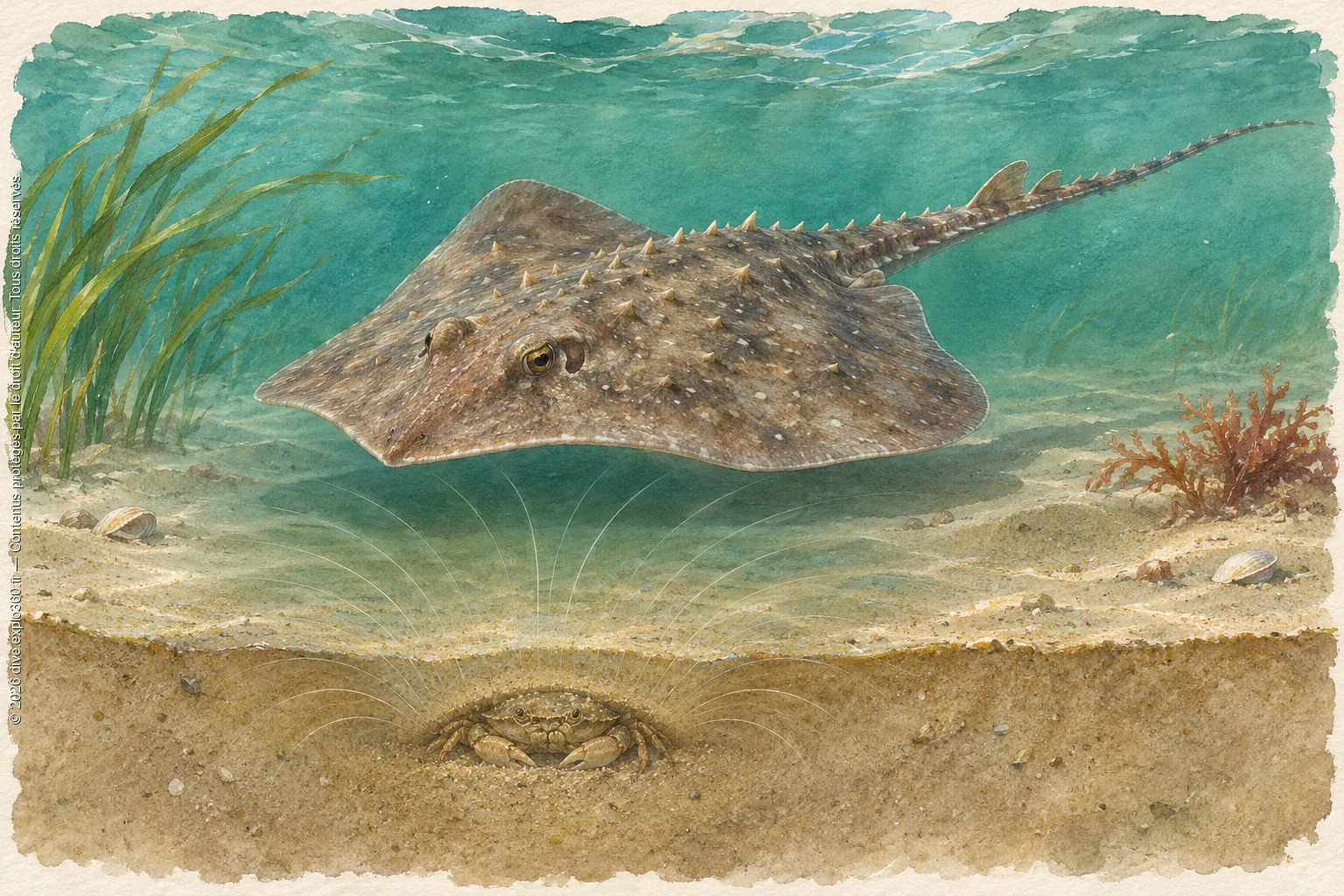
An illustration of a weak field beneath seawater-soaked sand. Its actual pattern depends on conductivity, the source and the surroundings. The lines show neither measurements nor a detection distance.
An illustration of a weak field beneath seawater-soaked sand. Its actual pattern depends on conductivity, the source and the surroundings. The lines show neither measurements nor a detection distance. © 2026 dive.explo360.fr — Contenus protégés par le droit d’auteur. Tous droits réservés.
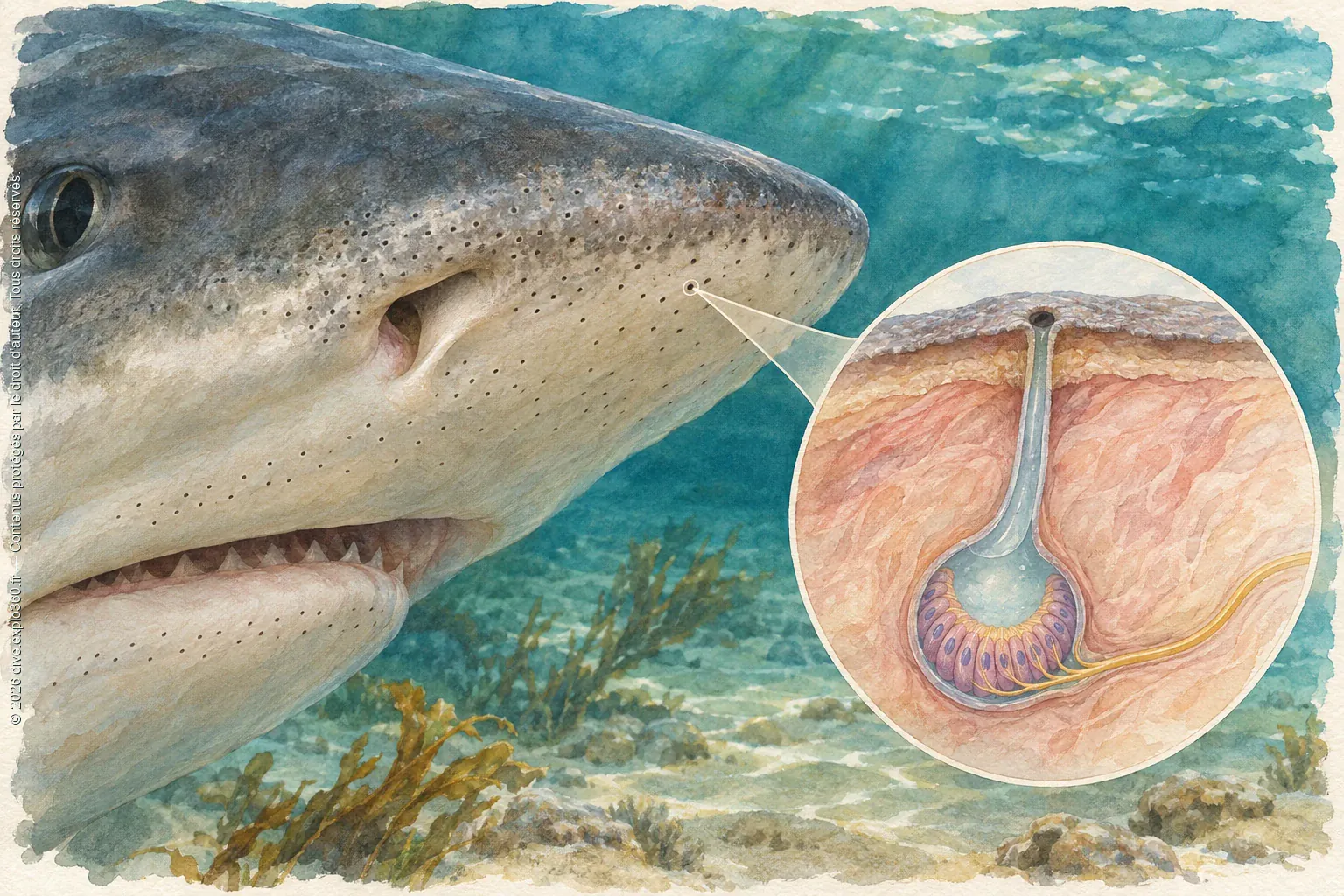
A simplified ampulla of Lorenzini: an external pore, a canal of conducting jelly, sensory cells and nerves. The cells respond to a potential difference between the opening and internal tissues. The enlarged detail is not a tissue section to scale.
A simplified ampulla of Lorenzini: an external pore, a canal of conducting jelly, sensory cells and nerves. The cells respond to a potential difference between the opening and internal tissues. The enlarged detail is not a tissue section to scale. © 2026 dive.explo360.fr — Contenus protégés par le droit d’auteur. Tous droits réservés.

Pores that open onto another sense

The ampullae of Lorenzini connect to pores on the head, notably near the snout, mouth and nostrils. Stefano Lorenzini described them in the seventeenth century.

A canal of conducting jelly links each pore to sensory cells in a chamber. The cells respond to a potential difference between the opening and internal tissues, then pass information to the nervous system. Spatially separated pores help locate the source. Some laboratory thresholds are a few nanovolts per centimetre, but sensitivity varies with species and conditions.

Testing an invisible clue

In 1971, Adrianus Kalmijn tested small-spotted catsharks, Scyliorhinus canicula, and thornback rays, Raja clavata. A plaice hidden beneath sand remained detectable through a jelly barrier that restricted chemical cues but transmitted electrical signals. An insulating membrane blocking transmission removed the capture responses.
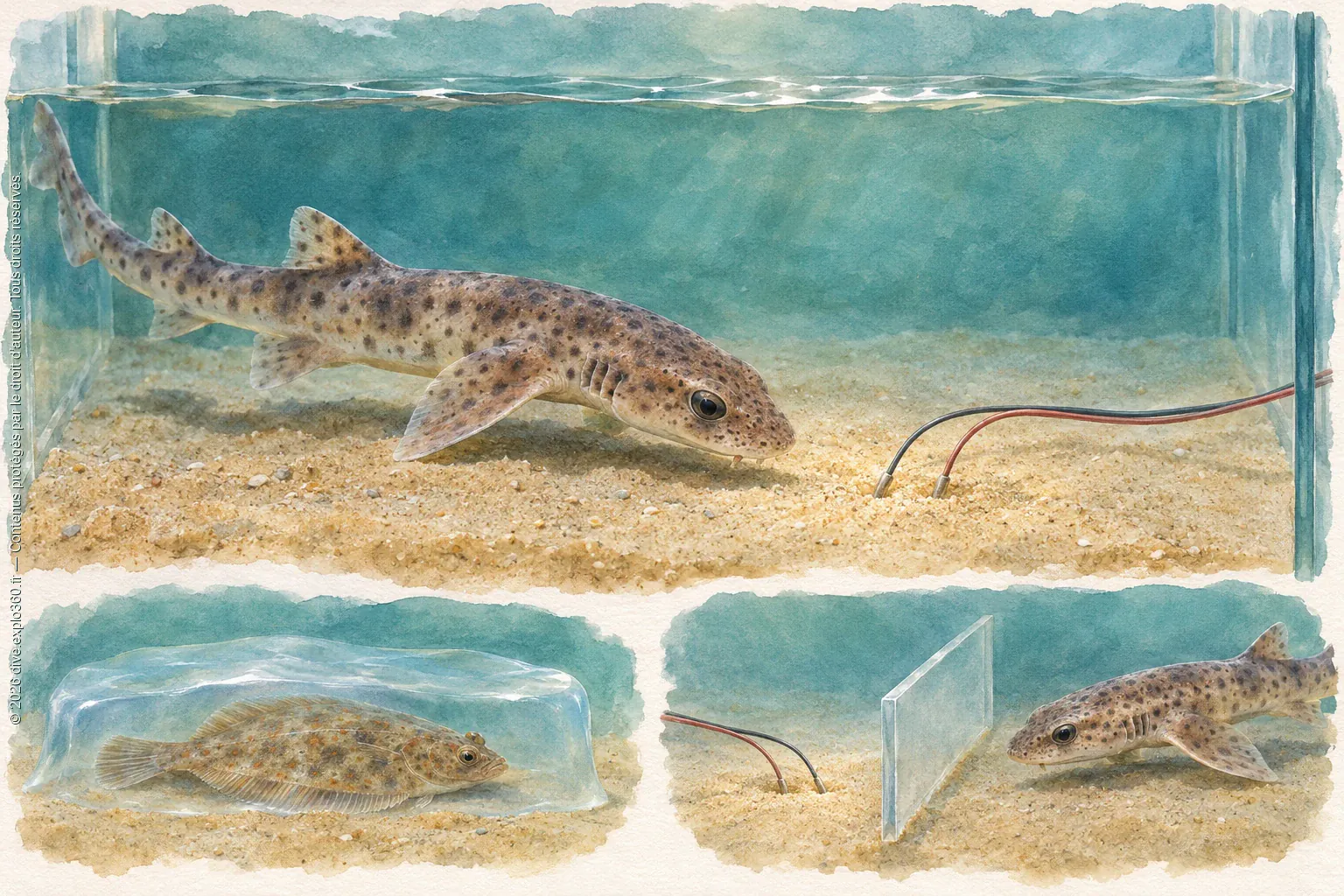
An illustration of Kalmijn’s 1971 comparisons: hidden prey, a jelly barrier, electrical insulation and electrodes. It explains how clues were separated, rather than reproducing the exact apparatus or settings.
An illustration of Kalmijn’s 1971 comparisons: hidden prey, a jelly barrier, electrical insulation and electrodes. It explains how clues were separated, rather than reproducing the exact apparatus or settings. © 2026 dive.explo360.fr — Contenus protégés par le droit d’auteur. Tous droits réservés.
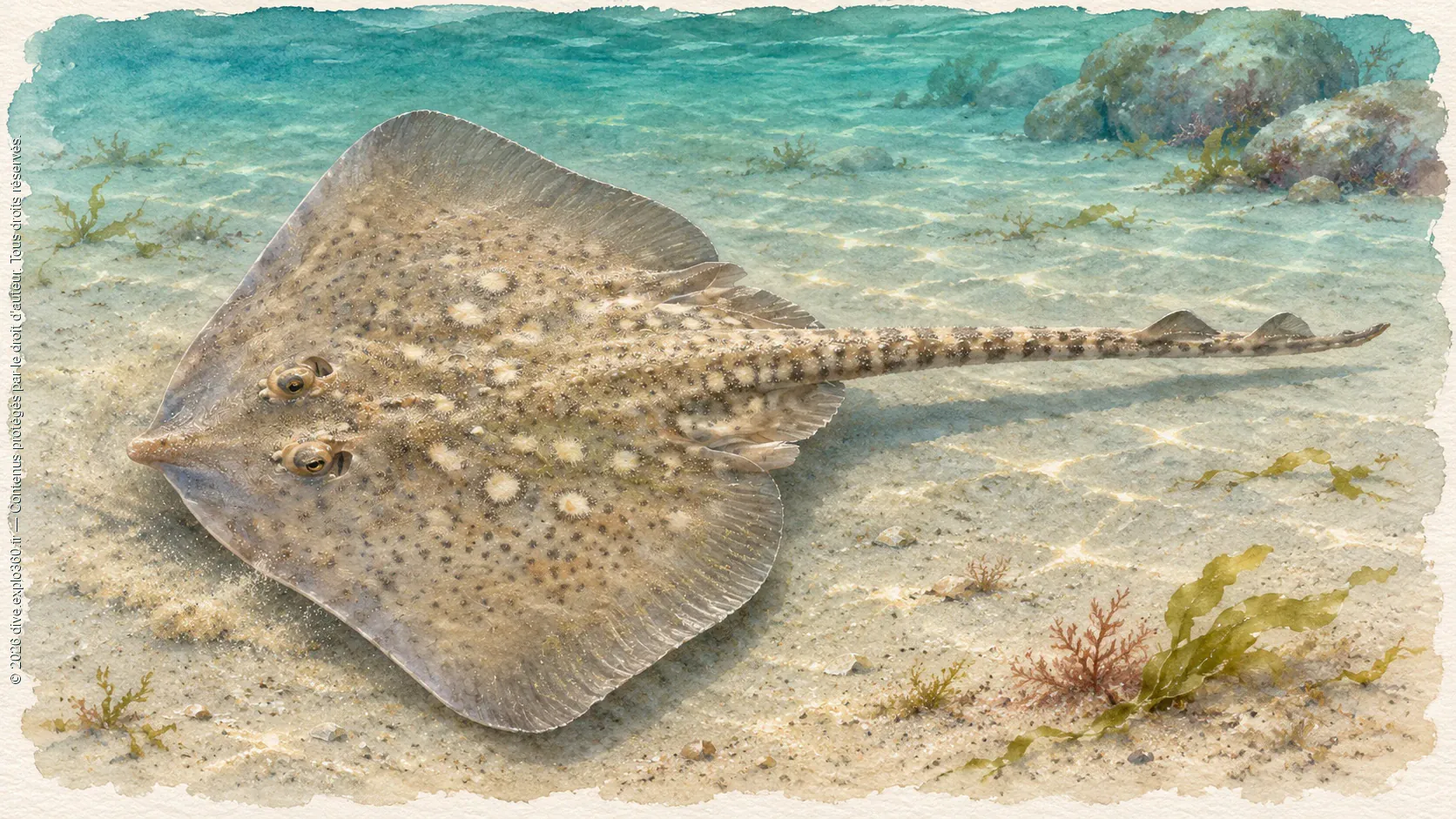
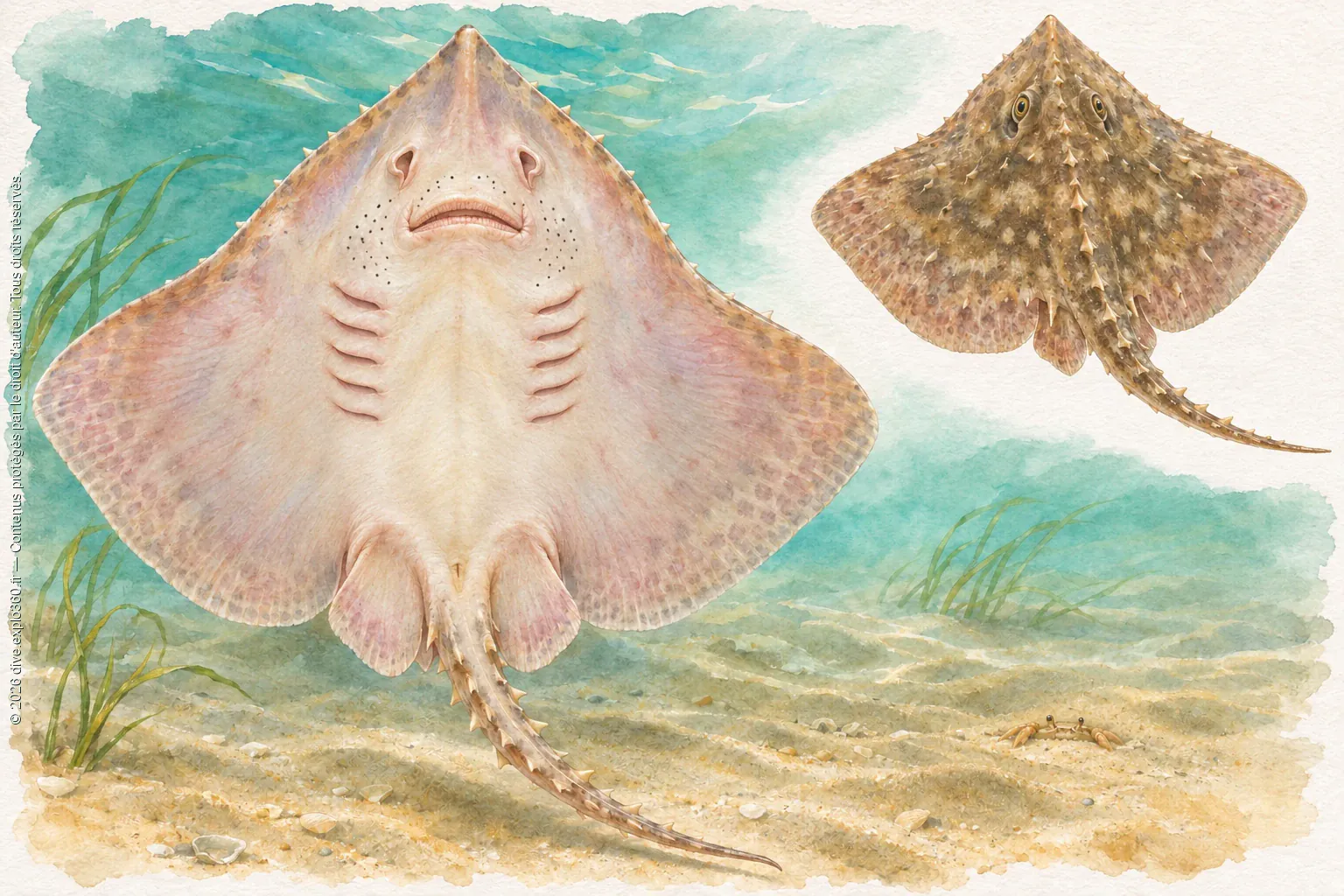
Two views of a bottom-dwelling ray: eyes above, mouth and five pairs of gill slits below. Pores near the snout and mouth allow close sampling. The anatomy is simplified, not a complete map of pores.
Two views of a bottom-dwelling ray: eyes above, mouth and five pairs of gill slits below. Pores near the snout and mouth allow close sampling. The anatomy is simplified, not a complete map of pores. © 2026 dive.explo360.fr — Contenus protégés par le droit d’auteur. Tous droits réservés.

Searching just above the sand

A ray’s flattened body brings underside pores, especially near the snout and mouth, close to the seabed. Eyes on top cannot necessarily see prey directly below.

Depending on species, pectoral fins or water movements associated with the mouth uncover sediment, sometimes with suction. Crustaceans, worms, molluscs and fish become accessible. Receptor distribution, body form and mouth position complement each other.

GO FURTHER WITH AMIGANSEAU

Continue reading

Discover full species guides, in-depth content and interactive tools available with your licence.

Your subscription helps preserve our independence.

Dive.Explo360 is an independent, self-funded nonprofit. Every licence helps us create new content, improve our teaching tools and keep some of our resources free and ad-free.

Licences from €80 per year

Choose a licence that suits your needs for personal, educational or professional use.

Open-access resources remain available without a subscription.