


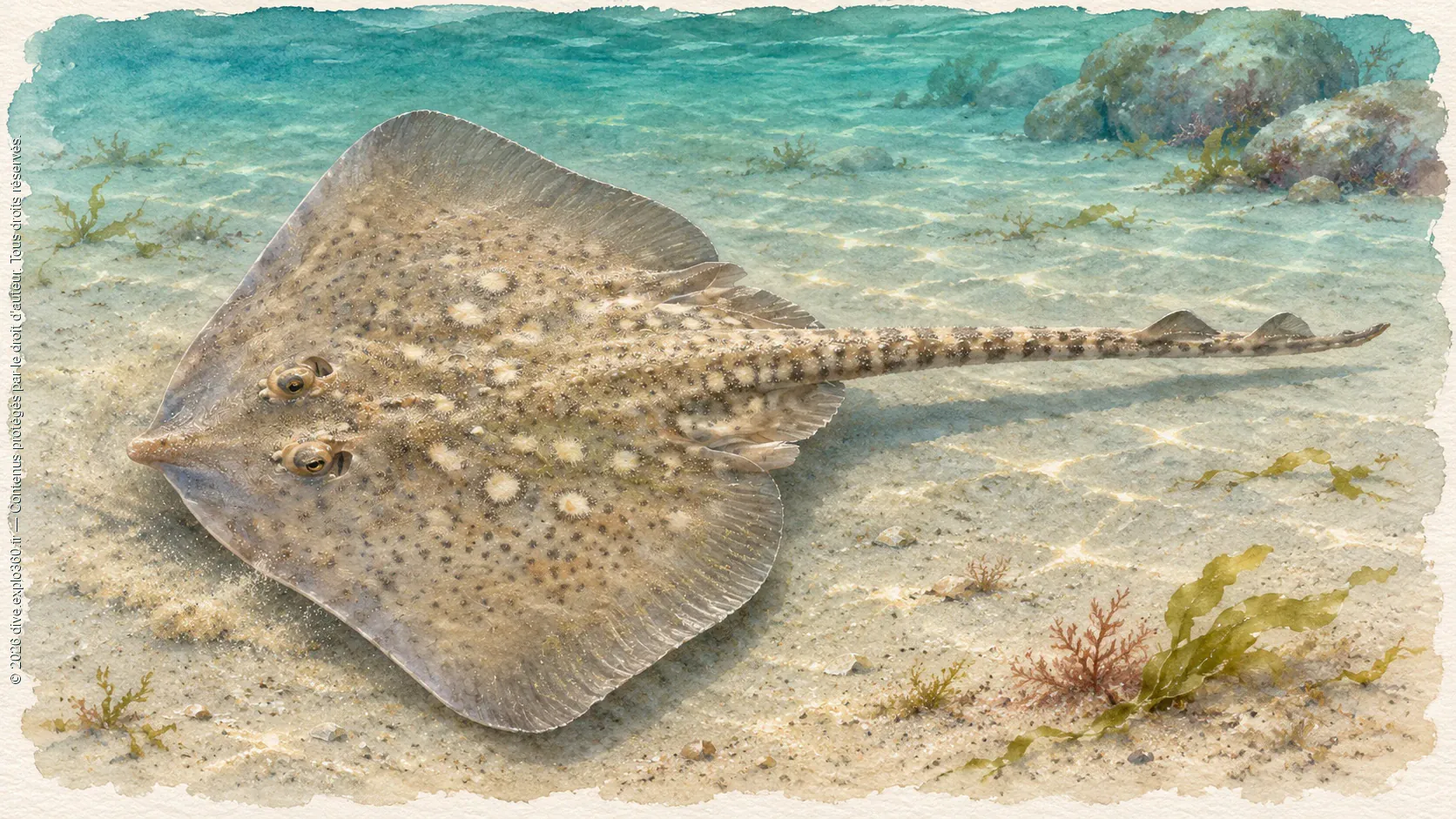
Tiny electric clues
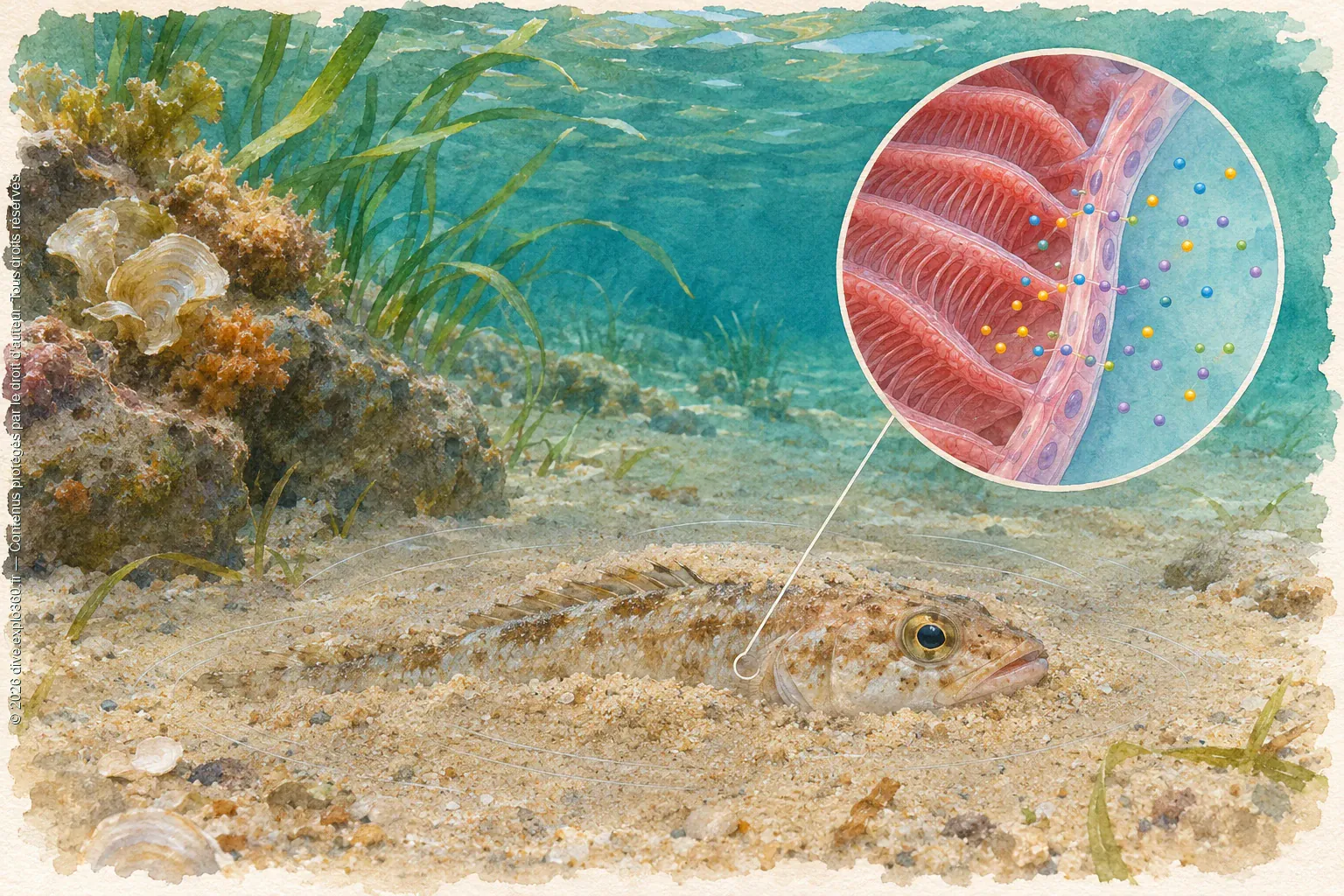
Cells use charged particles called ions, including sodium, potassium, calcium and chloride. Nerves, muscles, hearts and breathing involve electrical activity. Ion exchanges between an animal and the water also make weak fields, especially near the gills.
Salt helps water conduct electricity
Ions from dissolved salts help seawater conduct electricity much better than pure water. A living body produces a weak field that fades quickly with distance. Its pattern depends on the animal, water and seabed.
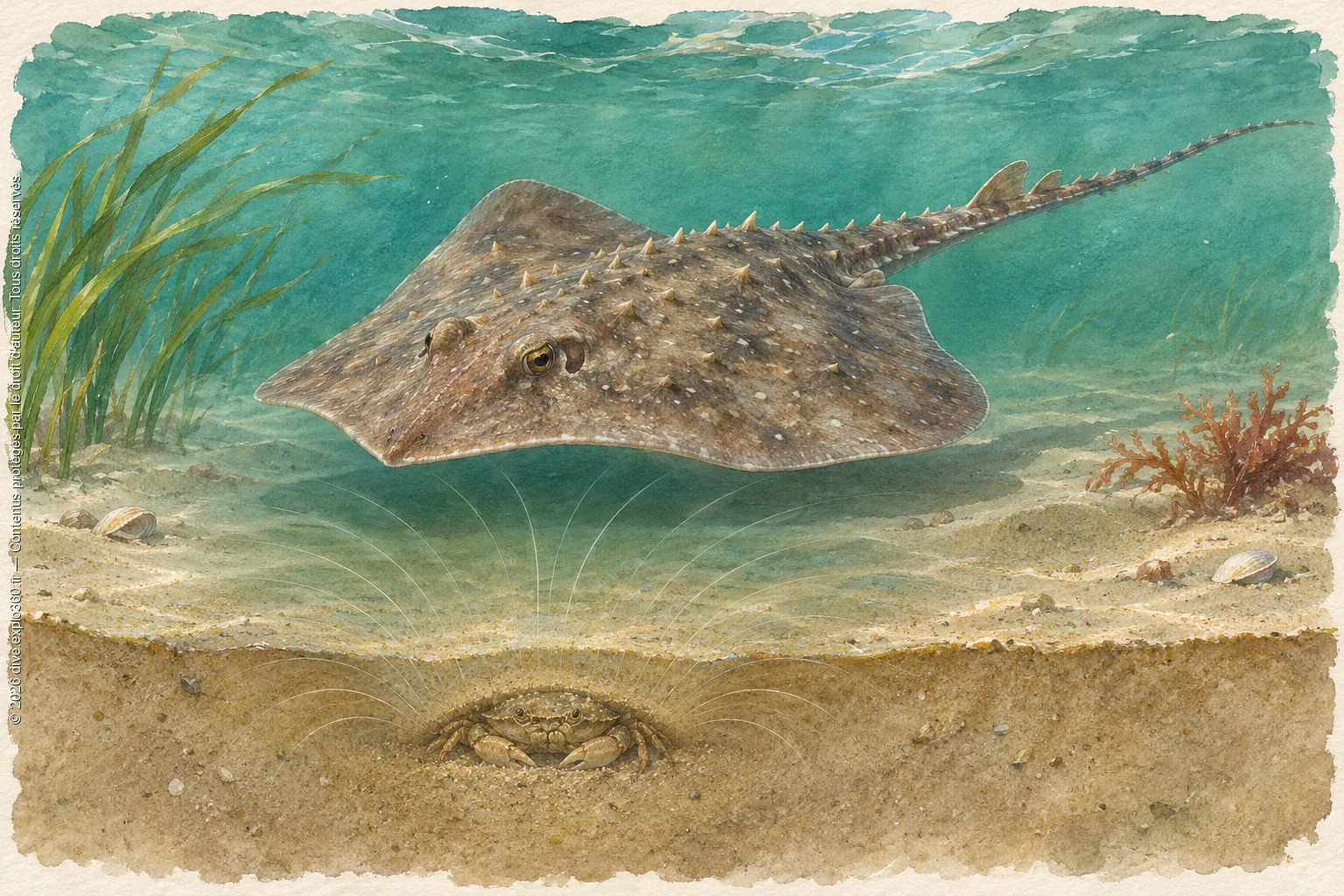
Wet sand does not block every signal. Buried prey may still be detected. This sense is mainly useful close up during hunting. Other senses may lead a predator towards the area; electricity can help it find where to dig.
A shark’s special sensors
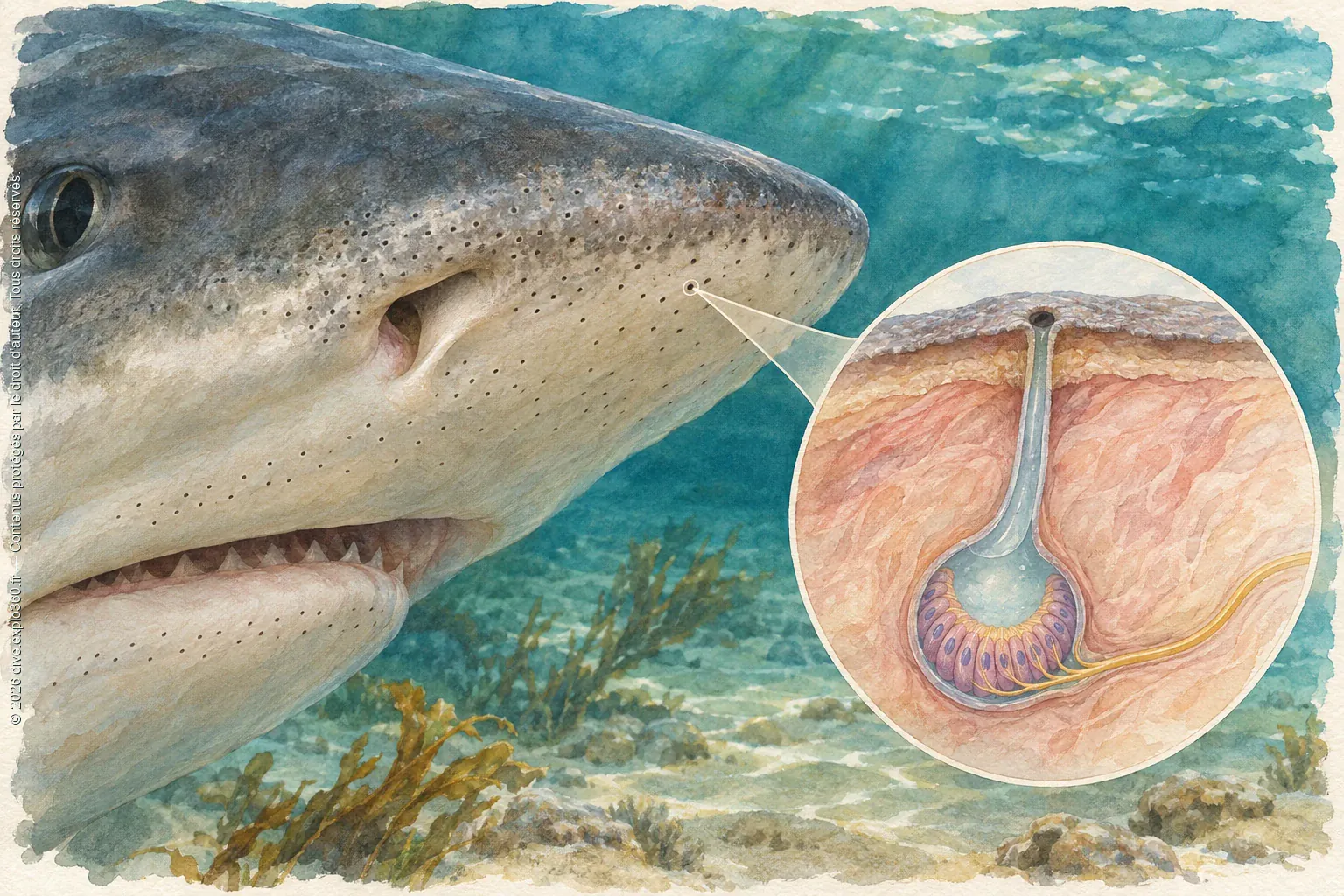
Little dark pores around a shark’s snout and mouth lead to organs called the ampullae of Lorenzini. Stefano Lorenzini described them in the seventeenth century.
Each pore leads into a canal of conducting jelly, then to a small chamber with sensory cells. The cells detect a tiny electrical difference and send information along nerves. Pores in different places help locate the source. In some tests, animals detect just a few nanovolts per centimetre, a very tiny measurement. Results vary between species and experiments.
Finding out which clue matters
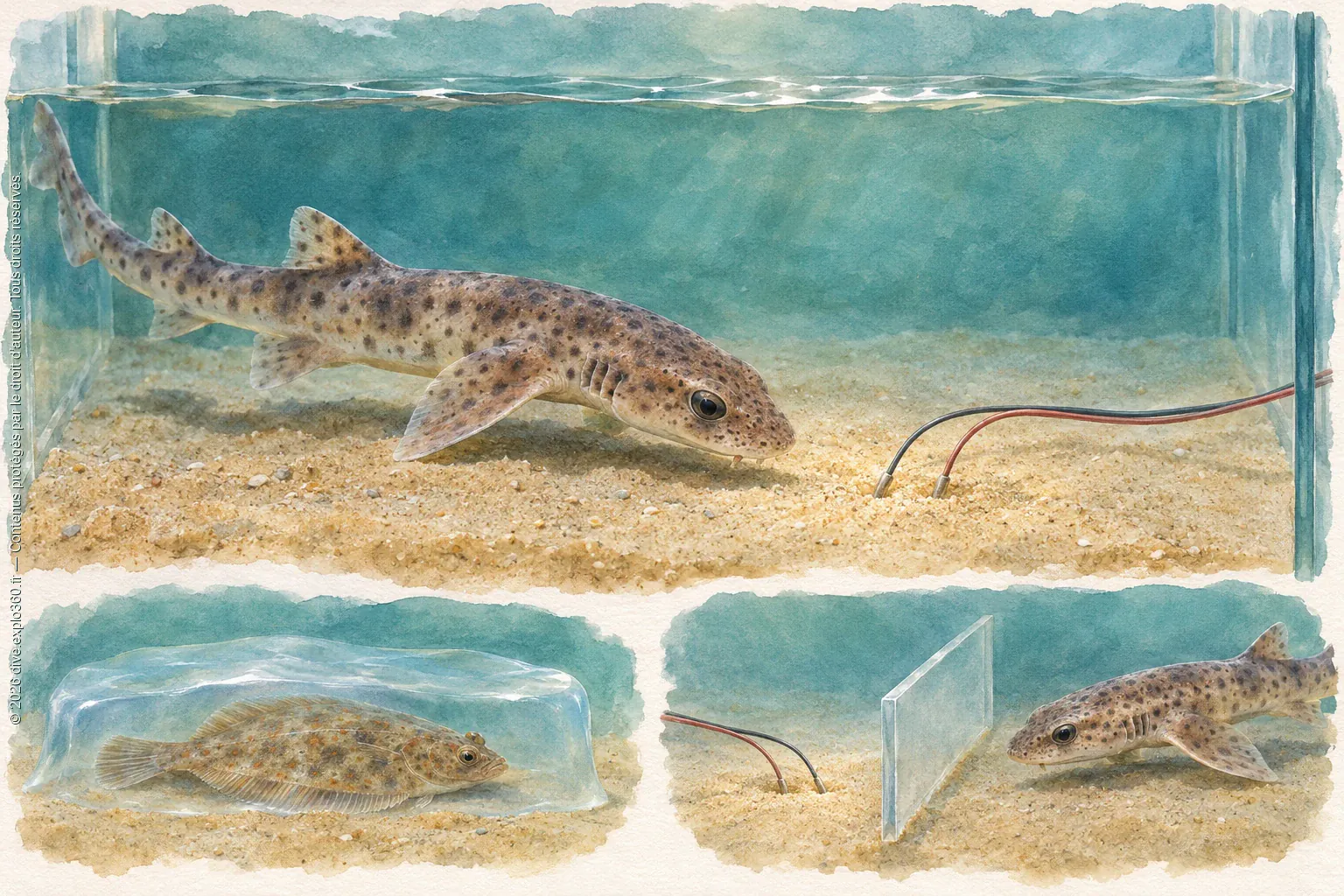
In 1971, Adrianus Kalmijn tested small-spotted catsharks and thornback rays finding a plaice under sand. A jelly barrier restricted smells but let electrical signals through. They could still find the fish. When an insulating barrier blocked the field, their attempts to catch it stopped.
Searching just above the sand
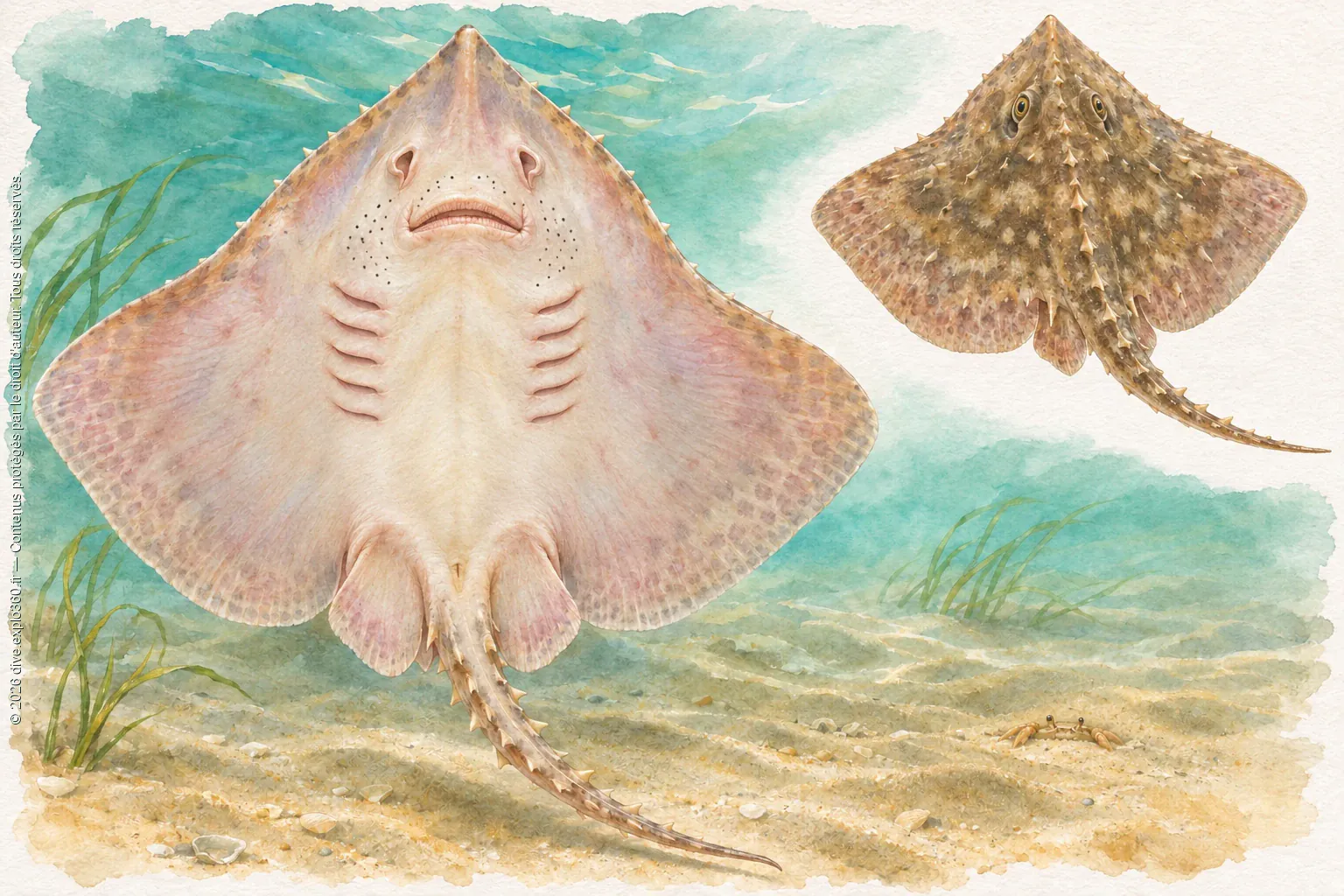
Many rays have eyes on top and a mouth underneath. Prey below the body can be out of sight. As a ray glides low, pores near its snout and mouth come close to hidden animals.
Fins or water movements around the mouth can shift sand, depending on the species. Crabs, worms, shellfish and fish become easier to reach. The ray’s body and sensors work together.
GO FURTHER WITH AMIGANSEAU
Continue reading
Discover full species guides, in-depth content and interactive tools available with your licence.
Dive.Explo360 is an independent, self-funded nonprofit. Every licence helps us create new content, improve our teaching tools and keep some of our resources free and ad-free.
Choose a licence that suits your needs for personal, educational or professional use.
Open-access resources remain available without a subscription.