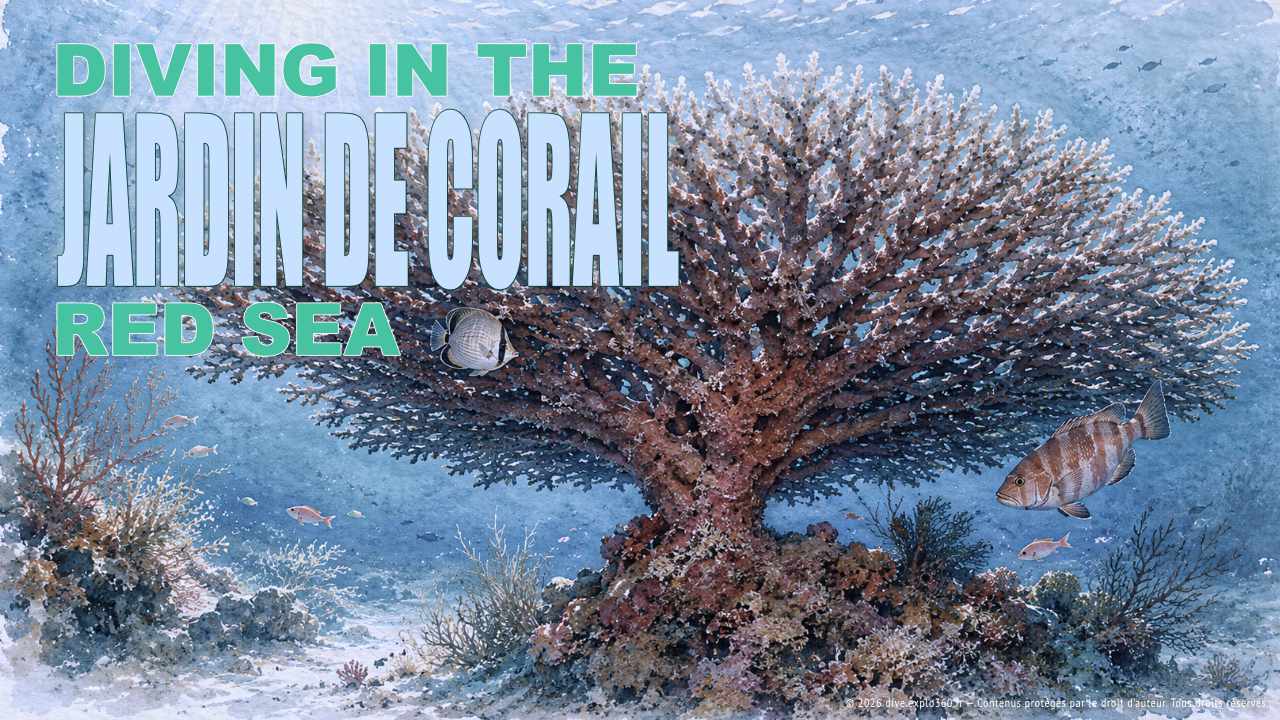
A symbiosis that feeds the reef
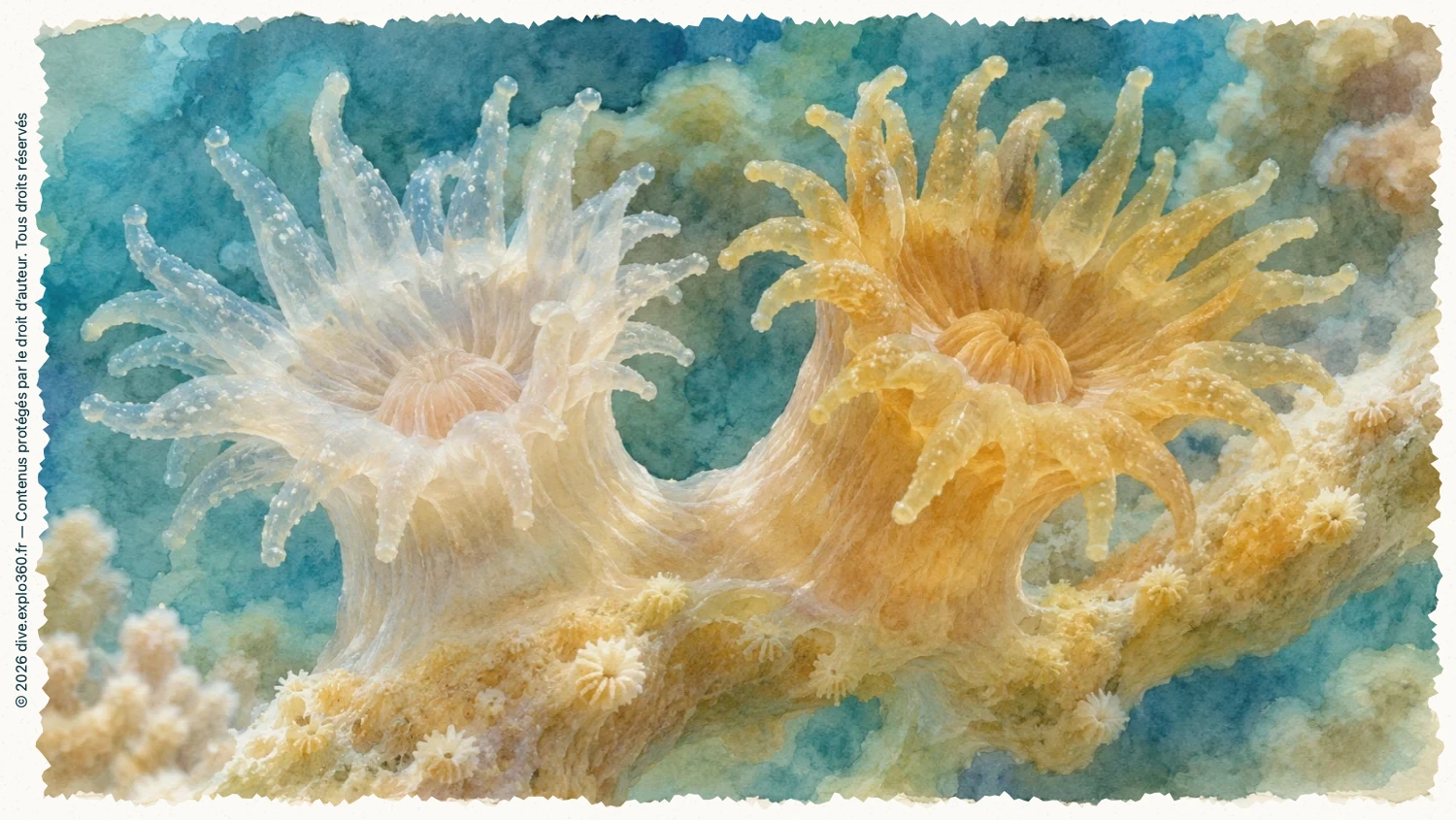
Algae in the family Symbiodiniaceae live inside polyp cells. They photosynthesise and pass some of the organic compounds they make to the coral. Their pigments give many colonies brown or golden tones. The coral’s own proteins account for some other colours.
From heat stress to bleaching
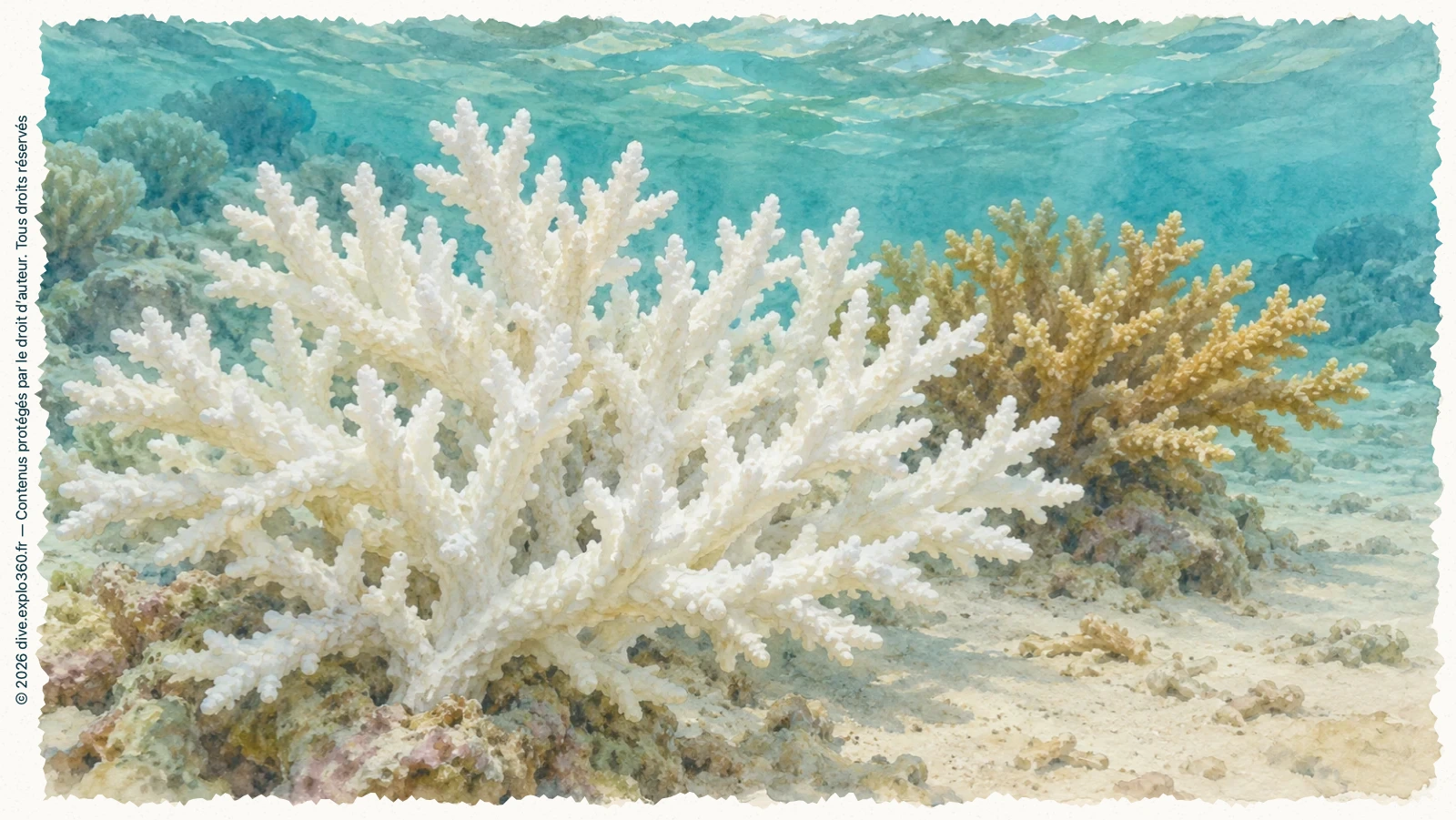
How much heat the coral experiences and for how long both matter. Strong light can compound the effects of heat on photosynthesis and increase oxidative stress. Several cellular processes can reduce the number of symbionts, and a loss of pigment can also expose the colour of the skeleton through the tissue.
Why does it look white?
Bleaching involves a reduction in symbionts or their pigments. As the tissue becomes more transparent, the skeleton underneath shows through.
GO FURTHER WITH AMIGANSEAU
Continue reading
Discover full species guides, in-depth content and interactive tools available with your licence.
Dive.Explo360 is an independent, self-funded nonprofit. Every licence helps us create new content, improve our teaching tools and keep some of our resources free and ad-free.
Choose a licence that suits your needs for personal, educational or professional use.
Open-access resources remain available without a subscription.