The surge beneath the waves
Watch a wave approach and it seems as though a body of water is travelling with it. Away from breaking waves, that is not quite what happens.
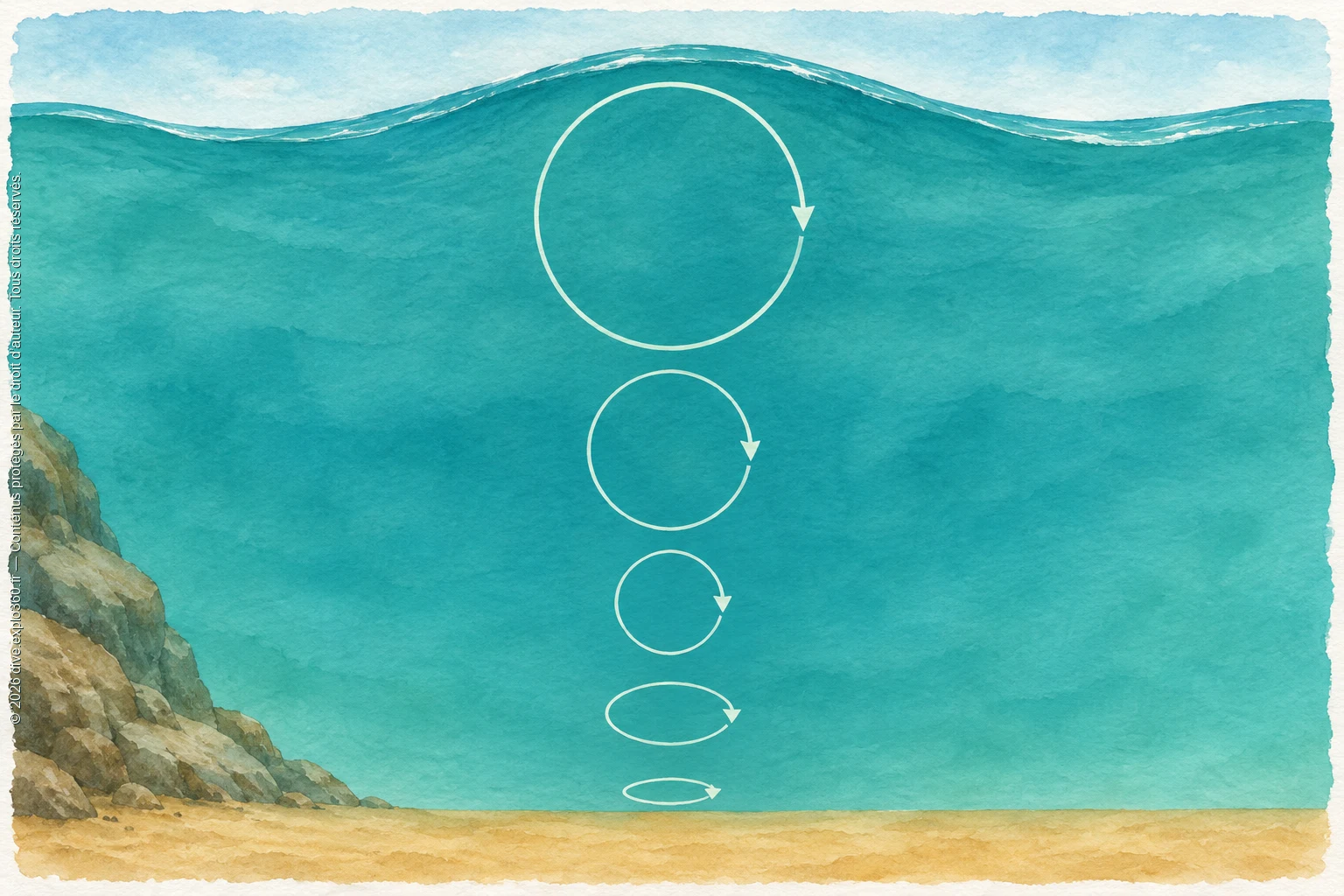
Swell mainly carries energy. Water particles move in roughly circular paths that get smaller with depth. Near the seabed, those paths flatten into ellipses.
Divers recognise the resulting surge: forwards towards a rock, then back again. Even on a fairly calm day, leftover swell can produce this motion without a steady current.
How deep the movement reaches depends partly on wavelength. Long swell from a distant storm can disturb deeper seabeds than short waves raised by local winds.
There is no single depth at which every storm loses its influence.
A seabed on the move
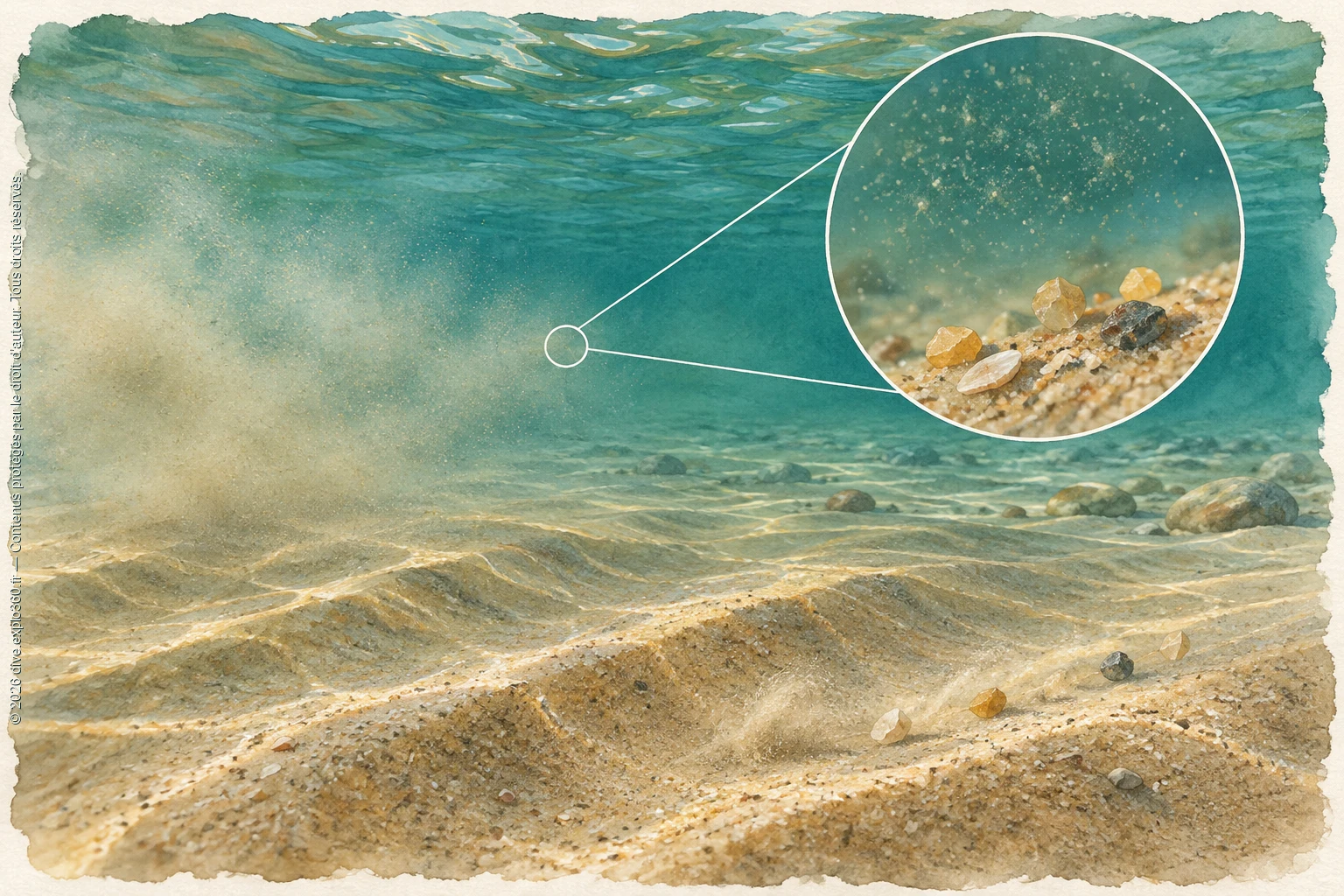
Sand looks solid enough beneath our feet on a beach. Underwater, sufficient water movement can set the grains travelling.
Fine grains rise into suspension. Coarser grains roll or hop along the bottom. Stronger movement can shift gravel and pebbles too.
The seabed begins to change shape.
A rock emerges where sand has been stripped away. Elsewhere, a hollow fills. Attached animals may be buried, while animals that lived beneath the sand are suddenly exposed.
The small ridges divers see on sandy bottoms record some of this movement. These sediment ripples form under waves or currents.
Their direction, spacing and shape reflect both the grains and the flow that moved them.
After a severe storm, a familiar sandy patch may have a quite different set of contours.
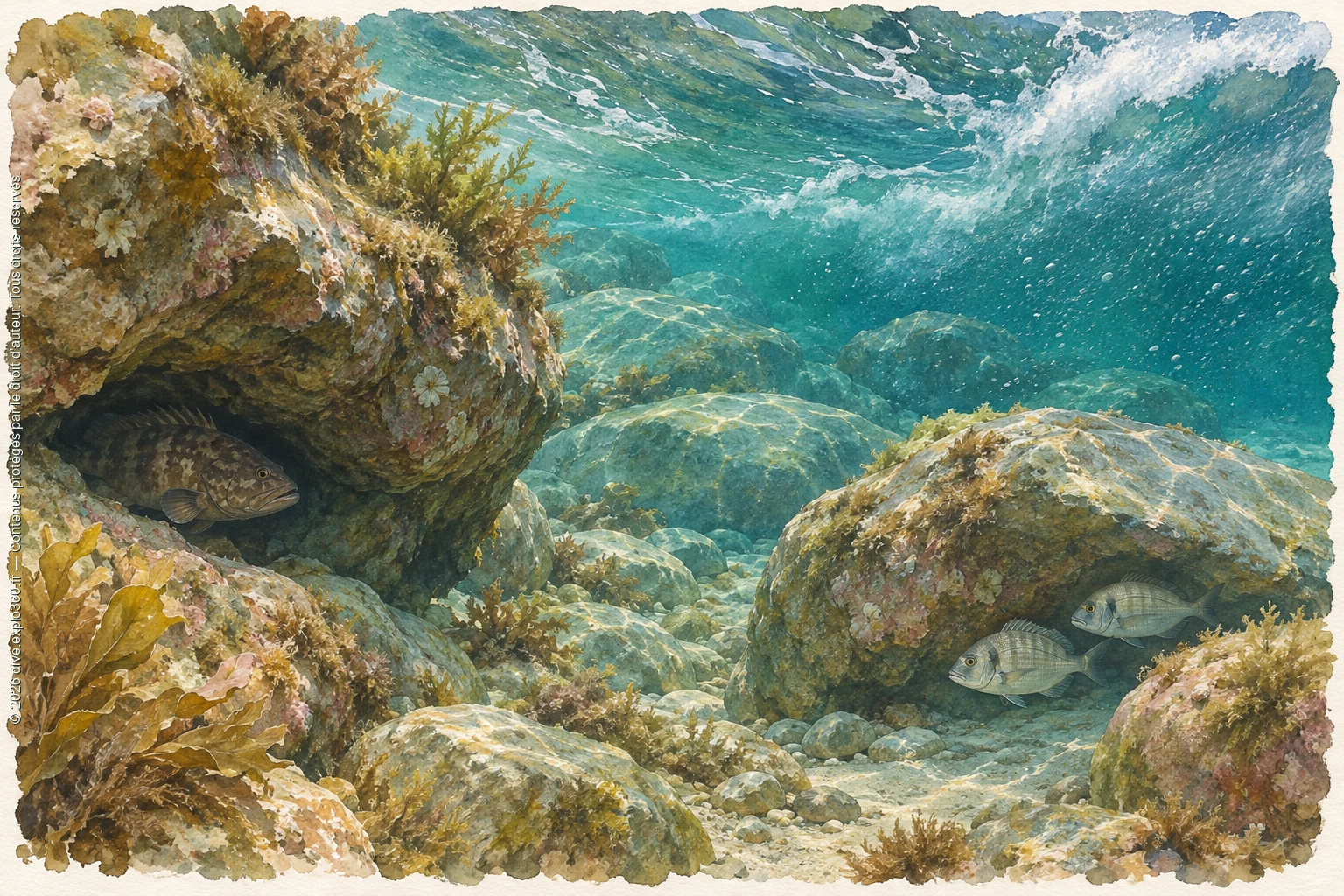
Where do fish shelter?
For a fish above a rocky bottom, holding position becomes harder as the surge strengthens. Repeated changes of direction cost energy.
A small feature of the seabed can make a big difference.
Behind a boulder, inside a hollow or deep in a crack, movement may be much weaker. Just a few tens of centimetres can separate rough water from a calmer pocket.
A fish using that shelter can save effort and reduce the risk of being thrown against the bottom.
Others head for less exposed places or deeper water. Species, size, swimming ability and available habitat influence the response.
Acoustic tracking shows some fish changing their movements during powerful storms, while others stay in their usual area.
There is no single fish strategy. A bottom-dwelling goby, a grouper with several rocky shelters and a shoal of barracuda in open water face very different choices.
Can fish sense a storm approaching?
The first clues can arrive before the largest waves.
Air pressure may fall, swell builds, and water movements change. Waves and shifting sediment alter the underwater soundscape too.
Fish have several ways of detecting changes around them.
The lateral line senses certain water movements; the inner ear contributes to hearing and balance. In some species, the swim bladder also contributes to pressure sensitivity.
In Florida in 2001, researchers tracking young blacktip sharks, Carcharhinus limbatus, noticed a striking movement as Tropical Storm Gabrielle approached.
The sharks left their usual shallow-water area for deeper water, then returned after the storm.
Falling atmospheric pressure was suggested as one possible trigger.

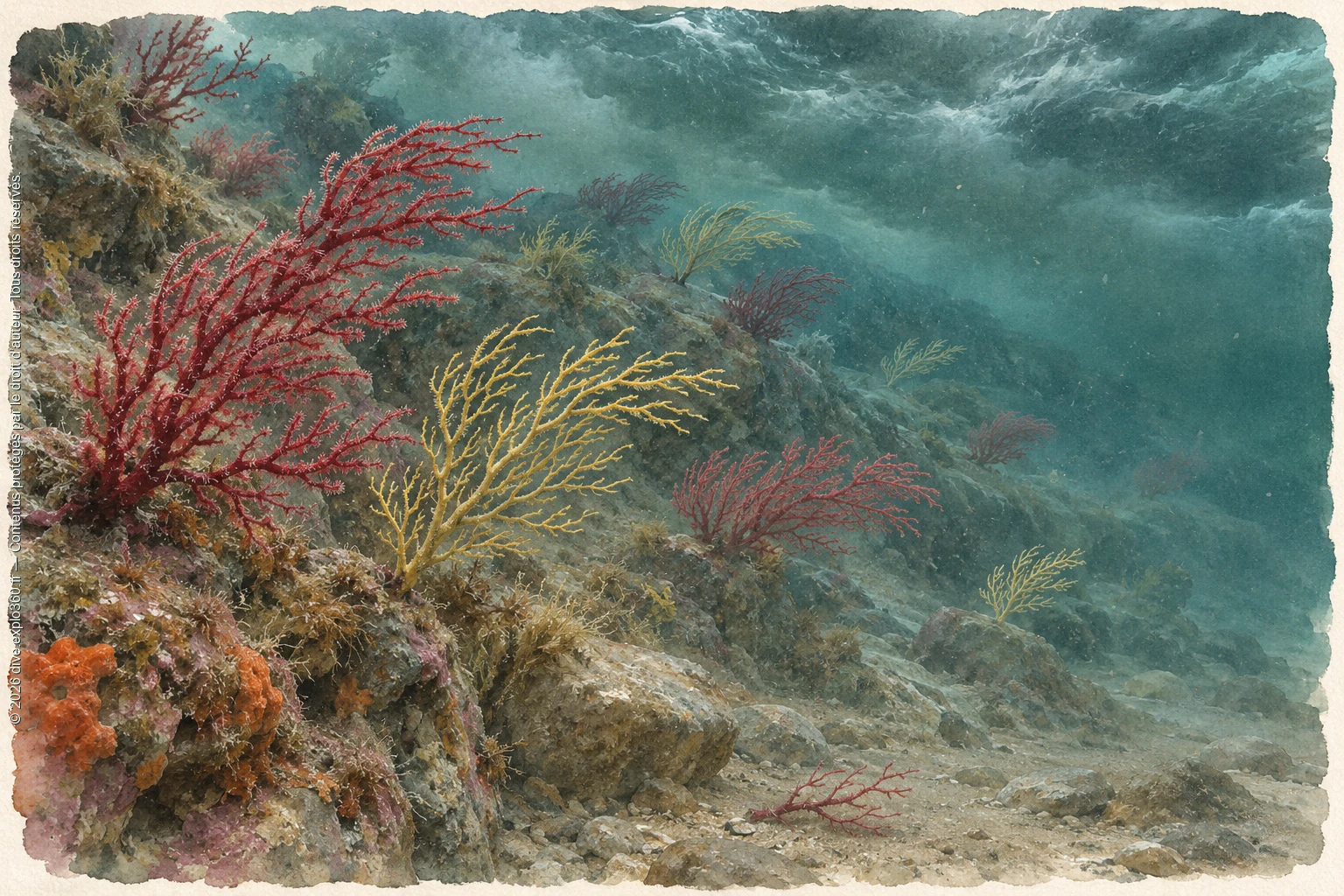
Bend, break or hold on
Red sea fans, Paramuricea clavata, and yellow sea fans, Eunicella cavolini, spread their branches across Mediterranean drop-offs. They look vulnerable to a strong surge.
Their supporting axes are not entirely rigid, however. They can flex in moving water.
As the flow strengthens, leaning branches reduce some of the resistance they present.
There is a limit to that flexibility.
A severe storm can snap branches or tear away whole colonies. Flying sediment and debris can scrape the living tissue covering the skeleton.
Size, orientation, the strength of the attachment and nearby rock features all affect the outcome.
Decades of growth can be damaged in a few hours.
Tropical branching corals face similar forces, but their rigid limestone skeletons behave differently. Branches can break and colonies overturn.
Compact, massive forms often resist better, though they are not immune.
A meadow that bends with the surge
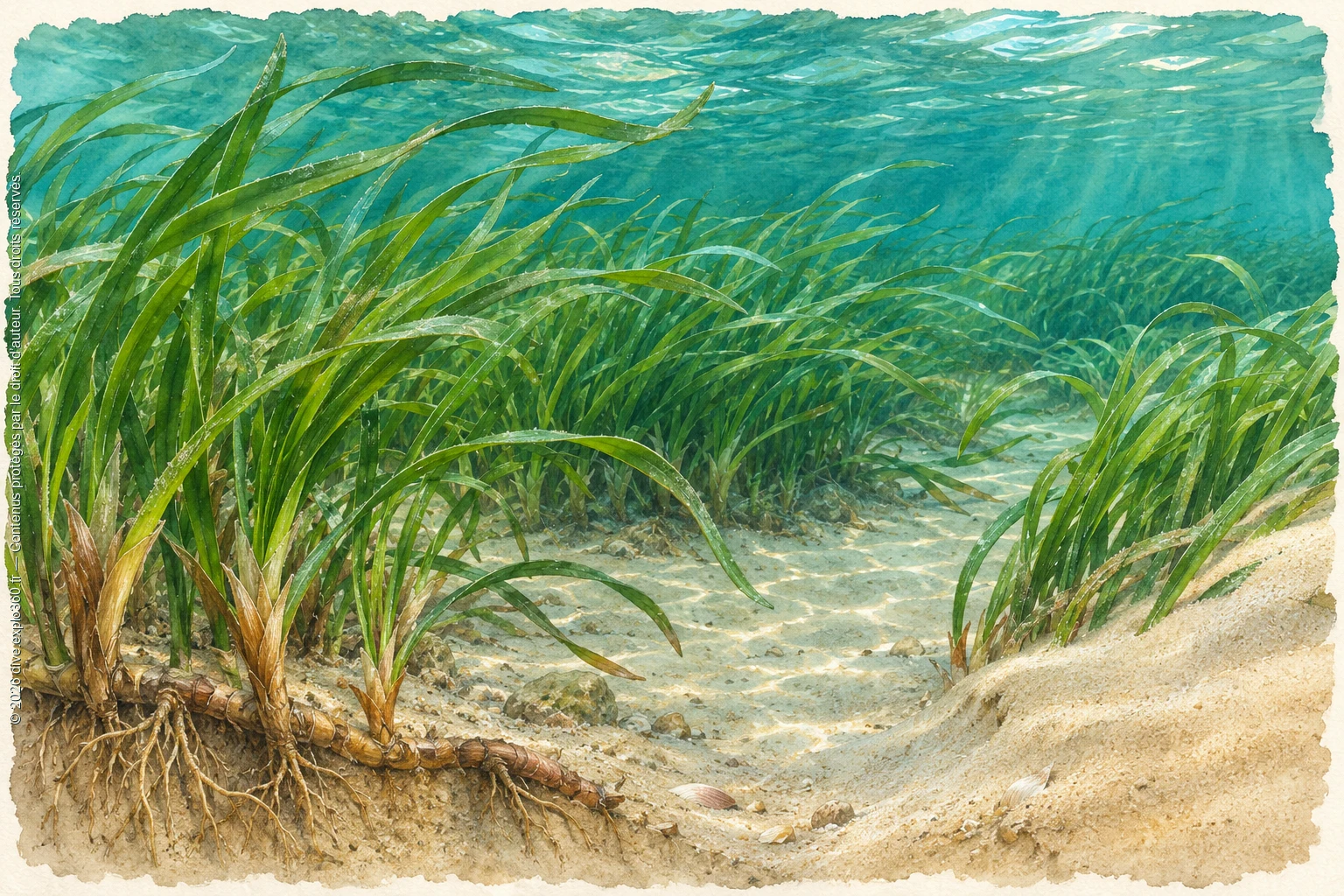
In shallow Mediterranean meadows, Posidonia seagrass, also called Neptune grass, can face powerful water movements.
Long leaves bend almost flat, then lift as the surge reverses. Flexibility lets them yield to forces that would break a rigid structure.
The canopy slows some flows, while roots and rhizomes help hold the sediment in place.
Yet even a flexible meadow has limits.
Leaves may be torn away, rhizomes exposed or whole patches removed. Deposits elsewhere can bury plants too deeply to survive.
At the end of October 2018, a severe storm struck Italy’s Ligurian coast. Two meadows had recently been surveyed, giving scientists a record of their condition before the event.
Living cover in those meadows was roughly halved. Erosion and burial affected different areas according to their exposure to swell.
Posidonia rhizomes grow slowly. Where conditions still allow recovery, losses suffered in hours may take decades to repair.
GO FURTHER WITH AMIGANSEAU
Continue reading
Discover full species guides, in-depth content and interactive tools available with your licence.
Dive.Explo360 is an independent, self-funded nonprofit. Every licence helps us create new content, improve our teaching tools and keep some of our resources free and ad-free.
Choose a licence that suits your needs for personal, educational or professional use.
Open-access resources remain available without a subscription.