The surge beneath the waves
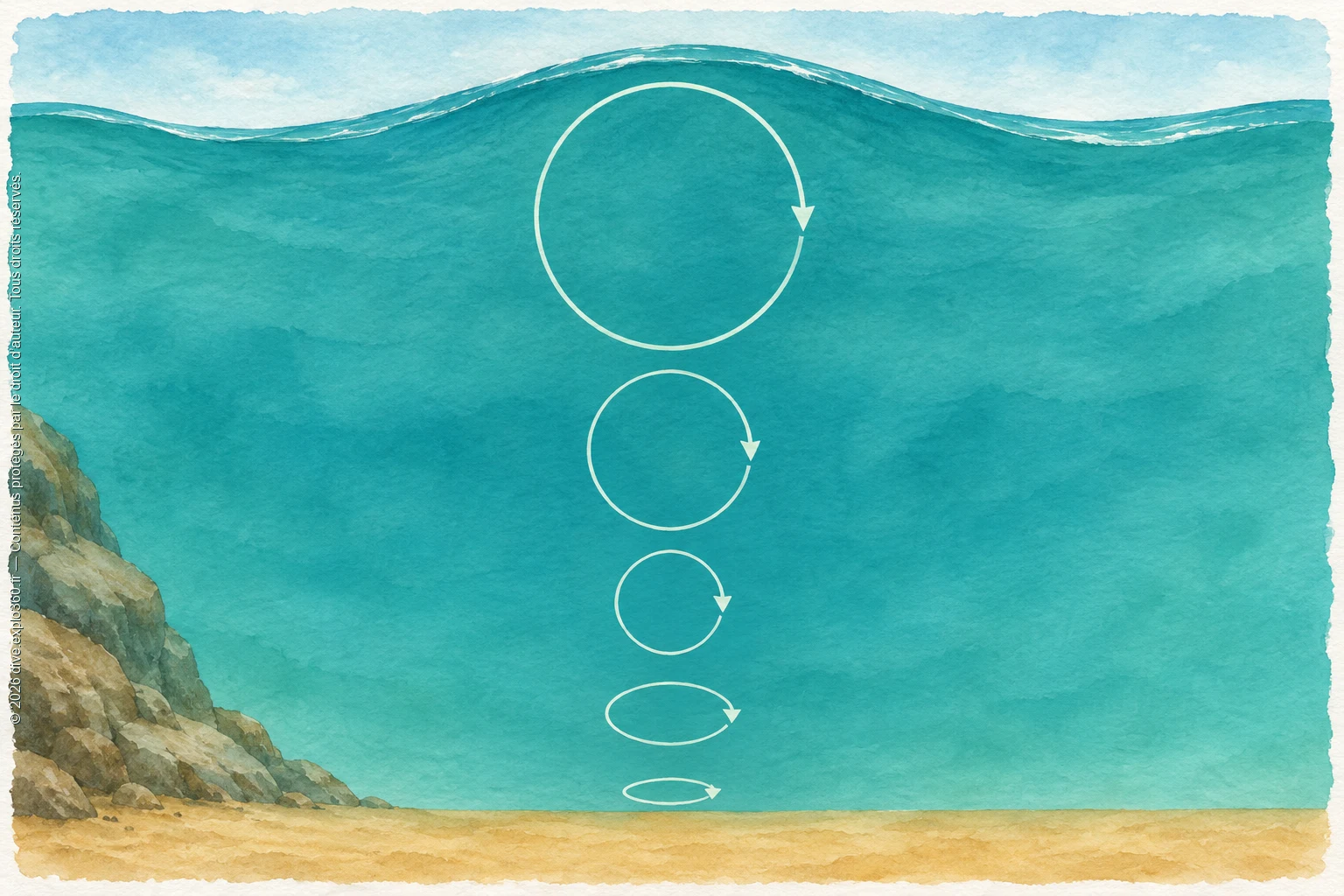
Away from breaking waves, swell mainly transfers energy rather than carrying a body of water along with each crest. Water particles follow roughly circular paths of decreasing size with depth. Near the seabed, these paths flatten into ellipses.
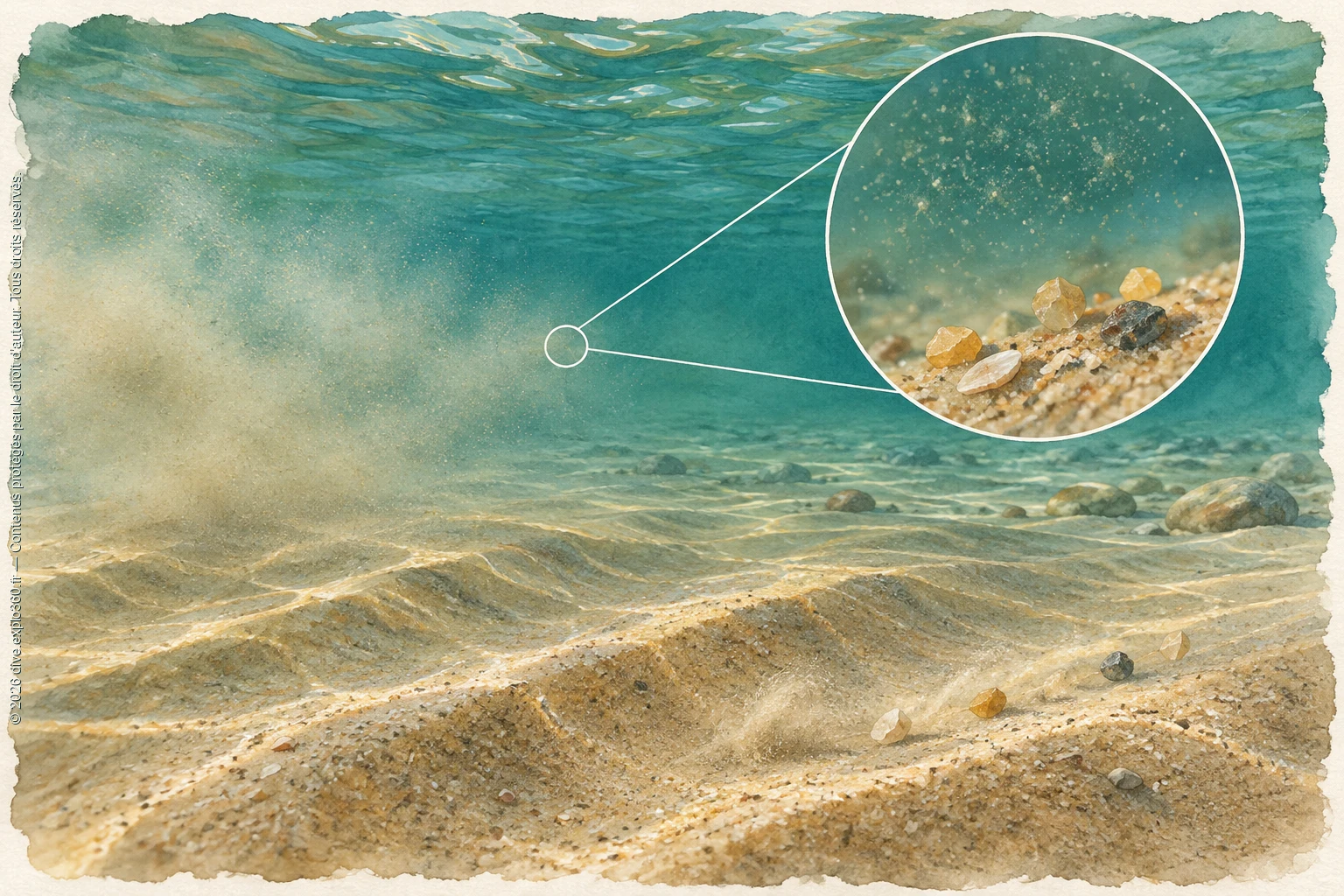
A seabed on the move
Fine grains enter suspension; larger ones roll or move in short hops. Stronger flow can shift gravel and pebbles.
Erosion exposes rock or buried animals, while deposition fills hollows and can smother attached organisms. Sediment ripples record wave or current action, with direction, spacing and shape influenced by grain size and flow. The seabed’s contours may change considerably.
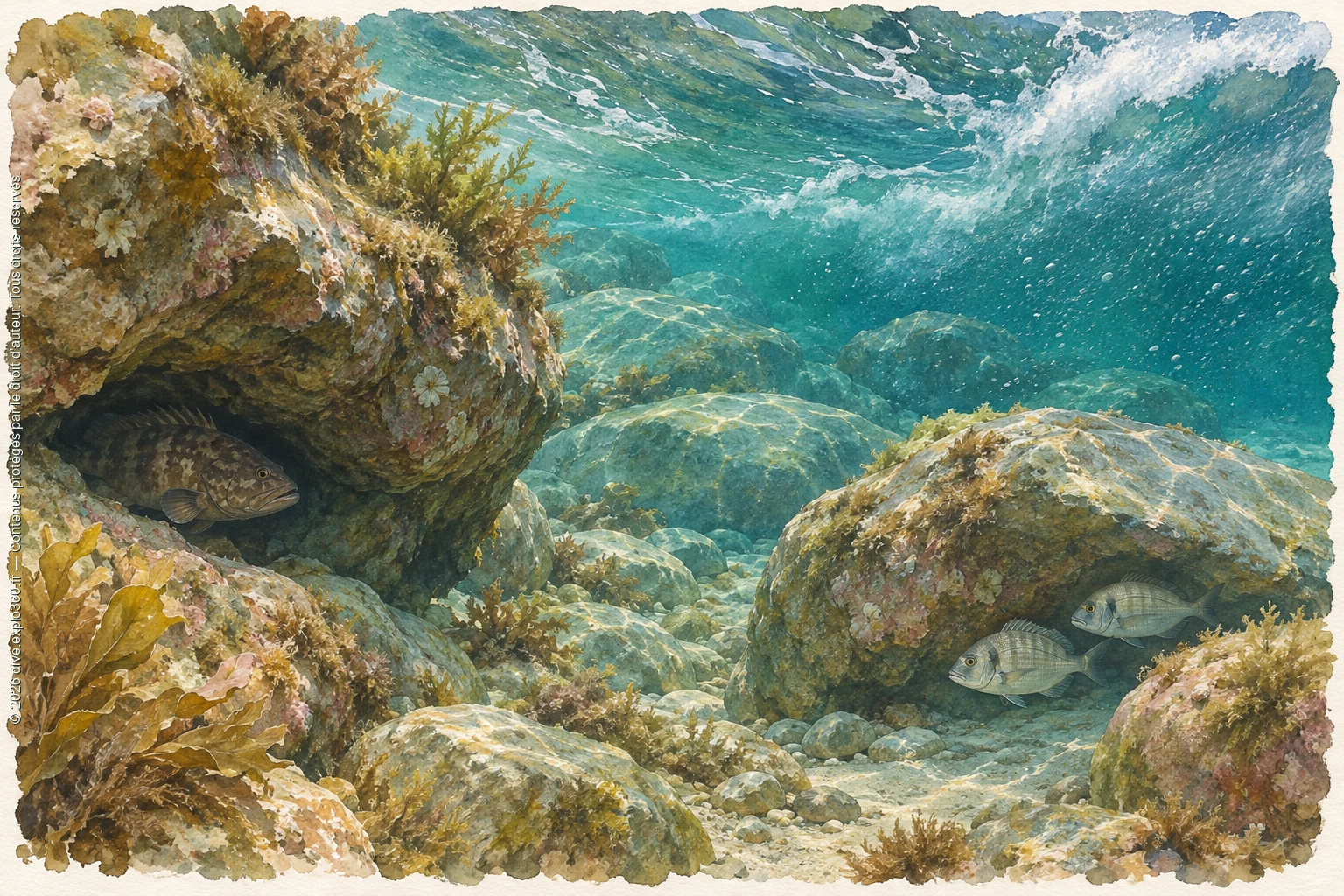
Fish seek shelter, or move away
Holding position in a reversing flow costs energy. Yet a crack, cavity or the lee of a boulder may provide calmer water just tens of centimetres from an exposed area.
Refuges reduce effort and collisions. Other fish seek deeper or less exposed places. Acoustic tracking shows varied responses, including fish staying put. Species, size, swimming ability and habitat matter: a goby on the bottom, a grouper using crevices and barracuda in open water face different constraints.
Which signals come before the storm?
Physical clues may precede the strongest surge. Atmospheric pressure can fall, while swell and the underwater soundscape change. The lateral line detects certain water movements; the inner ear contributes to hearing and balance. In some species, the swim bladder also contributes to pressure sensitivity.

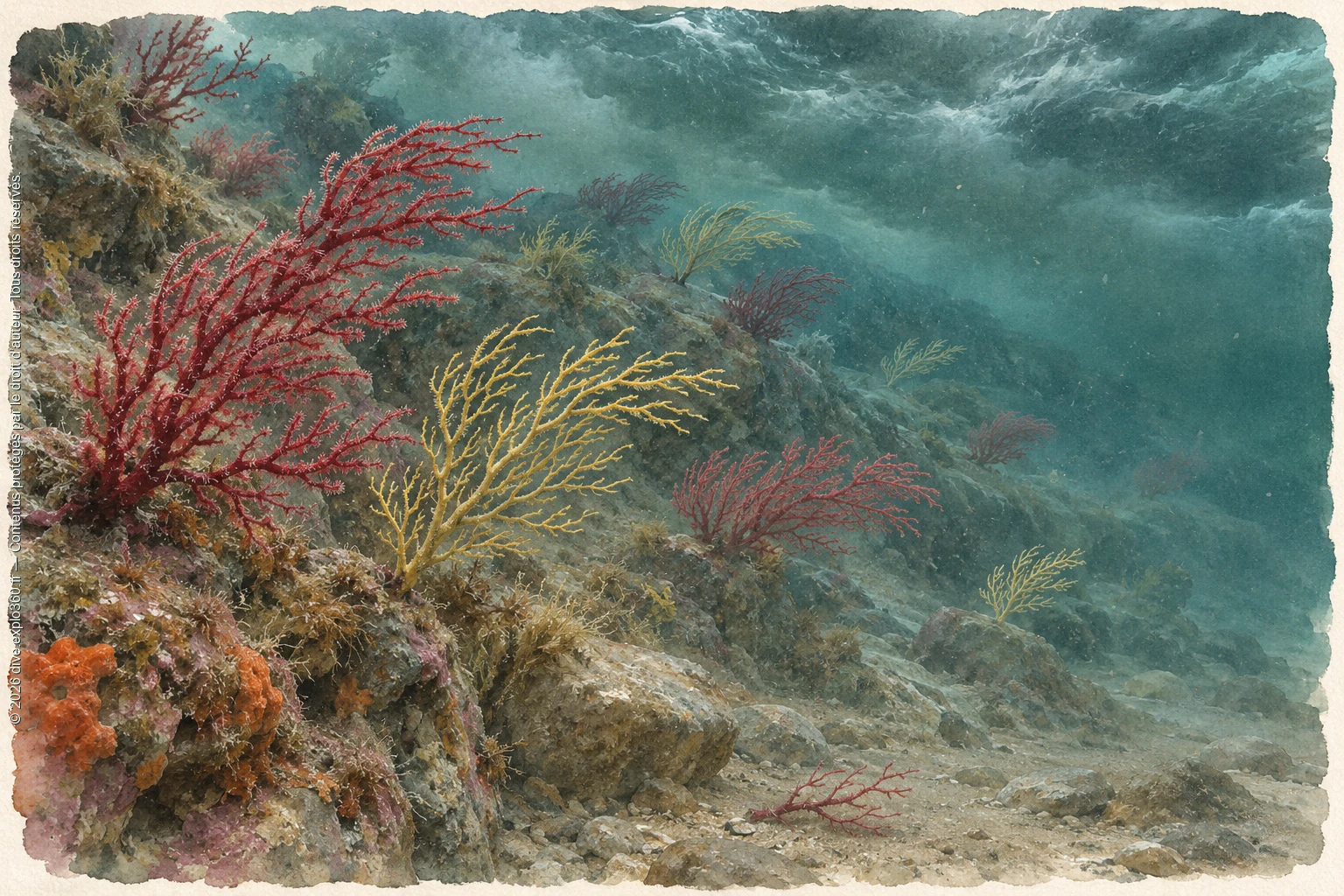
Bend, break or hold on
The supporting axes of red sea fans, Paramuricea clavata, and yellow sea fans, Eunicella cavolini, can flex. Branches lean with the flow and reduce some of the resistance they present.
Excessive force still breaks branches or detaches whole colonies. Debris can abrade tissue. Size, orientation, attachment and local rock features influence resistance; decades of growth may be damaged in hours. Tropical branching corals face similar forces with rigid limestone skeletons. Massive forms often resist better, but remain vulnerable.
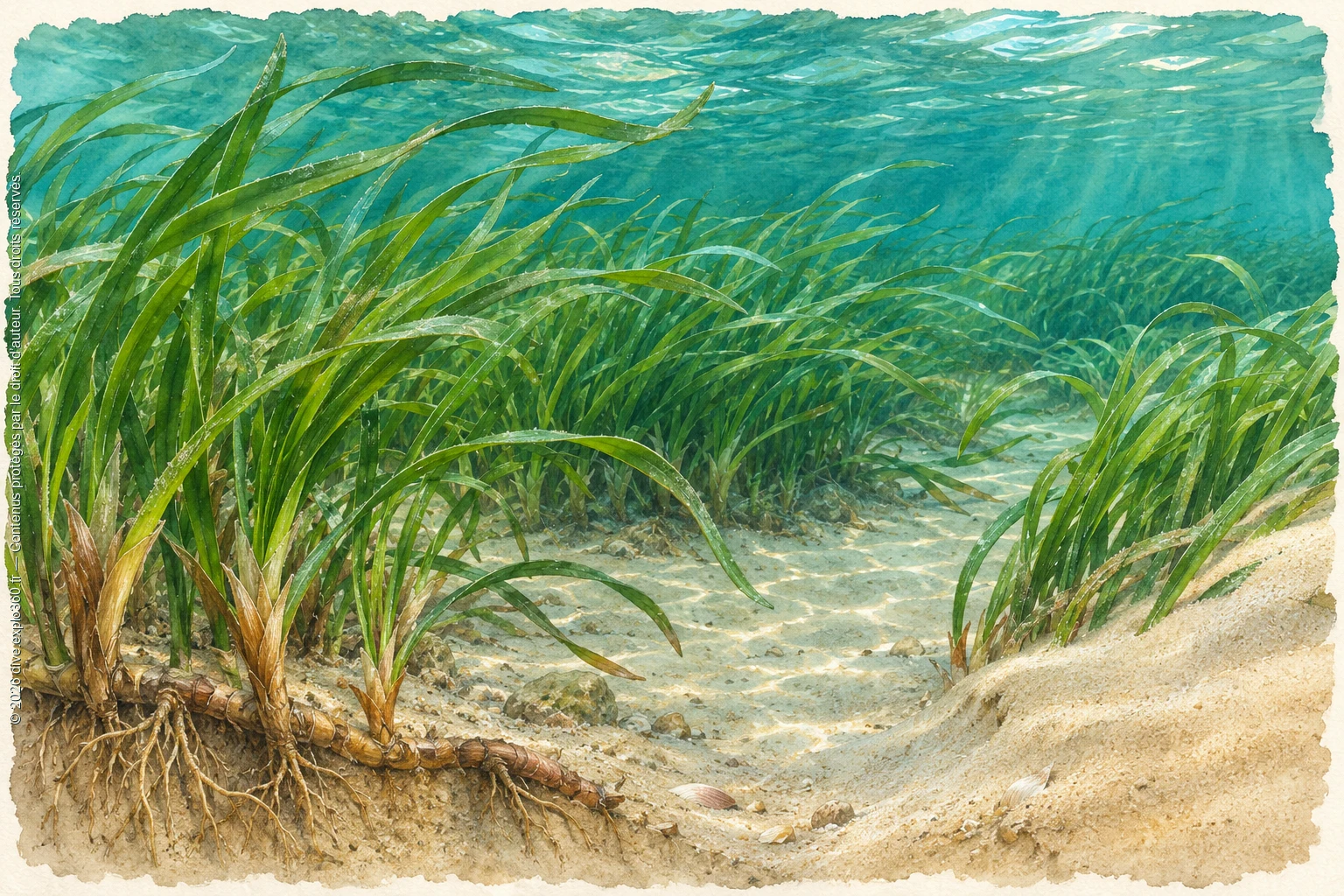
A meadow that bends with the surge
Posidonia seagrass leaves bend with the flow, then rise as it reverses. This flexibility reduces mechanical forces. The canopy slows some flows, and roots and rhizomes stabilise sediment.
Storms can nevertheless remove plants, expose rhizomes or bury them. After the October 2018 storm in Liguria, two meadows surveyed shortly beforehand lost roughly half their living cover. This figure applies to those meadows. Erosion and burial varied with exposure. Slow rhizome growth can mean decades of recovery, if conditions remain suitable.
GO FURTHER WITH AMIGANSEAU
Continue reading
Discover full species guides, in-depth content and interactive tools available with your licence.
Dive.Explo360 is an independent, self-funded nonprofit. Every licence helps us create new content, improve our teaching tools and keep some of our resources free and ad-free.
Choose a licence that suits your needs for personal, educational or professional use.
Open-access resources remain available without a subscription.