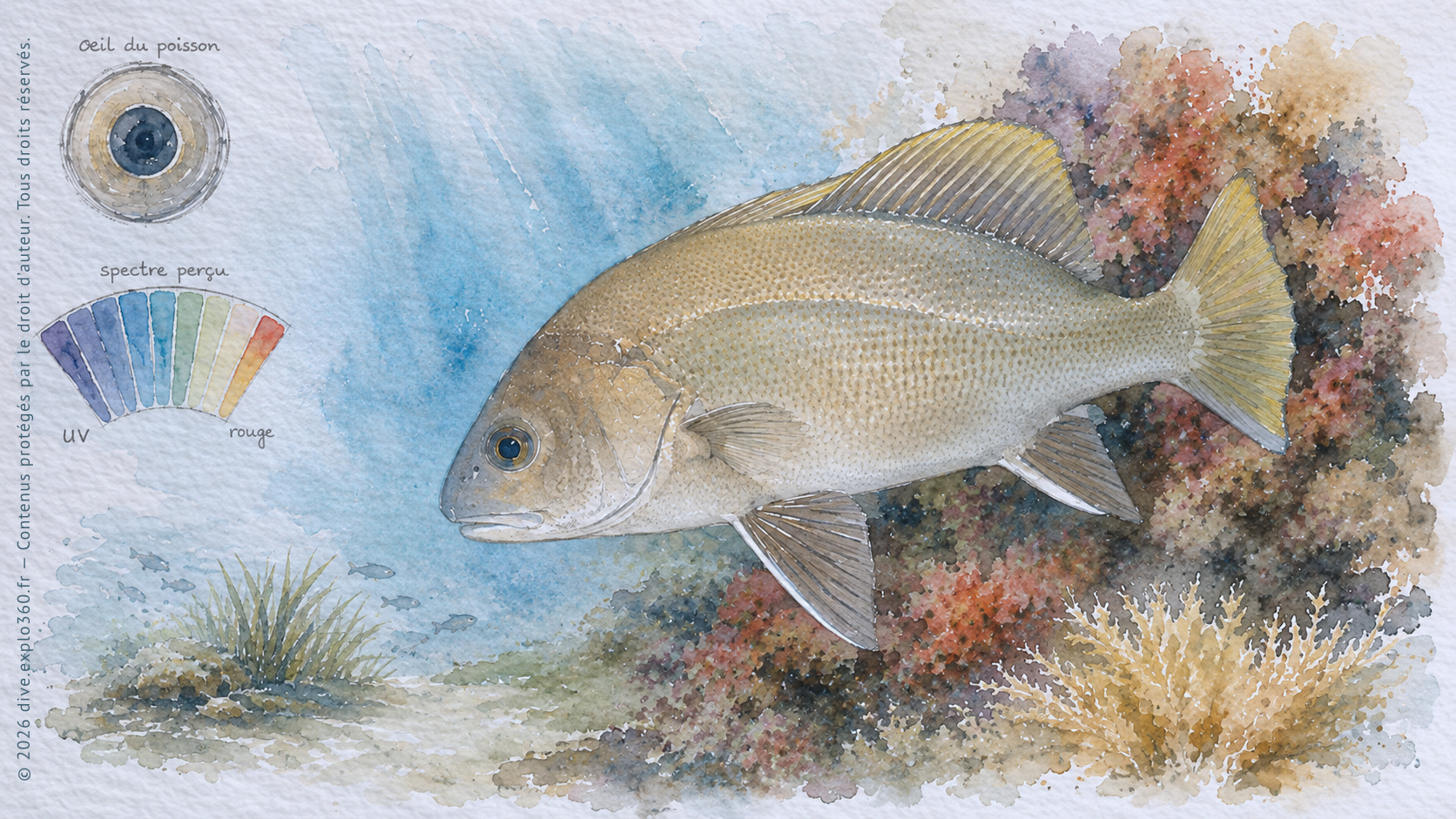
WHAT DO FISH SEE UNDERWATER?
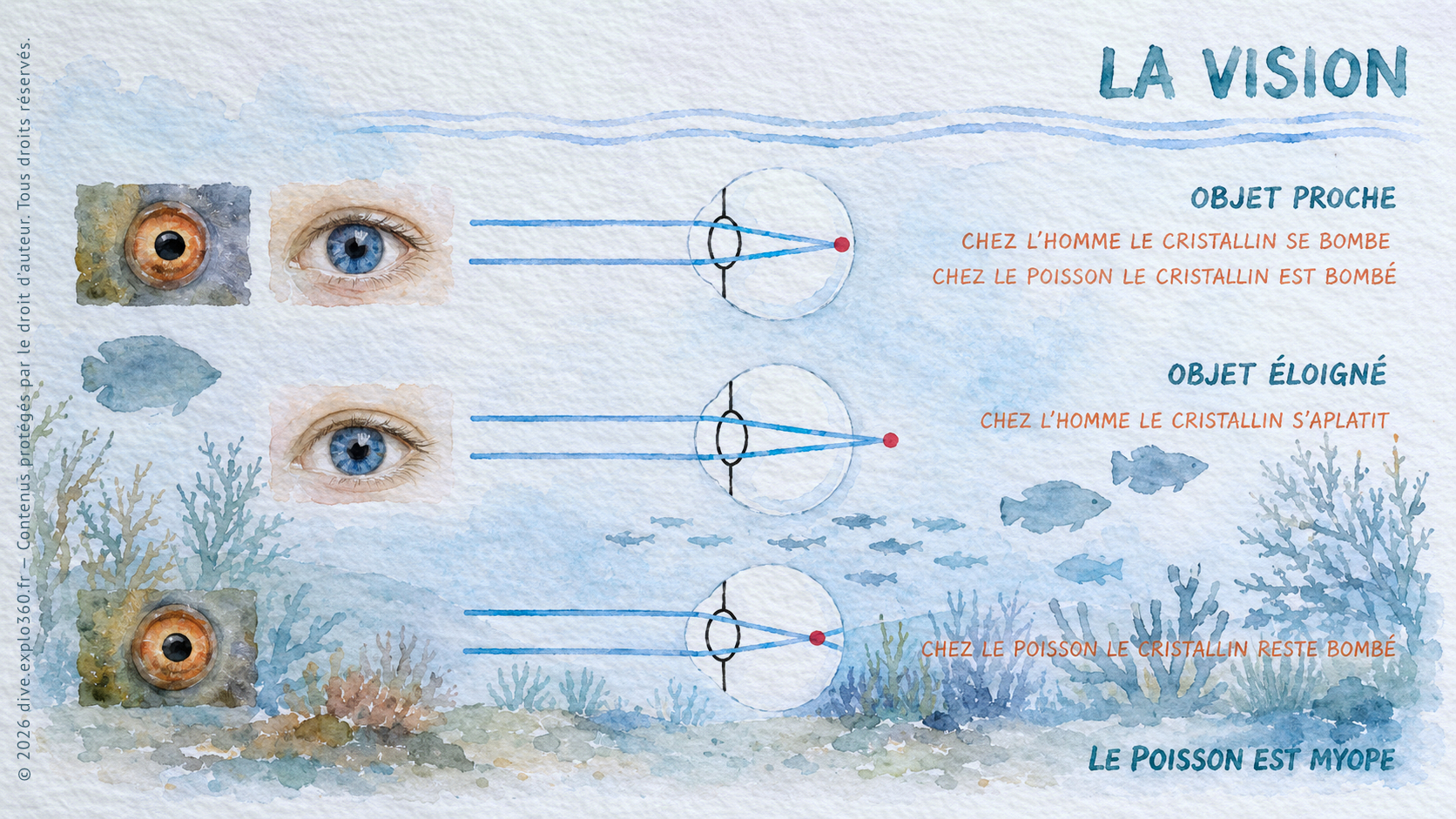
The nearly spherical lens of many fish focuses light on the retina, the light-sensitive layer at the back of the eye. Many species adjust their focus by moving the lens relative to the retina. In humans, the lens changes shape.
A relatively rigid lens can still bring a distant object into focus. Whether its details are visible also depends on the eye’s resolving power and on how much light and suspended material are in the water.
FIELD OF VIEW
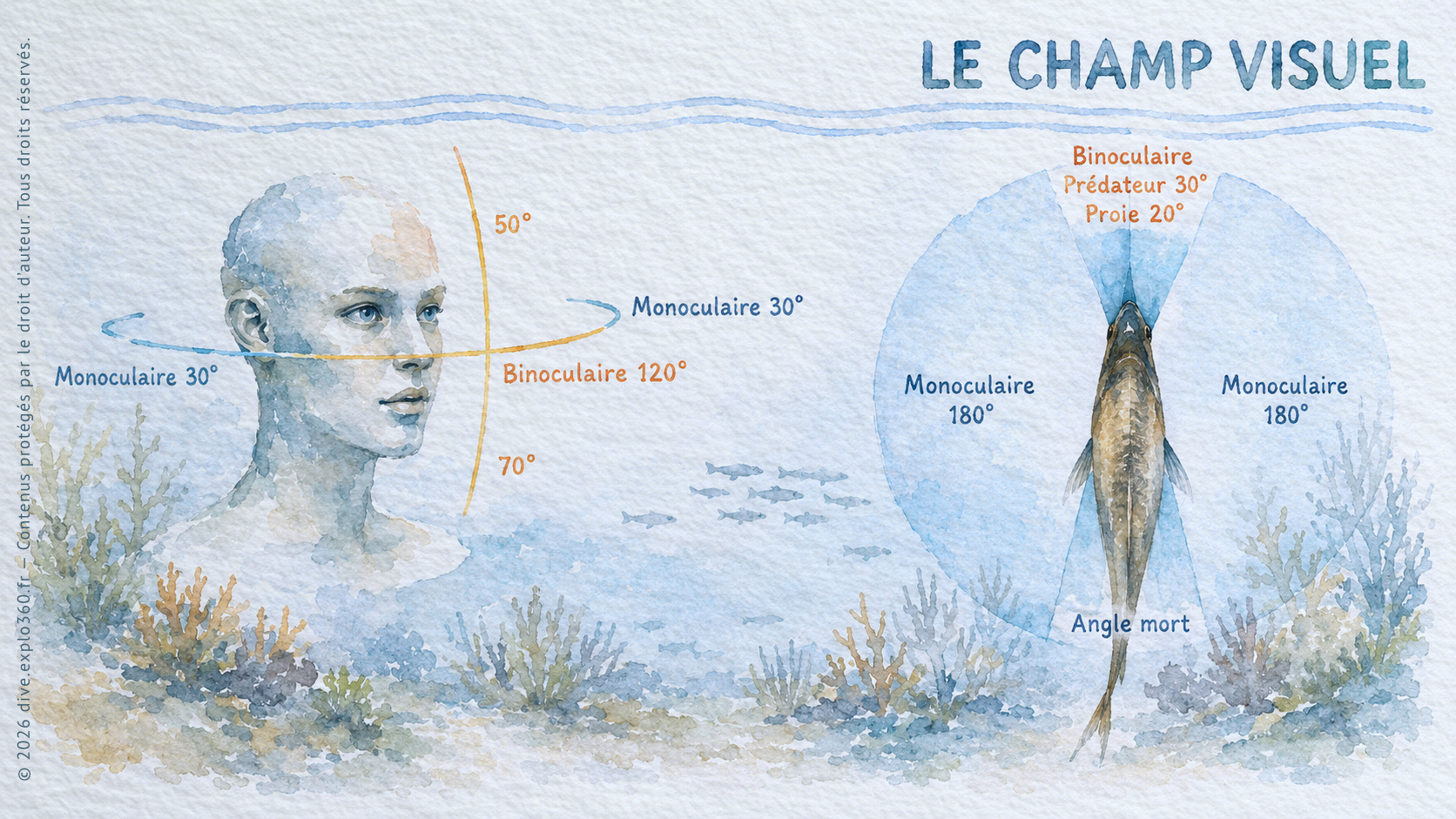
Eyes on the sides of the head give many fish a wide field of view. The extent depends on the species and on where its eyes sit.
The area where the two views overlap is the binocular field. It can help a fish locate prey. Movement and other visual cues can also help it judge distance.
Through a Predator’s Eyes
GO FURTHER WITH AMIGANSEAU
Continue reading
Discover full species guides, in-depth content and interactive tools available with your licence.
Dive.Explo360 is an independent, self-funded nonprofit. Every licence helps us create new content, improve our teaching tools and keep some of our resources free and ad-free.
Choose a licence that suits your needs for personal, educational or professional use.
Open-access resources remain available without a subscription.
Explore the same world