A reservoir of carbonate
Reef-building corals form calcium carbonate skeletons. Waves and storms break off pieces, and boring organisms weaken the reef by tunnelling into it. Even a worn grain can retain features that reveal its origin.
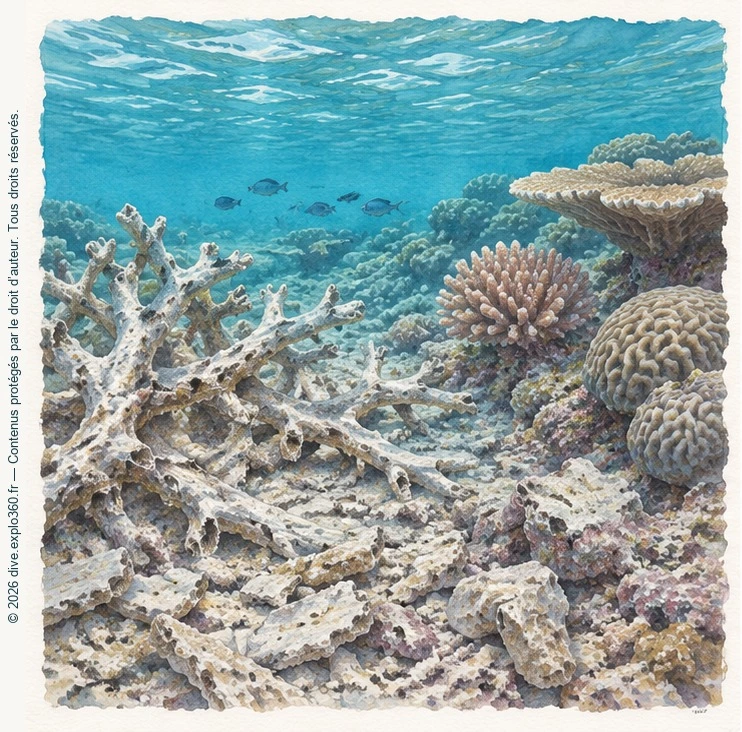
Bioerosion by fish and sea urchins
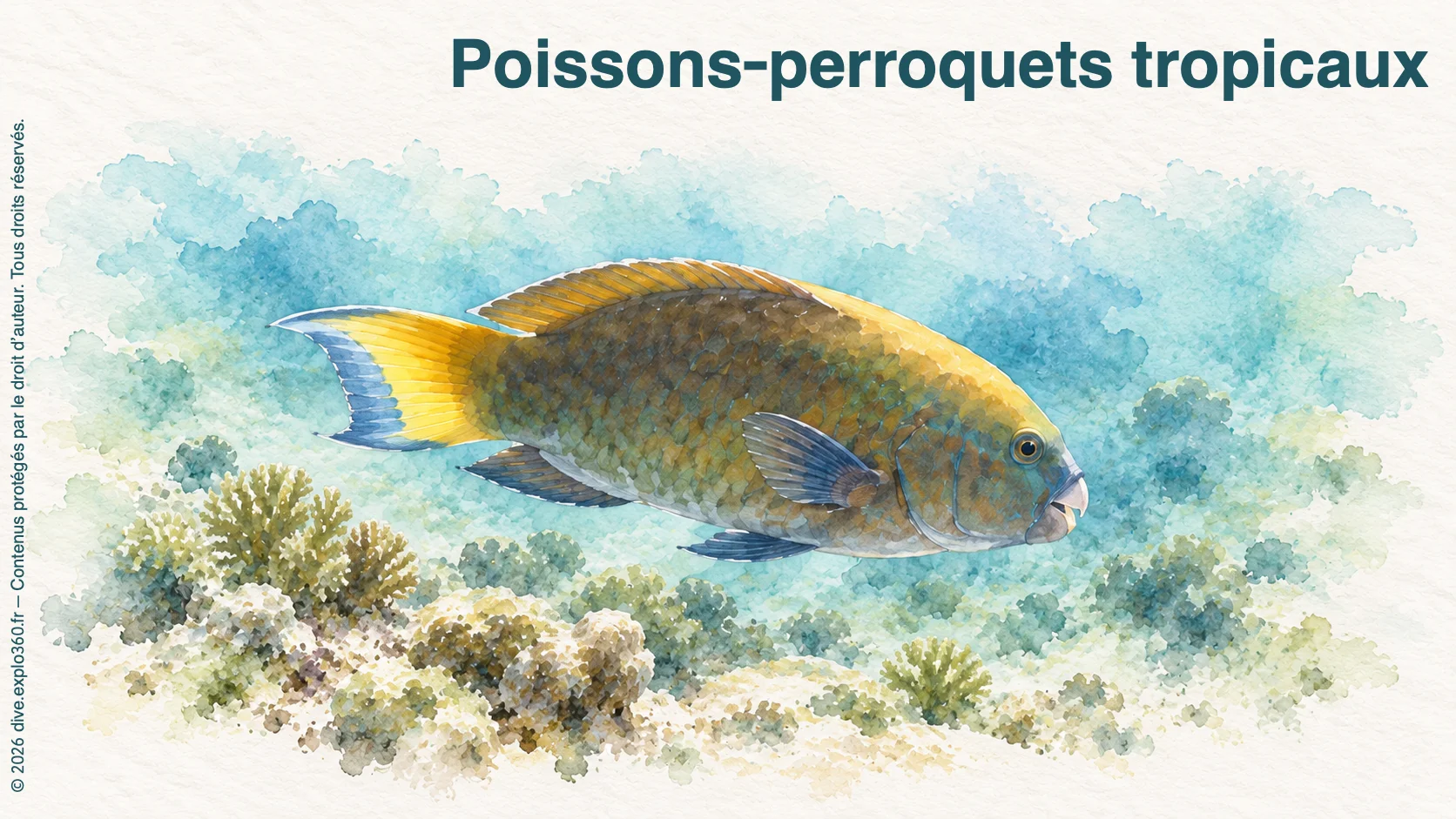
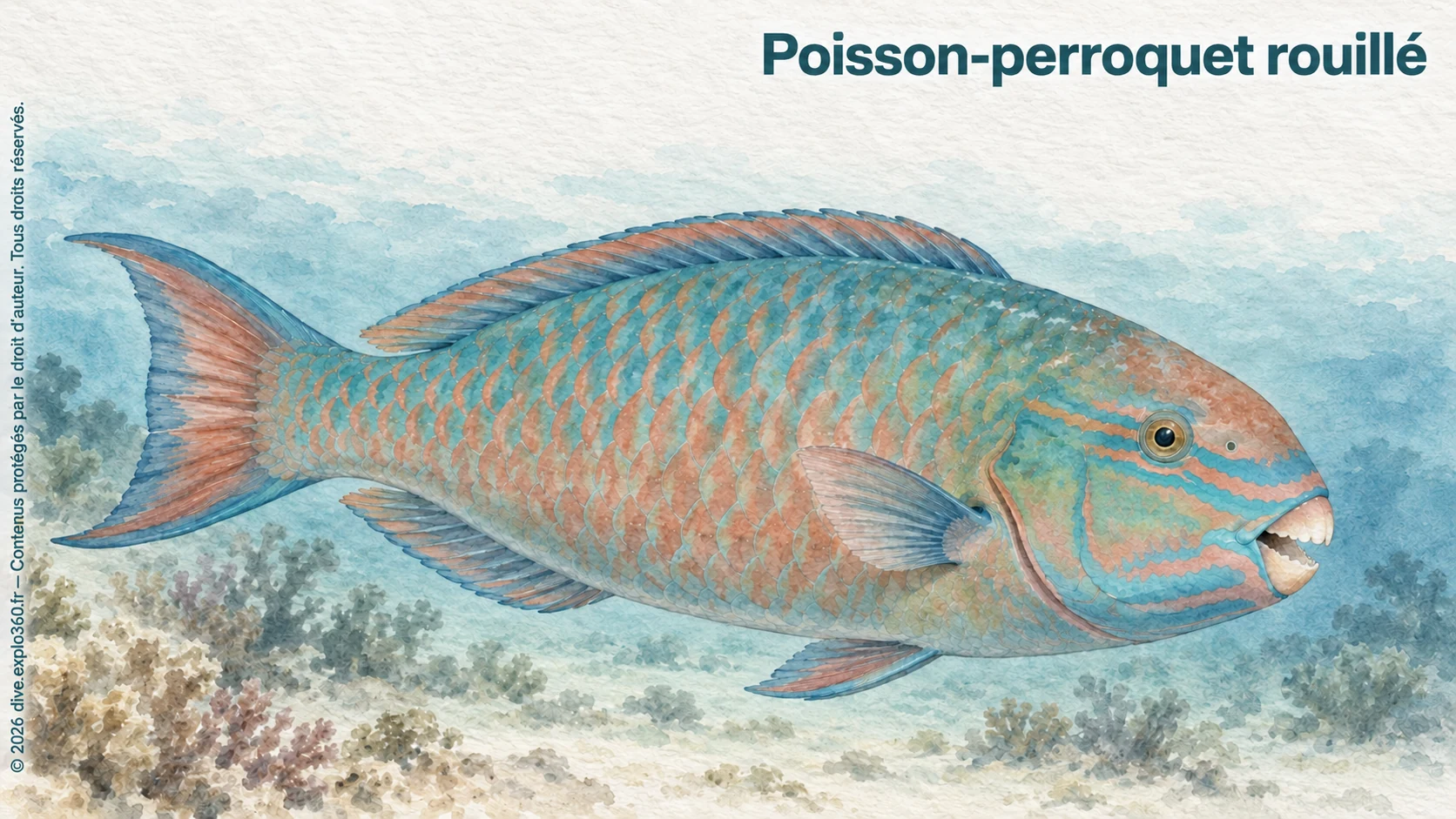
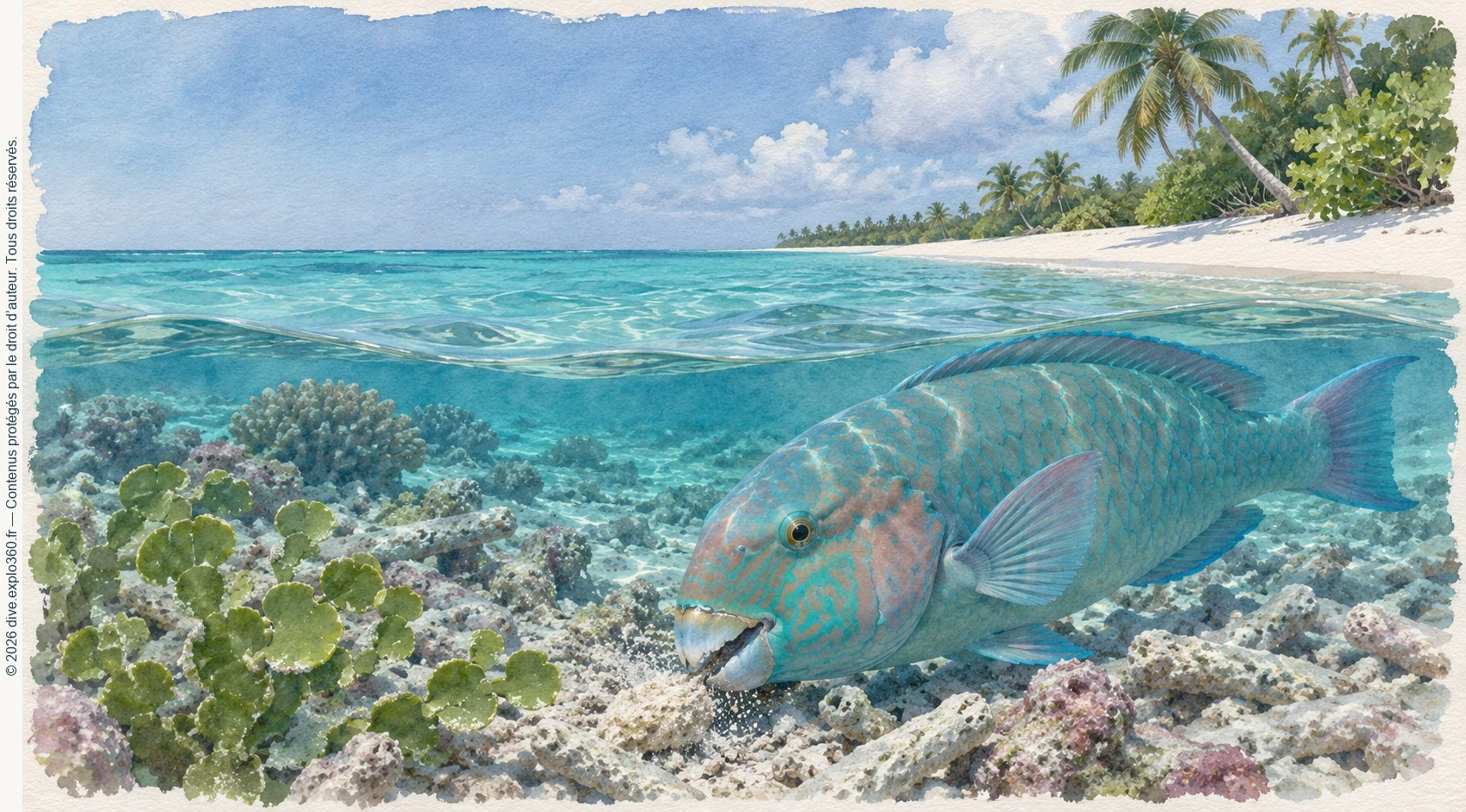
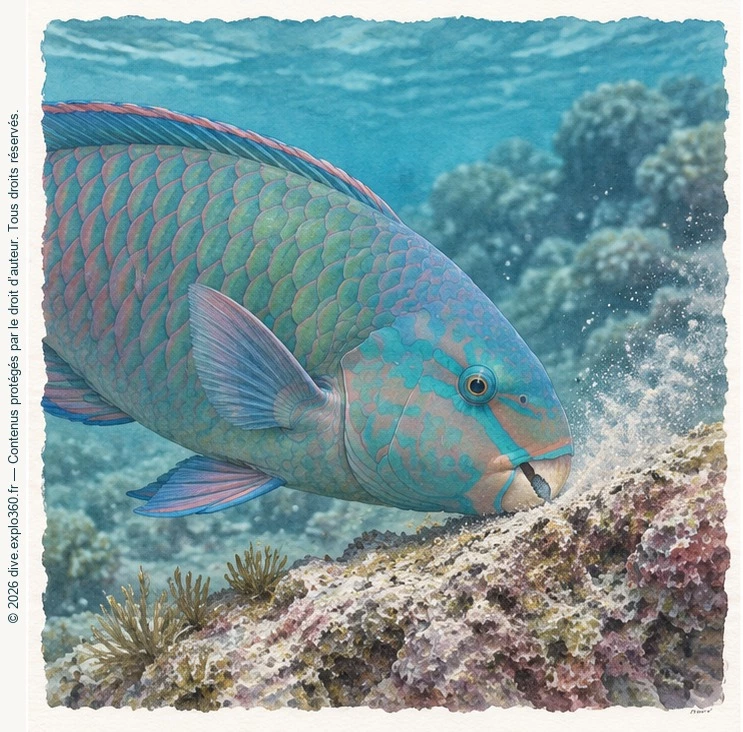
Parrotfish scrape or bite into the reef as they feed. A grinding structure in the throat, the pharyngeal mill, crushes the carbonate they swallow. The fish then release it as sediment. Sea urchins also wear away the reef with the teeth of Aristotle’s lantern. After the urchins die, their shells and spines can break up and contribute grains.
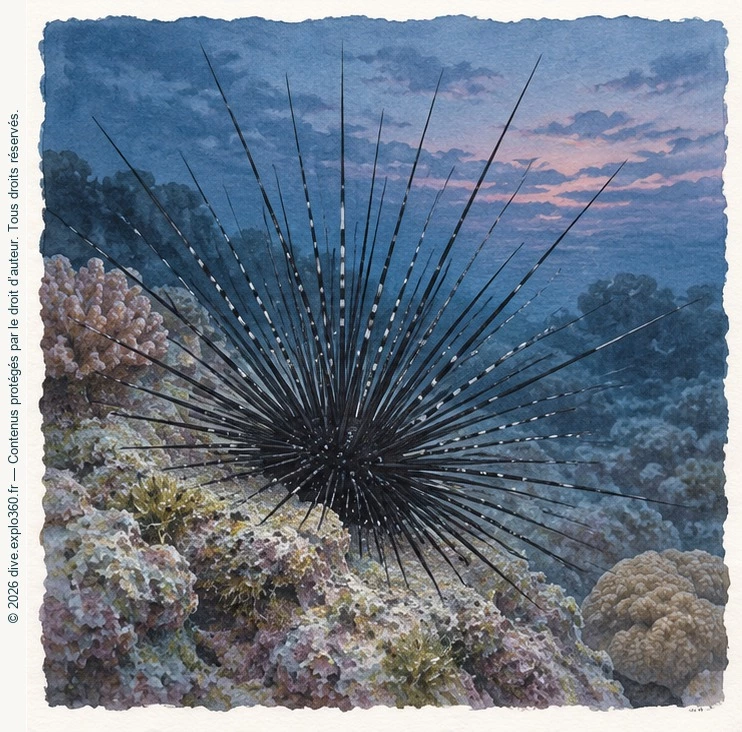
The sea urchin scrapes the reef
The sea urchin’s feeding apparatus removes carbonate as it grazes. This is one mechanism of reef bioerosion.
Grains built by organisms
Some foraminifera that live on the seabed leave distinctive calcium carbonate shells, known as tests. The tests of Baculogypsina sphaerulata contribute to some star sands in Okinawa. Other deposits contain calcified segments of Halimeda and fragments of calcareous red algae.
GO FURTHER WITH AMIGANSEAU
Continue reading
Discover full species guides, in-depth content and interactive tools available with your licence.
Dive.Explo360 is an independent, self-funded nonprofit. Every licence helps us create new content, improve our teaching tools and keep some of our resources free and ad-free.
Choose a licence that suits your needs for personal, educational or professional use.
Open-access resources remain available without a subscription.
Explore the same world