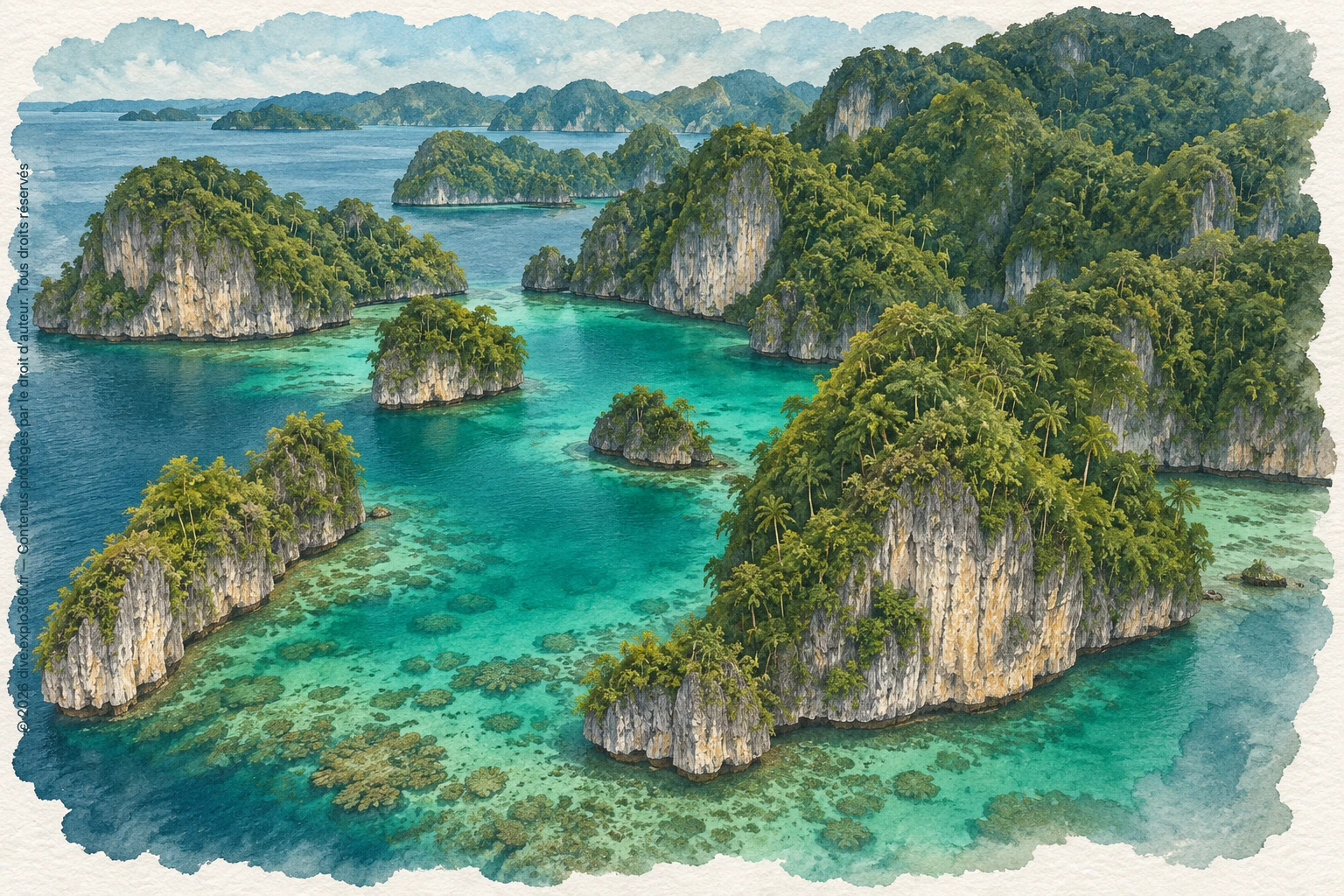
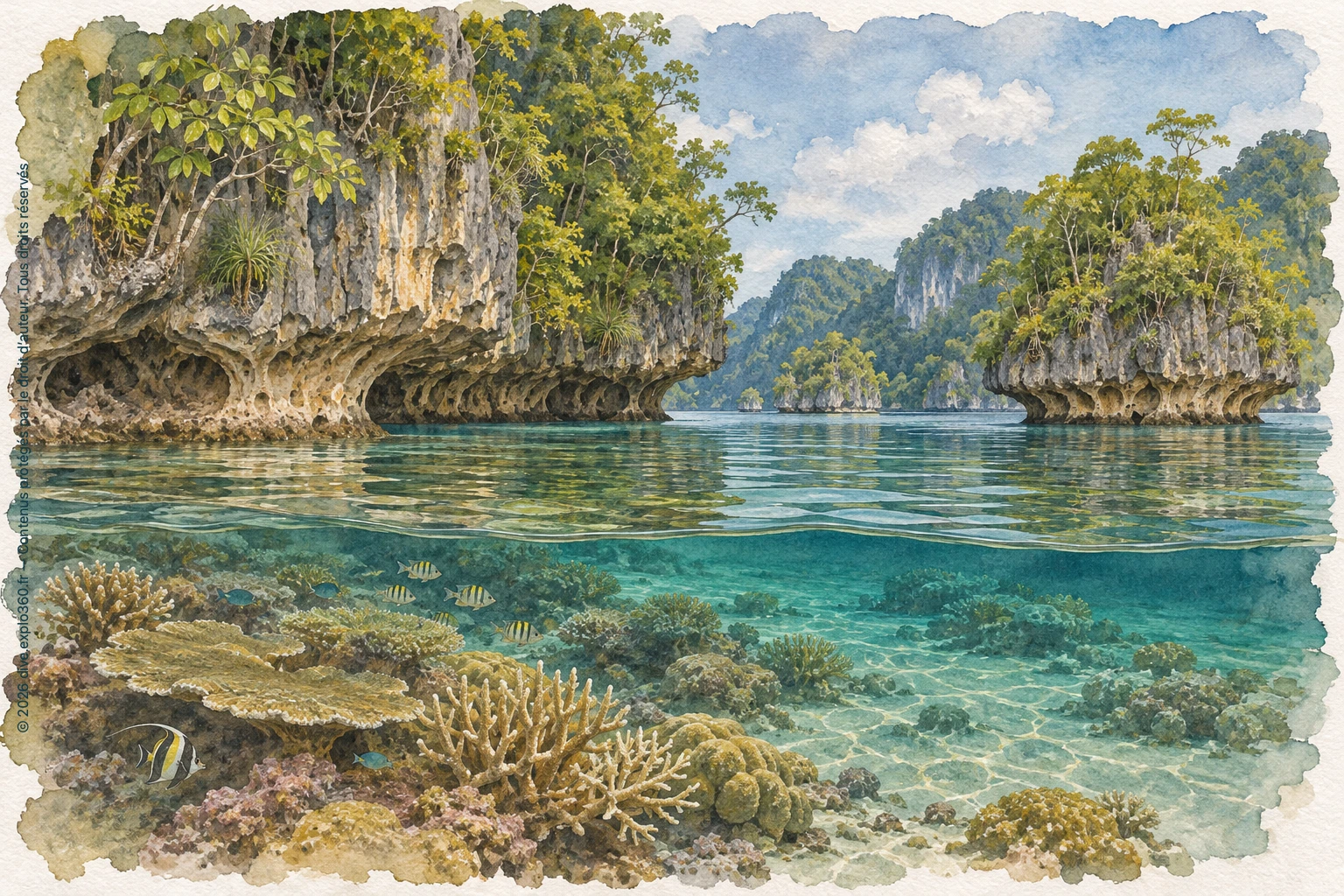
Limestone islets line channels and sheltered bays.
Islets surround channels where water flows. © dive.explo360.fr — All rights reserved. Reproduction requires permission.

The four main islands

Raja Ampat means “four kings”, after its four biggest islands. Around them are many little islands. Water rushes through some of the gaps, while in sheltered bays it is much calmer.

When land moves

Over millions of years, the islands slowly moved. Some gaps between them opened up and others closed, changing where the sea could flow.

A lower sea

During the ice ages, huge sheets of ice held a lot of water. The sea level fell, and places that had been underwater became dry land.
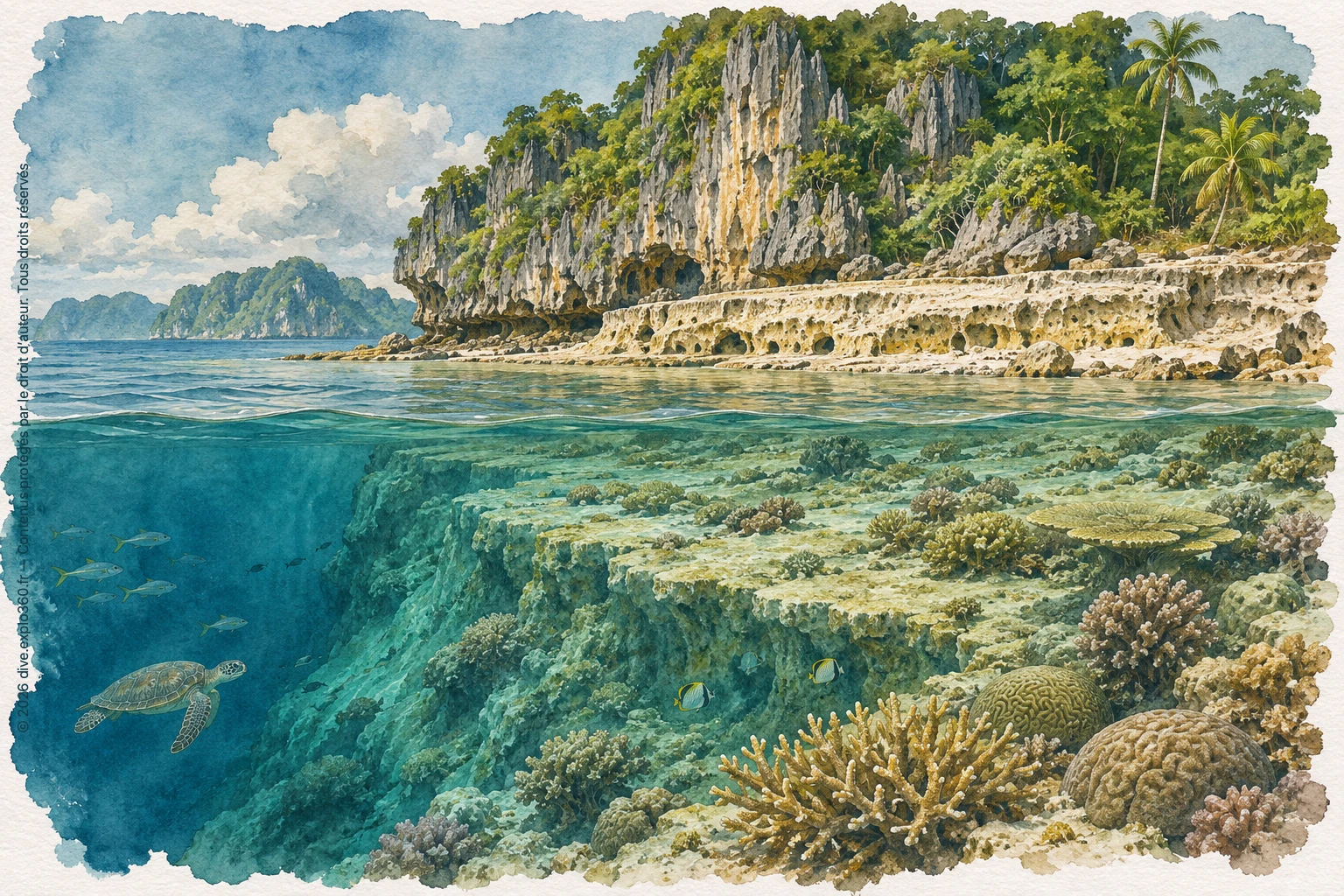
Conceptual illustration. Shelves emerge when sea level falls and are submerged again when it rises.
A falling sea exposes shallow ground. Rising water covers it again. © dive.explo360.fr — All rights reserved. Reproduction requires permission.

Water between two oceans

Water from the Pacific Ocean flows through gaps between Indonesia’s islands on its way to the Indian Ocean.
The Indonesian Throughflow connects the Pacific and Indian Oceans. Straits shape local currents.
Water flows between the islands, from one ocean to the other. © dive.explo360.fr — All rights reserved. Reproduction requires permission.
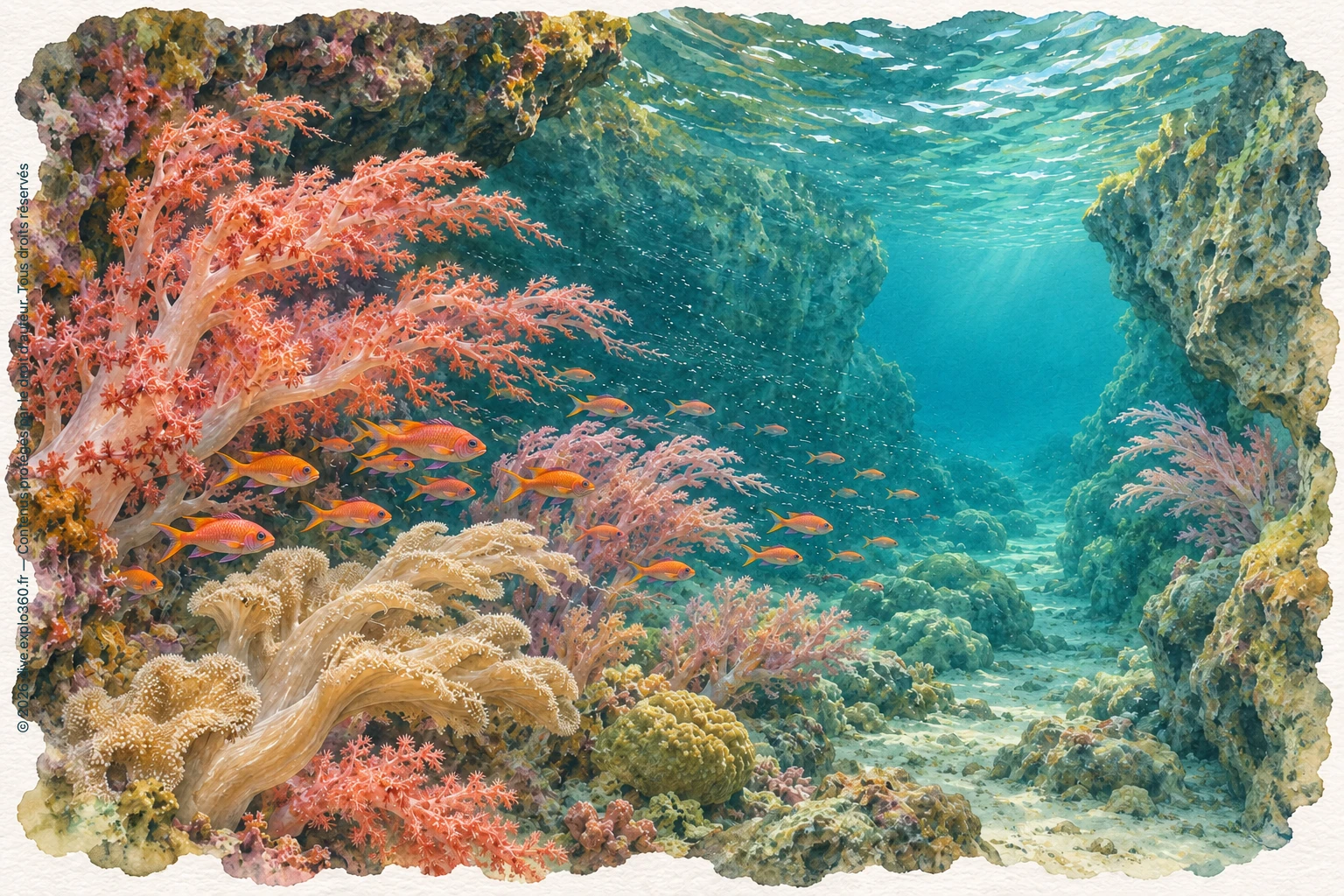
Currents may disperse or retain larvae. Settlement also depends on the habitat they encounter.
Currents can carry larvae away or keep them near the reef. © dive.explo360.fr — All rights reserved. Reproduction requires permission.

Larvae on the move

Many sea animals start life as tiny larvae. The current can carry them to another reef or keep them close to where they hatched.

Many kinds of shelter

Some fish hide among coral branches. Others slip between mangrove roots or into seagrass. A young fish can shelter in seagrass and move to the reef when it is bigger.
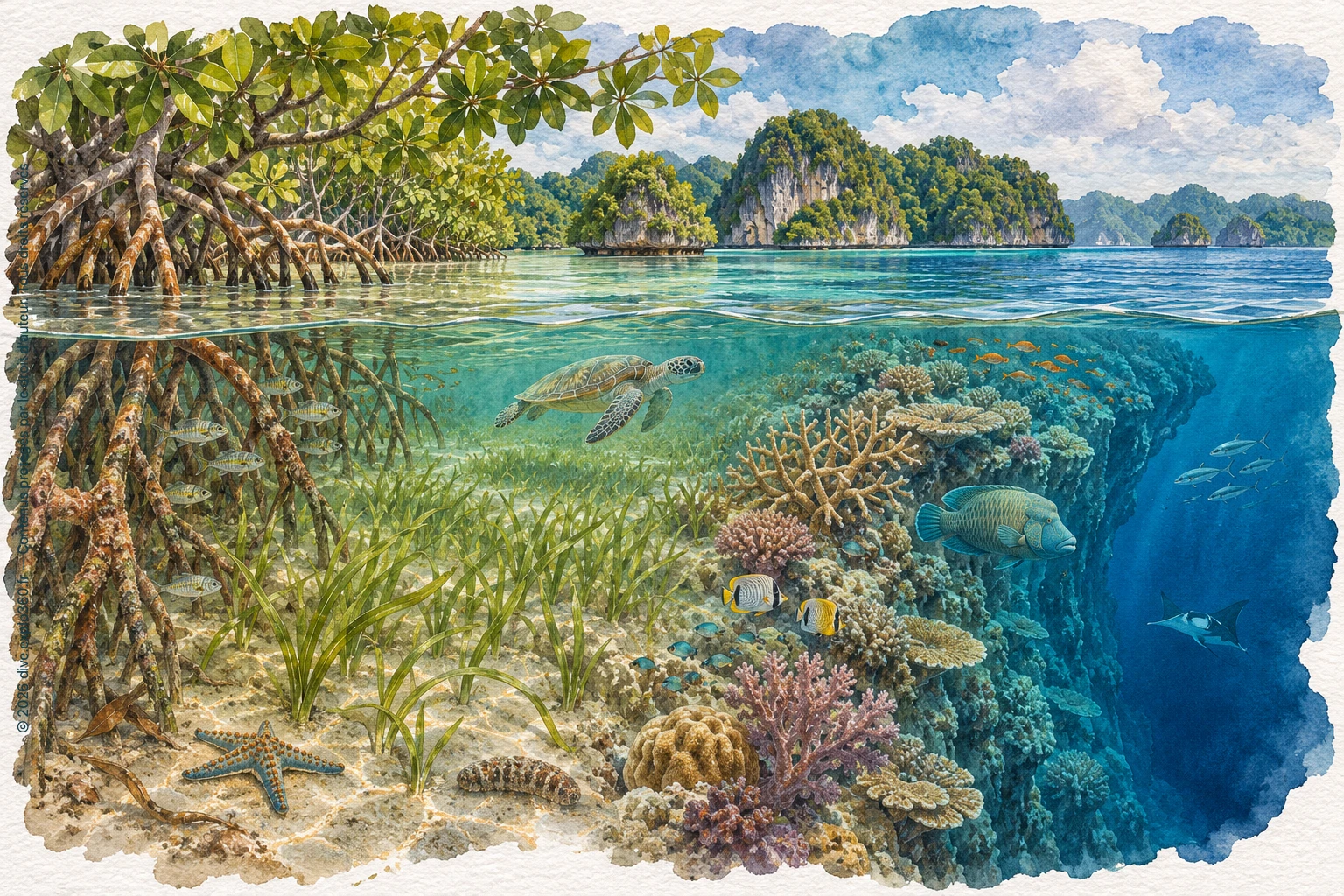
Mangroves, seagrass beds and reefs lie close together. Some fish use several of these habitats during their lives.
Fish find shelter among roots, seagrass and corals. © dive.explo360.fr — All rights reserved. Reproduction requires permission.

Two reefs, two landscapes

Imagine swimming from a quiet bay to a reef where the current is strong. You might see different animals on the two reefs.
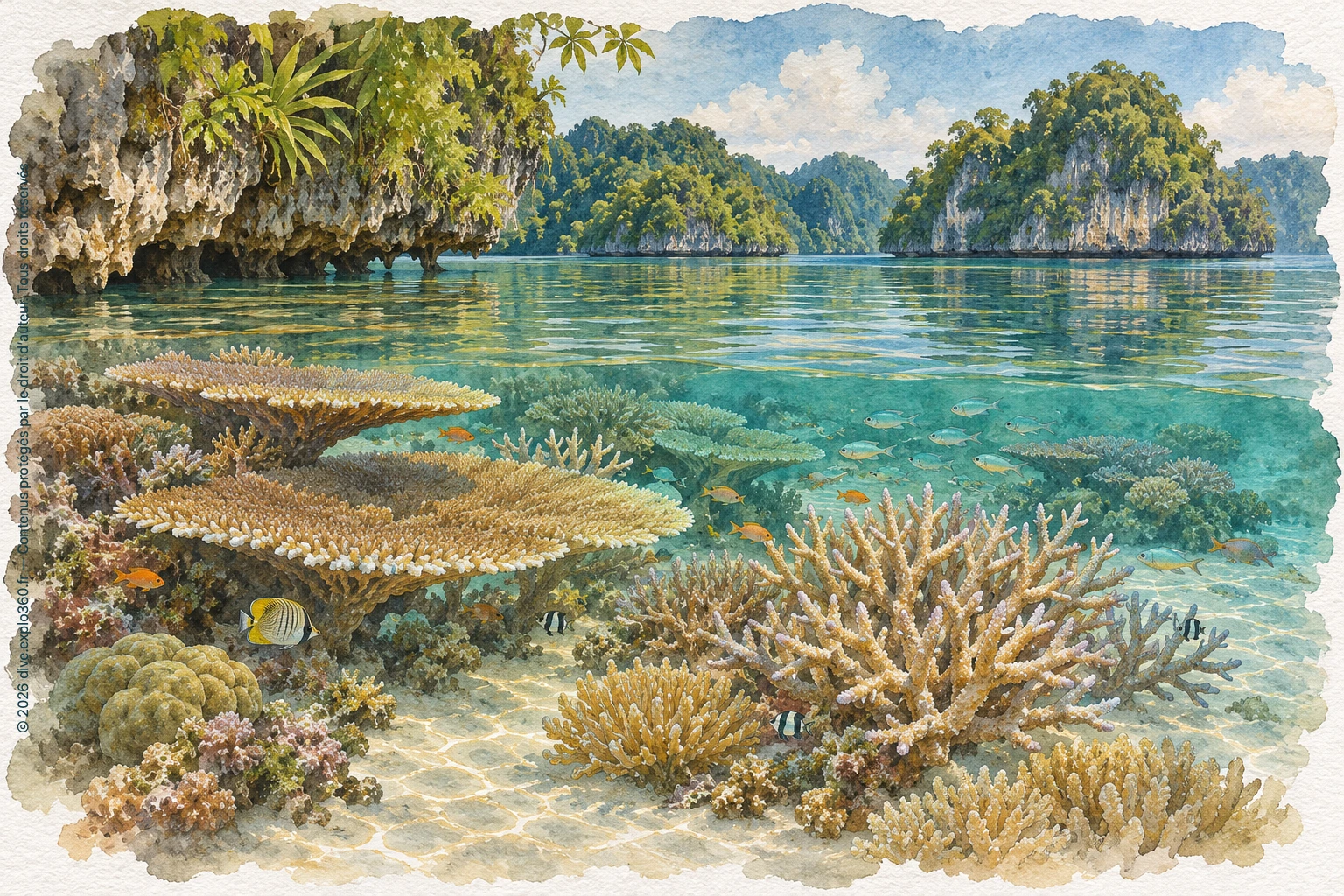
A sheltered lagoon offers different conditions from a current-exposed slope.
Animals in a quiet bay differ from those on a current-swept slope. © dive.explo360.fr — All rights reserved. Reproduction requires permission.

Species found close to home

Some fish live on reefs far apart. Raja Ampat’s little walking shark lives in a much smaller area. It can use its fins to walk along the seabed.
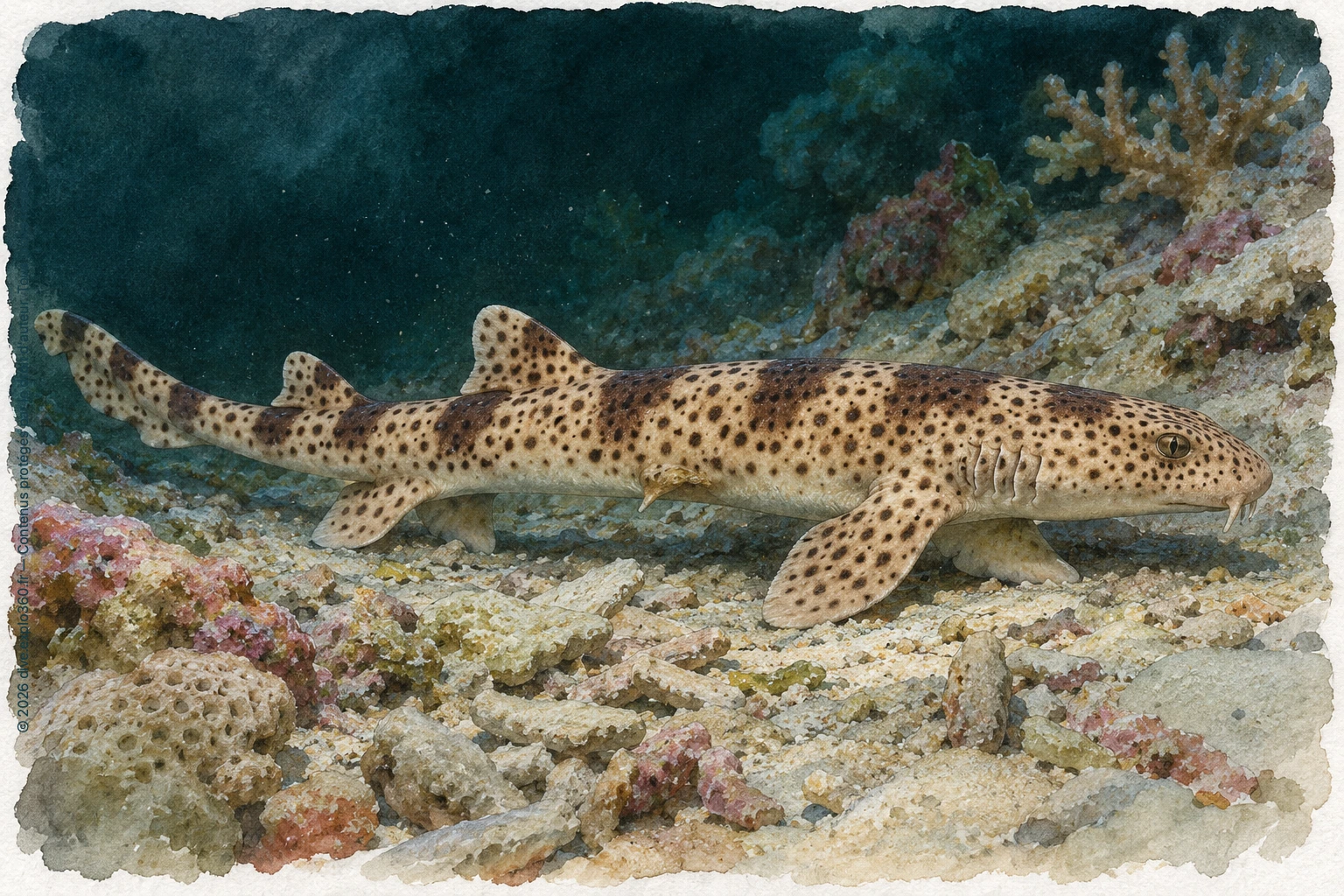
Artist’s view of Raja Ampat’s speckled walking shark (Hemiscyllium freycineti), a small bottom-dwelling shark.
This little shark moves across the seabed using its fins. © dive.explo360.fr — All rights reserved. Reproduction requires permission.

Where did all these species come from?

Over a very long time, some kinds of animals appeared in this part of the sea. Others arrived from farther away or found places where they could survive as the sea changed.

Warm water and much more

Water temperature matters for corals. Light, currents and shelter also shape life on reefs.
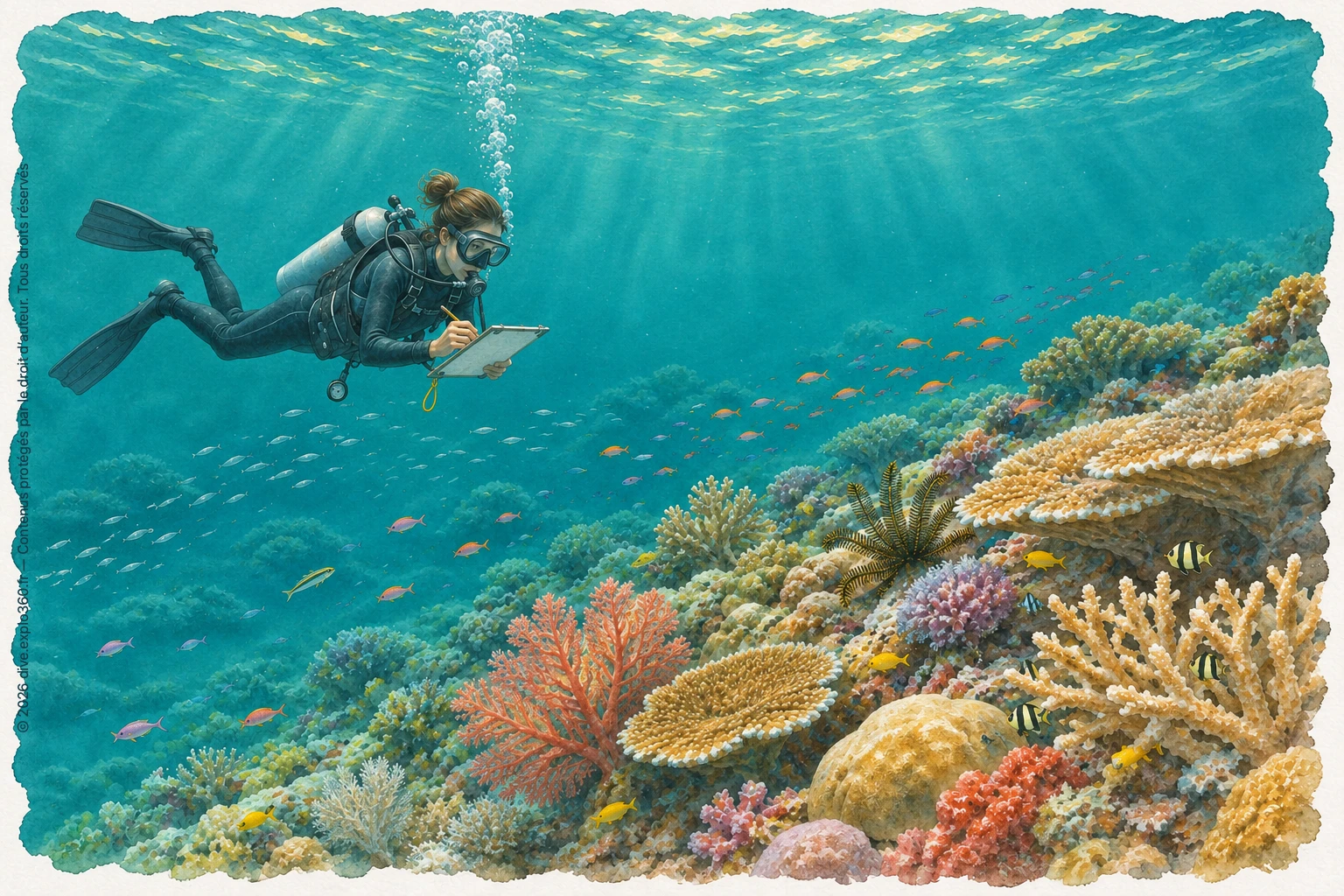
Underwater, a diver records the fish she sees. Environmental DNA can complement these observations.
A diver records the fish she sees on the reef. © dive.explo360.fr — All rights reserved. Reproduction requires permission.

How do we count species?

Divers write down which animals they see. Scientists can also look for tiny traces called DNA in seawater. These traces can give clues about animals that are hard to spot.

Interactive quiz

Test what you know

5 question(s) to test your knowledge.

Why so many animals live here

A fish might hide in a coral, a young shark might walk over the sand, and tiny larvae can drift between reefs. The islands have many different places for animals to live.

Scientific references

Cox, K. & Bright, J. (2017). Raja Ampat: A Biodiversity Hot Spot and the Future of Marine Conservation. Fisheries, 42(9), 462–467. Géographie de l'archipel, diversité des habitats, richesse des coraux et des poissons.doi.orgAllen, G. R. & Erdmann, M. V. (2009). Reef fishes of the Bird's Head Peninsula, West Papua, Indonesia. Check List, 5(3), 587–628. Inventaires des poissons récifaux et espèces à répartition restreinte.doi.orgCenozoic history of the tropical marine biodiversity hotspot (2024). Nature, 632, 343–349. Reconstruction de la diversification marine dans l'archipel indo-australien à partir des fossiles.www.nature.comComparative Phylogeography of the Coral Triangle and Implications for Marine Management (2011). Journal of Marine Biology, article 396982. Histoire des connexions et séparations entre populations, fluctuations du niveau marin et diversification.doi.orgPatterns of species range evolution in Indo-Pacific reef assemblages reveal the Coral Triangle as a net source of transoceanic diversity (2016). Analyse phylogéographique de 45 espèces et 314 populations, portant sur les rôles de centre d'origine, de survie et d'accumulation.pubmed.ncbi.nlm.nih.govEnvironmental DNA in a global biodiversity hotspot: Lessons from coral reef fish diversity across the Indonesian archipelago (2021). Environmental DNA. Comparaison entre inventaires visuels et ADN environnemental, avec données de richesse pour Raja Ampat.doi.orgDelineating priority areas for marine biodiversity conservation in the Coral Triangle (2018). Biological Conservation, 222, 198–211. Analyse régionale de la richesse biologique, de la diversité des habitats et des répartitions d'espèces.doi.orgVeron, J. E. N. et collaborateurs. Corals of the World — Distributions. Répartition géographique des coraux et diversité des espèces dans le Triangle de Corail, notamment à Raja Ampat.www.coralsoftheworld.orgUNESCO. Raja Ampat UNESCO Global Geopark. Description des formations géologiques, des reliefs karstiques et de leur histoire.www.unesco.org