Spawning in sync
At dusk, two mandarinfish line up side by side and swim upwards. They release eggs and sperm, together known as gametes. The sperm fertilise the eggs in the water. This is called external fertilisation. In studies of mandarinfish, the females observed spawned with males larger than themselves.
A vacant territory
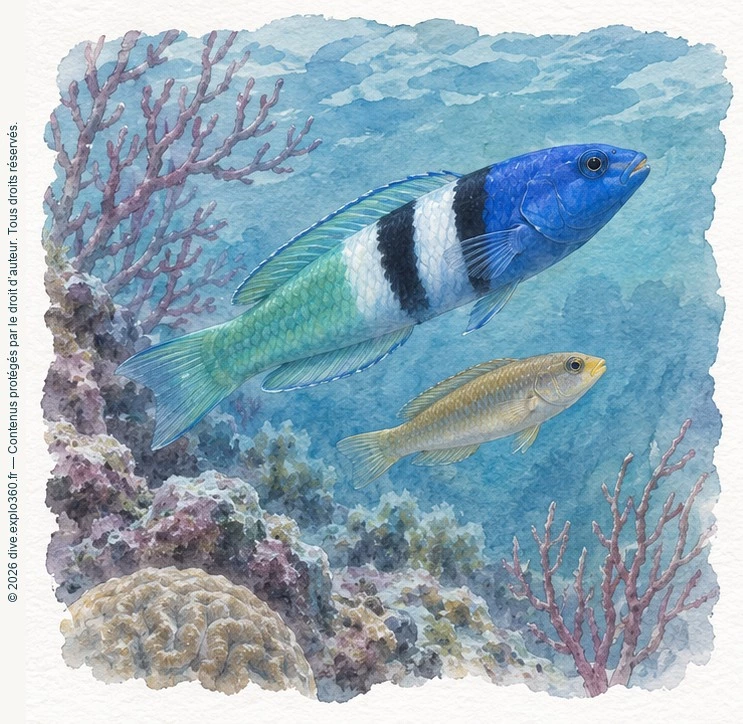
Bluehead wrasses spawn by day. Depending on the fish and the reef, you may see pairs or groups spawning. If a territorial male disappears, a large female can start defending the site. Her body then changes until she can produce sperm.
Three ways to approach a nest
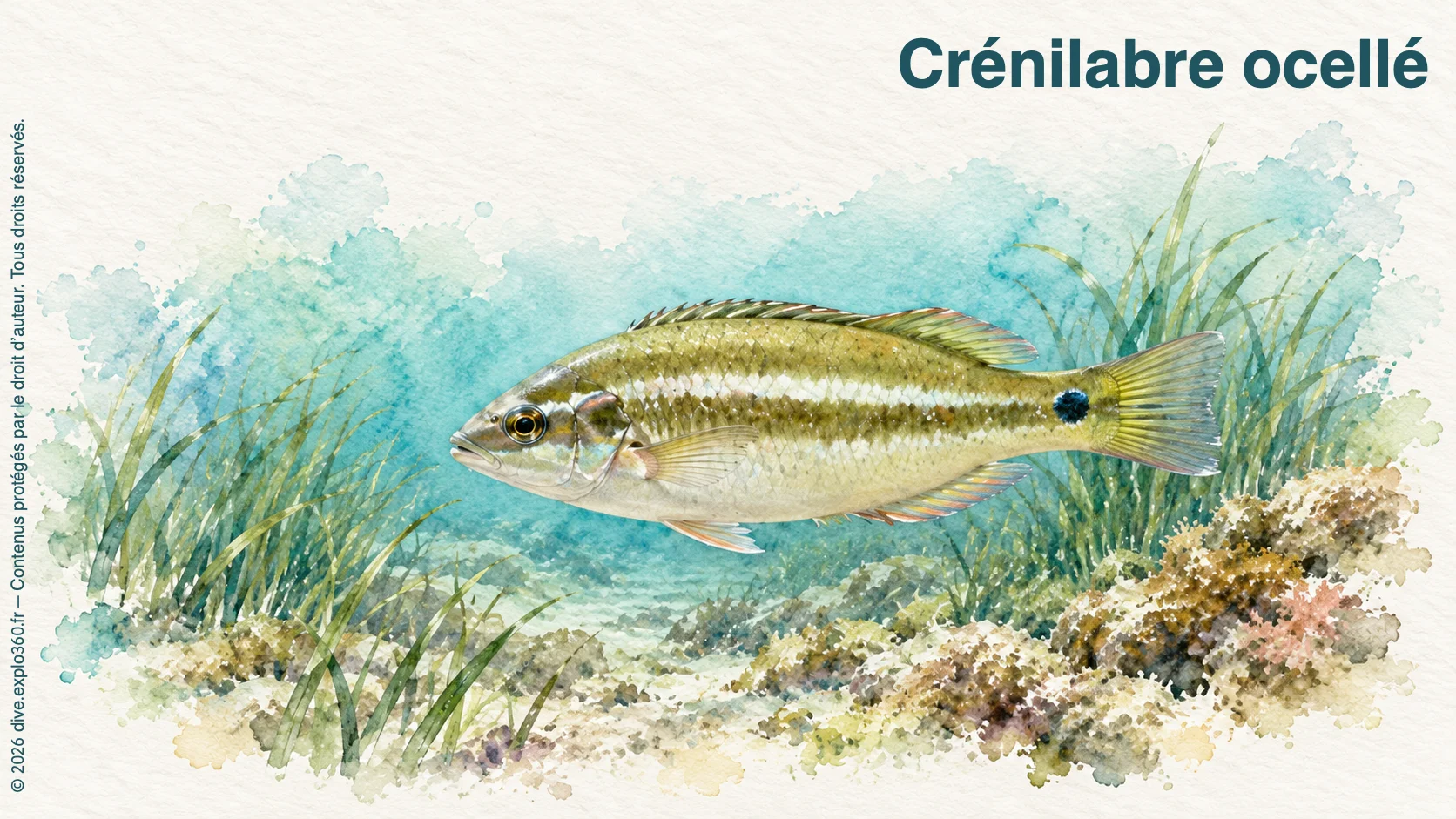
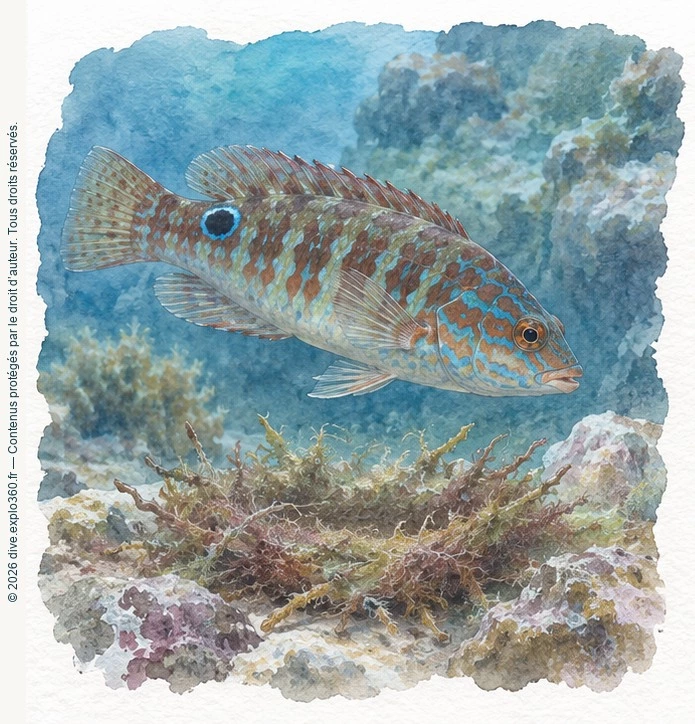
A male ocellated wrasse builds a nest out of algae and guards the eggs. A smaller male, called a satellite, may help drive intruders away and fertilise some eggs during spawning. Another male may dart in without helping. A single batch of eggs can therefore have more than one father.
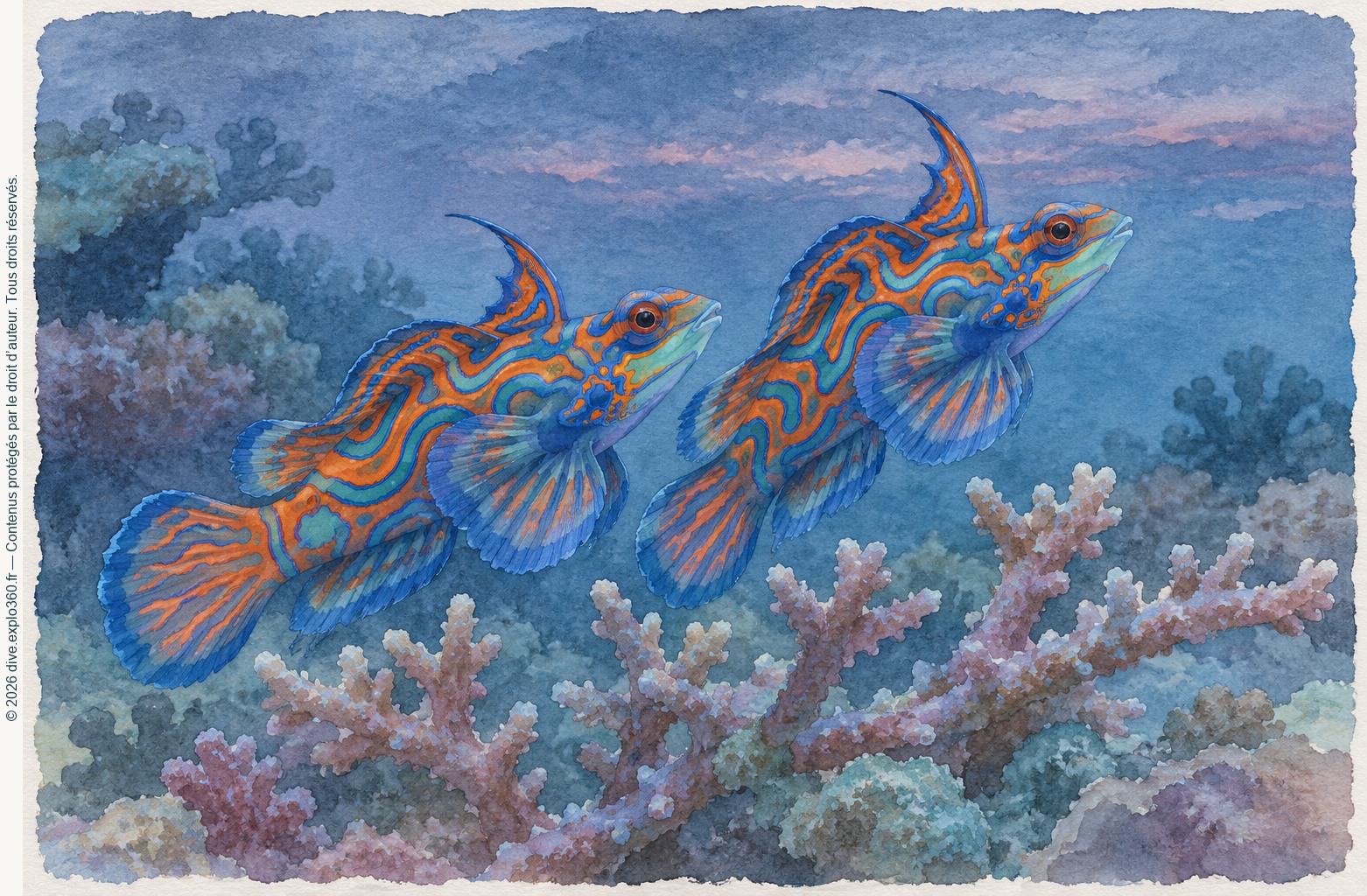
The mandarinfish dance
Two mandarinfish synchronise their ascent and the release of gametes above the seabed.
A scent in the water
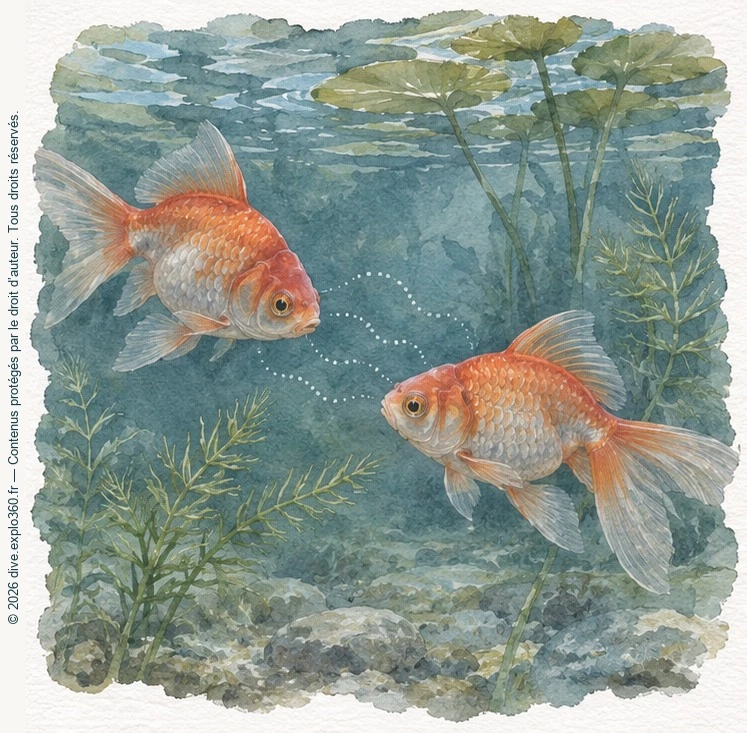
Before eggs leave a female goldfish’s ovaries, she releases chemical signals into the fresh water. A male can pick up these signals by smell. Some help prepare his body for spawning. Other substances, released at a different stage, can change his behaviour.
GO FURTHER WITH AMIGANSEAU
Continue reading
Discover full species guides, in-depth content and interactive tools available with your licence.
Dive.Explo360 is an independent, self-funded nonprofit. Every licence helps us create new content, improve our teaching tools and keep some of our resources free and ad-free.
Choose a licence that suits your needs for personal, educational or professional use.
Open-access resources remain available without a subscription.
Explore the same world