Habitat
 Depth
 Group
 Role
 Size
 Good to know
WHAT DOES IT LOOK LIKE?
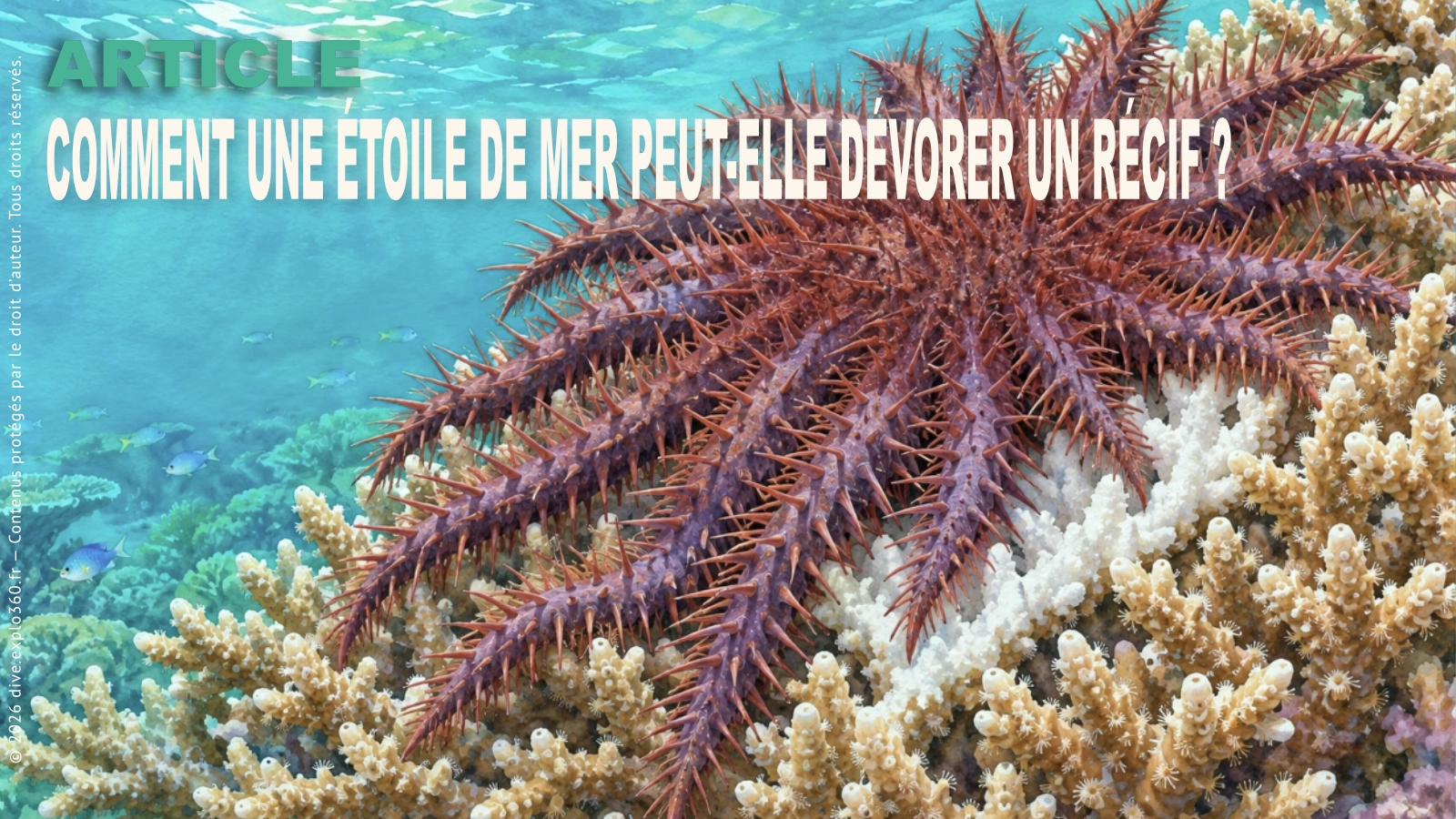
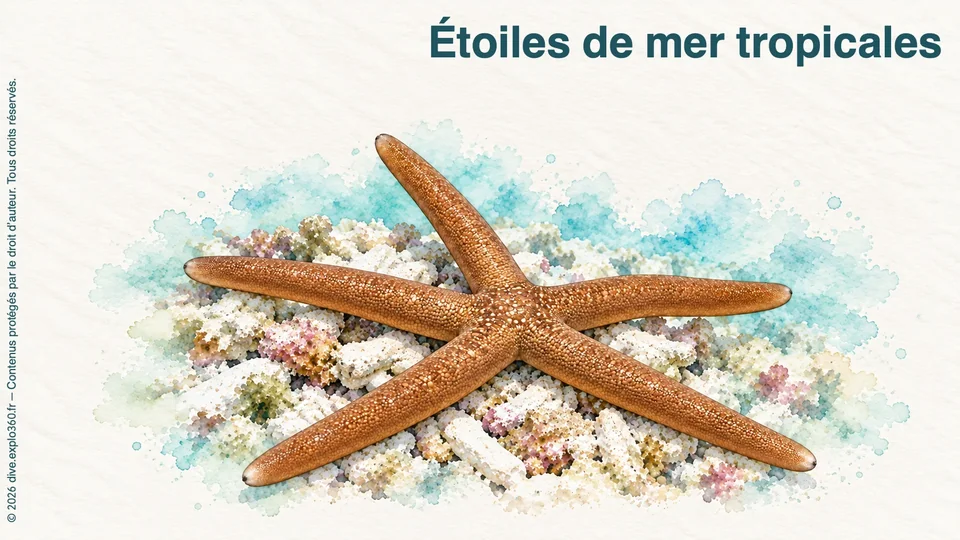
Arm shape gives tropical starfish very different outlines, short and thick in some, more elongated in others. The arms surround the central body disc and carry little feet, the podia, underneath. Colour, proportions and arm count add to comparison without supplying a species name on their own.
WHERE DOES IT LIVE?
Tropical sea stars occupy rocky and coral structures as well as sediment areas, depending on the species. Their position remains associated with the seabed. A sea star seen on coral therefore cannot establish the usual surface or depth occupied by all the others.
WHAT DOES IT EAT?
Tropical sea stars have several feeding styles. Some take fine detritus or microscopic bottom films; others eat attached or mobile animals. The blue sea star illustrates the former group. The New Guinea cushion star may combine corals, urchins and microbial films. Digestion also varies: some spread their stomach against food, while others swallow prey.
GO FURTHER WITH AMIGANSEAU
Unlock the full profile
Deepen your knowledge with the exclusive chapters and interactive resources included in an AMIGANSEAU licence.
Subscribing to Dive.Explo360 means supporting a different way to discover marine life.
Our independent platform is entirely self-funded and relies solely on subscriptions. Every licence helps us continue our work, create new content, and share what we know about the marine world with as many people as possible.
Starting at €80 per year, your support makes all the difference.
 Understand the species