Habitat
 Depth
 Group
 Role
 Average size
WHAT DOES IT LOOK LIKE?
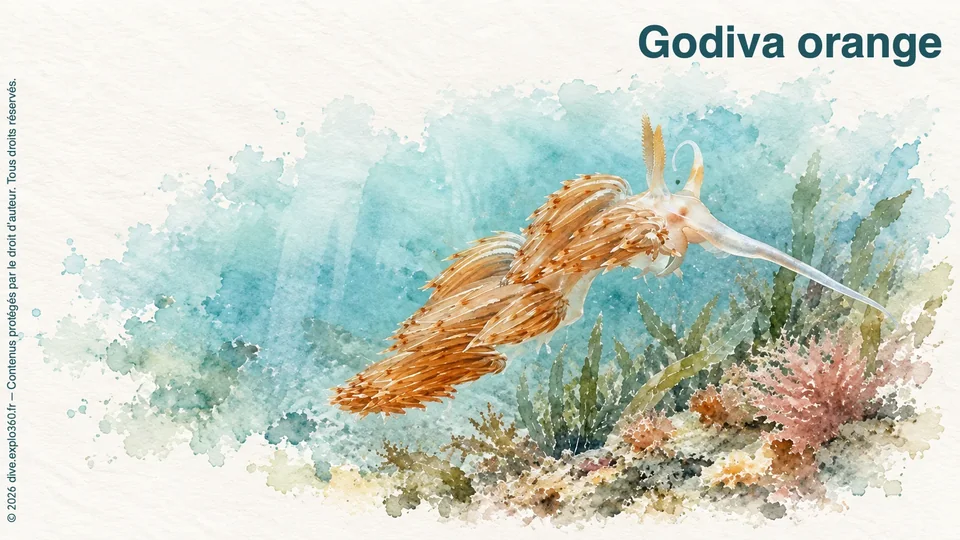
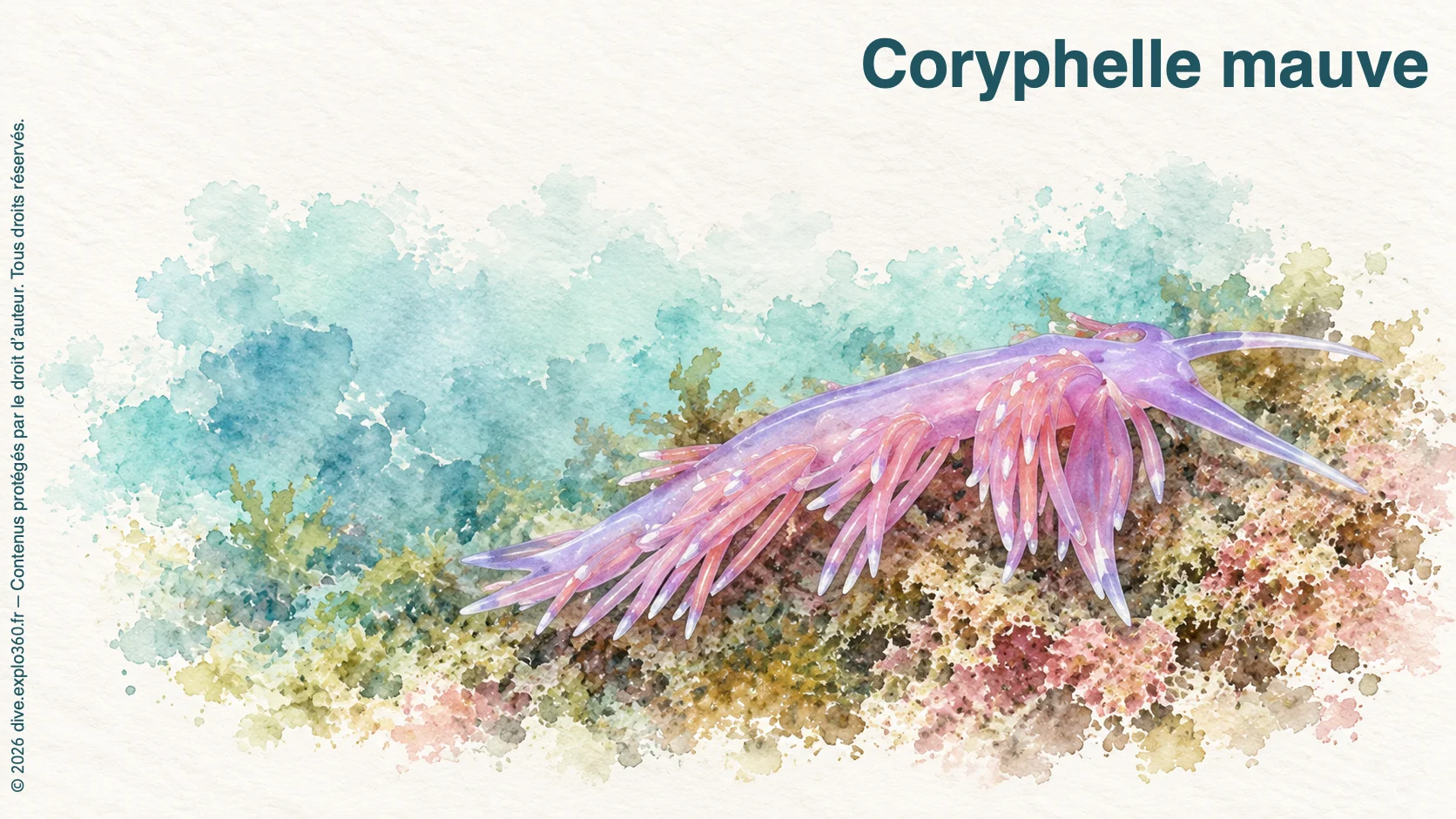
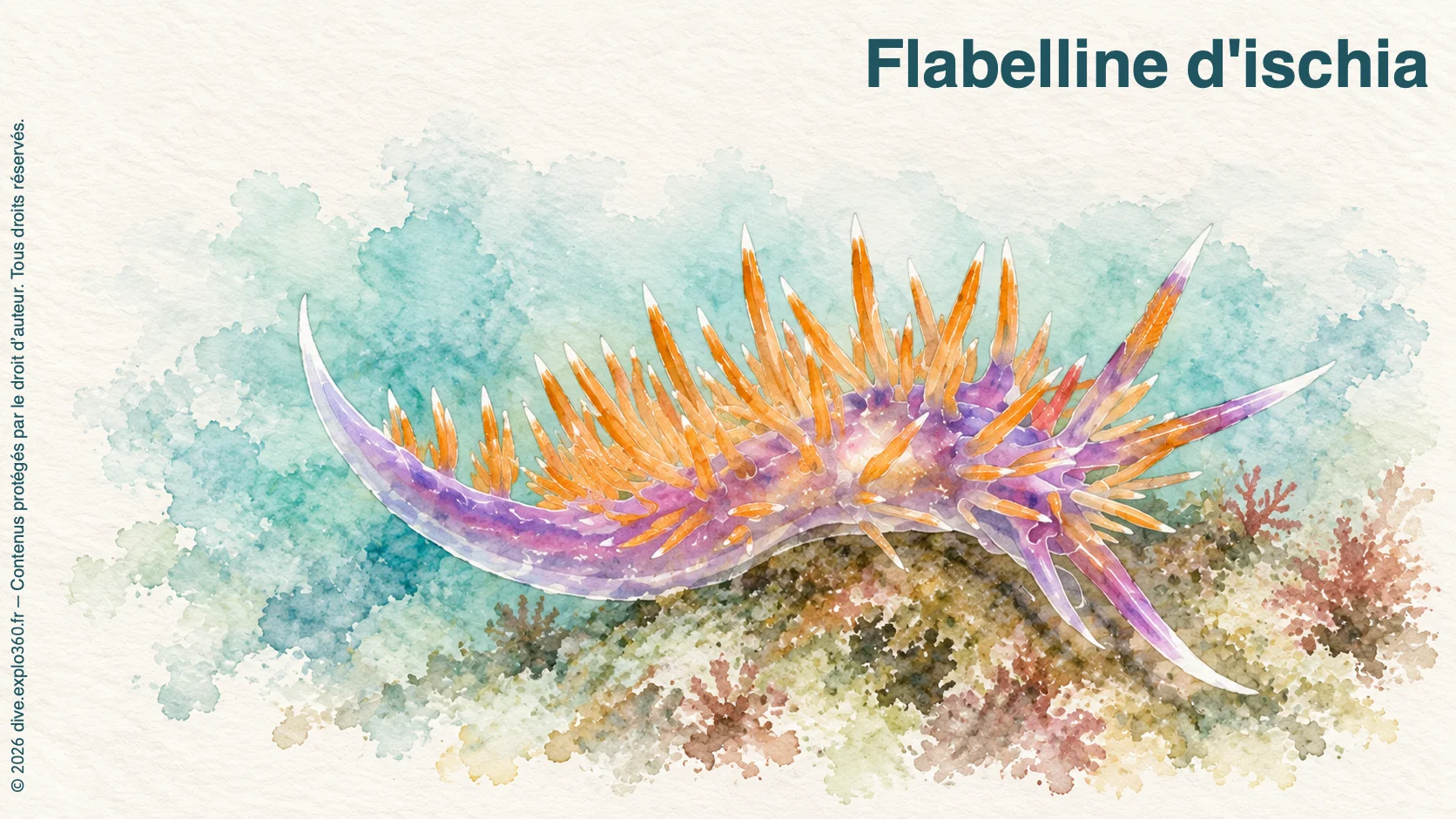
The long oral tentacles, those extending beside the mouth, broaden the head outline of the orange godiva (Nemesignis banyulensis). Behind them stand the rhinophores, two shorter orange, ringed projections.
The elongated, translucent, orange-toned body has white lines along the back. Long cerata, the soft projections gathered in side bunches, end in bright orange to red. They leave the tapering tail clear.
WHERE DOES IT LIVE?
Hydroid growth on rocky seabeds provides places to look for the orange godiva. It uses these surfaces in the Mediterranean and some nearby Atlantic regions at shallow to intermediate depths.
WHAT DOES IT EAT?
The orange godiva can curl its foot around a hydroid stem as it climbs. This holds it close to its main food: the polyps making up the colony. Its radula removes these tiny animals. Feeding is best seen at the front of the body, against the hydroid, while the foot maintains its grip. On a narrow branch, movement and feeding take place at the same small scale.
GO FURTHER WITH AMIGANSEAU
Unlock the full profile
Deepen your knowledge with the exclusive chapters and interactive resources included in an AMIGANSEAU licence.
Subscribing to Dive.Explo360 means supporting a different way to discover marine life.
Our independent platform is entirely self-funded and relies solely on subscriptions. Every licence helps us continue our work, create new content, and share what we know about the marine world with as many people as possible.
Starting at €80 per year, your support makes all the difference.
 Understand the species