Habitat
 Depth
 Group
 Role
 Average size
WHAT DOES IT LOOK LIKE?
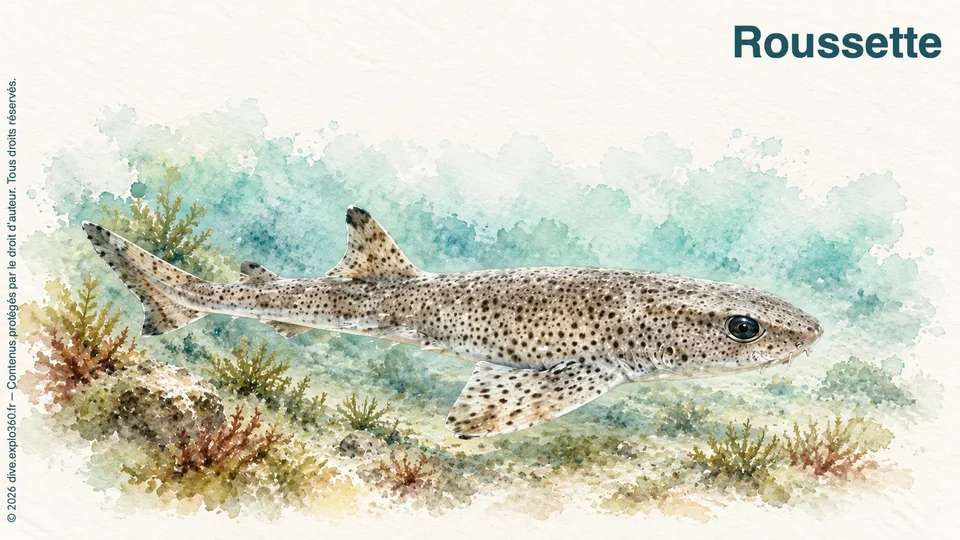
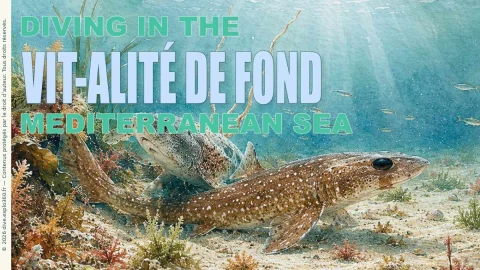
Close-set little spots mark the beige to reddish brown back of the small-spotted catshark (Scyliorhinus canicula). The contrast continues with the pale belly of this elongated, slender shark.
The head is rounded at the front, with the mouth underneath. The nasal flaps, the small folds over the nostrils beneath the snout, meet in the middle.
WHERE DOES IT LIVE?
It lives on soft seabeds such as sand, mud or gravel, from the coast down to several hundred metres deep. During the day, it often rests on the bottom, sometimes motionless.
WHAT DOES IT EAT?
The small-spotted catshark’s nocturnal meals combine several kinds of seabed animals. Crabs, shrimps and Norway lobsters are among the crustaceans; molluscs include gastropods, bivalves and young cuttlefish. Polychaete worms and small fish are eaten too. The range includes shell-protected animals and mobile soft-bodied prey. Night movements offer access to foraging activity, while a fish resting by day may simply be inactive. The known menu is more detailed than the account of every detection and capture sequence.
GO FURTHER WITH AMIGANSEAU
Explore the full species guide
Discover full species guides, in-depth content and interactive tools available with your licence.
Dive.Explo360 is an independent, self-funded nonprofit. Every licence helps us create new content, improve our teaching tools and keep some of our resources free and ad-free.
Choose a licence that suits your needs for personal, educational or professional use.
Open-access resources remain available without a subscription.
 Understand the species