


 Habitat
 Depth
 Group
 Role
WHAT DOES IT LOOK LIKE?
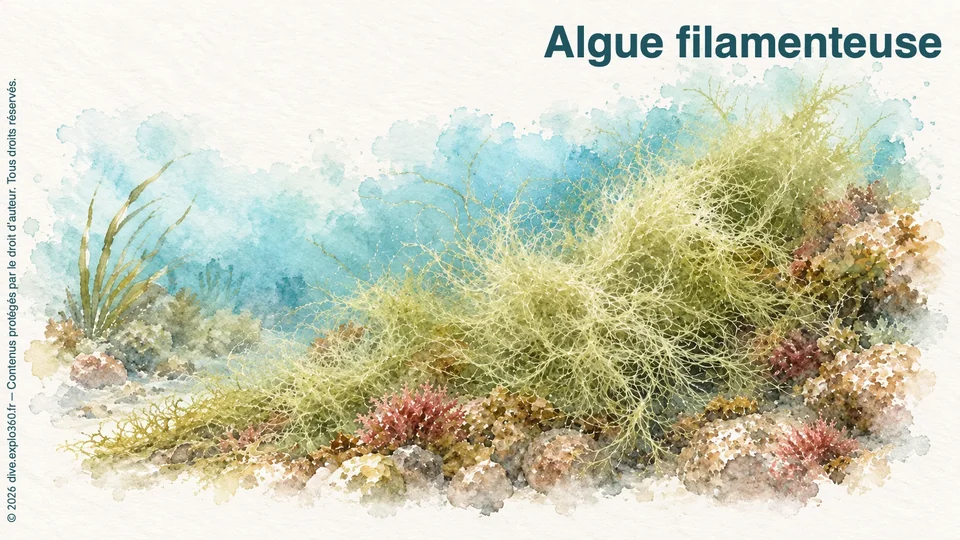
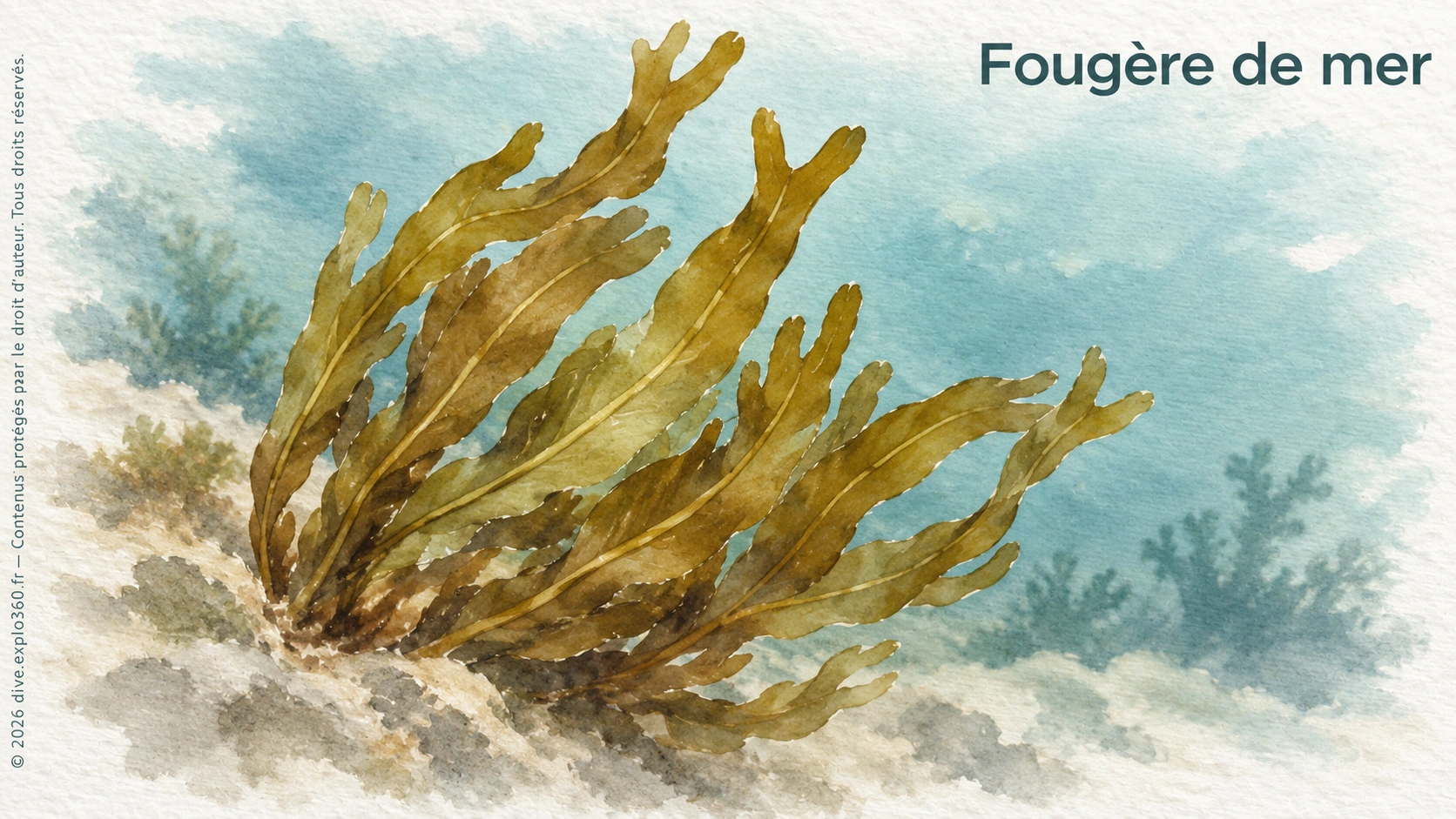
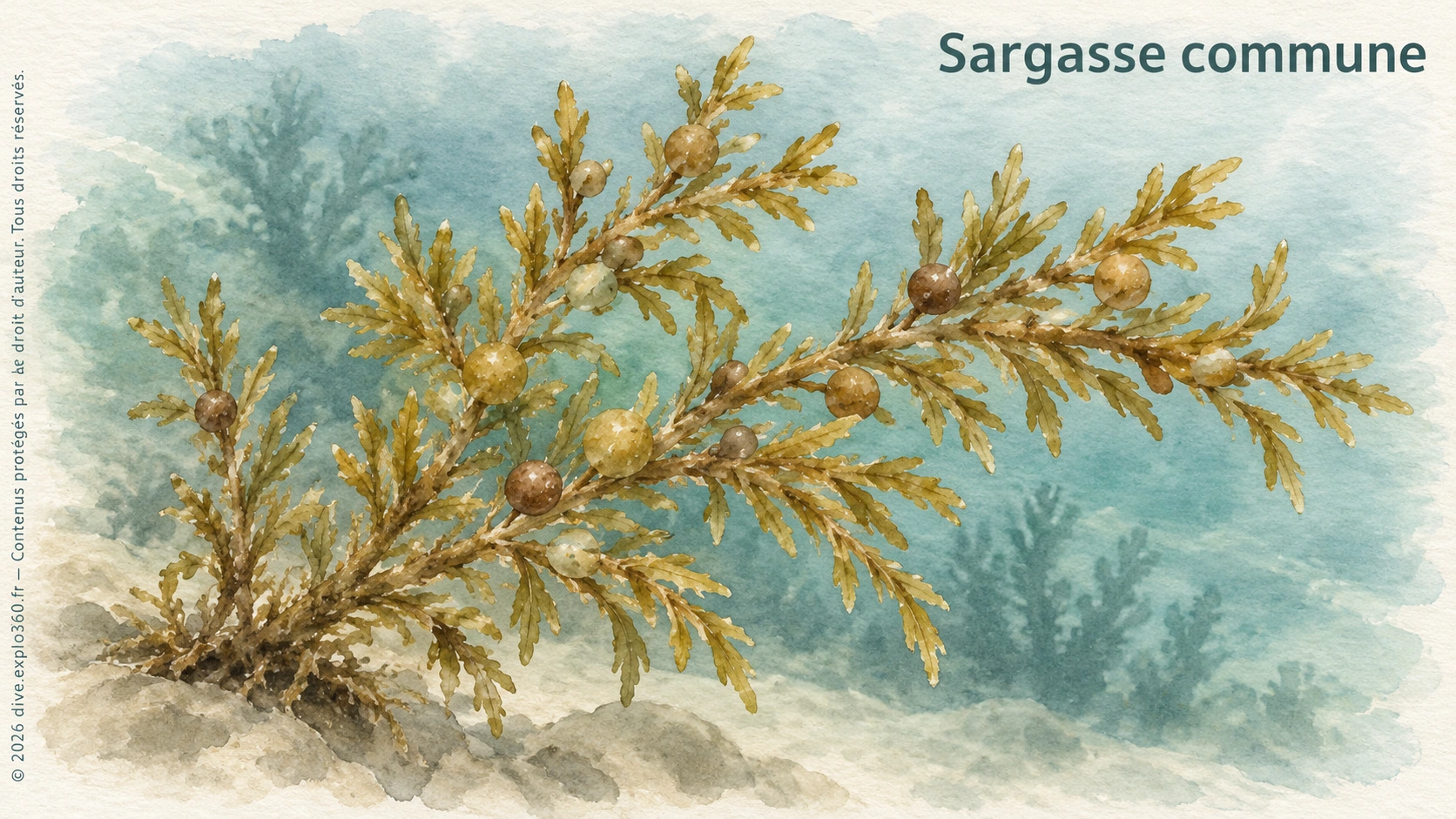
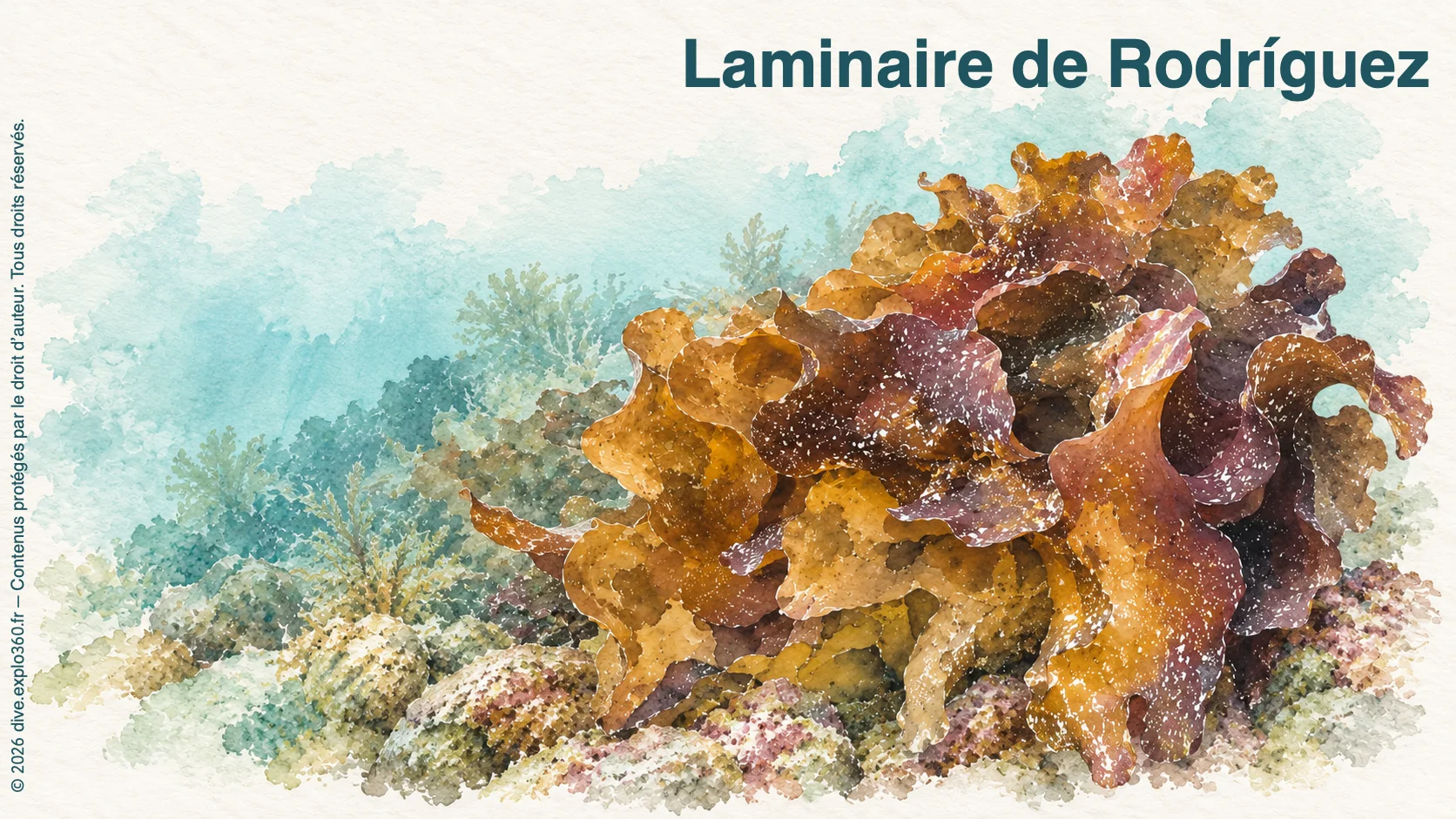
Loose or densely tufted, filamentous algae look like wisps of very fine fibres. Their flexible threads can also gather into broader mats.
Green, brown and yellowish shades vary between algae. Several species share this fibrous appearance, and tuft shape and colour do not always establish an exact name.
WHERE DOES IT LIVE?
A rock, shell, large alga or artificial structure may carry filamentous algae. Some also colonise seagrass plants. This group includes algae with different requirements, but shallow coastal waters with sufficient light are common habitats for their growth.
WHAT DOES IT EAT?
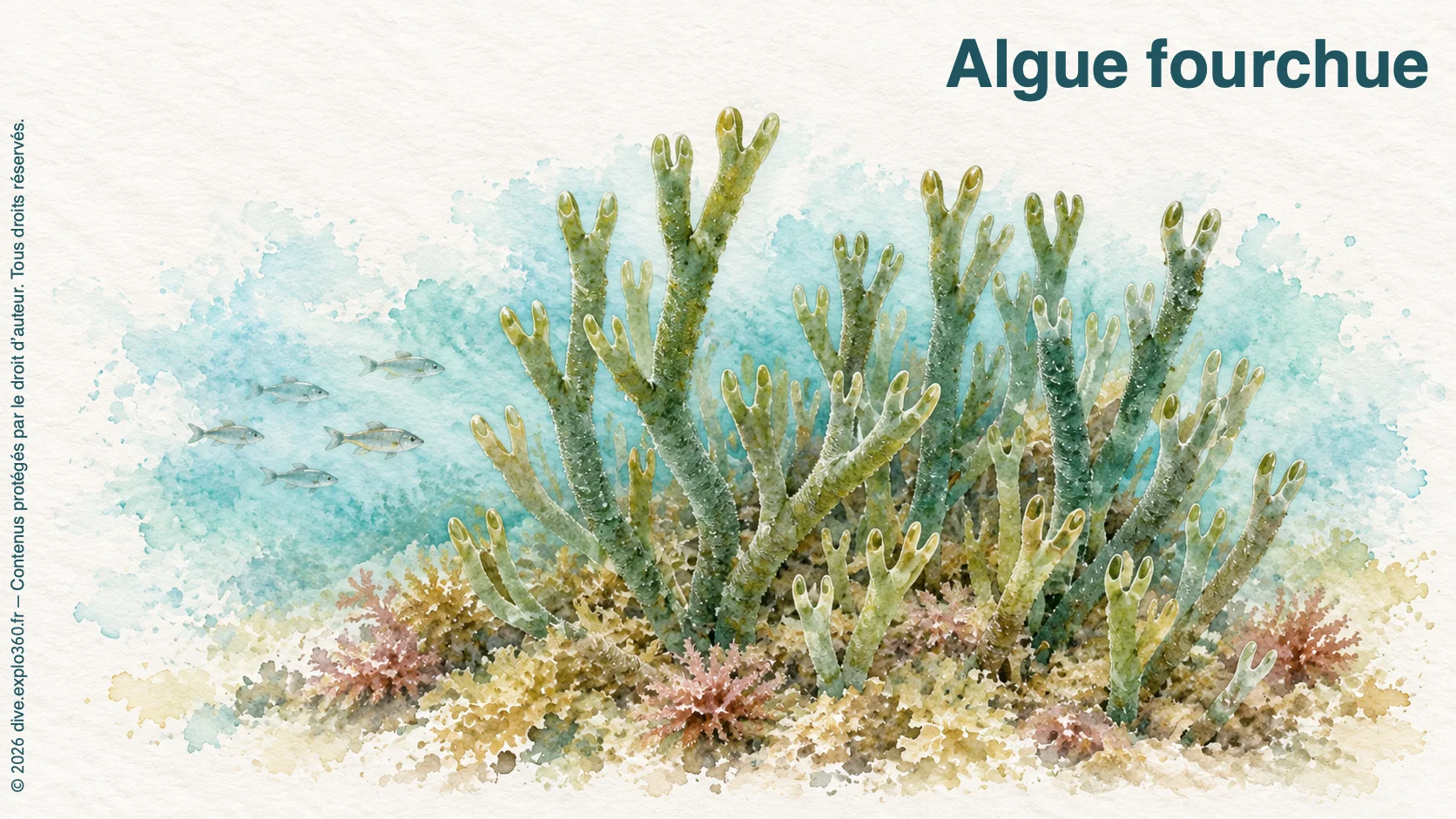
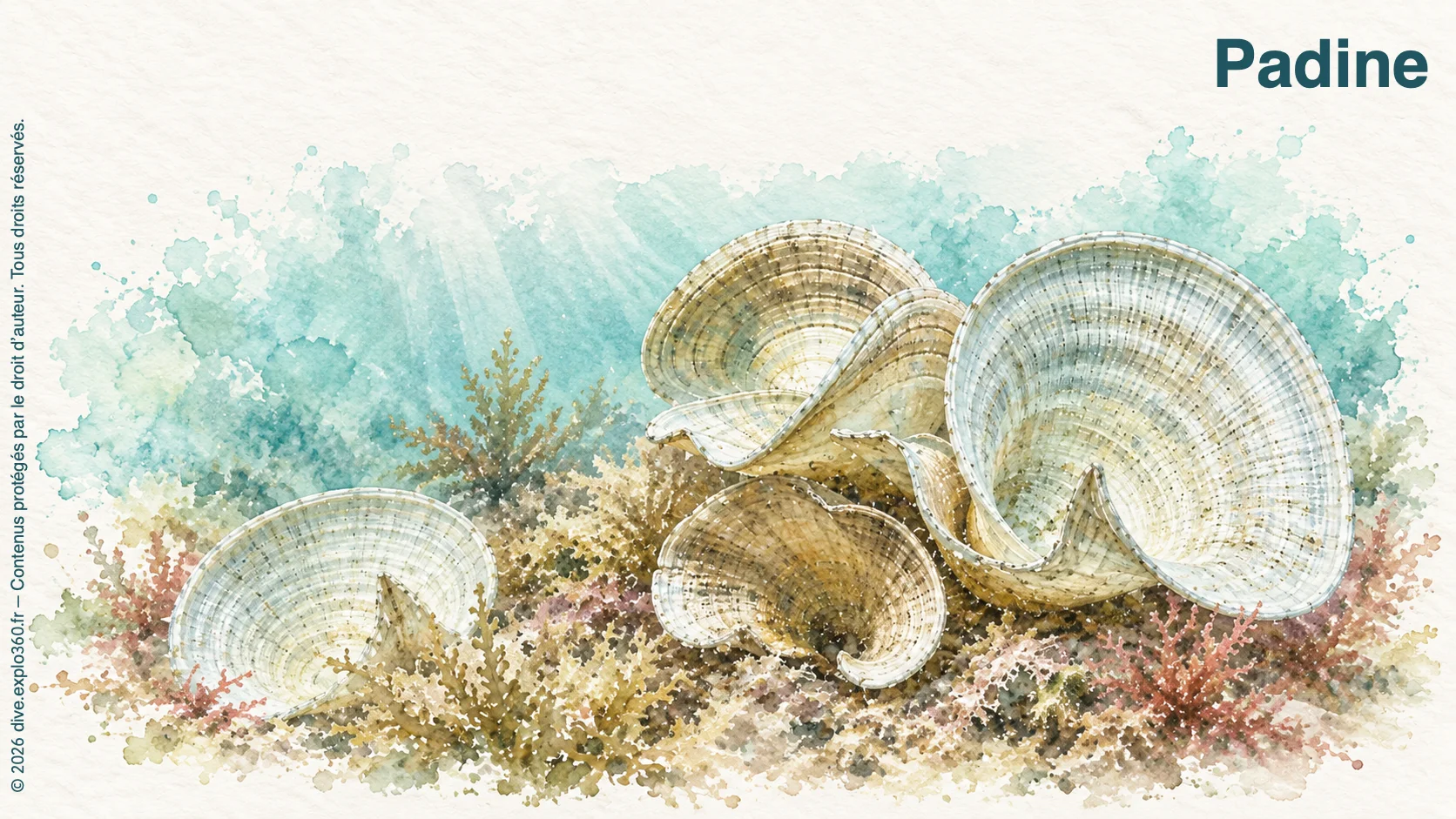
The different filamentous algae shown here are photosynthetic organisms. Their cells use light energy to turn dissolved carbon and water into organic material. The resulting sugars support their activities and growth, alongside minerals absorbed from their surroundings. Light requirements and responses to nutrient supplies depend on the species.
GO FURTHER WITH AMIGANSEAU
Unlock the full profile
Deepen your knowledge with the exclusive chapters and interactive resources included in an AMIGANSEAU licence.
Subscribing to Dive.Explo360 means supporting a different way to discover marine life.
Our independent platform is entirely self-funded and relies solely on subscriptions. Every licence helps us continue our work, create new content, and share what we know about the marine world with as many people as possible.
Starting at €80 per year, your support makes all the difference.
 Understand the species