


 Habitat
 Depth
 Group
 Role
 Average size
WHAT DOES IT LOOK LIKE?
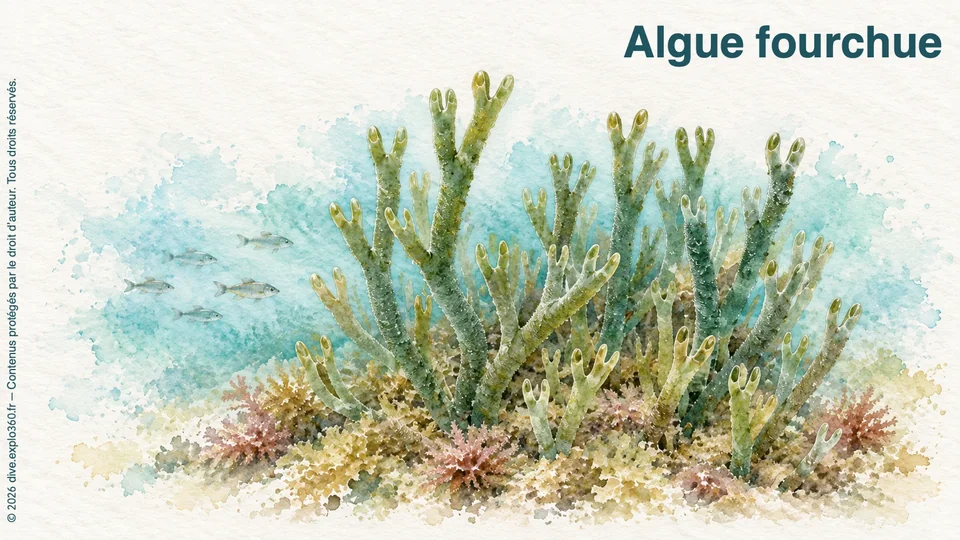
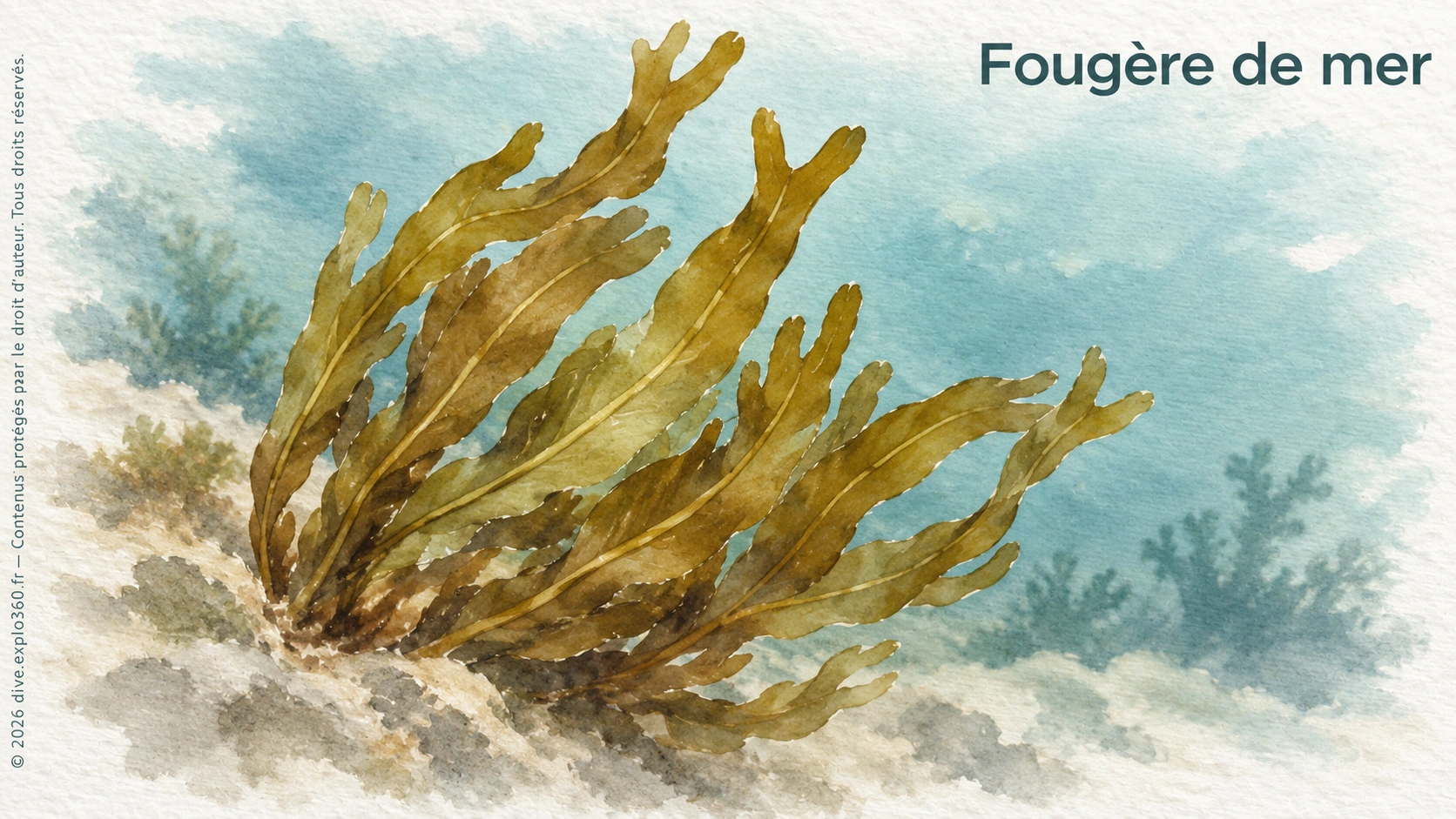
The ribbons of forkweed (Dictyota dichotoma) split in two, then each divides again. Forks follow one another regularly: this is dichotomous branching, repeated division in pairs.
The flat blades remain thin and flexible, from yellowish to darker brown. Their slight transparency lets a little light through.
WHERE DOES IT LIVE?
From coastal rock surfaces to hard supports on mixed seabeds, forkweed remains in sufficiently lit areas. Occupied depth varies with water clarity. A deeper seabed in clear water may still receive enough light, so no single limit describes every site.
WHAT DOES IT EAT?
Cells in the forked alga produce the organic compounds they need through photosynthesis. Pigments capture light, while seawater supplies dissolved carbon and the necessary minerals. The sugars produced then support the alga’s activities and the building of new living material. Light supplies the energy needed to make this organic material.
GO FURTHER WITH AMIGANSEAU
Unlock the full profile
Deepen your knowledge with the exclusive chapters and interactive resources included in an AMIGANSEAU licence.
- HOW DOES IT REPRODUCE?
- OUR OBSERVATIONS
- ARTICLE
Also included in the full profile
- Advanced navigation between description, ecological context, observations and behaviour
- Interactive food chain to explore the species’ feeding relationships
- Natural history podcast and dive debrief
- Infographic and illustrated summary profile
 Understand the species