Habitat
 Depth
 Group
 Role
 Average size
WHAT DOES IT LOOK LIKE?
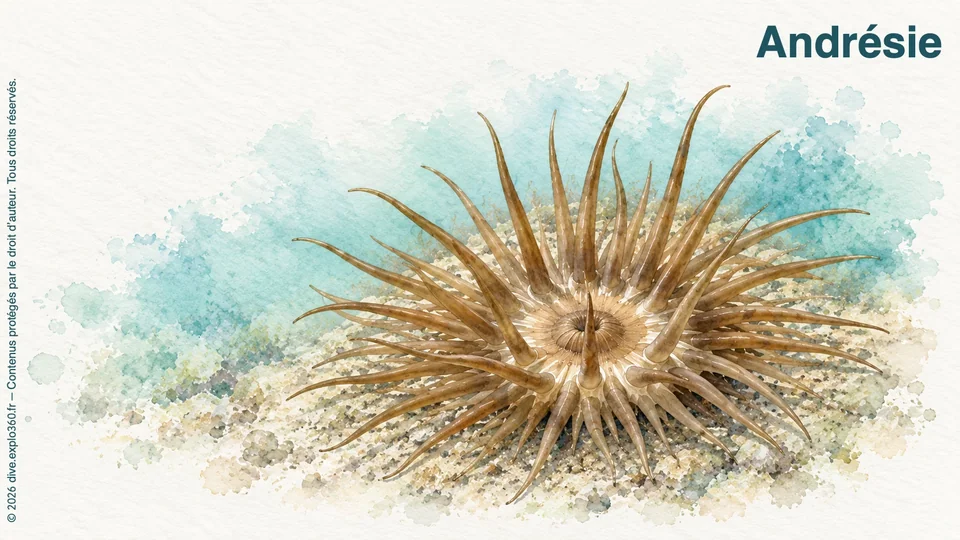
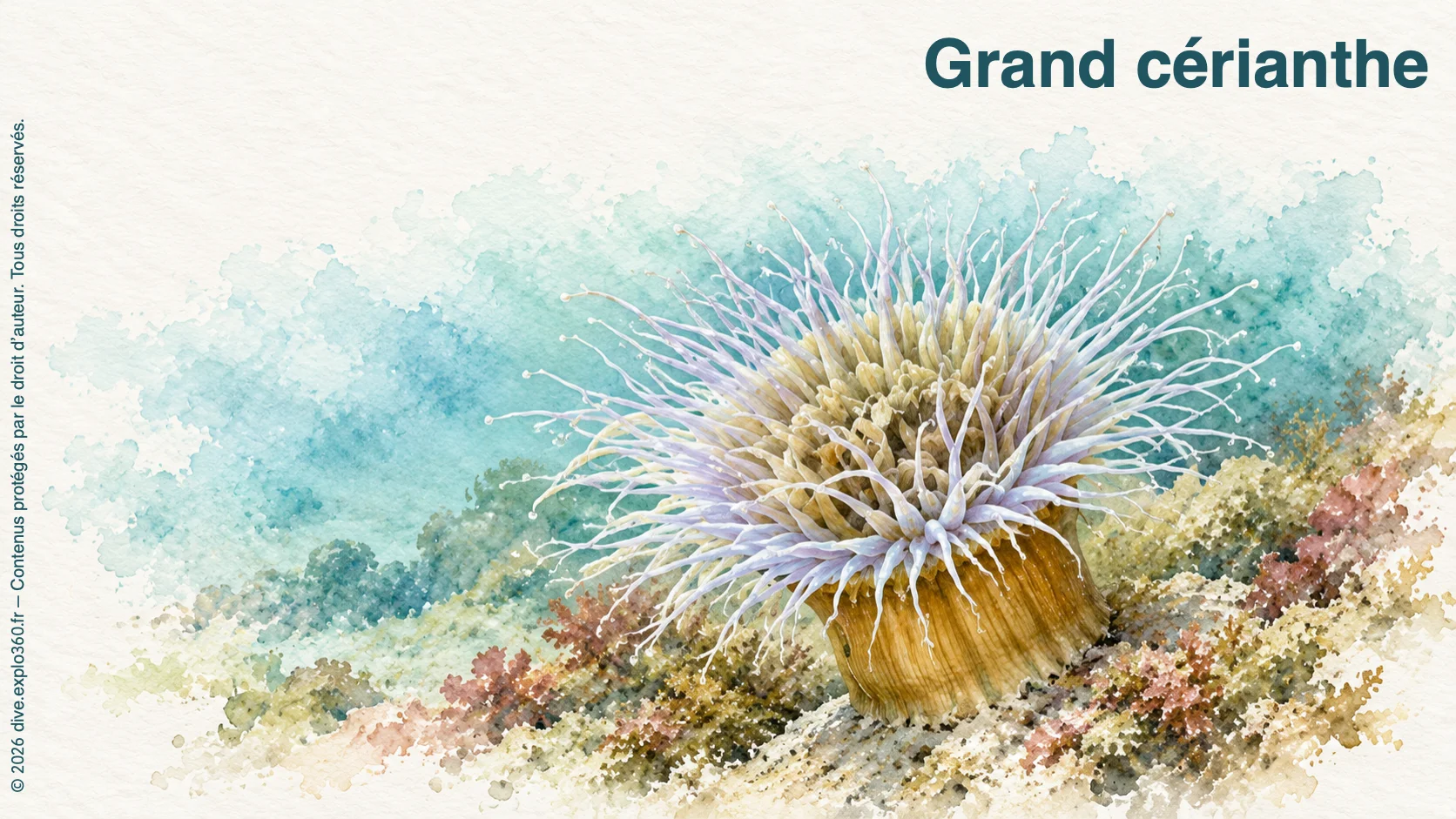
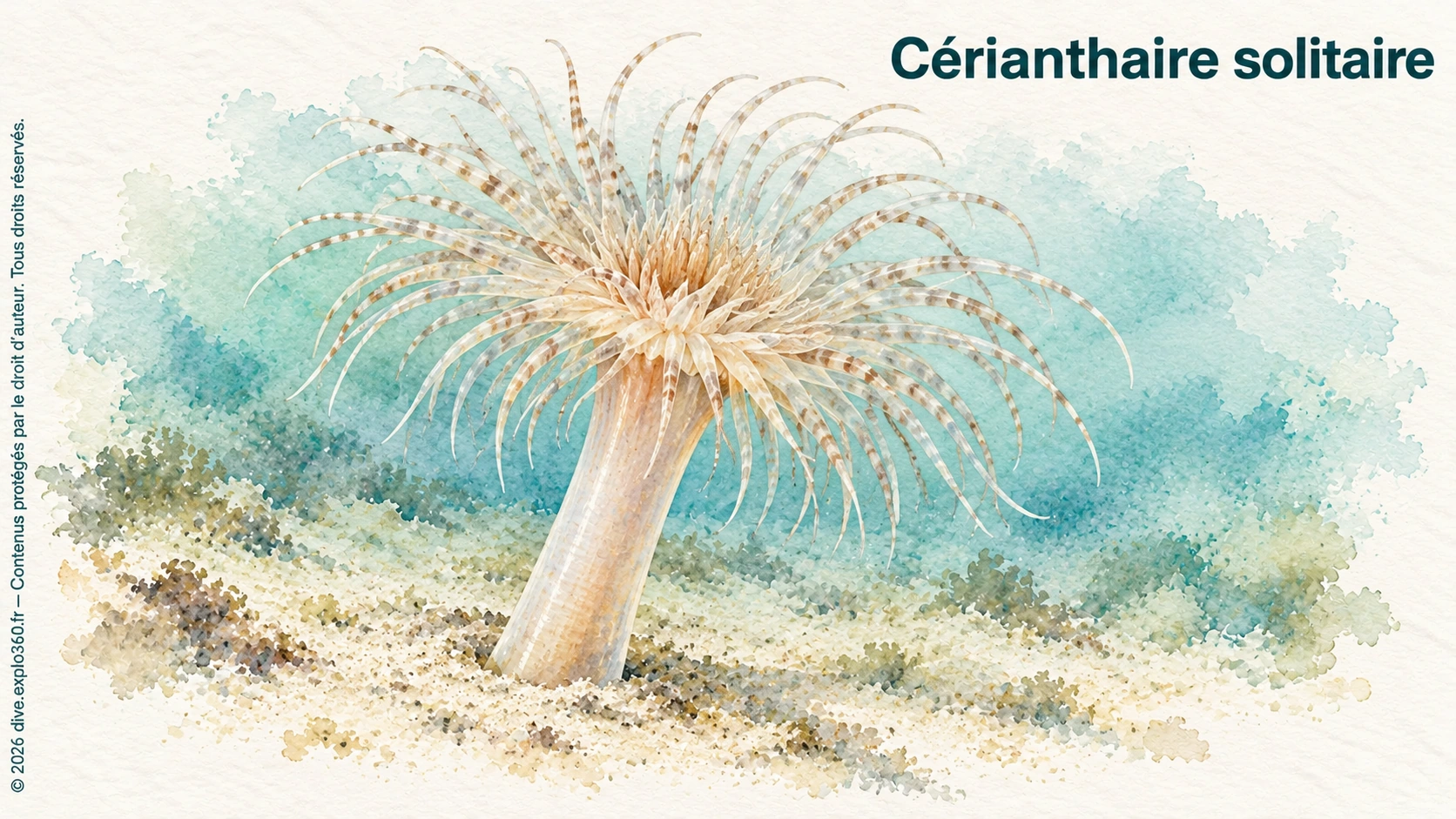
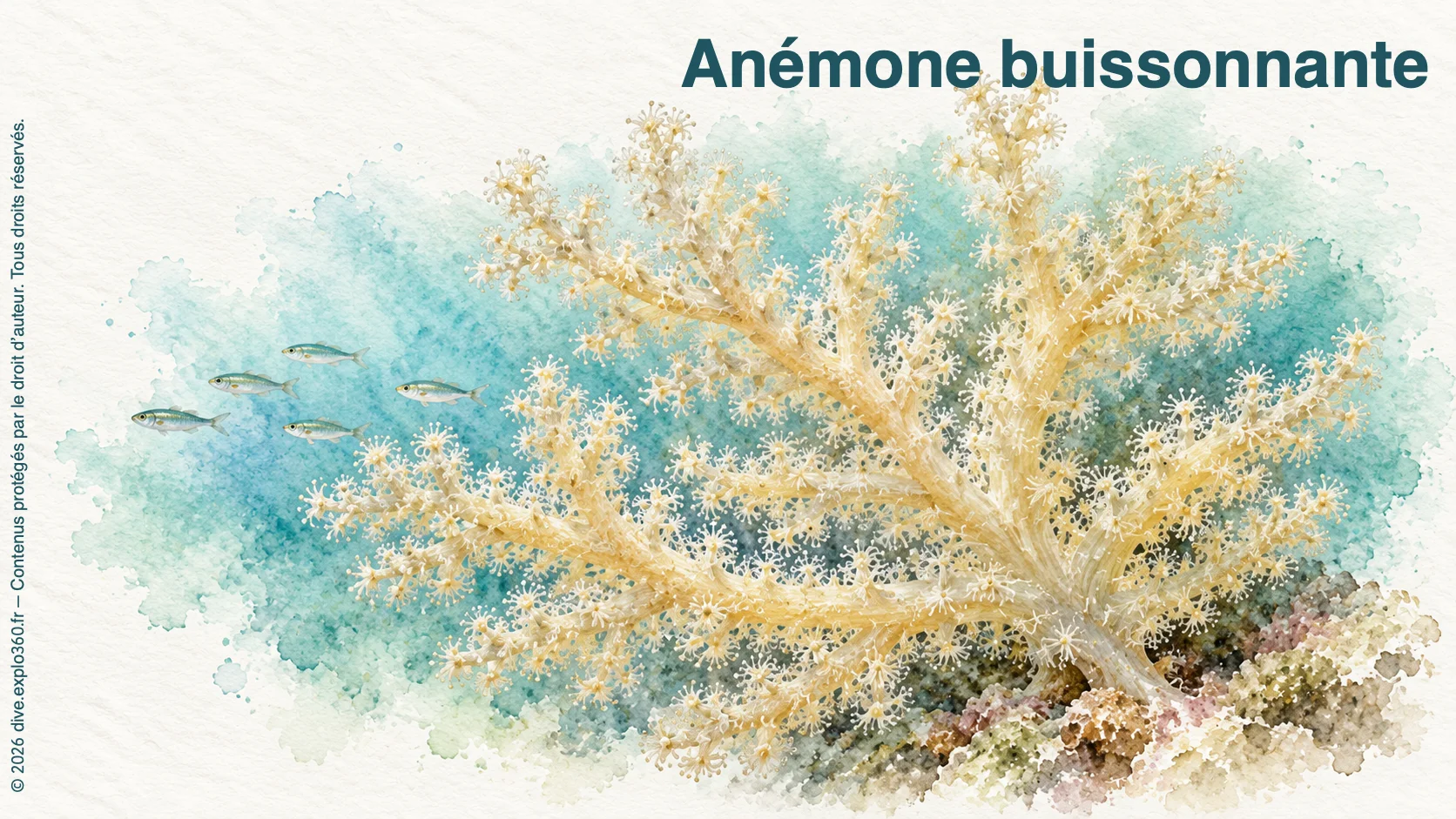
Around the edge of the burrowing anemone (Andresia parthenopea), tentacles spread flat; nearer the centre, they stand upright. Several rings surround the mouth on the oral disc, the anemone’s upper surface.
The body mainly reveals this disc. It may be very pale or brown, while the contrasting tentacle positions add depth to the outline.
WHERE DOES IT LIVE?
Sand and muddy-sand seabeds form the habitat of the burrowing anemone. Its column remains buried directly in sediment, without the protective tube of a tube anemone. It occurs in the Mediterranean and north-east Atlantic from shallow water to several tens of metres.
WHAT DOES IT EAT?
When prey is held by the burrowing anemone’s tentacles, their stinging cells can immobilise it before it is moved towards the central mouth. These stages distinguish an actual capture from an anemone simply holding its tentacles open. Feeding depends on taking animals within reach rather than continuously filtering water.
GO FURTHER WITH AMIGANSEAU
Unlock the full profile
Deepen your knowledge with the exclusive chapters and interactive resources included in an AMIGANSEAU licence.
Subscribing to Dive.Explo360 means supporting a different way to discover marine life.
Our independent platform is entirely self-funded and relies solely on subscriptions. Every licence helps us continue our work, create new content, and share what we know about the marine world with as many people as possible.
Starting at €80 per year, your support makes all the difference.
 Understand the species