


 Habitat
 Depth
 Group
 Role
 Average size
 Good to know
WHAT DOES IT LOOK LIKE?
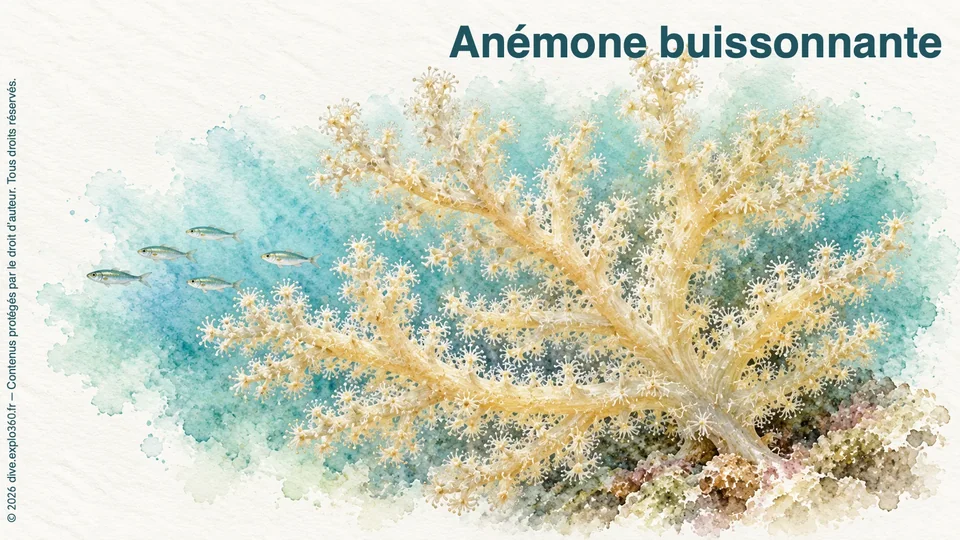
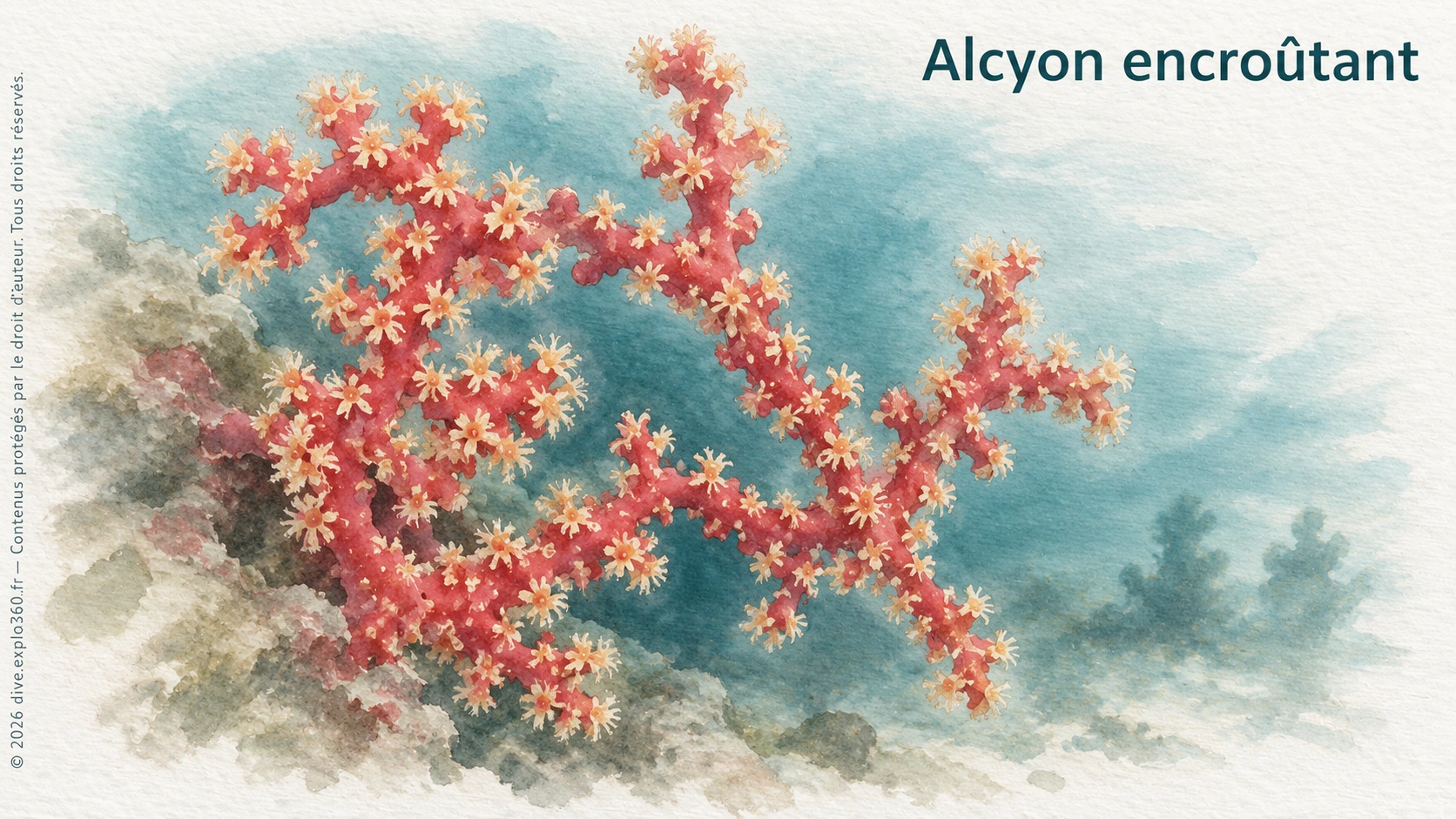
Yellow polyps, the small animals living together in the colony, stand out on the rigid branches of gold coral (Savalia savaglia). When expanded, each bears a crown of tentacles, fine flexible extensions around the mouth. The branching structure can approach a metre. Its outline recalls a gorgonian, although the small animals covering its branches have a different appearance.
WHERE DOES IT LIVE?
In dimly lit rocky areas, gold coral remains attached to a hard surface, often beside sea fans whose axes it may colonise. It is mainly known from the Mediterranean and nearby eastern Atlantic. Natural sites generally occur below around thirty metres; very shallow records may involve transplanted colonies.
WHAT DOES IT EAT?
The gold coral’s polyps form feeding points distributed across the colony. Their tentacles, armed with stinging cells, take small planktonic prey from the surrounding water. Captured food is brought to each polyp’s mouth. It may also absorb substances dissolved in seawater, a process that involves no visible movement.
GO FURTHER WITH AMIGANSEAU
Unlock the full profile
Deepen your knowledge with the exclusive chapters and interactive resources included in an AMIGANSEAU licence.
Subscribing to Dive.Explo360 means supporting a different way to discover marine life.
Our independent platform is entirely self-funded and relies solely on subscriptions. Every licence helps us continue our work, create new content, and share what we know about the marine world with as many people as possible.
Starting at €80 per year, your support makes all the difference.
 Understand the species