


 Habitat
 Depth
 Group
 Role
 Average size
WHAT DOES IT LOOK LIKE?
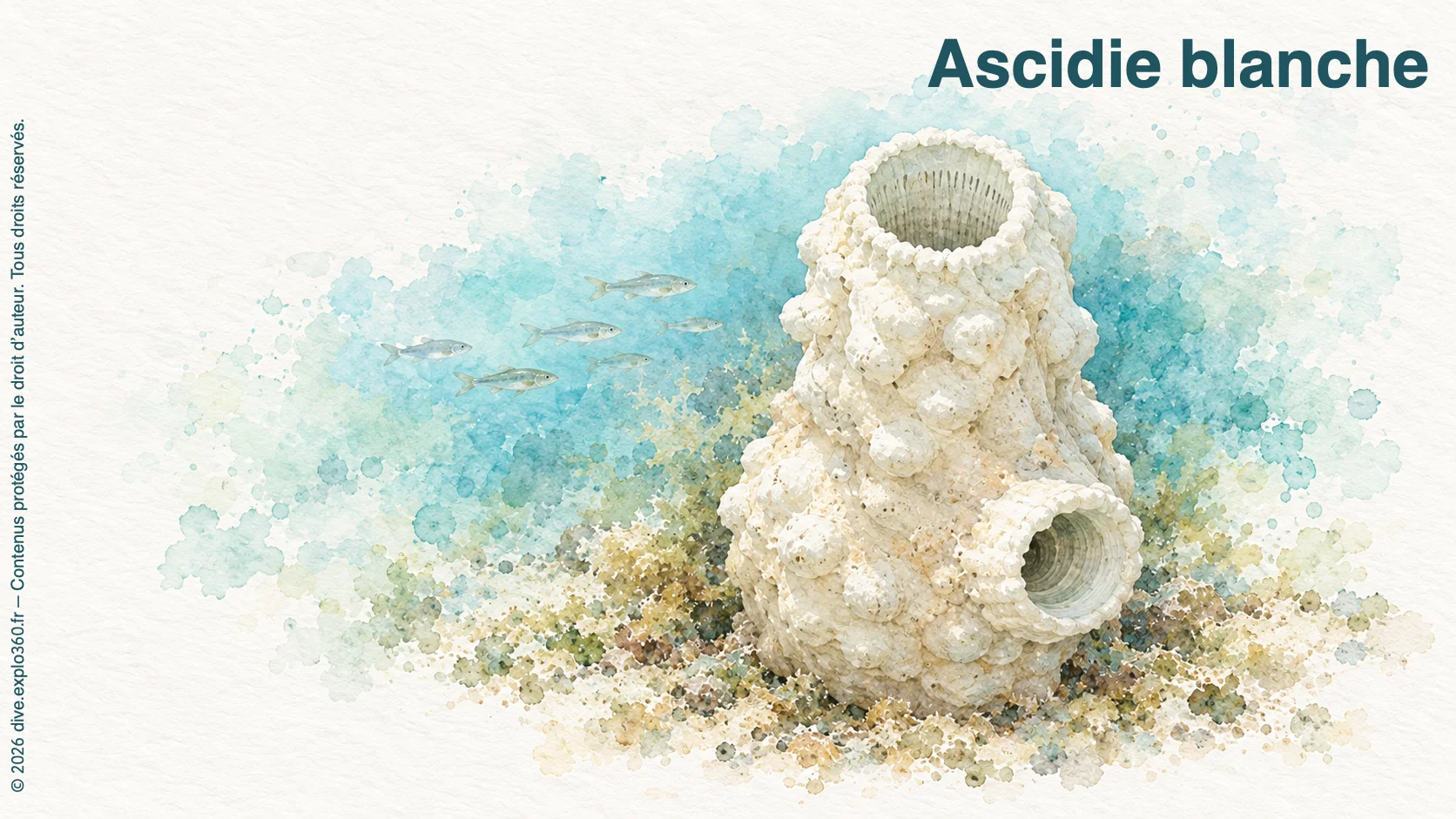
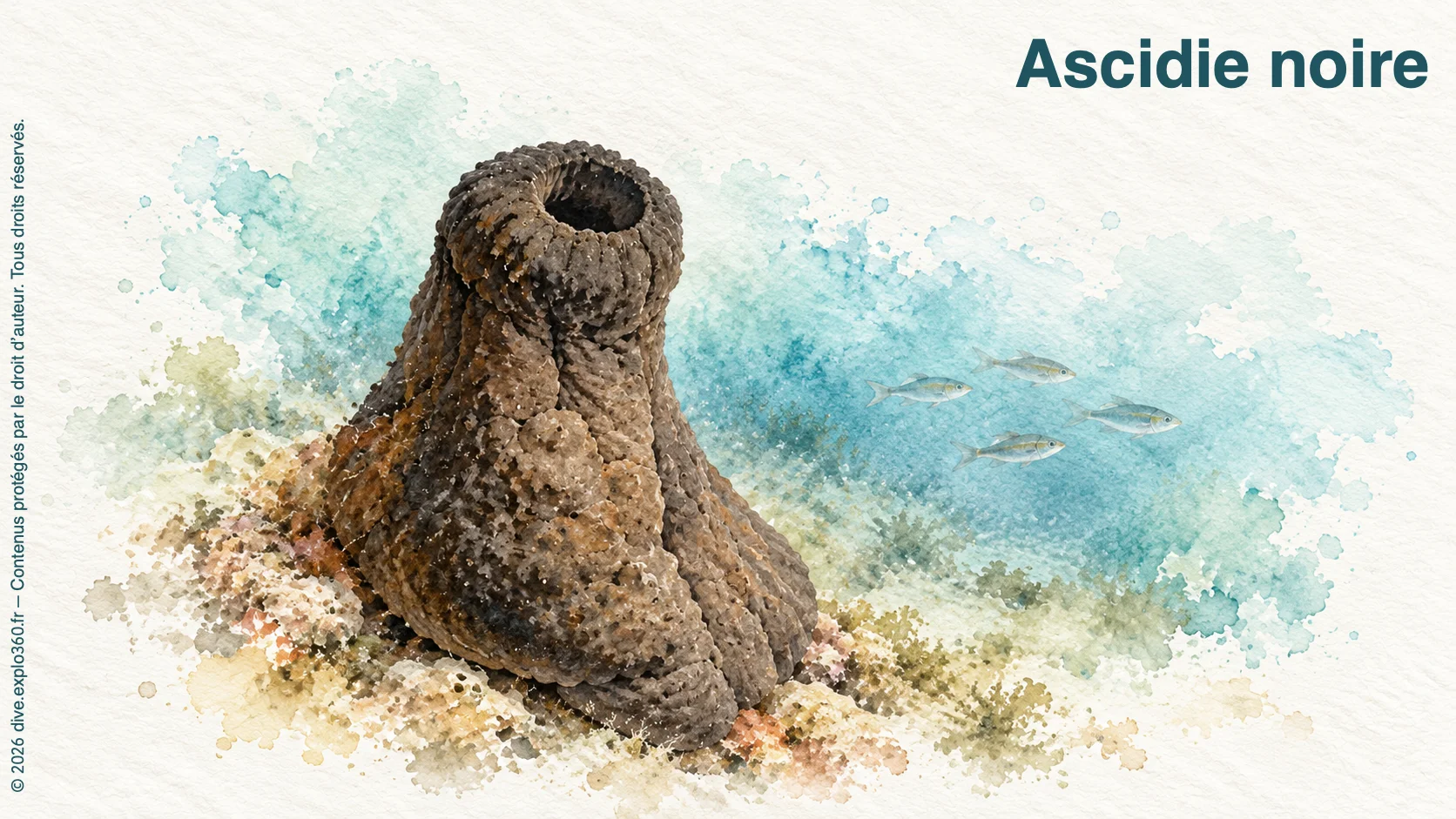
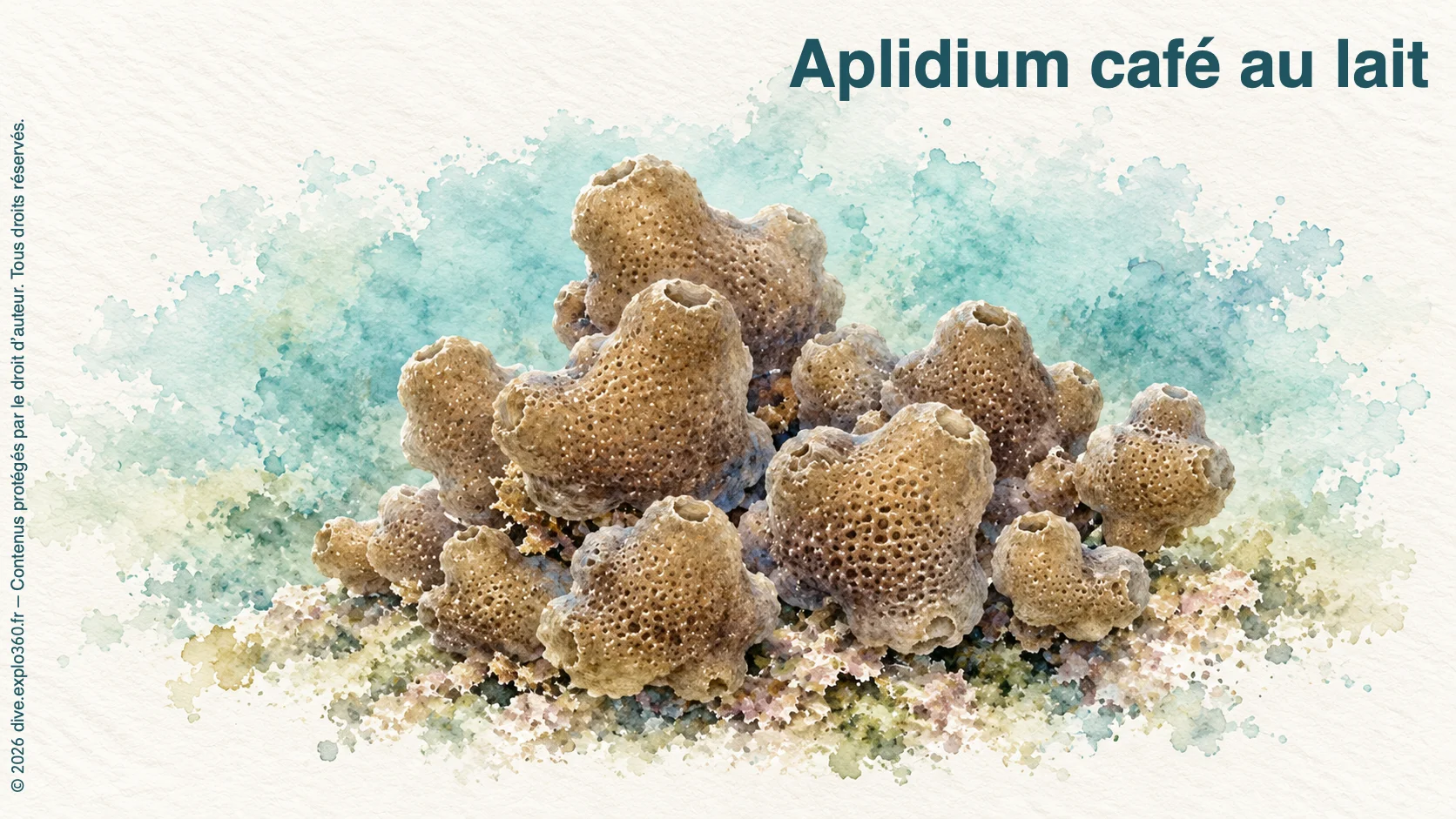
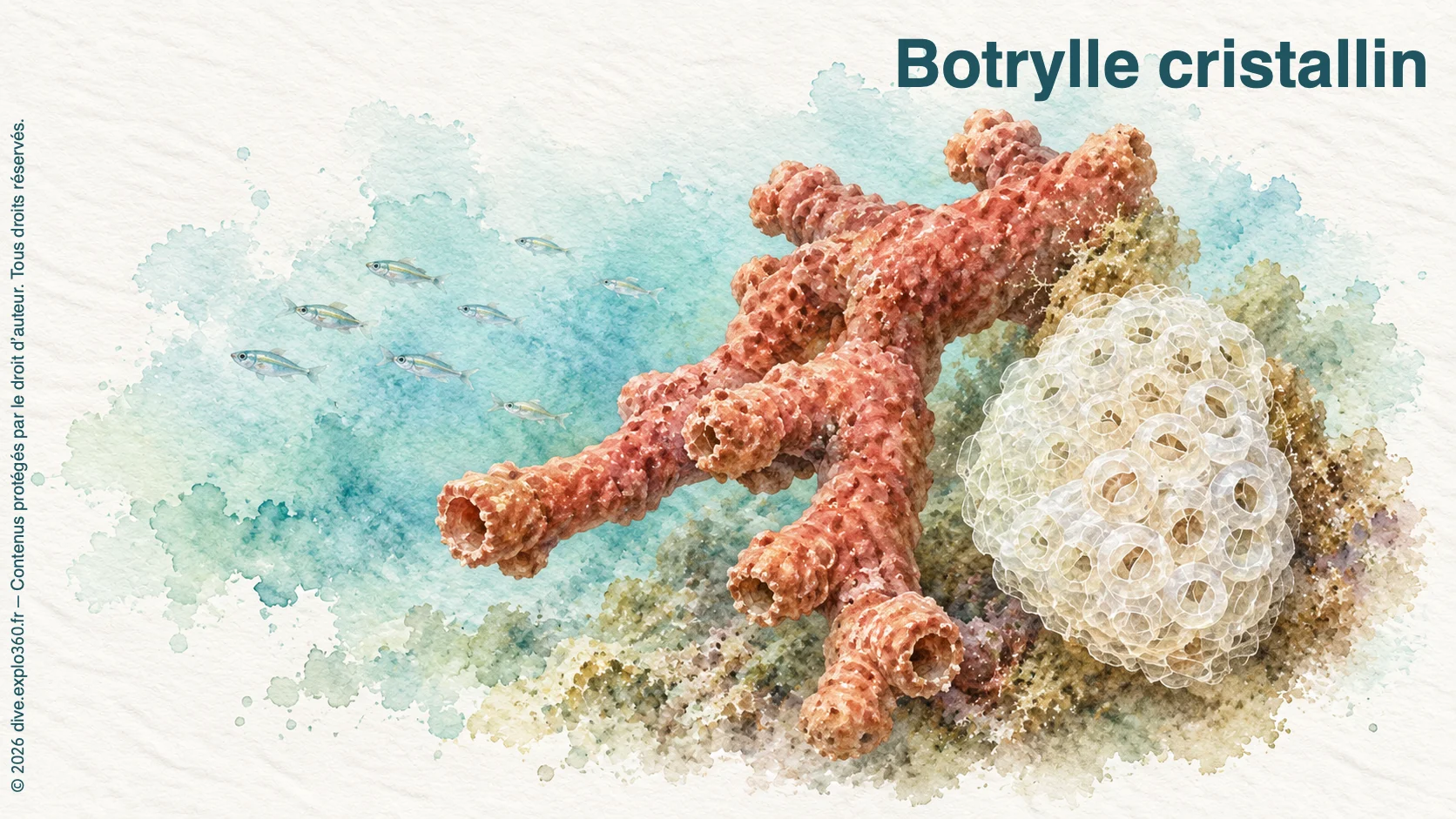
Tiny openings wind in rows across this colonial sea squirt (Aplidium conicum). The rows curve around larger openings, forming a pattern on the rounded or cone-shaped mass. The mass is made up of the tiny animals that live together in the colony.
Orange is frequent, but white colonies also occur. Other sea squirts, attached marine animals, may look very similar, and visible patterns do not always distinguish them.
WHERE DOES IT LIVE?
Drop-offs and coralligenous formations are among the conical sea squirt’s supports, alongside other rocky surfaces. The colony remains attached, often in a sheltered or dimly lit position. Such locations can occur at different depths depending on seabed structure.
WHAT DOES IT EAT?
Inside the conical sea squirt, individual animals filter water entering their small mouth openings. Pharyngeal cilia maintain the current, and suspended food particles are collected as the water passes through. Numerous filtering apparatuses operate together within the colony. Microscopic foods reach each zooid’s digestive tract, while water follows the outgoing circuit.
GO FURTHER WITH AMIGANSEAU
Unlock the full profile
Deepen your knowledge with the exclusive chapters and interactive resources included in an AMIGANSEAU licence.
- HOW DOES IT REPRODUCE?
- OUR OBSERVATIONS
- ARTICLE
Also included in the full profile
- Advanced navigation between description, ecological context, observations and behaviour
- Interactive food chain to explore the species’ feeding relationships
- Natural history podcast and dive debrief
- Infographic and illustrated summary profile

 Understand the species