


 Habitat
 Depth
 Group
 Role
 Average size
 Good to know
WHAT DOES IT LOOK LIKE?
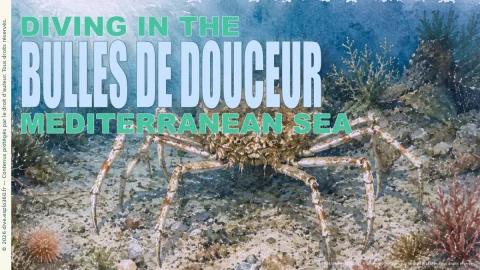
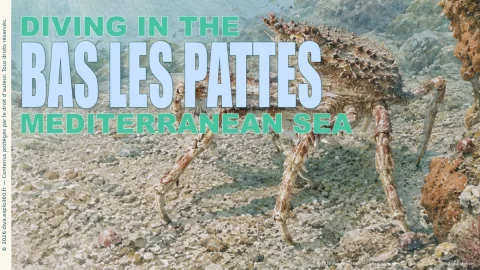
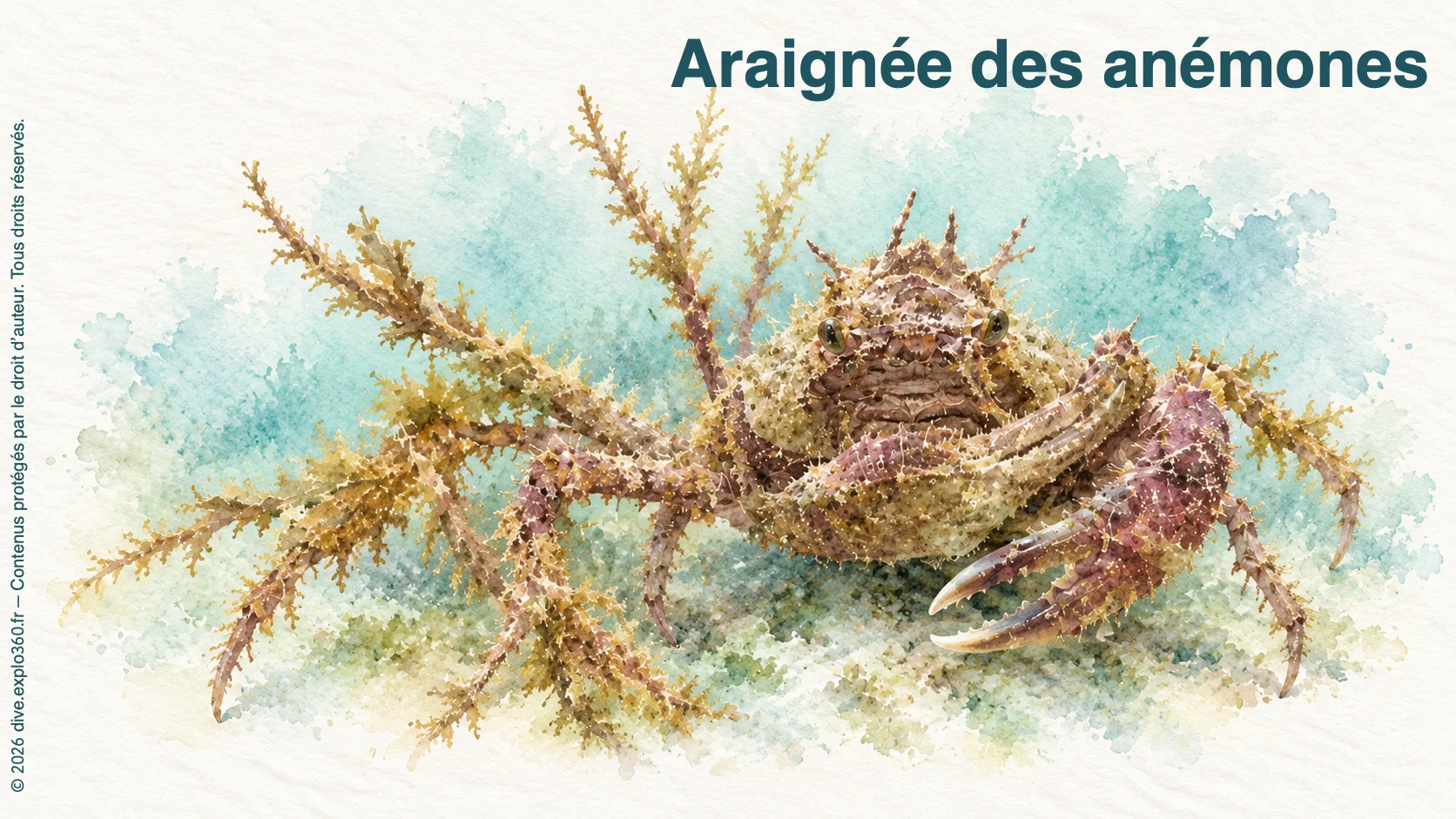
Algae or small organisms can obscure the outline of the spider crab (Maja squinado). Beneath this covering, the hard shell is domed, triangular from above and rounded at the rear, with spines along its margins.
Long, slender legs give the whole animal its spider-like appearance. Brown and reddish colours on the shell may show only in patches. Several spider crabs have similar outlines, so a general impression alone does not always establish the species.
WHERE DOES IT LIVE?
Seagrass meadows and algal beds are part of the spiny spider crab’s habitat, alongside rocky areas and sandy seabeds. The species occupies shallow water and areas several tens of metres deep. Locations and depth may vary with the season.
WHAT DOES IT EAT?
A spiny spider crab’s meal can often be recognised by its claw movements: they grasp a resource and carry it towards the mouthparts. Its diet includes algae and several groups of bottom-dwelling animals, notably molluscs, crustaceans and echinoderms. Fish remains may also be eaten. Taking algae, capturing an animal and eating remains provide different resources within its omnivorous diet.
GO FURTHER WITH AMIGANSEAU
Unlock the full profile
Deepen your knowledge with the exclusive chapters and interactive resources included in an AMIGANSEAU licence.
- HOW DOES IT REPRODUCE?
- OUR OBSERVATIONS
- ARTICLE
Also included in the full profile
- Advanced navigation between description, ecological context, observations and behaviour
- Interactive food chain to explore the species’ feeding relationships
- Natural history podcast and dive debrief
- Infographic and illustrated summary profile
- Additional photographic observations



 Understand the species