


 Habitat
 Depth
 Group
 Role
 Average size
WHAT DOES IT LOOK LIKE?
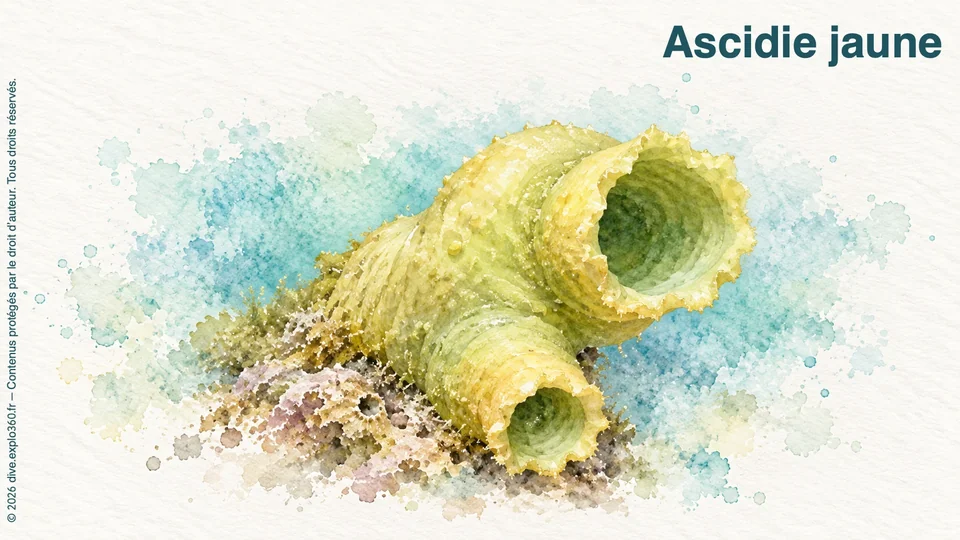
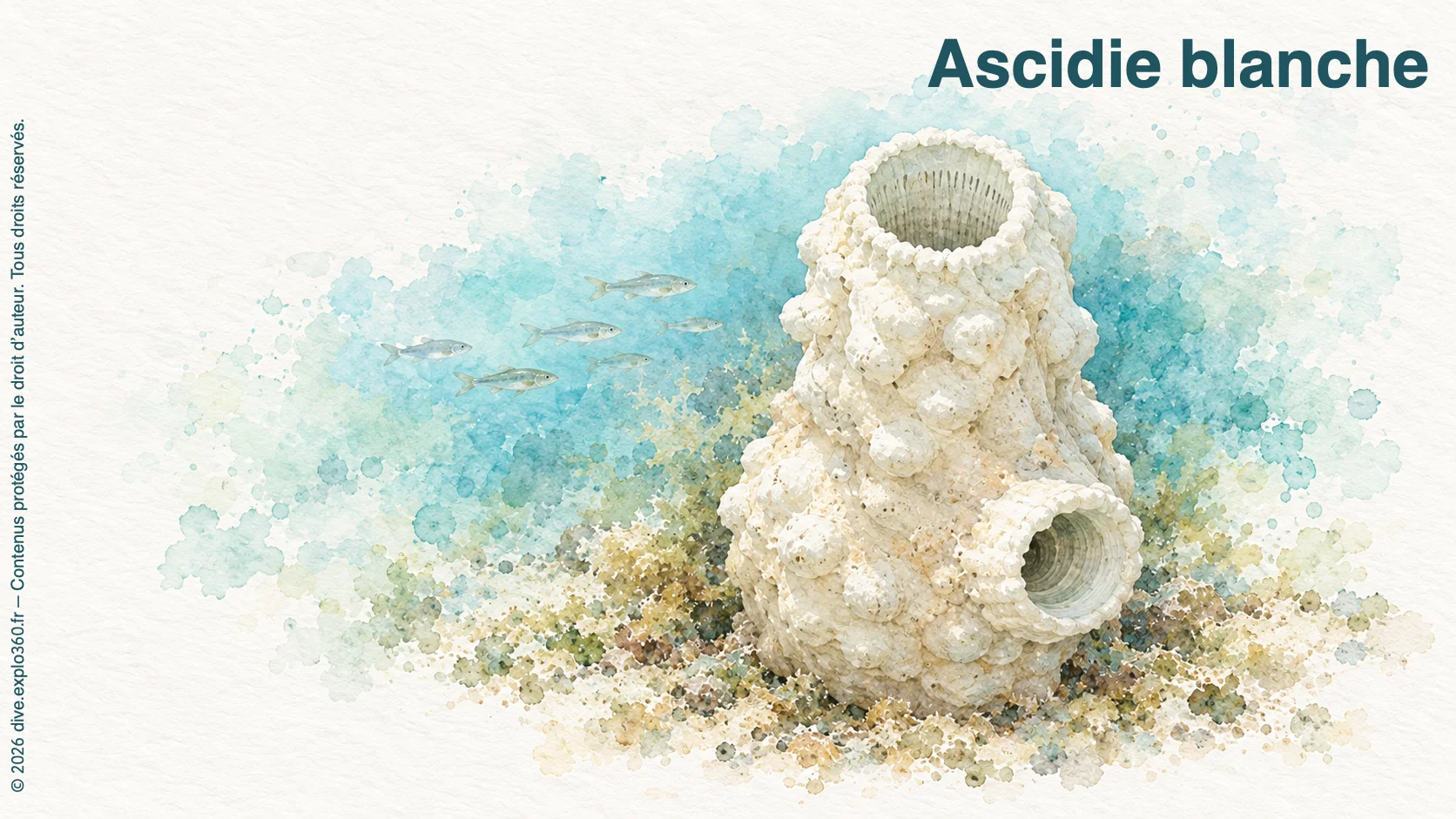
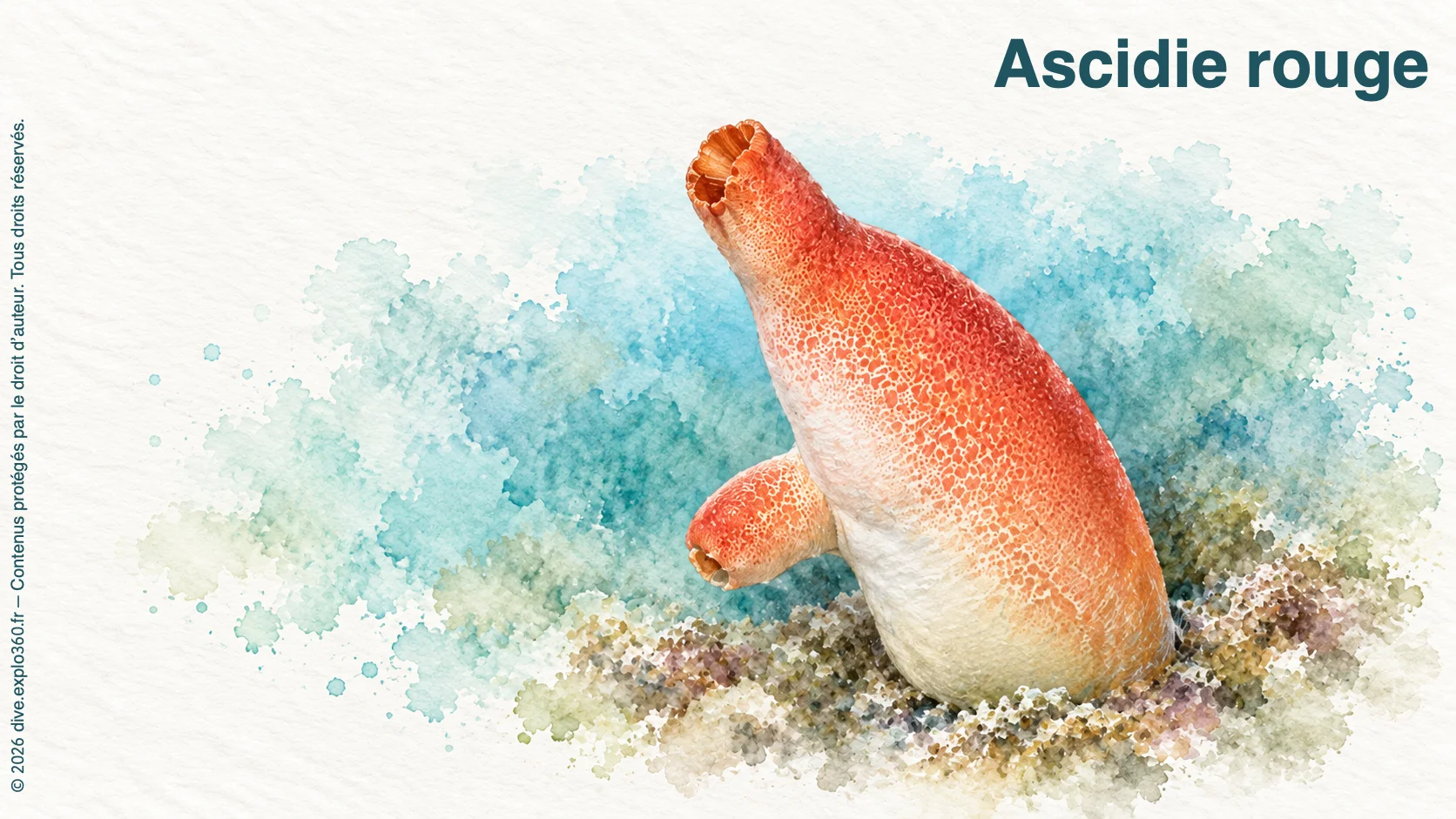
The yellow sea squirt (Ciona edwardsi) stands upright like a flexible, translucent yellow tube. Its outer covering, called the tunic, is smooth and looks like jelly. Its two openings, or siphons, sit close together, one at the top and one at the side.
The opening margins are lobed. Externally it closely resembles other related sea squirts, and a photograph may leave their identity unresolved.
WHERE DOES IT LIVE?
Within small fissures in rock or coralligenous formations, Edwards’ sea squirt may sit embedded in the structure. It attaches to rocky Mediterranean surfaces exposed to water movement. Records include diving depths and much deeper areas; shelter within a fissure does not imply an absence of current.
WHAT DOES IT EAT?
In the yellow sea squirt, food is collected inside the pharynx. A glandular groove produces mucus that traps particles carried in by the water. Cilia gather this food and direct it towards the stomach. Meanwhile, water passes through the filter slits and reaches the outgoing siphon. The mechanism combines filtration with particle transport, without external prey capture. Once retained, food enters the digestive tract; filtered water leaves through the exhalant siphon.
GO FURTHER WITH AMIGANSEAU
Unlock the full profile
Deepen your knowledge with the exclusive chapters and interactive resources included in an AMIGANSEAU licence.
- HOW DOES IT REPRODUCE?
- OUR OBSERVATIONS
- ARTICLE
Also included in the full profile
- Advanced navigation between description, ecological context, observations and behaviour
- Interactive food chain to explore the species’ feeding relationships
- Natural history podcast and dive debrief
- Infographic and illustrated summary profile
 Understand the species