


 Habitat
 Depth
 Group
 Role
 Average size
WHAT DOES IT LOOK LIKE?
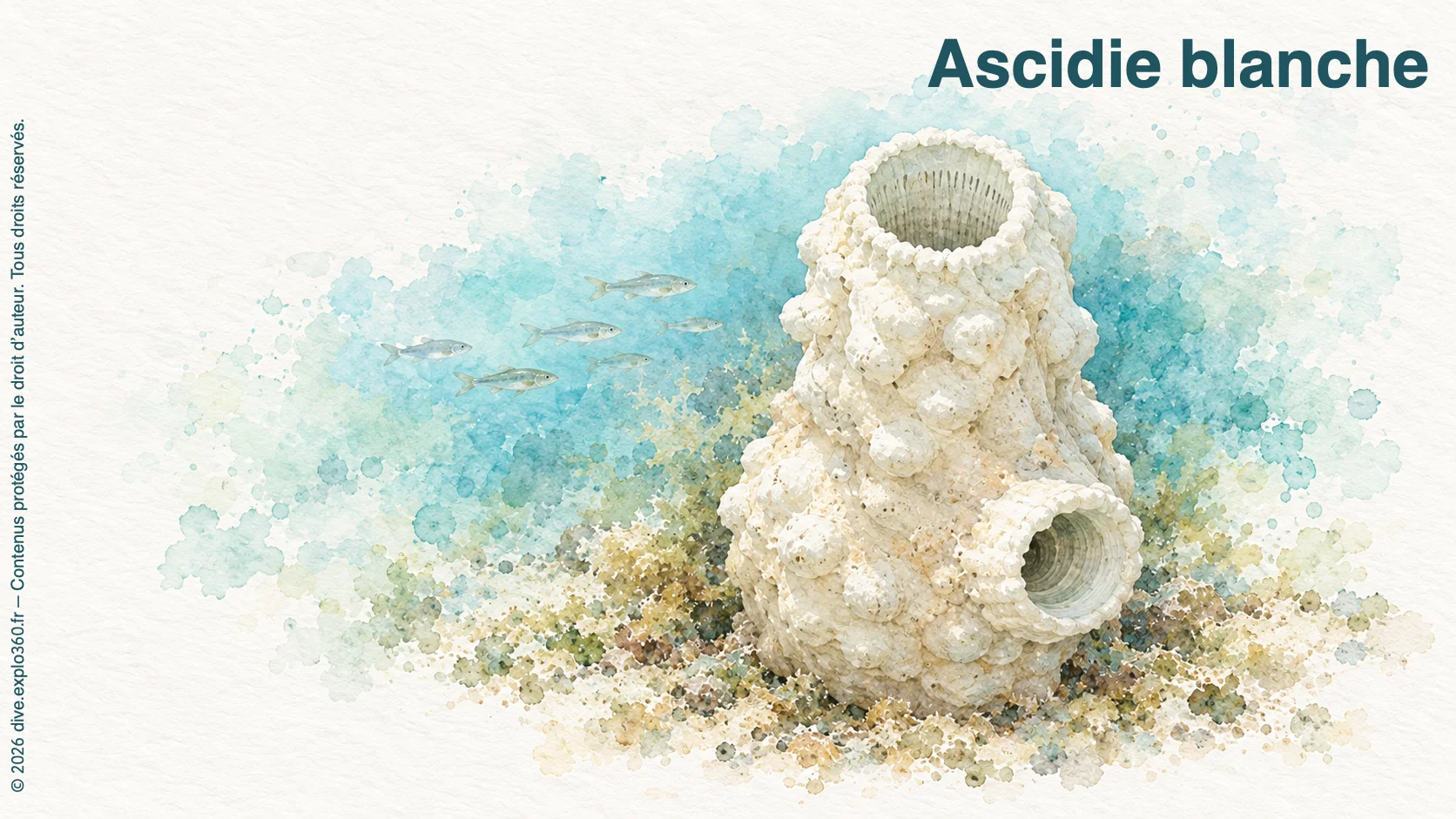
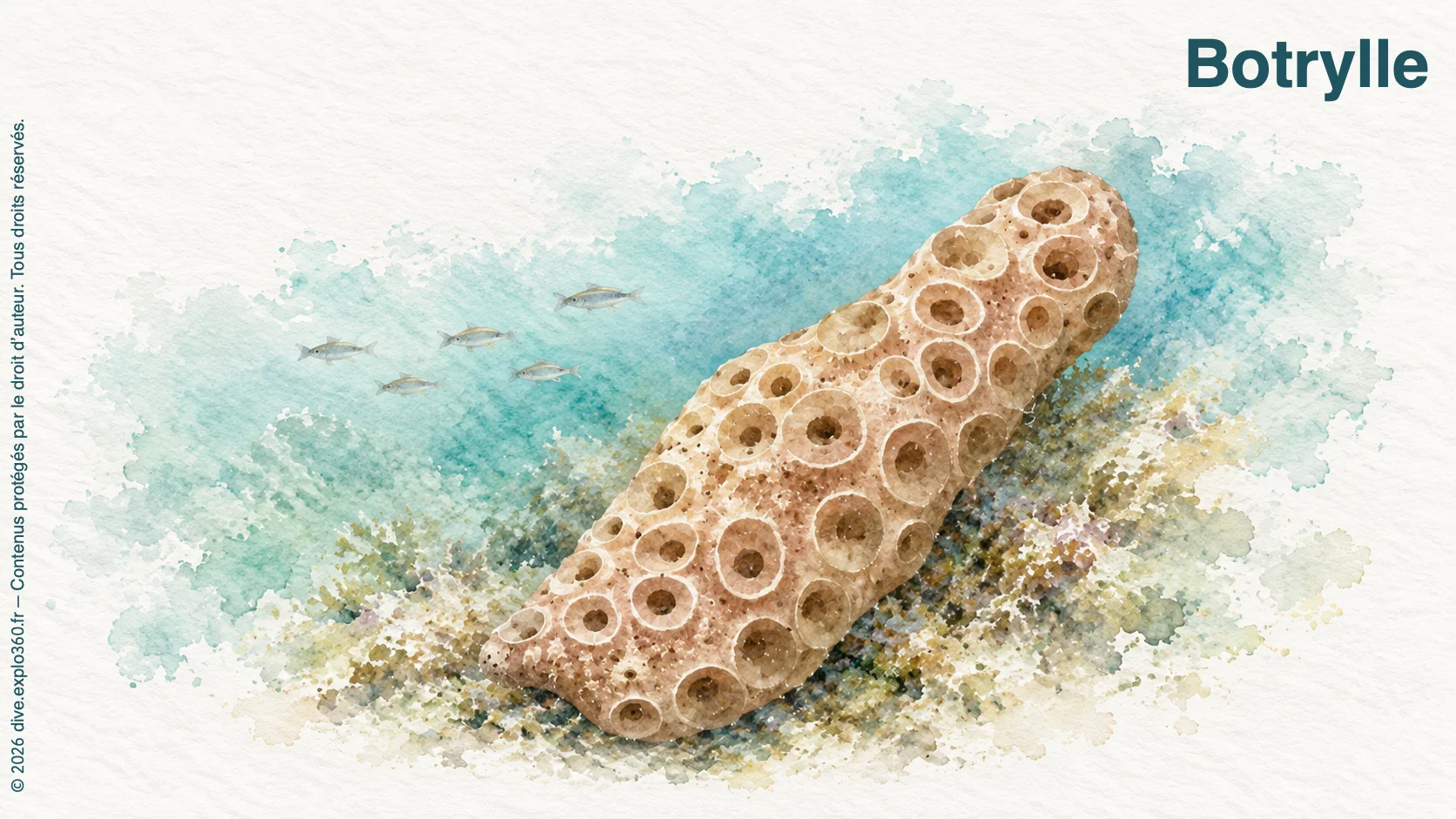
Fine white lines run across the transparent covering of the crystalline sea squirt (Botrylloides crystallinus), which ranges from white to pale yellow. The lines extend from the white rims around the openings.
The colony forms a rounded, often hemispherical mass with a jelly-like appearance. Through the tunic, the shared covering, the small animals called zooids form rows around common openings.
WHERE DOES IT LIVE?
Surfaces shaded by overhangs or inside recesses and cavities support the crystalline sea squirt. The colony attaches to hard rock or shell and may also use other organisms. Occupied positions extend from shallow water to several tens of metres, with water circulating around the surface.
WHAT DOES IT EAT?
Circulation in the crystalline colonial sea squirt combines individual inlets with shared outlets. Water first reaches each zooid’s internal filter, where food particles are retained and gathered in mucus. Beating cilia then direct them towards the stomach. Filtered water converges towards common cloacal siphons. Sensory tentacles at the inlet can limit the entry of oversized material.
GO FURTHER WITH AMIGANSEAU
Unlock the full profile
Deepen your knowledge with the exclusive chapters and interactive resources included in an AMIGANSEAU licence.
- HOW DOES IT REPRODUCE?
- OUR OBSERVATIONS
- ARTICLE
Also included in the full profile
- Advanced navigation between description, ecological context, observations and behaviour
- Interactive food chain to explore the species’ feeding relationships
- Natural history podcast and dive debrief
- Infographic and illustrated summary profile

 Understand the species