


 Habitat
 Depth
 Group
 Role
 Average size
WHAT DOES IT LOOK LIKE?
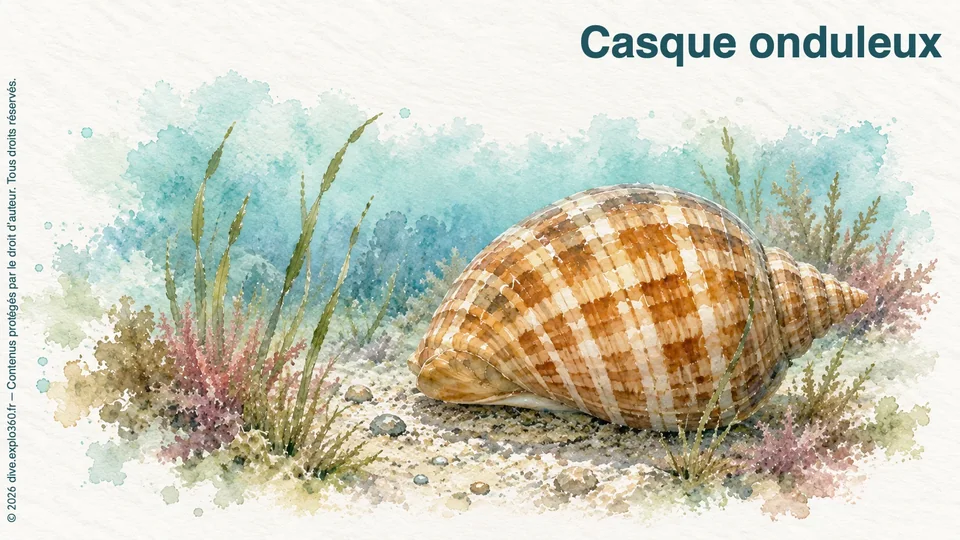
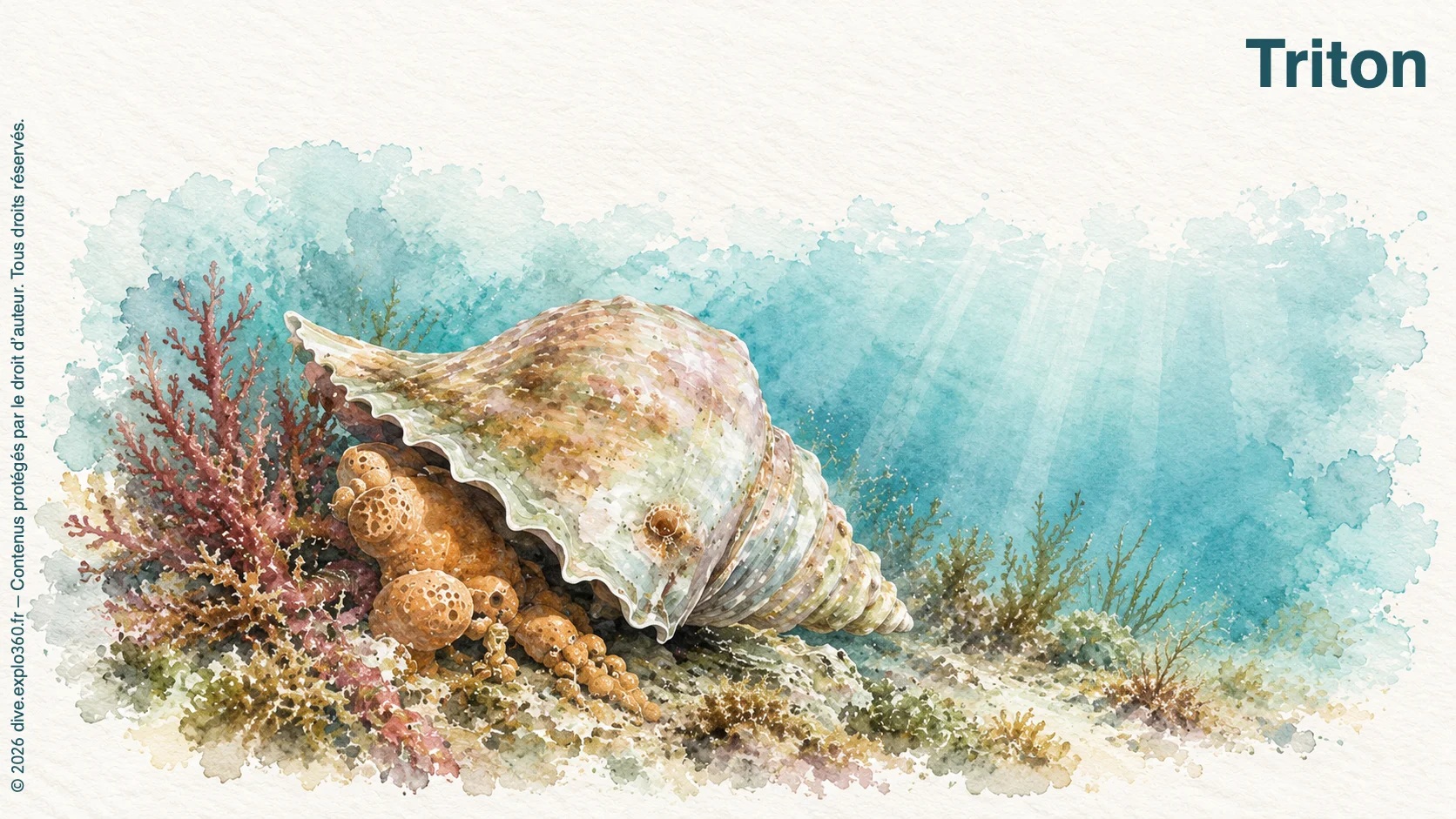
The Mediterranean helmet shell (Semicassis undulata) has a rounded shell with a pointed tip. Brown spots stand out against the pale shell, and small raised ridges follow its coils.
The opening has a thick outer lip, the shell’s outer edge. When the animal emerges, its broad, soft foot extends beneath.
WHERE DOES IT LIVE?
This species mainly lives on sandy or detrital seabeds, where it can partly bury itself.
It occurs in the Mediterranean Sea and the eastern Atlantic, generally between a few metres and several tens of metres deep.
It often remains hidden in the substrate during the day and becomes more active at nightfall.
WHAT DOES IT EAT?
Irregular sea urchins from soft seabeds are important in the grooved helmet snail’s diet. Its siphon helps locate food, while searching can be observed when it moves over sand. Scavenging is also reported, so some meals come from animals already dead at the time of feeding. Underwater, movement towards an urchin can be followed more easily than ingestion, which is partly obscured by contact between the two animals.
GO FURTHER WITH AMIGANSEAU
Unlock the full profile
Deepen your knowledge with the exclusive chapters and interactive resources included in an AMIGANSEAU licence.
- HOW DOES IT REPRODUCE?
- OUR OBSERVATIONS
- ARTICLE
Also included in the full profile
- Advanced navigation between description, ecological context, observations and behaviour
- Interactive food chain to explore the species’ feeding relationships
- Natural history podcast and dive debrief
- Infographic and illustrated summary profile
 Understand the species