


 Habitat
 Depth
 Group
 Role
 Average size
WHAT DOES IT LOOK LIKE?
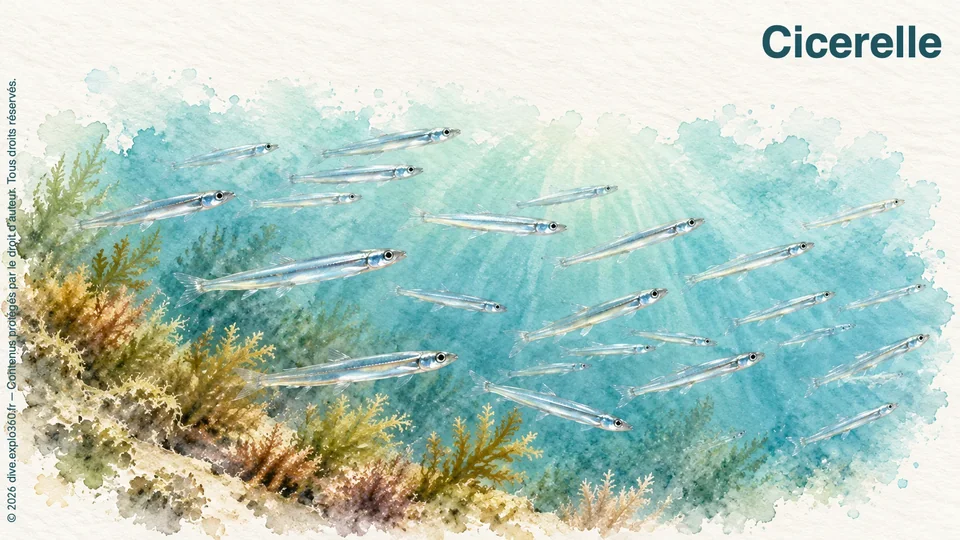
The Mediterranean sand eel (Gymnammodytes cicerelus) has a long, narrow, flexible body that moves in waves as it swims. Its sides are silvery, and its lower jaw sticks out slightly beyond the upper jaw.
Pelvic fins, those found beneath the front body in many fish, are absent. The slender head continues the outline. Length is commonly about 12.5 cm and may reach nearly 17 cm.
WHERE DOES IT LIVE?
The Mediterranean sand eel lives above sandy seabeds, often in coastal areas.
It spends part of its time buried in sand, quickly taking refuge there when danger threatens.
WHAT DOES IT EAT?
The Mediterranean sand eel feeds on small zooplanktonic animals that it catches while swimming above sandy seabeds. It searches for prey in the water, particularly during the day. Its small mouth allows it to seize these organisms carried by water movements.
GO FURTHER WITH AMIGANSEAU
Unlock the full profile
Deepen your knowledge with the exclusive chapters and interactive resources included in an AMIGANSEAU licence.
Subscribing to Dive.Explo360 means supporting a different way to discover marine life.
Our independent platform is entirely self-funded and relies solely on subscriptions. Every licence helps us continue our work, create new content, and share what we know about the marine world with as many people as possible.
Starting at €80 per year, your support makes all the difference.
 Understand the species