Habitat
 Depth
 Group
 Role
 Average size
 Good to know
WHAT DOES IT LOOK LIKE?
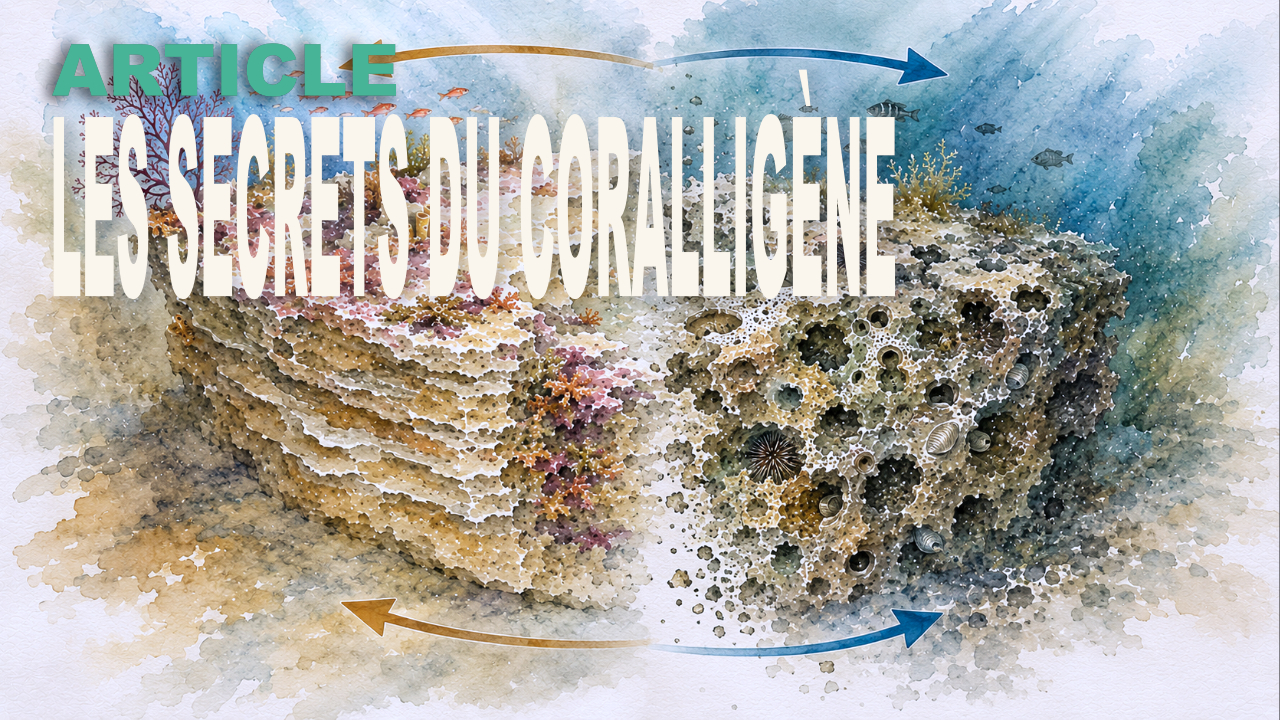
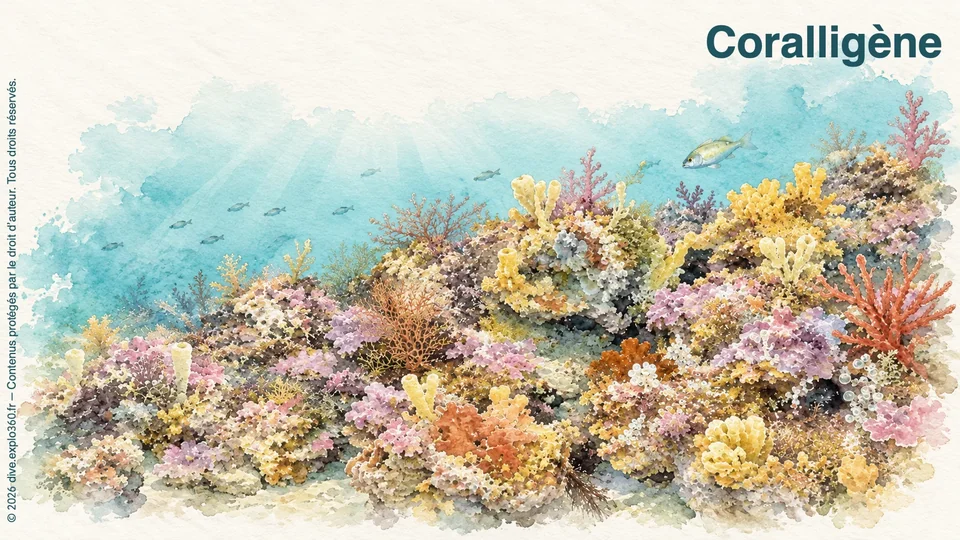
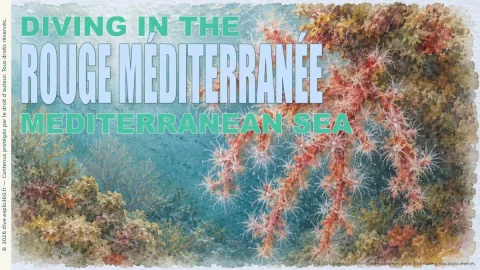
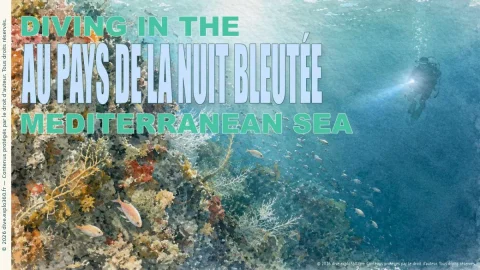
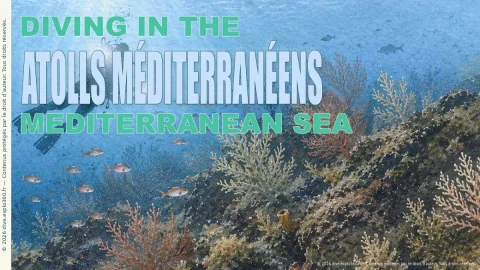
Coralligenous habitat has a hard, uneven surface that looks like rock. Algae, sponges and other animals form a mosaic across it, often growing over one another.
Coralligenous habitat is a bioconstruction: its relief forms in particular as calcareous algae deposit calcium carbonate. Other organisms settle on this structure, while some bore cavities into areas that have already formed. The result is a network of uneven surfaces, small crevices and overhangs inhabited by many species.
WHERE DOES IT LIVE?
Coralligenous habitat mainly develops on rocky seabeds or hard underwater features in low-light areas. It generally occurs from a few tens of metres deep and can extend well below a hundred metres.
It takes different forms: on vertical walls, beneath overhangs or as thick structures on more horizontal seabeds.
WHAT DOES IT EAT?
Feeding must be considered separately for the organisms making up coralligenous growth. Calcareous algae produce organic compounds through photosynthesis, using light energy and taking carbon and minerals from the water. Many attached animals collect suspended particles, some through internal filtration and others through tentacular interception. Predators and grazers add further nutritional modes.
GO FURTHER WITH AMIGANSEAU
Explore the full species guide
Discover full species guides, in-depth content and interactive tools available with your licence.
Dive.Explo360 is an independent, self-funded nonprofit. Every licence helps us create new content, improve our teaching tools and keep some of our resources free and ad-free.
Choose a licence that suits your needs for personal, educational or professional use.
Open-access resources remain available without a subscription.

 Understand the species