


 Habitat
 Depth
 Group
 Role
 Average size
WHAT DOES IT LOOK LIKE?
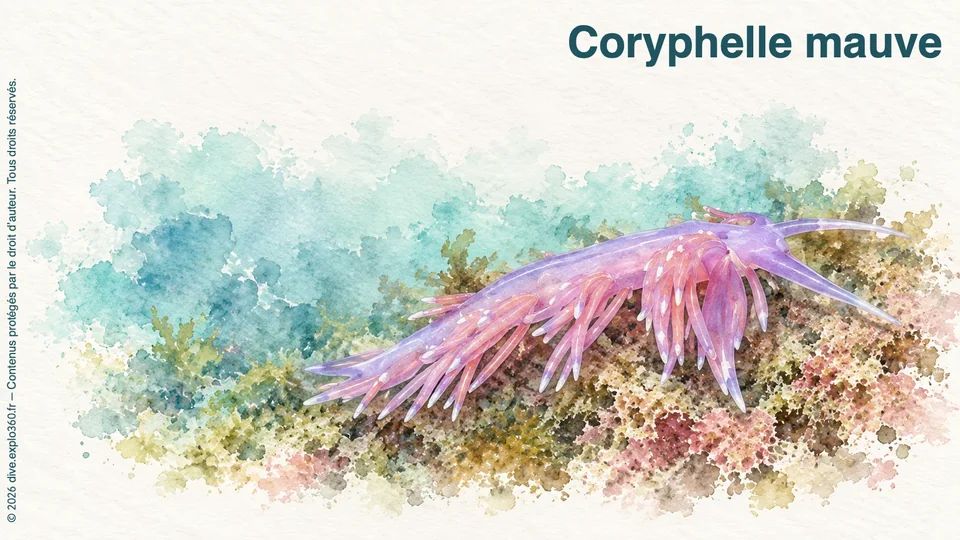
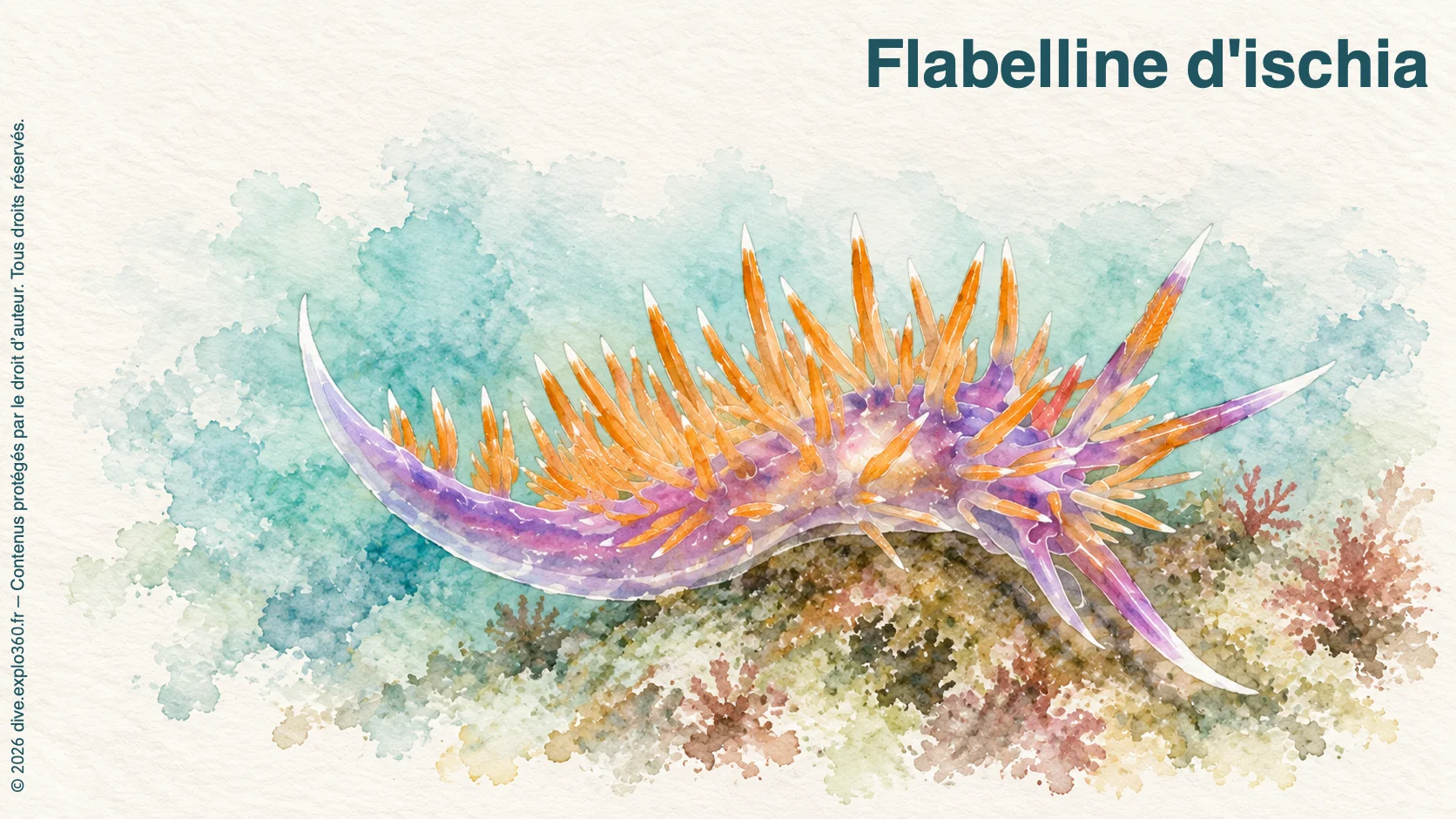
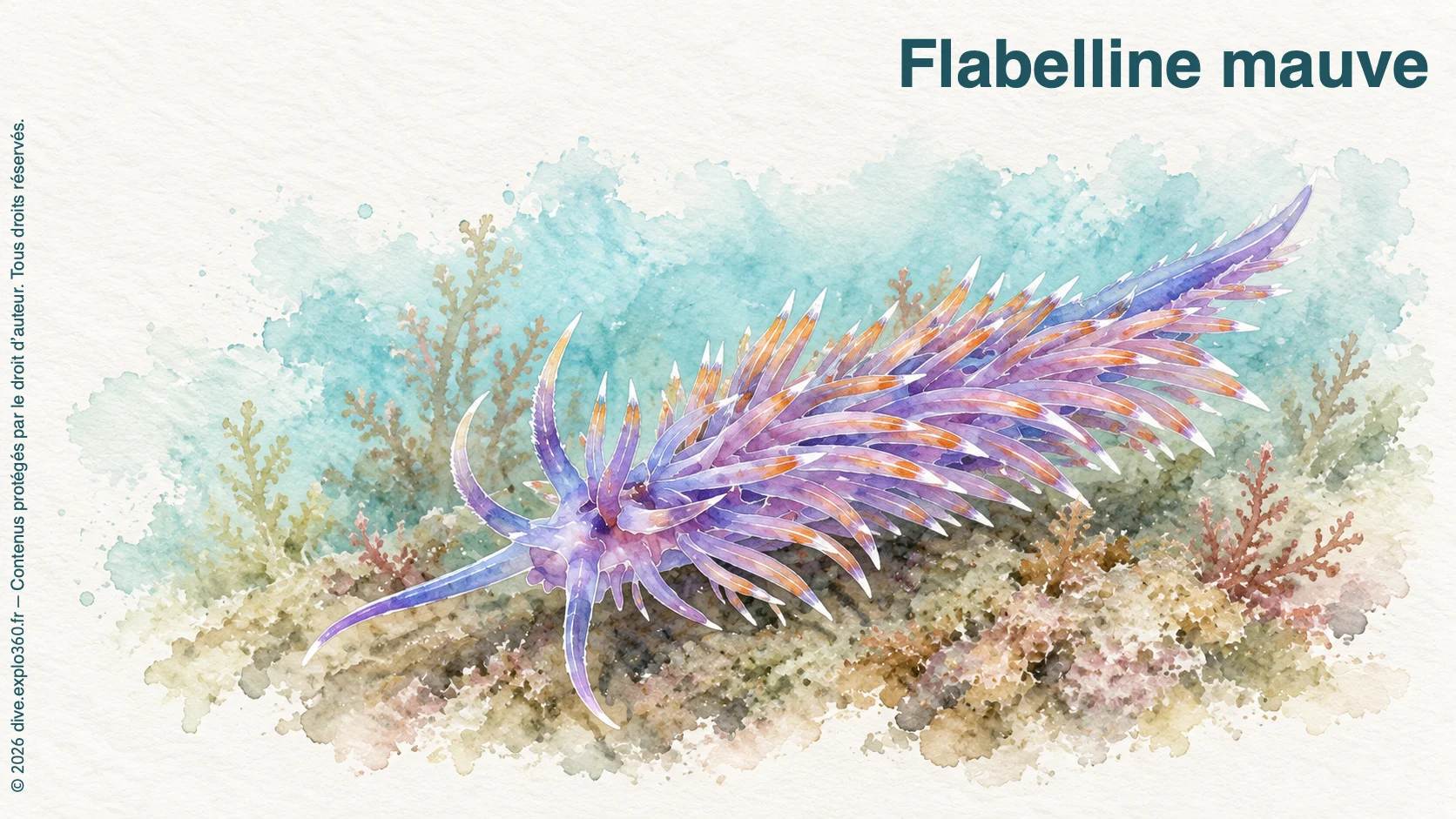
The purple flabellina (Edmundsella pedata) has two rhinophores on its head, upright sensory organs that detect chemicals in the water. Their tips are white and their surfaces look smooth or slightly wrinkled. Unlike those of some similar sea slugs, they have no rings. Two shorter tentacles, also tipped with white, extend near the mouth.
The slender, elongated body ranges from pink to violet. The cerata, long, soft projections grouped across the back, show red or orange shades through their translucent surface. White tips punctuate the whole outline.
WHERE DOES IT LIVE?
It is found in the Mediterranean Sea and nearby Atlantic, on rocky seabeds, in algae-rich areas or on substrates colonised by hydroids. It generally lives between a few metres and around forty metres deep.
WHAT DOES IT EAT?
Hydroid colonies feed the pink coryphella. It takes their polyps with its radula, a mobile mouth rasp. The head remains in contact with the colony’s small animals while removing tissue.
GO FURTHER WITH AMIGANSEAU
Unlock the full profile
Deepen your knowledge with the exclusive chapters and interactive resources included in an AMIGANSEAU licence.
Subscribing to Dive.Explo360 means supporting a different way to discover marine life.
Our independent platform is entirely self-funded and relies solely on subscriptions. Every licence helps us continue our work, create new content, and share what we know about the marine world with as many people as possible.
Starting at €80 per year, your support makes all the difference.
 Understand the species