


 Habitat
 Depth
 Group
 Role
 Average size
WHAT DOES IT LOOK LIKE?
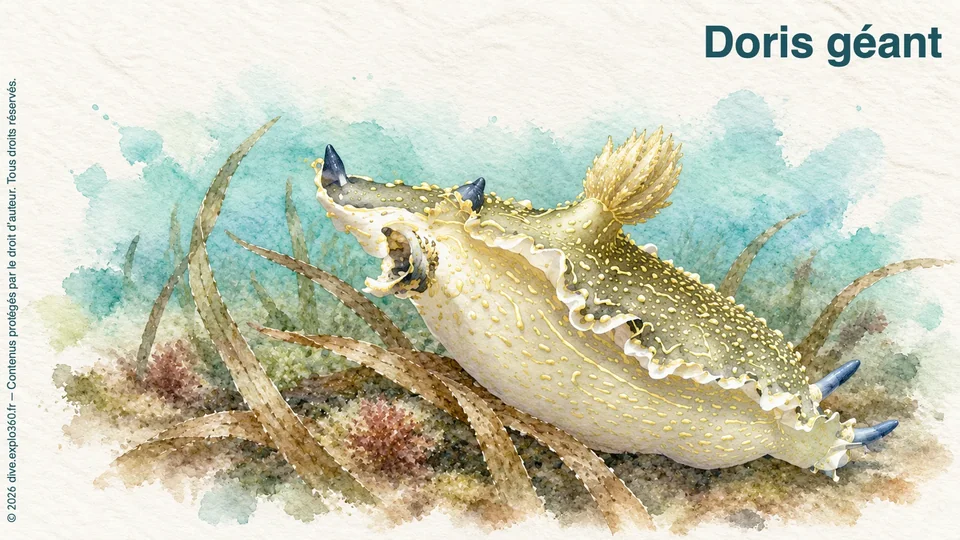
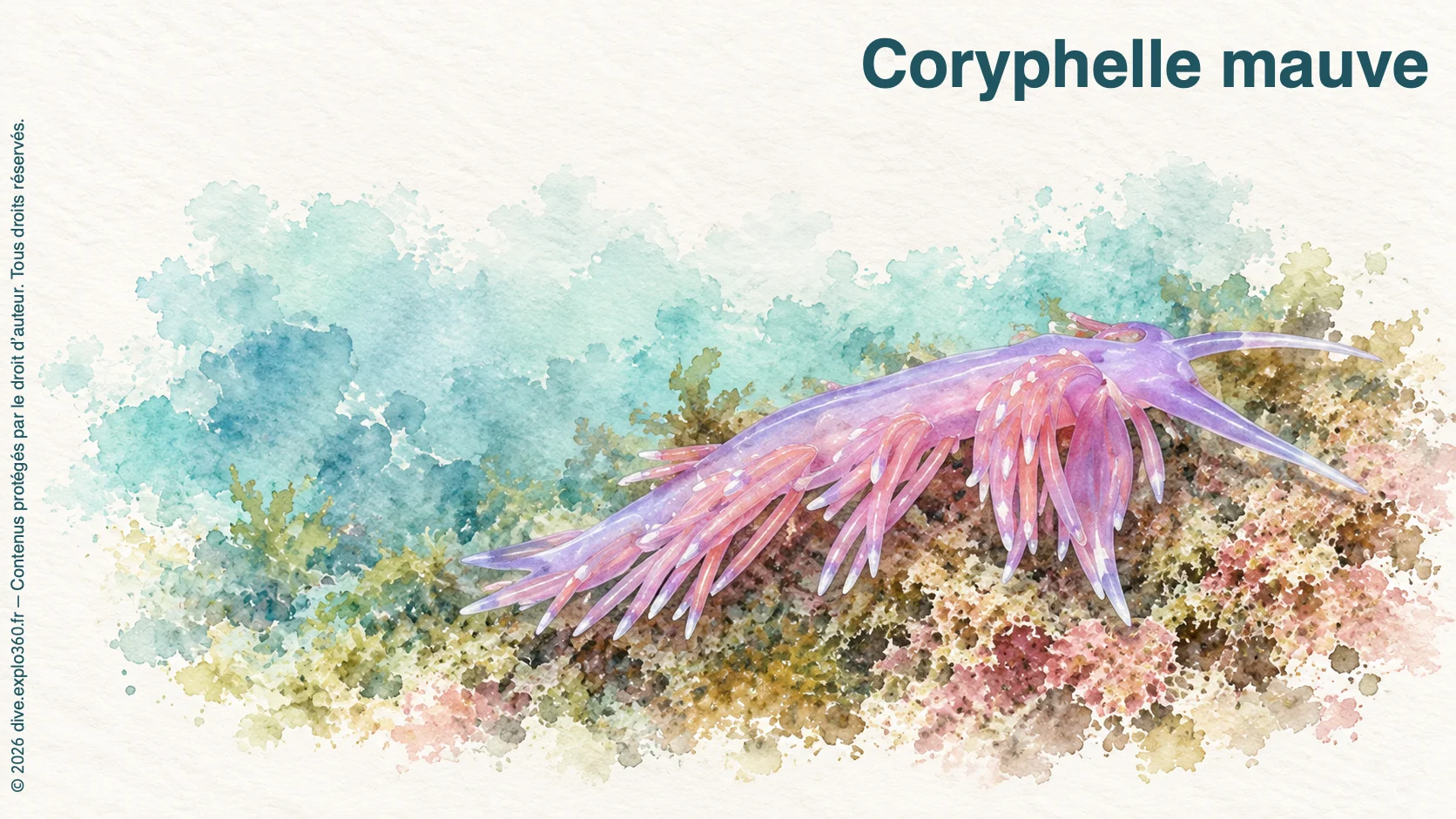
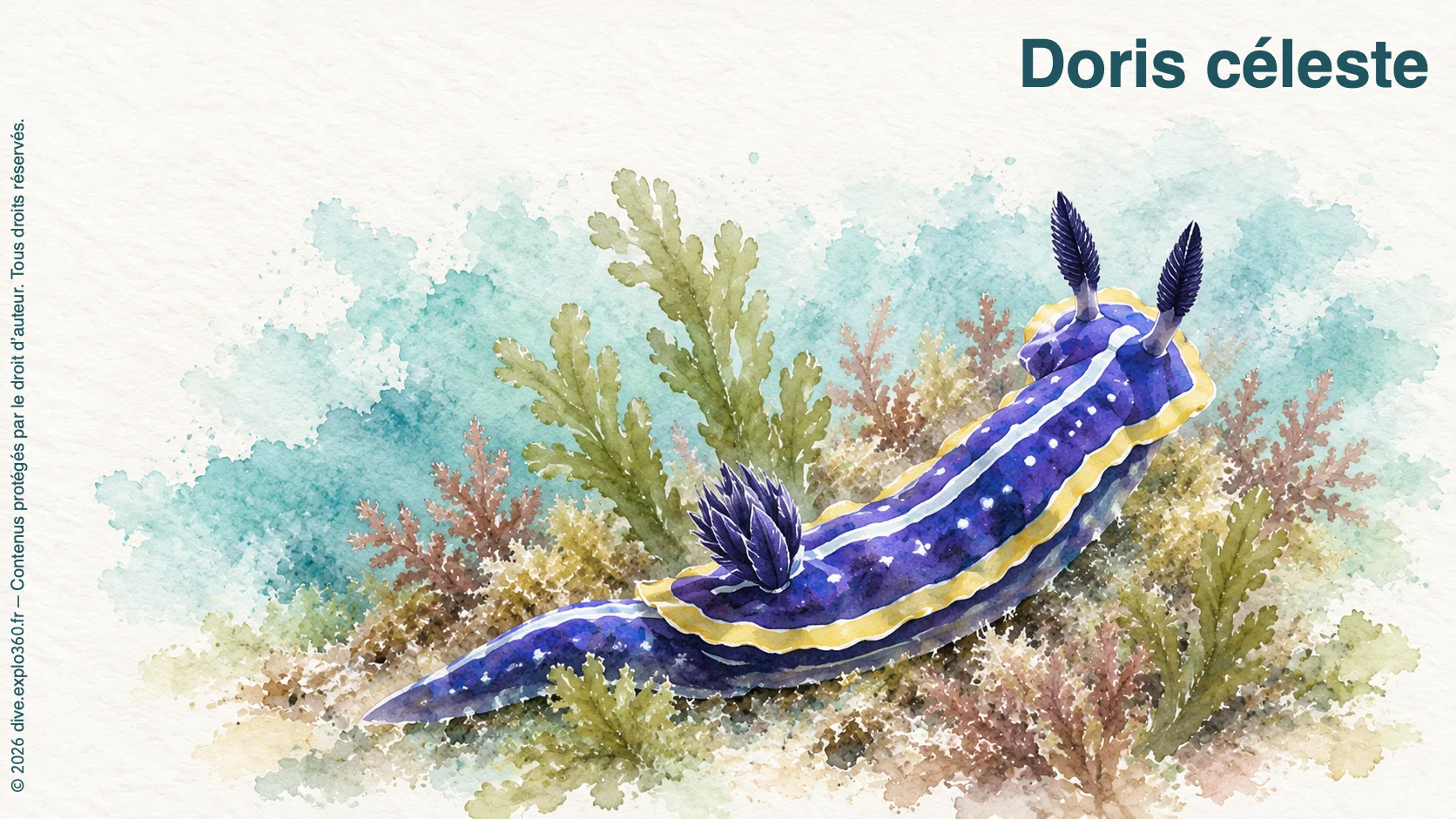
The giant doris (Felimare picta) has yellow dots, small patches and sometimes broken lines across its body. The background colour varies widely. It can be blue-violet or pale, depending on the individual.
The smooth, elongated, fairly deep body is edged by a wavy fold. Two rhinophores, the upright head projections, mark the front, while the gills gather in a feathery tuft at the rear.
WHERE DOES IT LIVE?
It mainly lives on rocky seabeds, drop-offs and areas rich in attached organisms. It is sometimes found near seagrass beds, but remains mainly associated with hard substrates where the sponges grow. It generally lives between a few metres and around fifty metres deep.
WHAT DOES IT EAT?
The giant sea slug feeds on certain sponges attached to rocky seabeds. It moves slowly over their surface and removes small portions of tissue with its radula, a ribbon bearing tiny teeth inside its mouth. As it moves, it may pass from one sponge to another. Its food therefore comes from animals attached to rocks rather than prey it pursues through the water.
GO FURTHER WITH AMIGANSEAU
Unlock the full profile
Deepen your knowledge with the exclusive chapters and interactive resources included in an AMIGANSEAU licence.
Subscribing to Dive.Explo360 means supporting a different way to discover marine life.
Our independent platform is entirely self-funded and relies solely on subscriptions. Every licence helps us continue our work, create new content, and share what we know about the marine world with as many people as possible.
Starting at €80 per year, your support makes all the difference.
 Understand the species