


 Habitat
 Depth
 Group
 Role
 Average size
 Good to know
WHAT DOES IT LOOK LIKE?
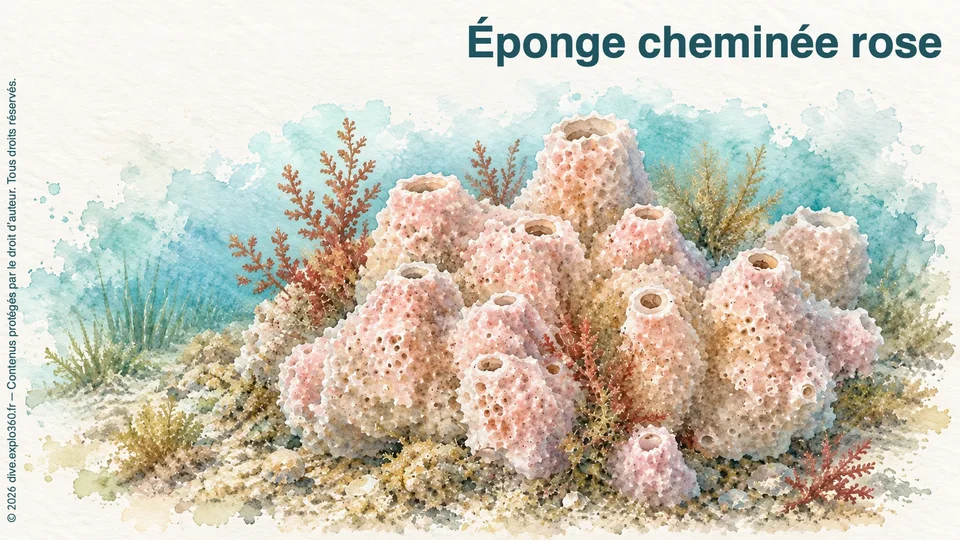
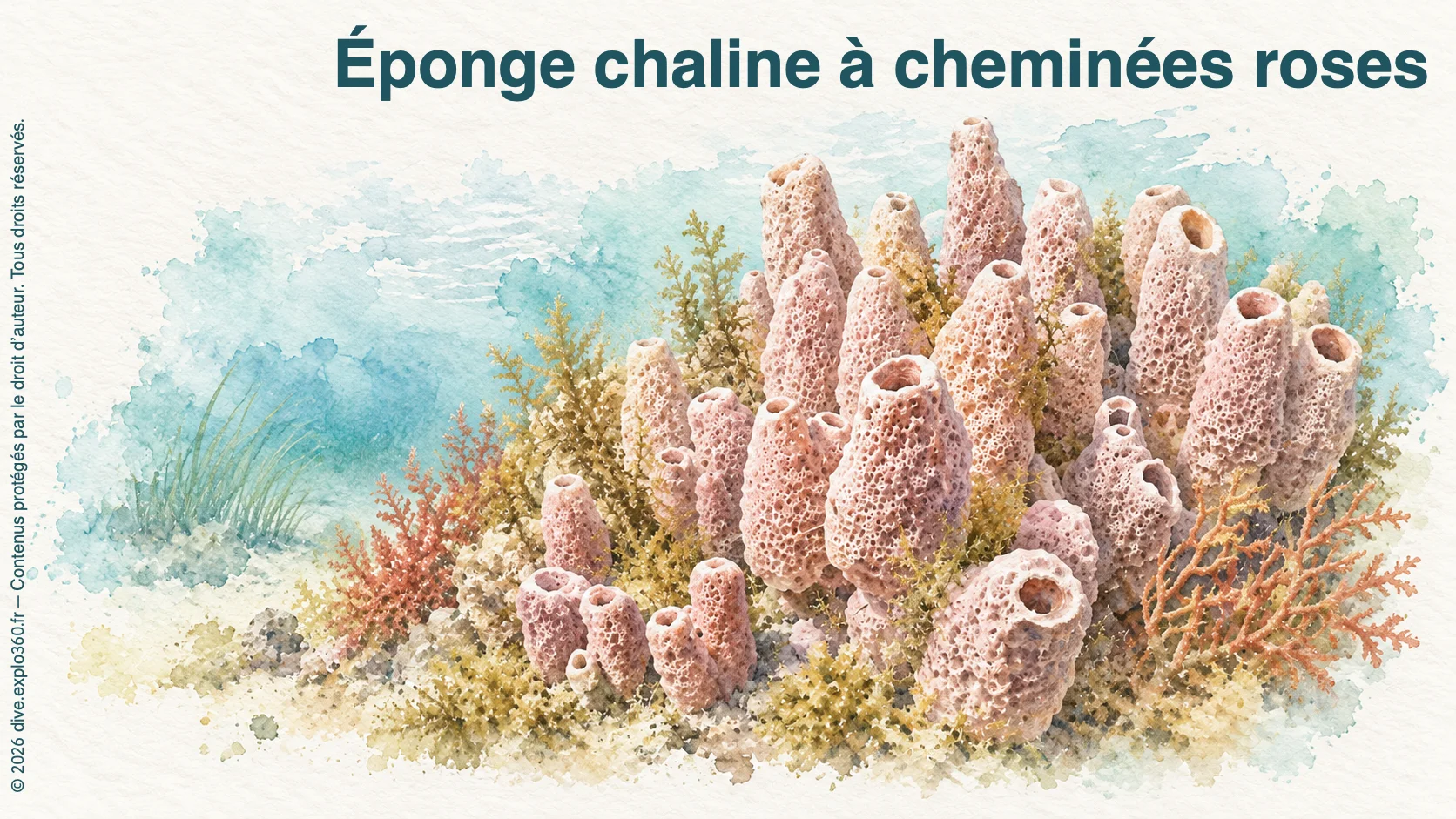
This pink chimney sponge (Dysidea avara) has large, open lobes. Small pointed bumps called conules stand out on its surface, which ranges from pale pink to dark mauve.
The lobes are often tubular and may branch. Large oscules, the openings at their tips, strengthen the chimney-like appearance.
WHERE DOES IT LIVE?
Beneath overhangs and within cavities, the pink chimney sponge colonises hard surfaces, often fairly flat ones. Shaded coralligenous areas are among its Mediterranean habitats, with occurrence in the nearby Atlantic.
WHAT DOES IT EAT?
The pink chimney sponge feeds by filtering water through its body. It captures bacteria, tiny single-celled organisms and phytoplankton. A year-long study at the Medes Islands found that bacteria accounted for about three quarters of the carbon ingested by the sponges studied. This proportion may vary with environmental conditions and populations. Filtered water exits through the large openings at the tops of the chimneys.
GO FURTHER WITH AMIGANSEAU
Unlock the full profile
Deepen your knowledge with the exclusive chapters and interactive resources included in an AMIGANSEAU licence.
Subscribing to Dive.Explo360 means supporting a different way to discover marine life.
Our independent platform is entirely self-funded and relies solely on subscriptions. Every licence helps us continue our work, create new content, and share what we know about the marine world with as many people as possible.
Starting at €80 per year, your support makes all the difference.
 Understand the species