


 Habitat
 Depth
 Group
 Role
 Average size
 Good to know
WHAT DOES IT LOOK LIKE?
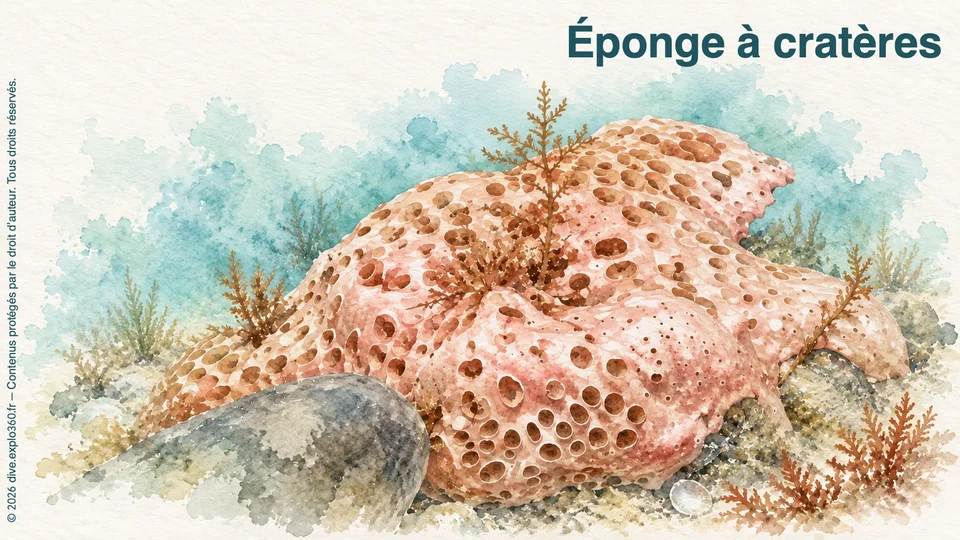
Pale-rimmed craters define the pattern of the crater sponge (Hemimycale columella). These shallow round depressions, varying in diameter, dot a pink to orange sheet or cushion.
The surface between the hollows is smooth. The pattern suggests a Hemimycale appearance, but similar species look too alike for the relief alone to guarantee a name.
WHERE DOES IT LIVE?
It grows on well-lit rocky substrates, often in areas containing little sediment. It is frequently found on walls, boulders or in coralligenous areas, in clear, well-flushed water.
WHAT DOES IT EAT?
The crater sponge feeds by filtering seawater. Water enters through tiny pores grouped in the depressions visible on its surface. Inside the sponge, cells capture bacteria and other food particles carried by the water. Water then leaves through separate openings called oscula. The craters are therefore not mouths: they are part of the system that circulates water through the sponge as it feeds.
GO FURTHER WITH AMIGANSEAU
Unlock the full profile
Deepen your knowledge with the exclusive chapters and interactive resources included in an AMIGANSEAU licence.
Subscribing to Dive.Explo360 means supporting a different way to discover marine life.
Our independent platform is entirely self-funded and relies solely on subscriptions. Every licence helps us continue our work, create new content, and share what we know about the marine world with as many people as possible.
Starting at €80 per year, your support makes all the difference.
 Understand the species