


 Habitat
 Depth
 Group
 Role
 Average size
WHAT DOES IT LOOK LIKE?
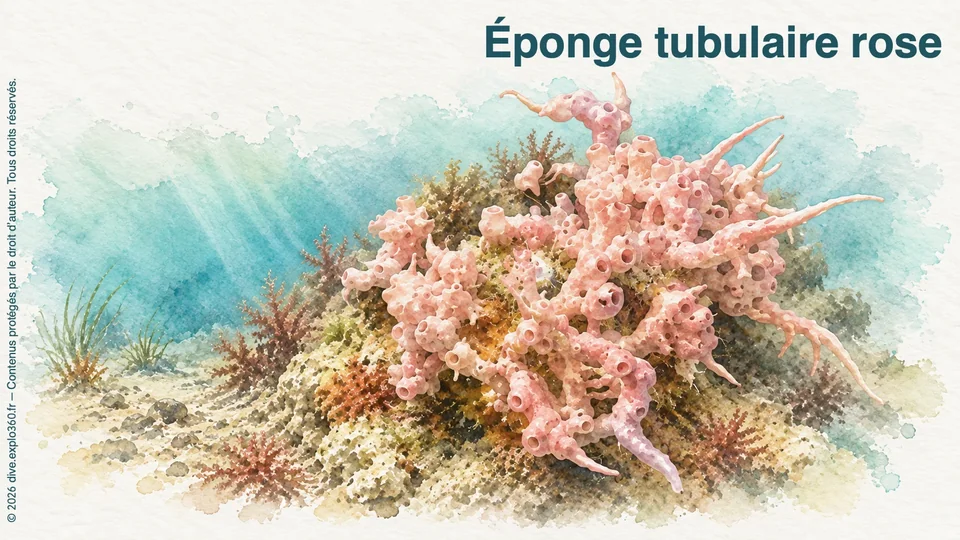
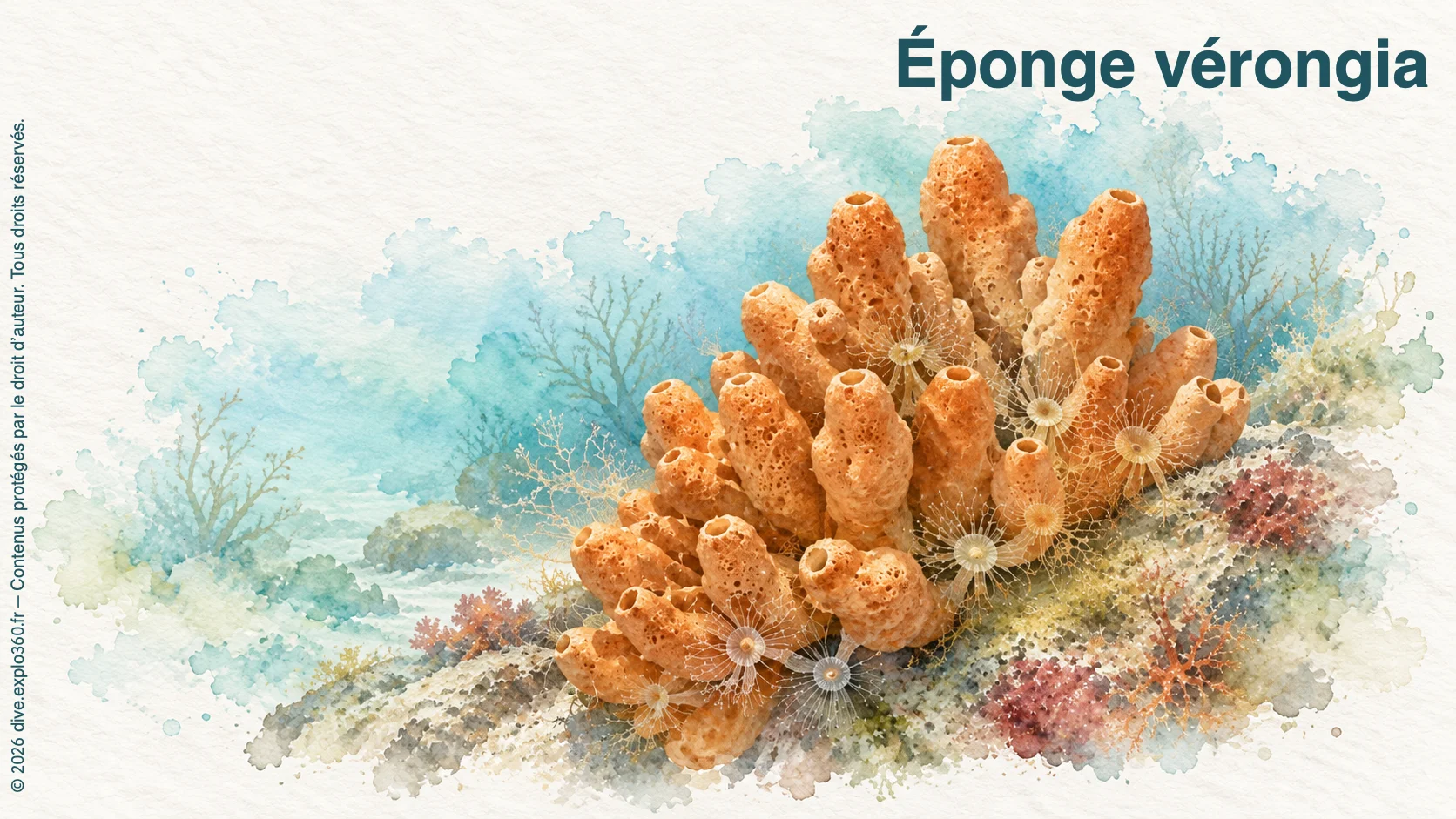
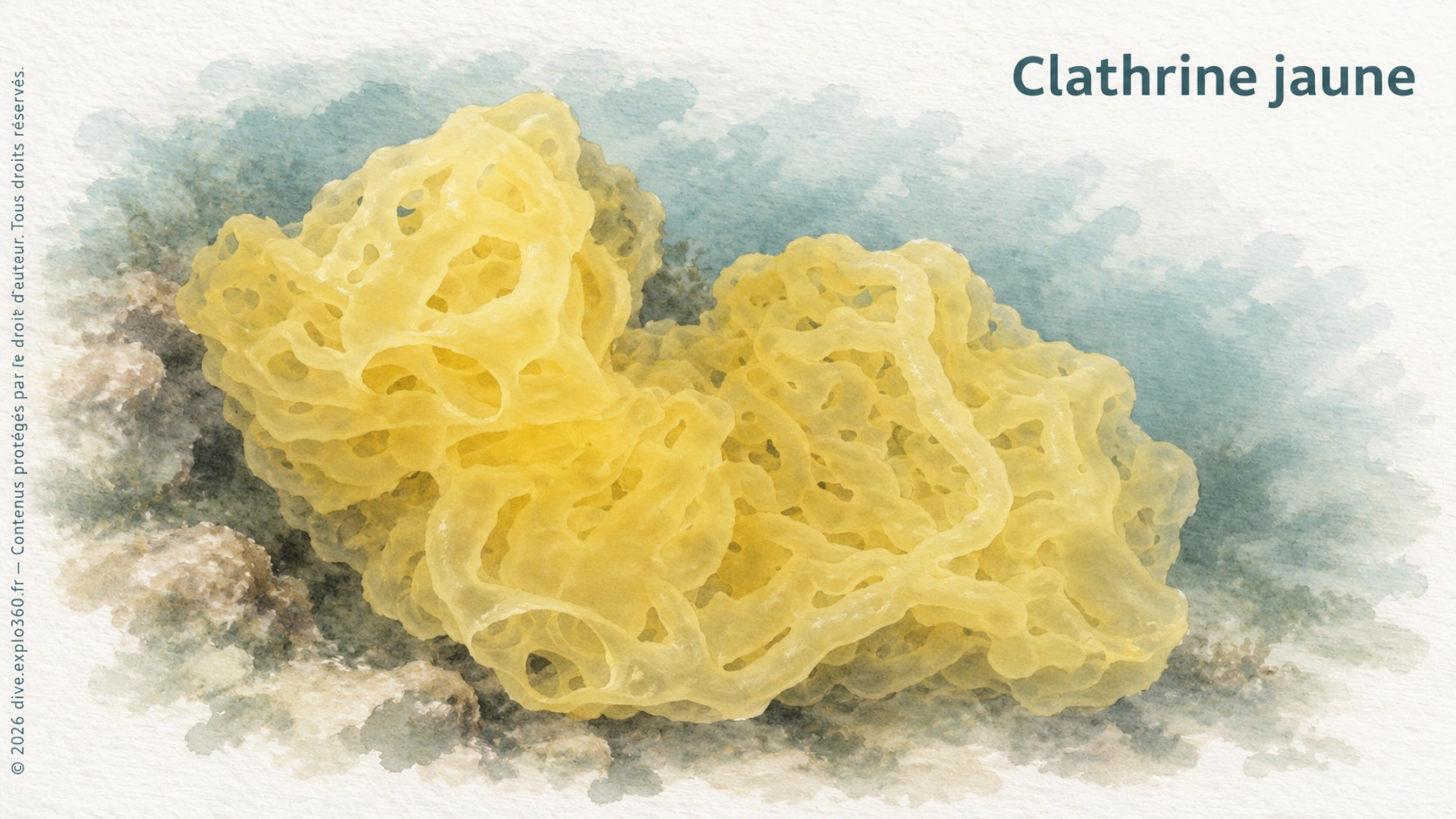
The pink tube sponge (Haliclona (Reniera) mediterranea) forms pink chimneys that can stand apart, twist around one another or share walls. The openings at the top can flare like the bells of trumpets.
A broad osculum, the terminal opening, then reveals the interior. The even surface remains uniformly pink, with different colour strengths between individuals.
WHERE DOES IT LIVE?
It mainly occurs on rocky substrates, often in shaded areas such as overhangs, crevices or cave entrances. It can also colonise exposed walls when conditions are favourable. It is observed at different depths, generally in the Mediterranean.
WHAT DOES IT EAT?
The pink tubular sponge feeds by filtering seawater. Water enters through tiny pores distributed over the surfaces of its tubes. Inside, cells called choanocytes keep the water circulating by beating their flagella and trap bacteria, single-celled algae and fine organic particles. Filtered water leaves through the large openings at the tops of the tubes, called oscula. These openings release the water, while food is captured in filtering chambers inside the sponge.
GO FURTHER WITH AMIGANSEAU
Explore the full species guide
Discover full species guides, in-depth content and interactive tools available with your licence.
Dive.Explo360 is an independent, self-funded nonprofit. Every licence helps us create new content, improve our teaching tools and keep some of our resources free and ad-free.
Choose a licence that suits your needs for personal, educational or professional use.
Open-access resources remain available without a subscription.
 Understand the species