


 Habitat
 Depth
 Group
 Role
 Average size
WHAT DOES IT LOOK LIKE?
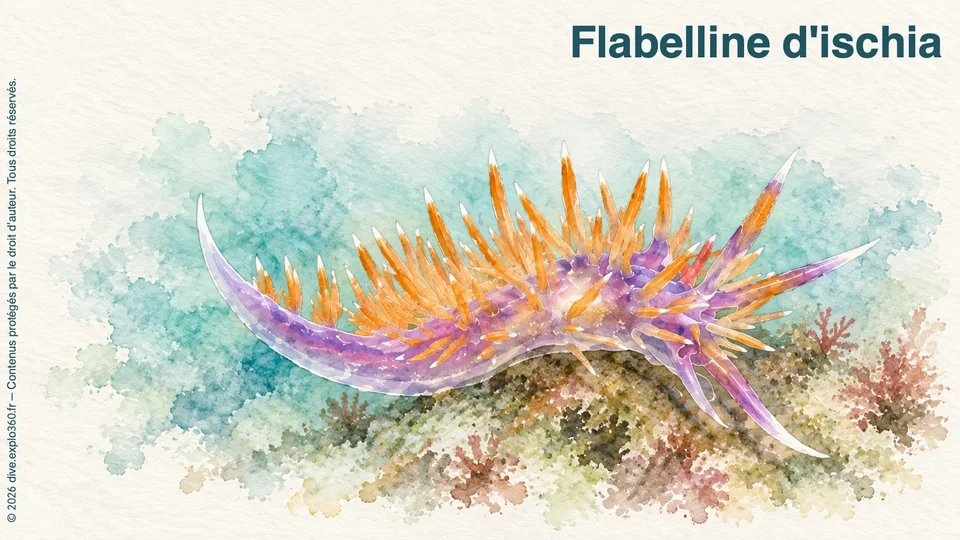
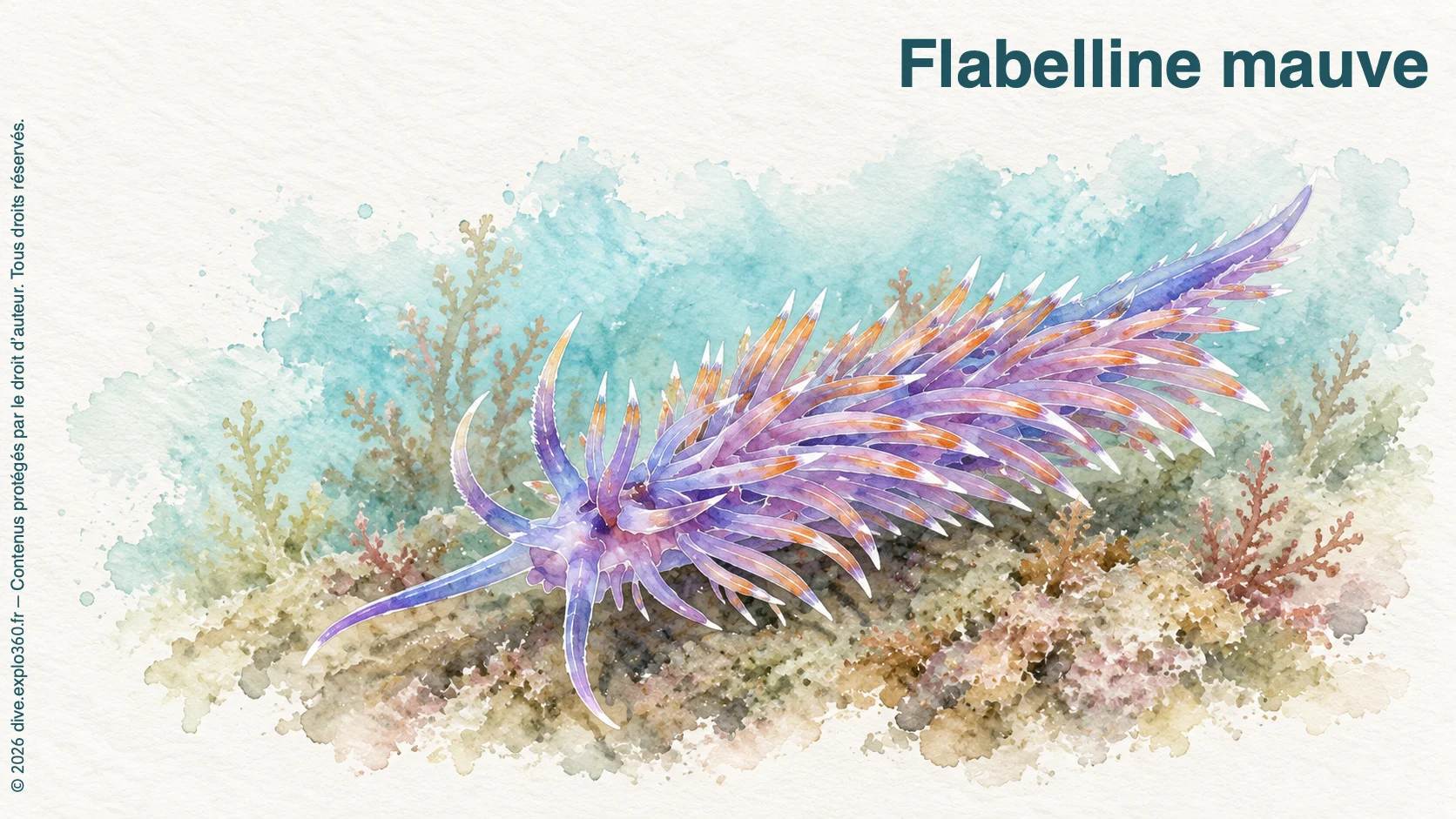
White punctuates the back and head of Ischia’s flabellina (Flabellina ischitana). It tips the cerata, the long orange to red back projections, as well as the rhinophores, the two upright, ringed head projections.
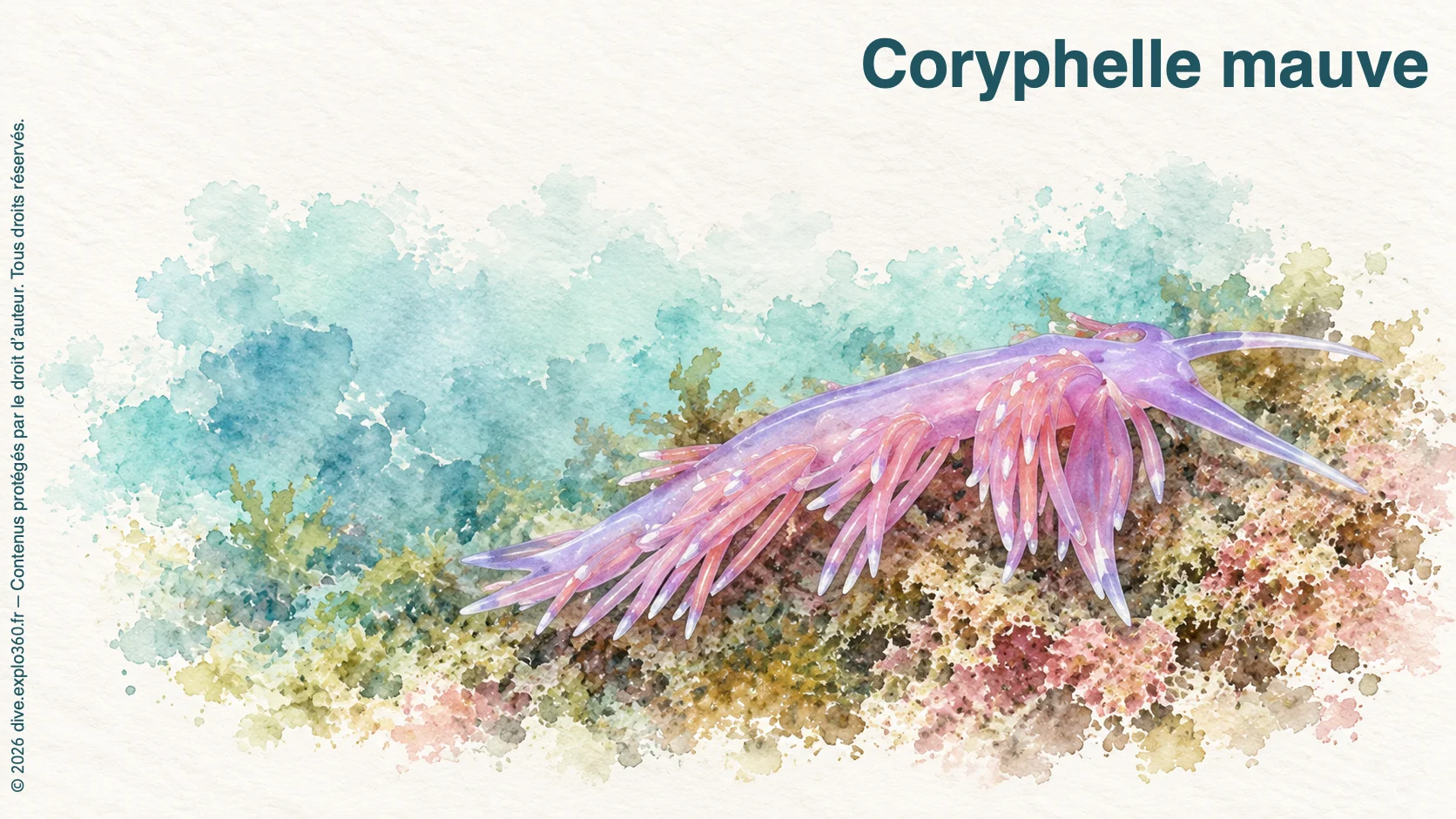
The elongated body is often mauve or violet, sometimes very pale and translucent. Unlike the pink flabellina, its cerata have no opaque violet ring below their white tips.
WHERE DOES IT LIVE?
It occurs in the Mediterranean Sea, mainly on rocky seabeds rich in hydroids. It is found on walls, in coralligenous areas and on substrates colonised by hydroids, generally between a few metres and around forty metres deep.
WHAT DOES IT EAT?
The Ischia flabellina feeds on hydroid polyps, small tentacled animals living in colonies on branching stems. It moves slowly over these colonies and removes the polyps with its radula, a ribbon of minute teeth inside its mouth. Branching hydroids are a documented food source for this species. While feeding, its head remains in contact with the stems to which the polyps are attached.
GO FURTHER WITH AMIGANSEAU
Continue your exploration
Discover full species guides, in-depth content and interactive tools available with your licence.
Dive.Explo360 is a self-funded nonprofit platform. Each licence helps us create new content, improve our educational tools and keep some resources freely available.
Choose a licence that suits your needs for personal, educational or professional use.
Open-access resources remain available without a subscription.
 Understand the species