


 Habitat
 Depth
 Group
 Role
 Average size
WHAT DOES IT LOOK LIKE?
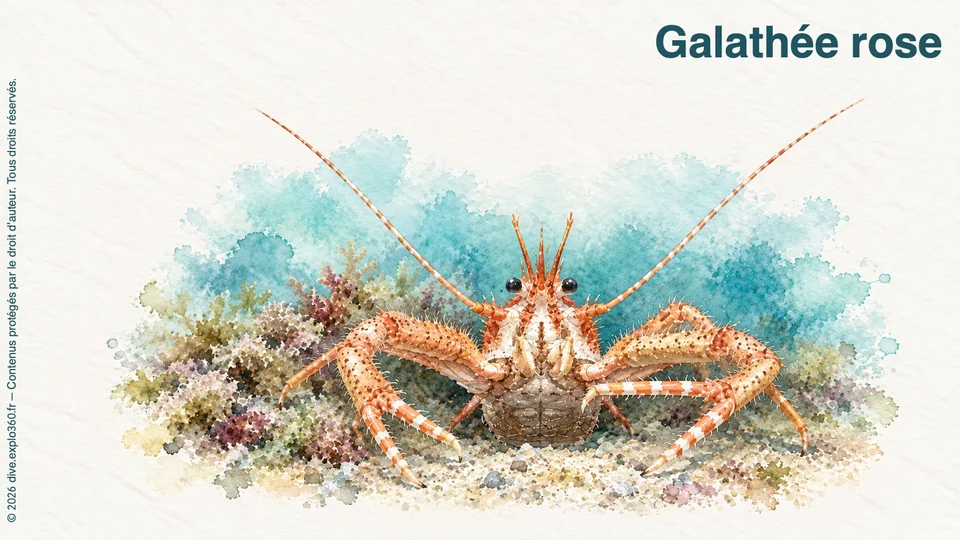
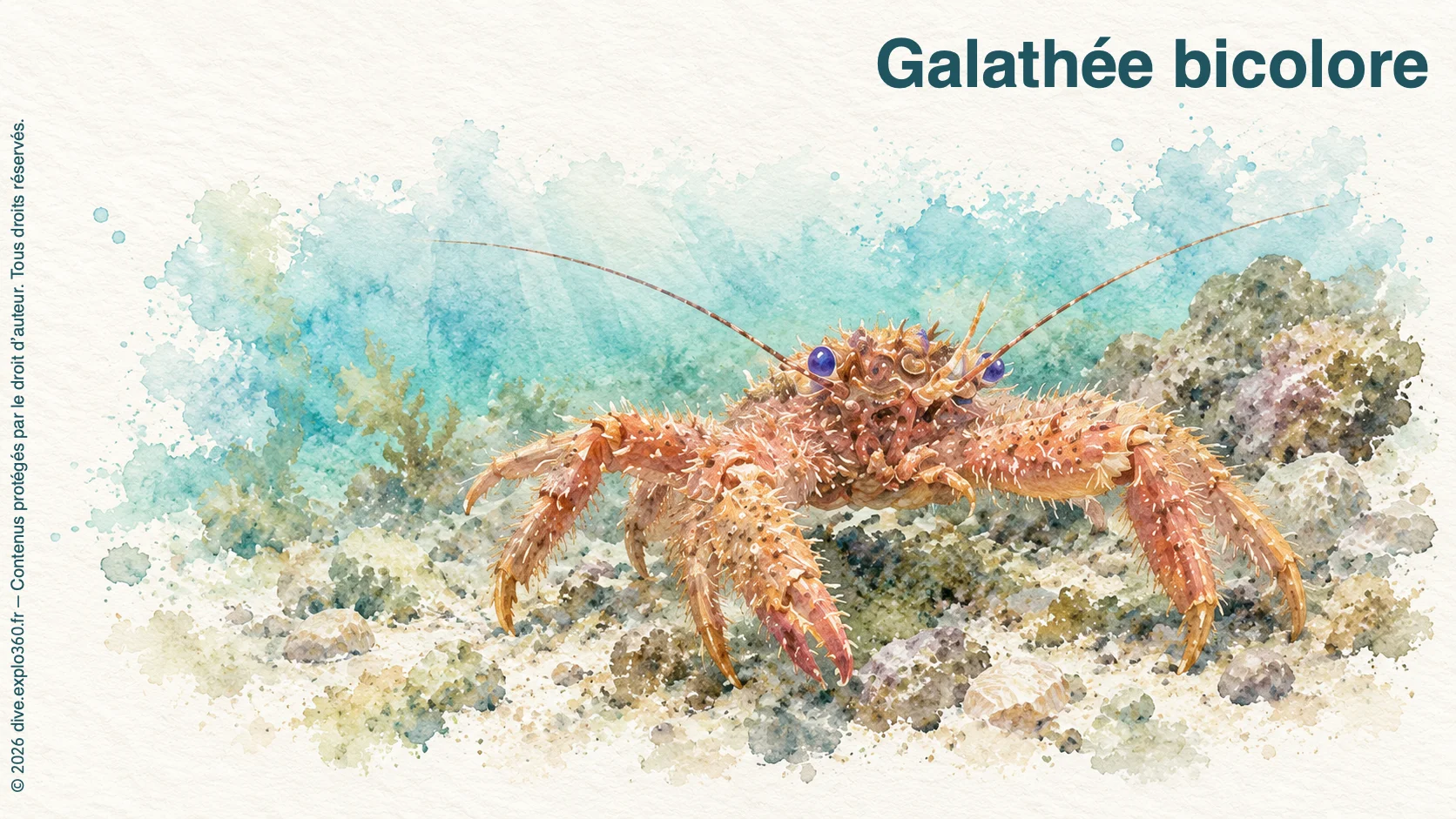
Two long claws dominate the outline of the rugose squat lobster (Munida rugosa). Slender and bristling with small spines, they extend beyond the already very long antennae.
The pink to reddish body looks short between these appendages. The abdomen, its jointed rear section, stays folded under the front, while thin legs create a broad outline around the shell.
WHERE DOES IT LIVE?
It lives mainly on soft or rocky seabeds, often in deep or moderately deep areas. It occurs in shelters such as cracks, crevices or boulder fields, where it finds protection during the day.
WHAT DOES IT EAT?
The long claws of the long-clawed squat lobster grasp and transport food. Appendages near the mouth then handle the pieces or particles collected. Its menu combines a preference for animal food with several kinds of feeding: it hunts, scavenges, gathers organic deposits and also eats algae. Omnivory here involves several ways of obtaining a meal. Depending on the resource encountered, feeding may mean manipulating a piece between the claws or gathering much less conspicuous fine particles.
GO FURTHER WITH AMIGANSEAU
Unlock the full profile
Deepen your knowledge with the exclusive chapters and interactive resources included in an AMIGANSEAU licence.
Subscribing to Dive.Explo360 means supporting a different way to discover marine life.
Our independent platform is entirely self-funded and relies solely on subscriptions. Every licence helps us continue our work, create new content, and share what we know about the marine world with as many people as possible.
Starting at €80 per year, your support makes all the difference.


 Understand the species