


 Habitat
 Depth
 Group
 Role
 Average size
 Good to know
WHAT DOES IT LOOK LIKE?
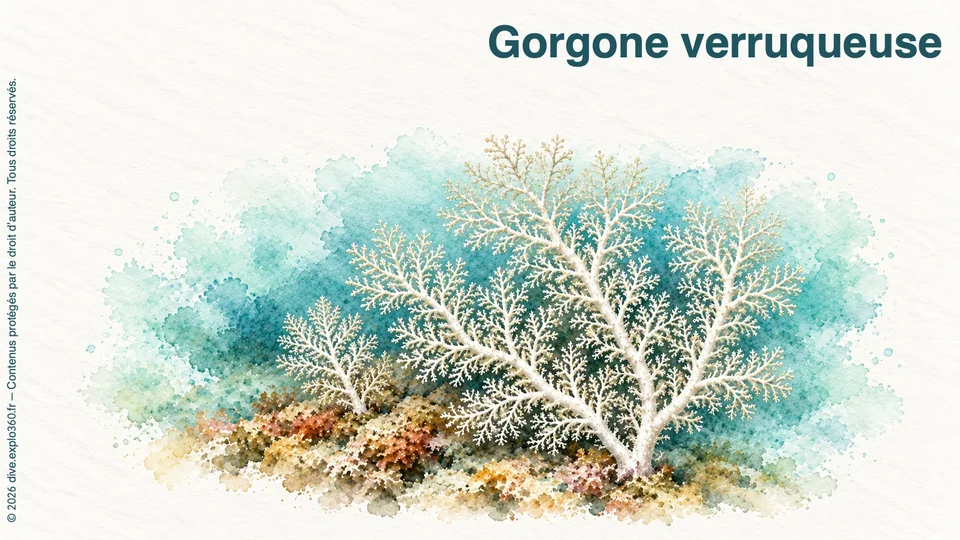
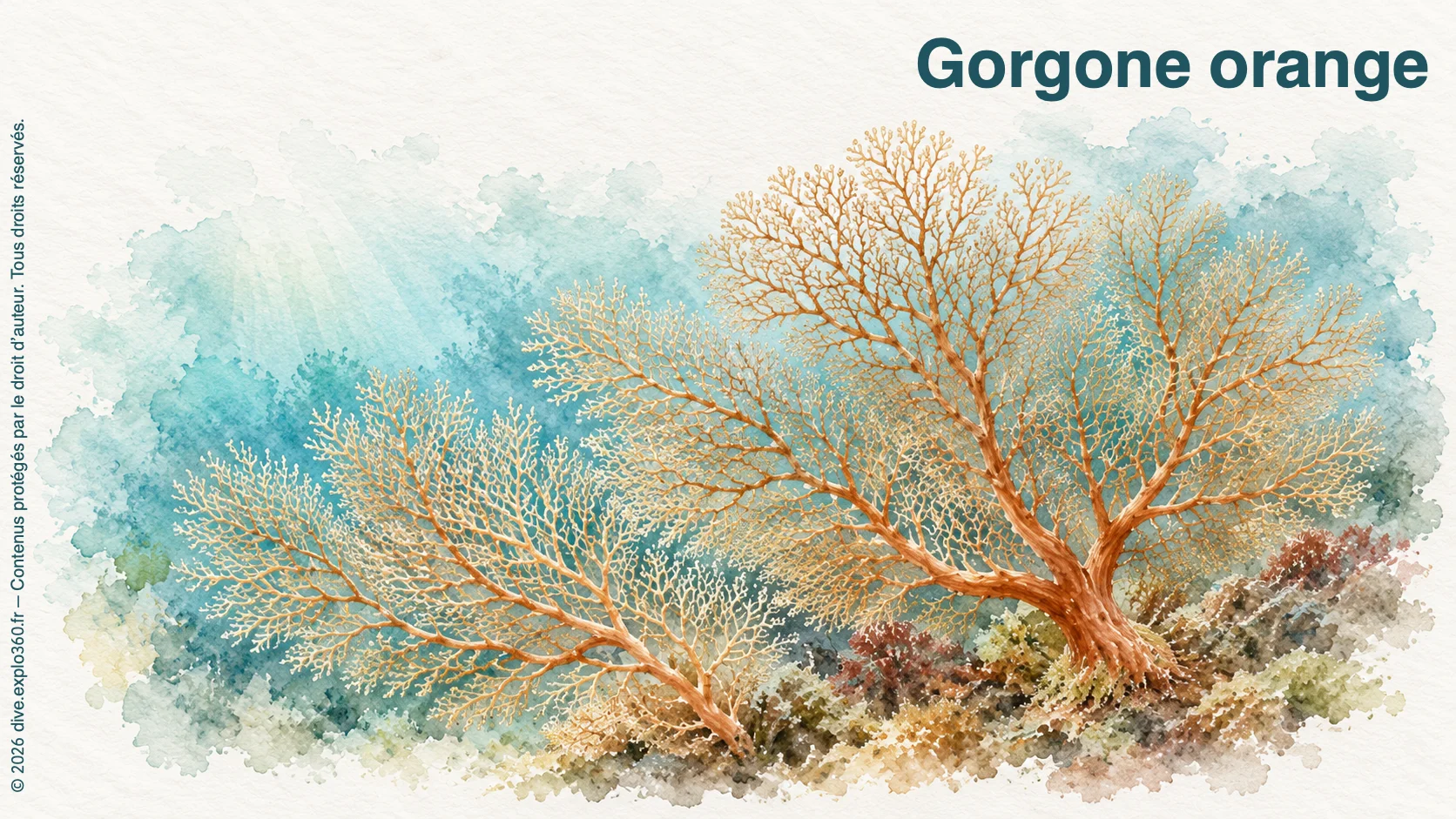
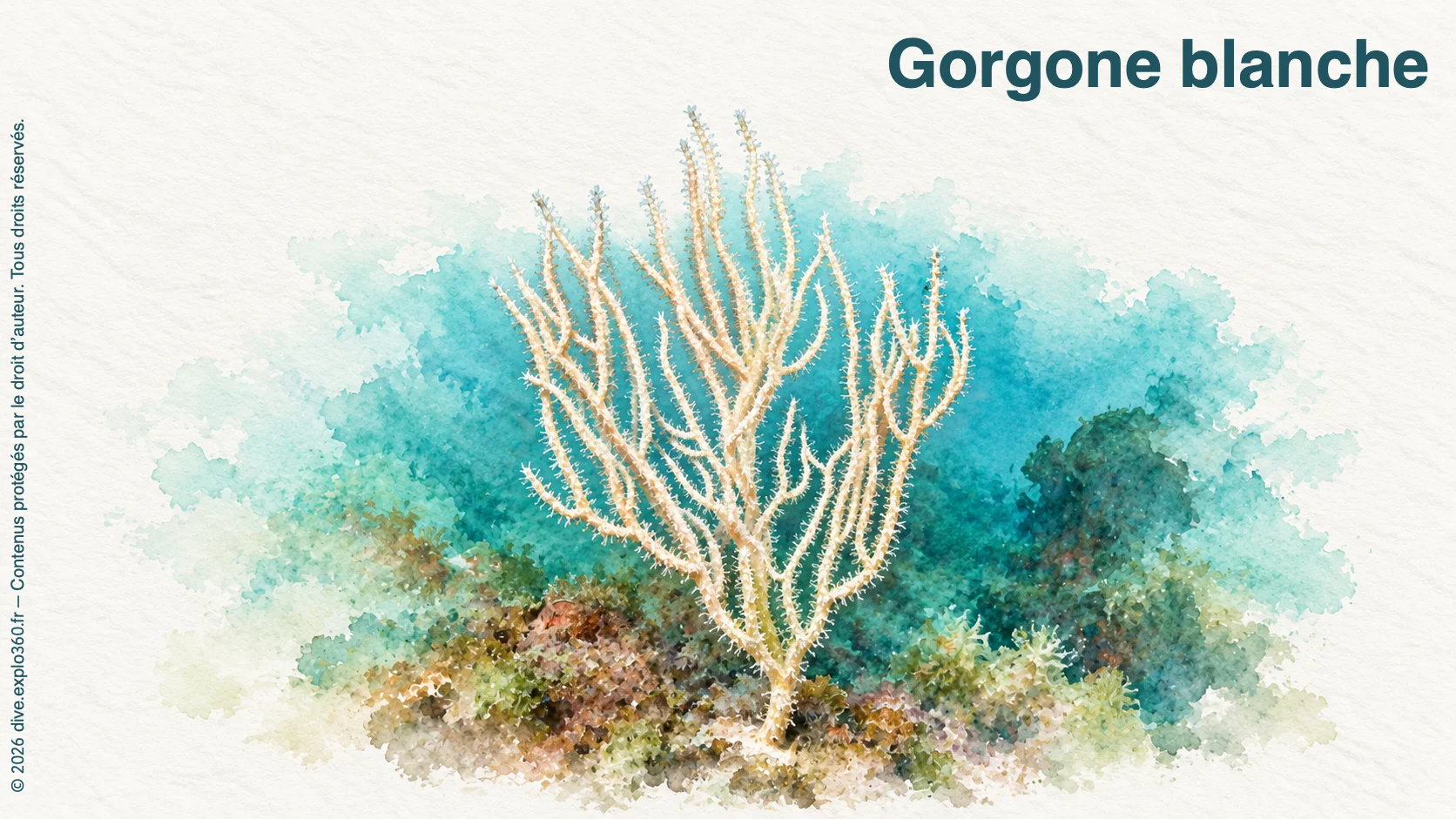
The bumps of the warty gorgonian (Eunicella verrucosa) create pronounced relief on the twigs. These are calyces, the small projections housing the polyps, the animals living together in the colony.
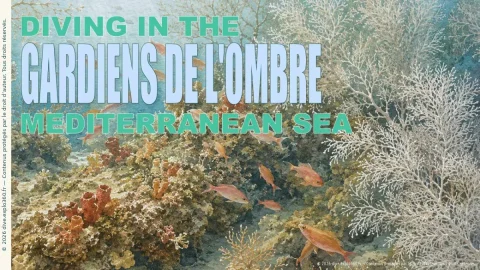
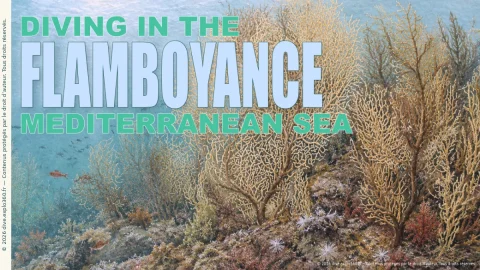
The dense framework most often spreads as a fan, with short, round, thick branches. White, salmon pink and yellow are among the possible colours.
WHERE DOES IT LIVE?
It occurs on rocky substrates exposed to currents, mainly in the Northeast Atlantic and more rarely in the Mediterranean. It settles from a few metres down to several tens of metres deep, depending on light and hydrodynamics, favouring areas with regular water circulation.
WHAT DOES IT EAT?
Along the warty gorgonian’s branches, polyps extend their tentacles into the current. They intercept plankton and suspended organic matter. This is passive suspension feeding because surrounding water movement delivers the food. A meal begins when a particle encounters an open polyp. Numerous capture points spread across the fan allow this attached colony to use food moving above the seabed.
GO FURTHER WITH AMIGANSEAU
Unlock the full profile
Deepen your knowledge with the exclusive chapters and interactive resources included in an AMIGANSEAU licence.
Subscribing to Dive.Explo360 means supporting a different way to discover marine life.
Our independent platform is entirely self-funded and relies solely on subscriptions. Every licence helps us continue our work, create new content, and share what we know about the marine world with as many people as possible.
Starting at €80 per year, your support makes all the difference.
 Understand the species