


 Habitat
 Depth
 Group
 Role
 Average size
WHAT DOES IT LOOK LIKE?
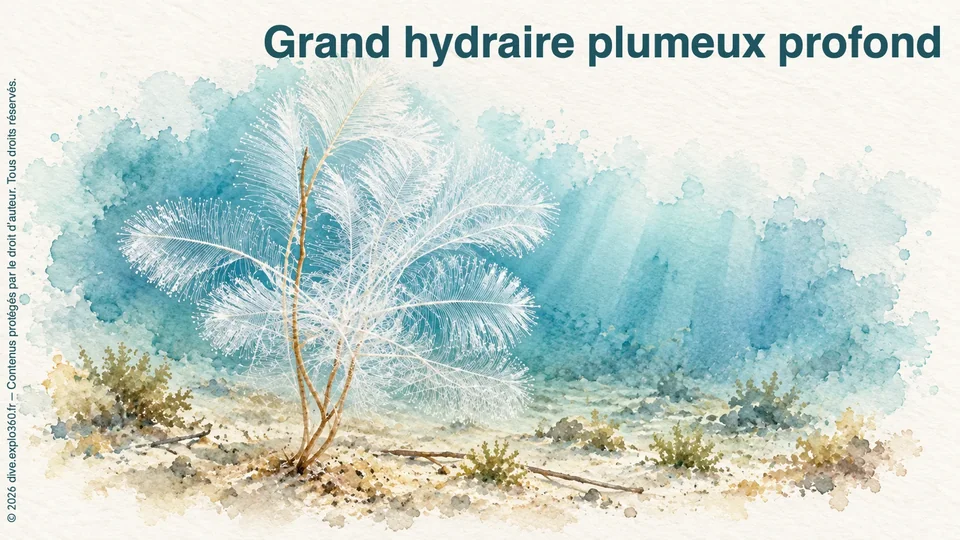
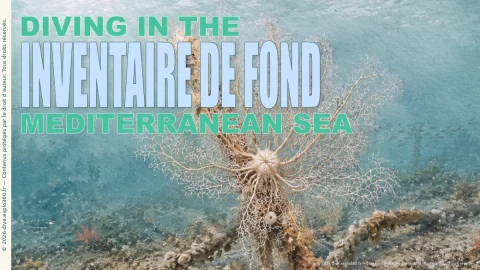
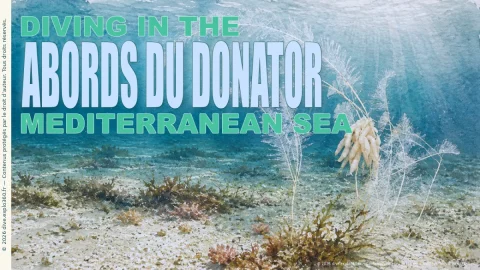
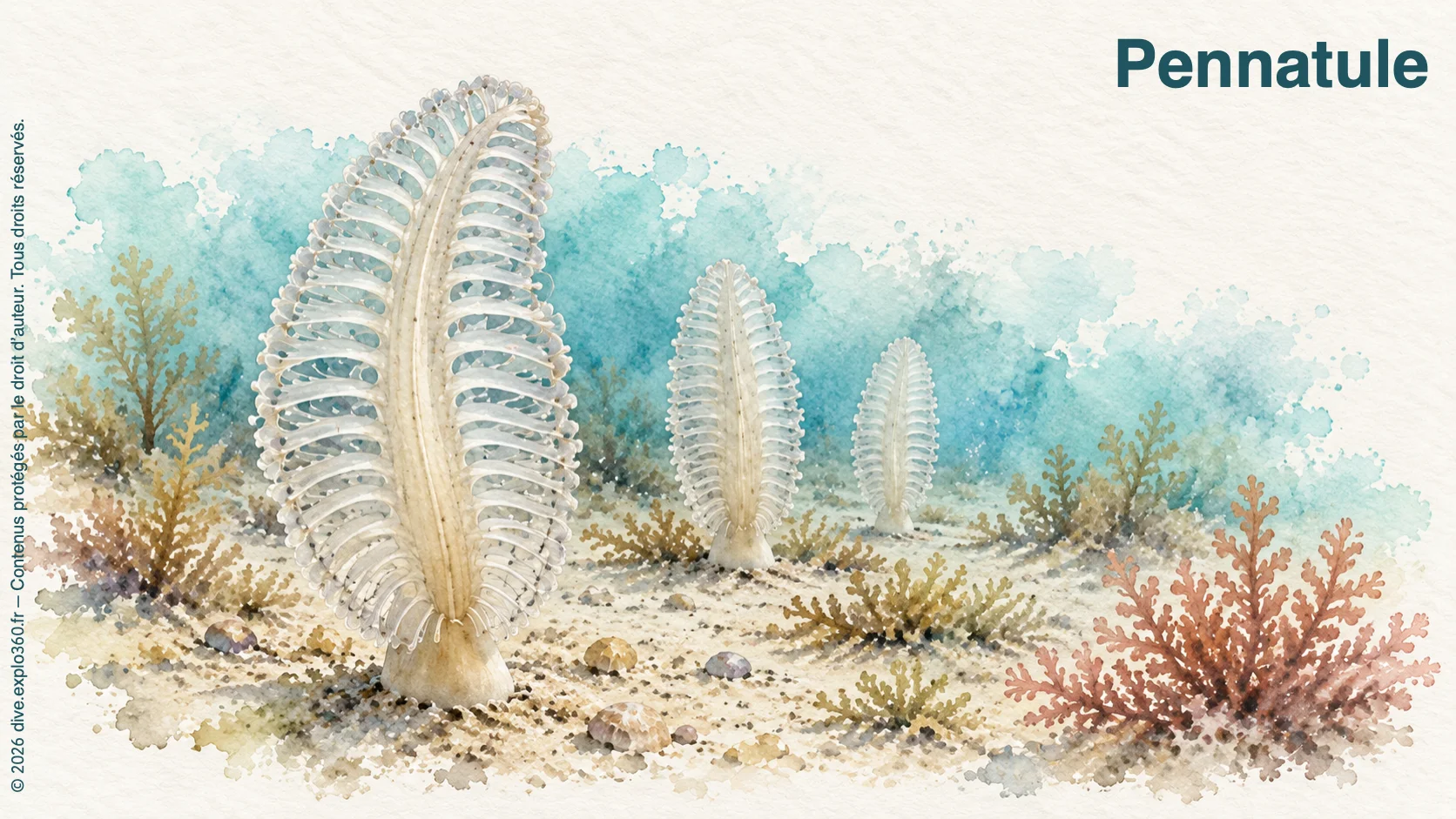
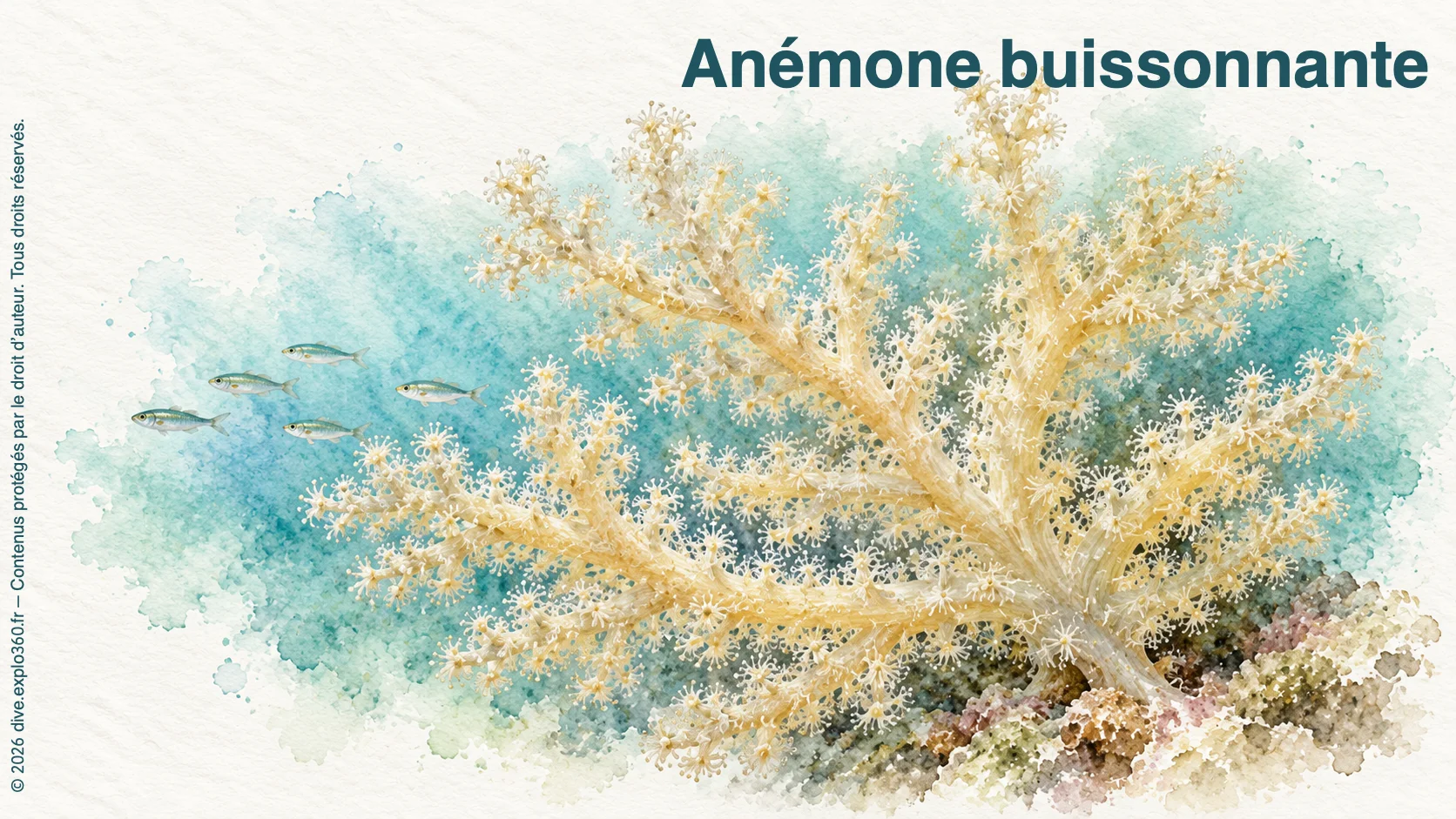
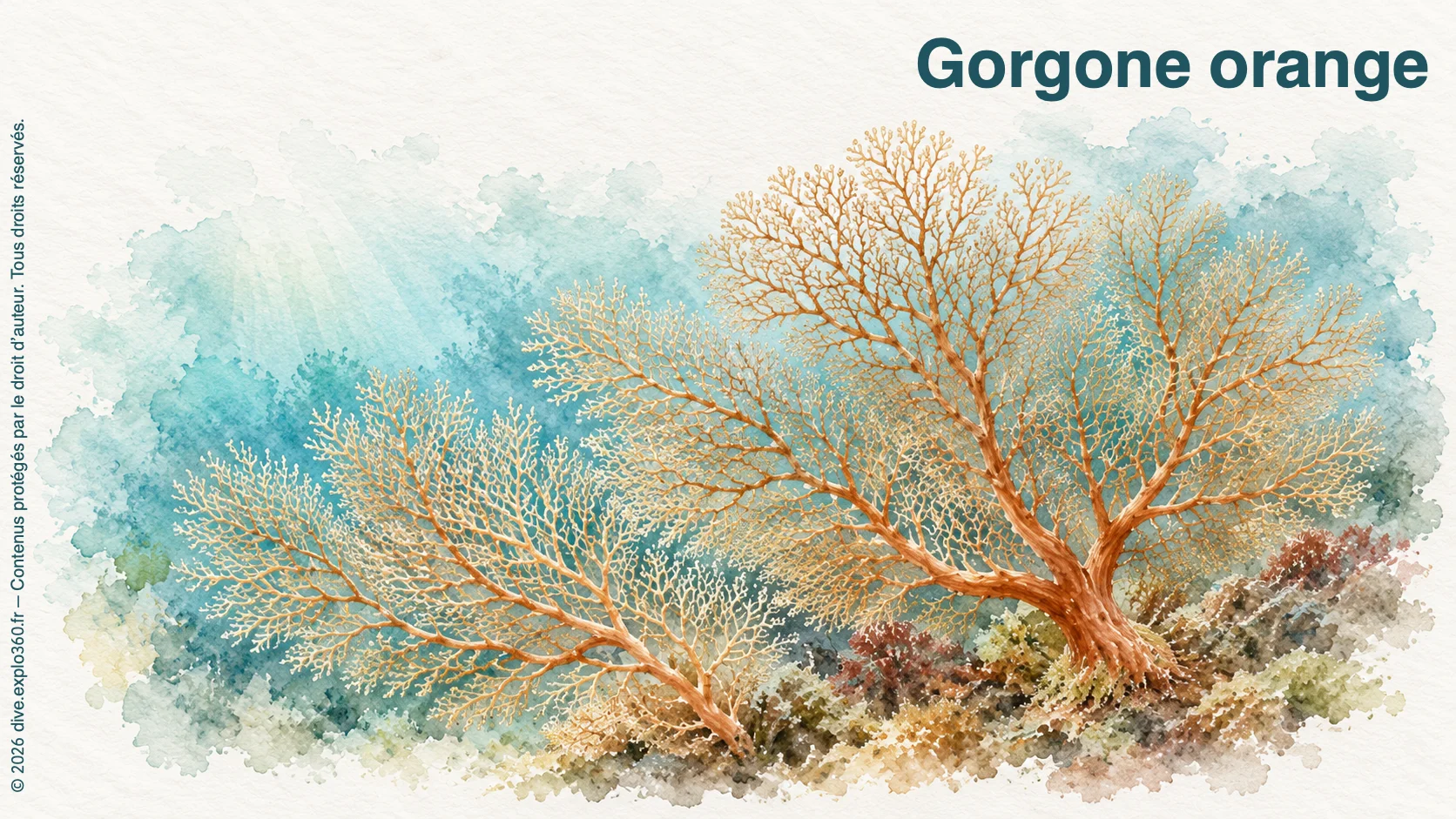
The “feather” of the large feather hydroid (Lytocarpia myriophyllum) has a main stem and fine branches regularly arranged on either side of its upper portion. The structure opens into a V when viewed in profile.
Each branch carries polyps, the tiny animals that together make up the colony. From a distance, their small projections merge into the fine overall pattern.
WHERE DOES IT LIVE?
It is encountered attached to hard substrates, often in areas exposed to currents. It can be observed on rocky seabeds or secondary supports near softer areas.
WHAT DOES IT EAT?
The deep-water feather hydroid’s plume carries a multitude of tiny feeding polyps. They take minute organisms and suspended organic material from the water. Currents renew the food available around the branches. The species also produces mucus, which has been proposed as a trap for organic matter, although this contribution is less firmly established than the feeding role of the polyps. The plume dominates the view, but meals occur in its minute animal units.
GO FURTHER WITH AMIGANSEAU
Unlock the full profile
Deepen your knowledge with the exclusive chapters and interactive resources included in an AMIGANSEAU licence.
Subscribing to Dive.Explo360 means supporting a different way to discover marine life.
Our independent platform is entirely self-funded and relies solely on subscriptions. Every licence helps us continue our work, create new content, and share what we know about the marine world with as many people as possible.
Starting at €80 per year, your support makes all the difference.
 Understand the species