Habitat
 Depth
 Group
 Role
 Average size
 Good to know
WHAT DOES IT LOOK LIKE?
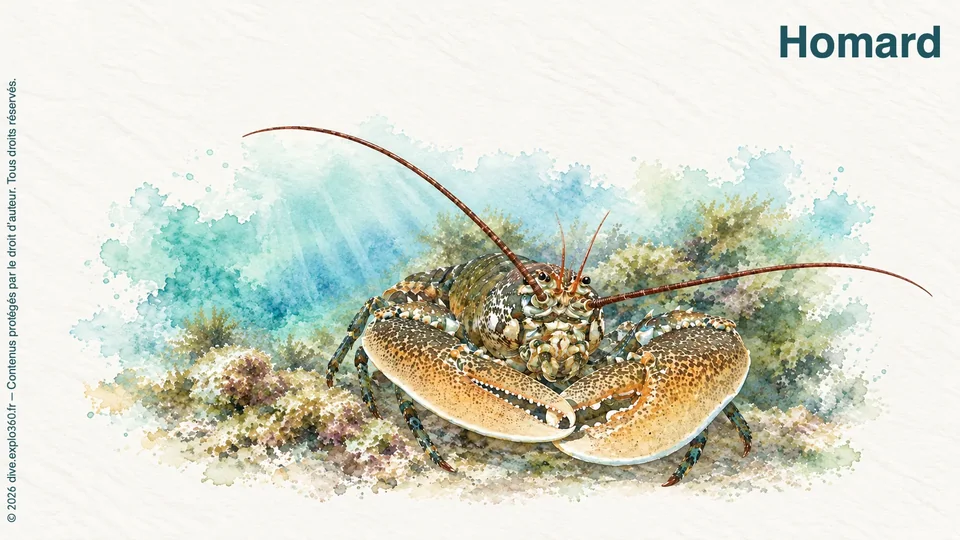
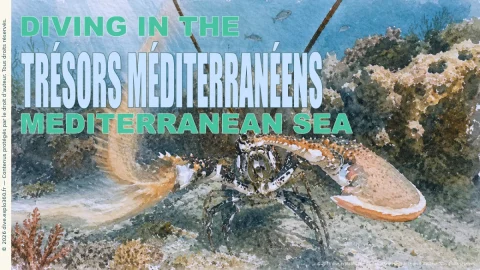
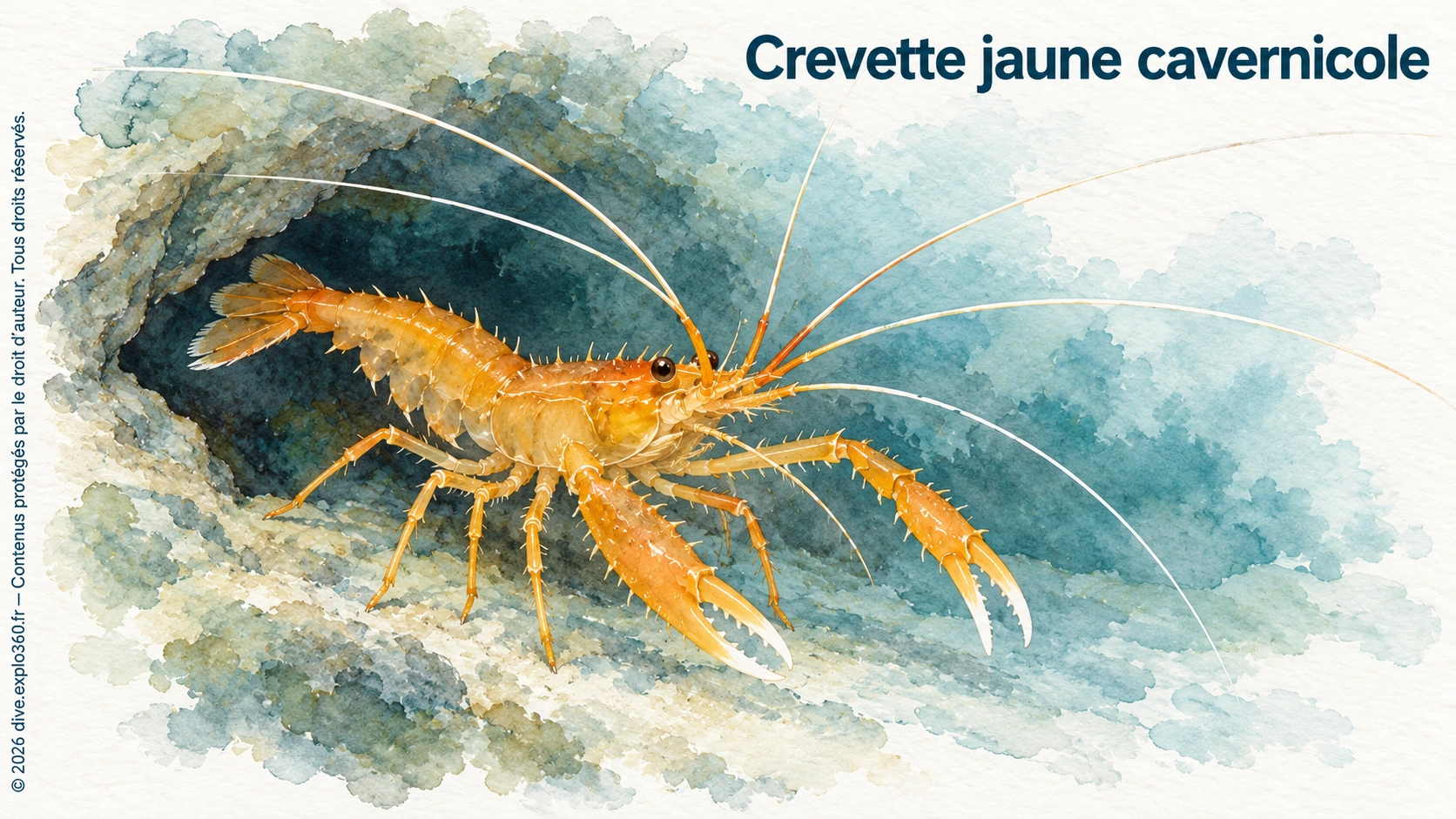
Orange antennae and unequal claws give the European lobster (Homarus gammarus) a striking outline. One claw is broad and heavy with irregular teeth; the other is narrower, with a row of finer teeth.
The shell is bluish, often very dark, while the leg tips are pale. Behind the robust front section, the abdomen, the jointed rear part, continues to the tail.
WHERE DOES IT LIVE?
It mainly frequents rocky seabeds, where it finds cavities to hide in, but may also occur on sandy substrates or around wrecks. It is encountered from the coast down to several tens of metres deep, depending on the region.
WHAT DOES IT EAT?
The European lobster’s two large claws grasp and prepare food. The heavy claw can break a resistant covering, while the slimmer one cuts and holds. Pieces then pass to appendages around the mouth. This equipment handles a varied menu: molluscs, crustaceans, worms and echinoderms, as well as fish and animal remains. The lobster can capture live prey or use food that is already dead. Scavenging accounts for only part of its meals.
GO FURTHER WITH AMIGANSEAU
Explore the full species guide
Discover full species guides, in-depth content and interactive tools available with your licence.
Dive.Explo360 is an independent, self-funded nonprofit. Every licence helps us create new content, improve our teaching tools and keep some of our resources free and ad-free.
Choose a licence that suits your needs for personal, educational or professional use.
Open-access resources remain available without a subscription.

 Understand the species