


 Habitat
 Depth
 Group
 Role
 Average size
WHAT DOES IT LOOK LIKE?
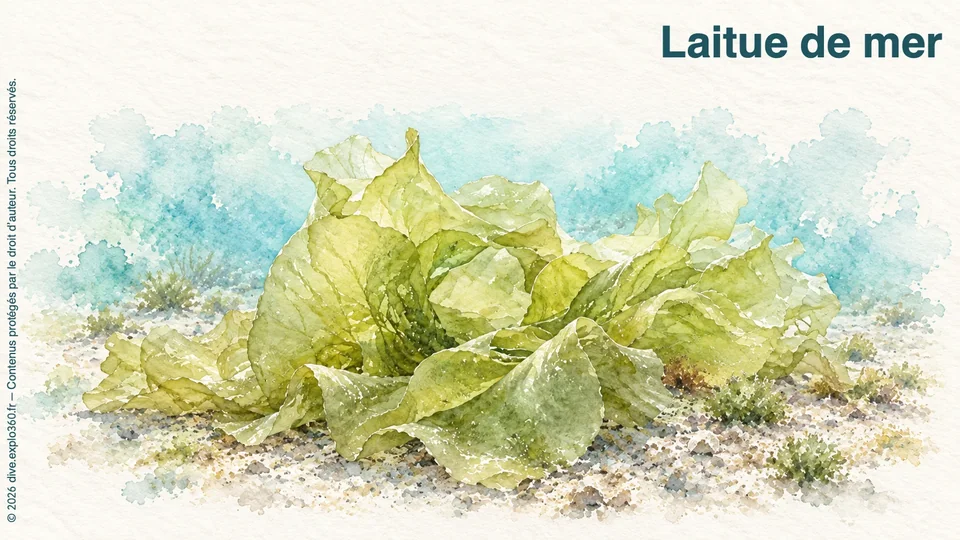
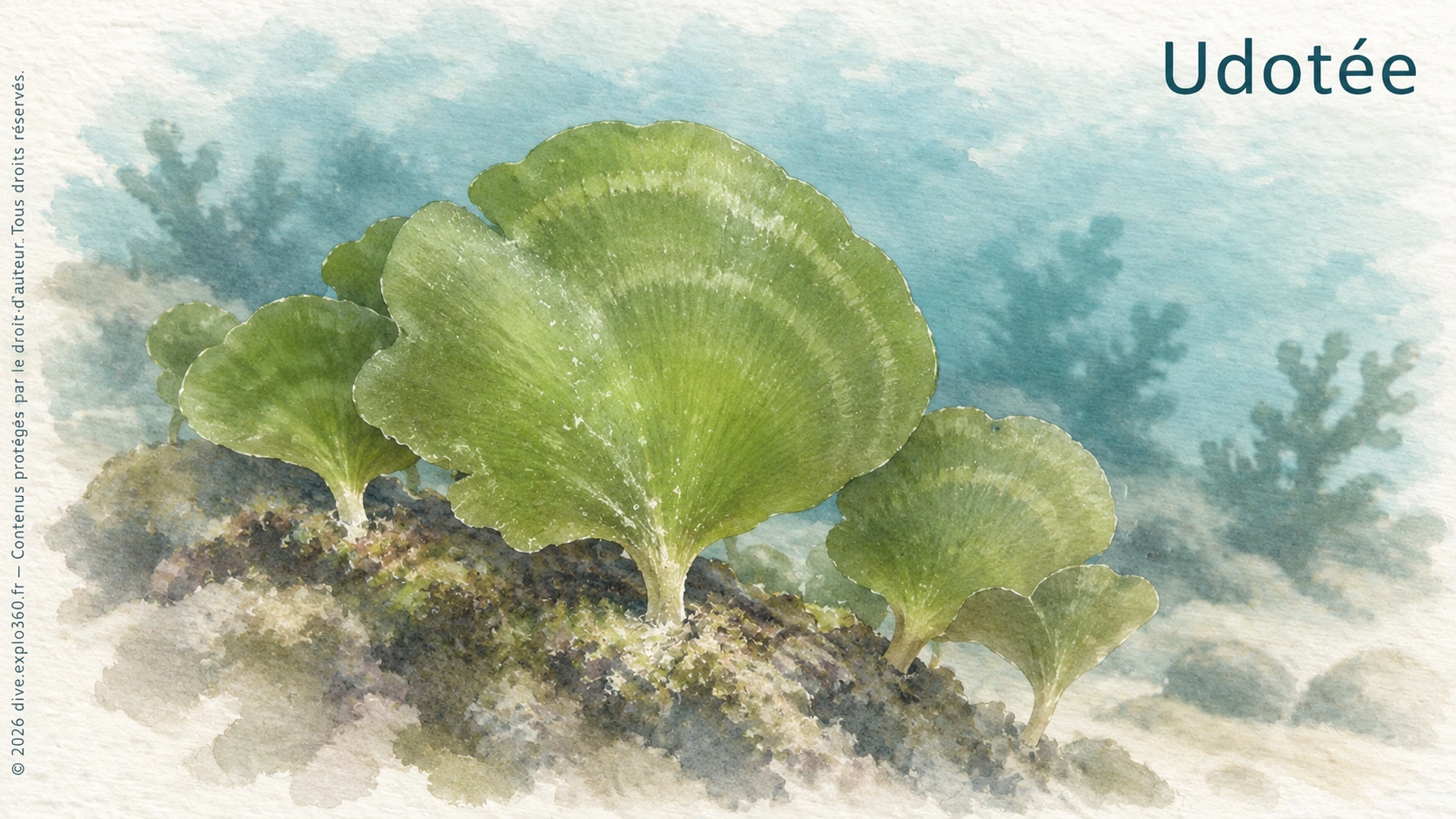
Sea lettuce forms a thin, flexible blade, sometimes translucent, with often wavy edges. Its bright green may shade towards yellow. A small holdfast secures it to rock or another surface.
The blade folds and unfurls as water moves past. Several Ulva species look much alike, so the outline alone does not always establish that a specimen is Ulva lactuca.
WHERE DOES IT LIVE?
It grows in well-lit shallow coastal water, attached to rocks, shells and submerged structures. Some sea lettuces also occur in brackish coastal habitats.
Detached blades may drift and gather in sheltered bays. Where nutrient supplies are high, Ulva algae can sometimes grow in great abundance.
WHAT DOES IT EAT?
Like other green algae, sea lettuce uses sunlight to make organic matter from carbon dissolved in seawater. It also takes up the mineral nutrients needed for growth. This process, photosynthesis, does not involve catching or swallowing prey.
GO FURTHER WITH AMIGANSEAU
Unlock the full profile
Deepen your knowledge with the exclusive chapters and interactive resources included in an AMIGANSEAU licence.
Subscribing to Dive.Explo360 means supporting a different way to discover marine life.
Our independent platform is entirely self-funded and relies solely on subscriptions. Every licence helps us continue our work, create new content, and share what we know about the marine world with as many people as possible.
Starting at €80 per year, your support makes all the difference.
 Understand the species