


 Habitat
 Depth
 Group
 Role
 Average size
 Good to know
WHAT DOES IT LOOK LIKE?
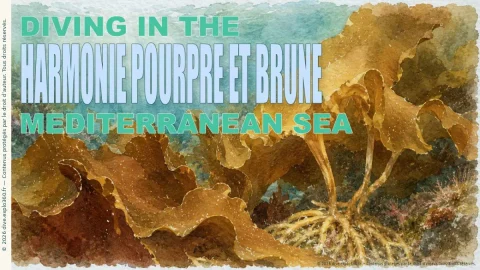
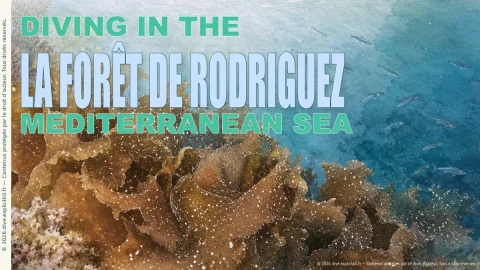
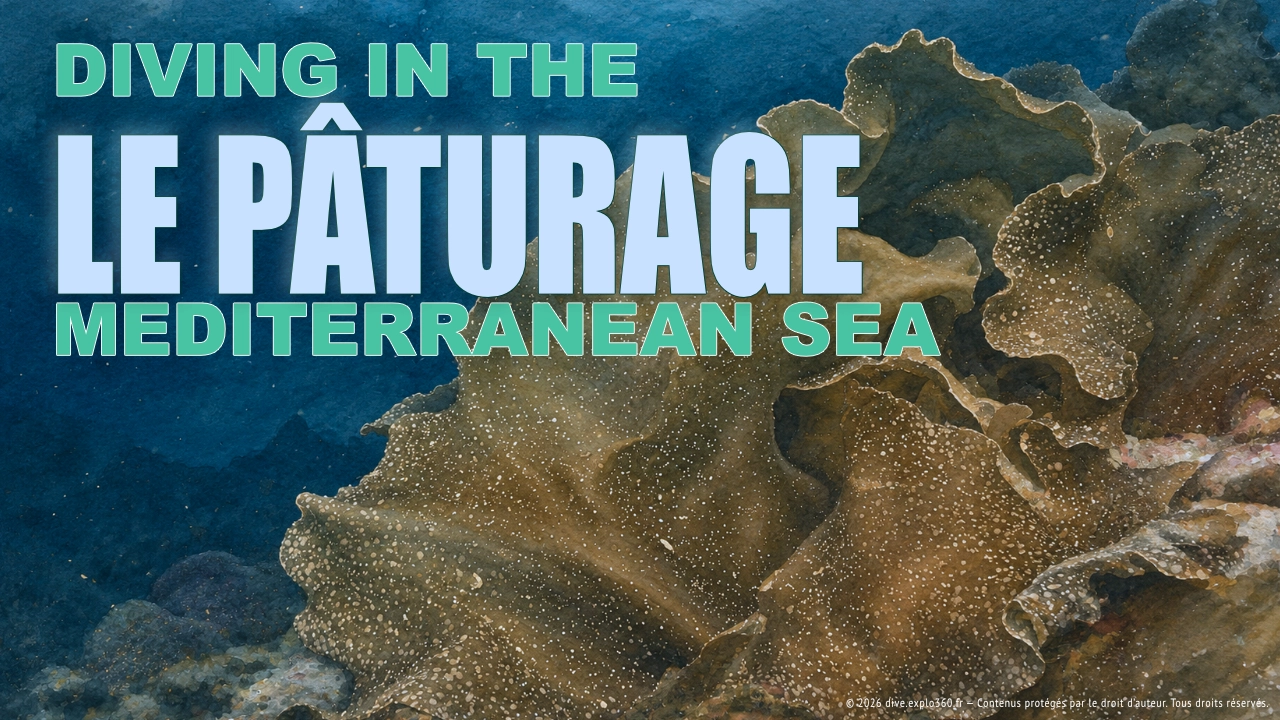
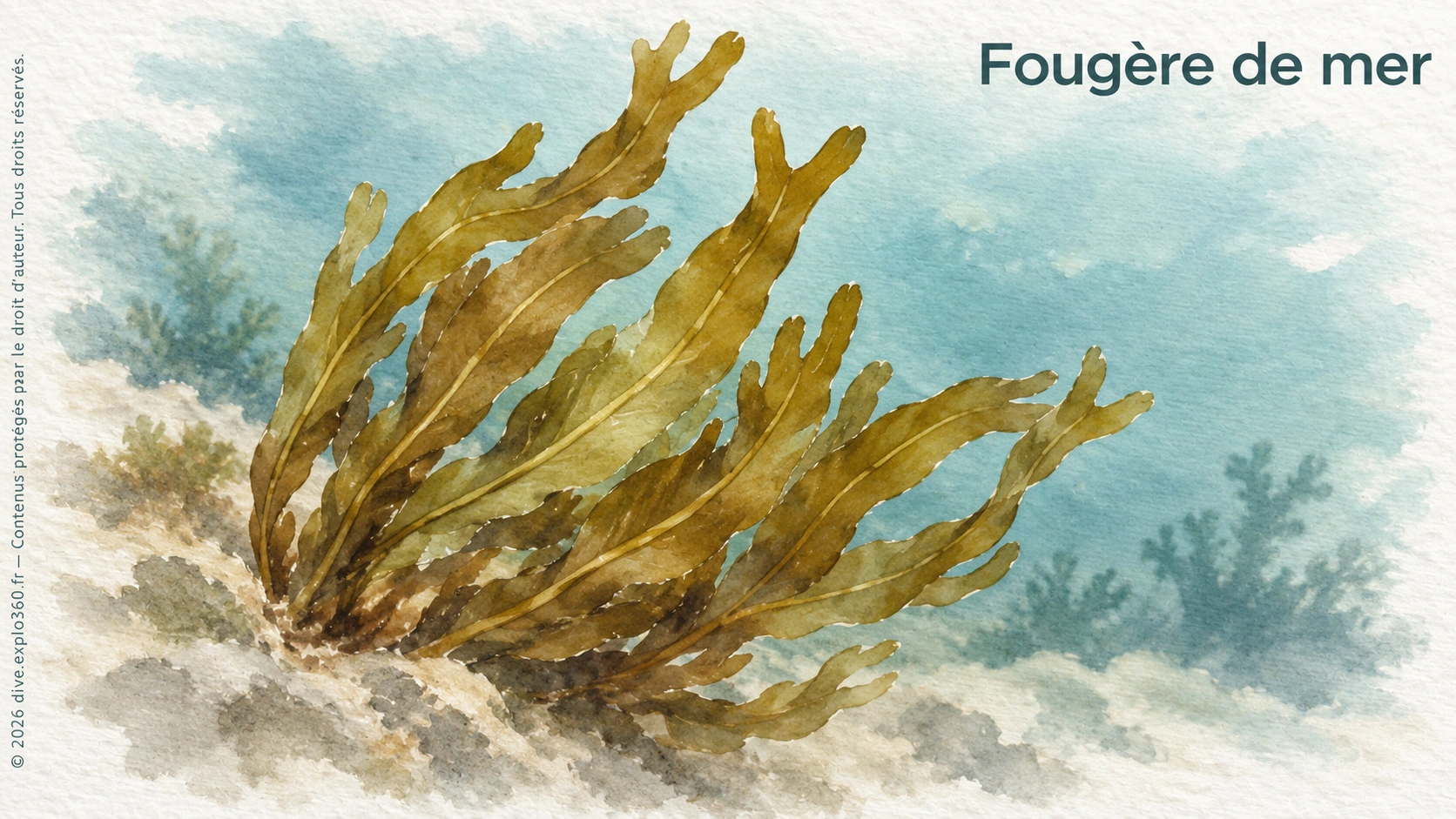
Its broad, brown to olive-green blades are flat, with gently wavy edges. A narrow band may separate a newer section from an older one, sometimes covered with small attached organisms. A short cylindrical stalk joins each blade to stolons, creeping runners anchored to the seabed by numerous holdfasts.
WHERE DOES IT LIVE?
Found only in the Mediterranean, this kelp grows on deep rocky bottoms, coralligenous formations and hard calcareous deposits, where the water is clear and currents flow along the seabed. Most stands lie well below ordinary recreational diving depths, although records from around 30 m exist in some areas. Its blades spread close to the bottom rather than forming a vertical forest.
WHAT DOES IT EAT?
Even in deep water, the kelp uses the faint light that reaches its blades. Pigments capture this energy for photosynthesis, allowing it to produce organic matter from dissolved carbon. It also absorbs mineral nutrients from seawater. It neither hunts nor eats prey.
GO FURTHER WITH AMIGANSEAU
Continue your exploration
Discover full species guides, in-depth content and interactive tools available with your licence.
Dive.Explo360 is a self-funded nonprofit platform. Each licence helps us create new content, improve our educational tools and keep some resources freely available.
Choose a licence that suits your needs for personal, educational or professional use.
Open-access resources remain available without a subscription.

 Understand the species