


 Habitat
 Depth
 Group
 Role
 Average size
WHAT DOES IT LOOK LIKE?
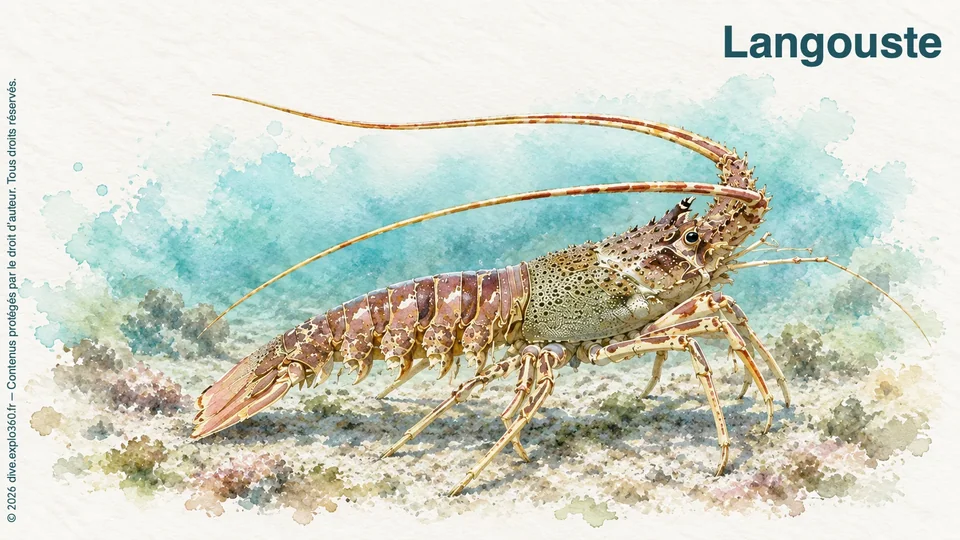
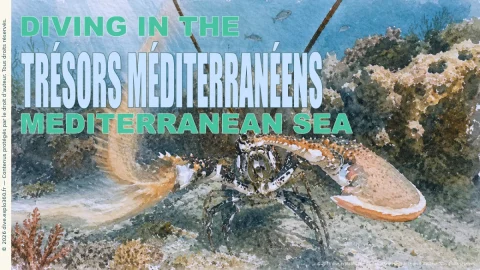
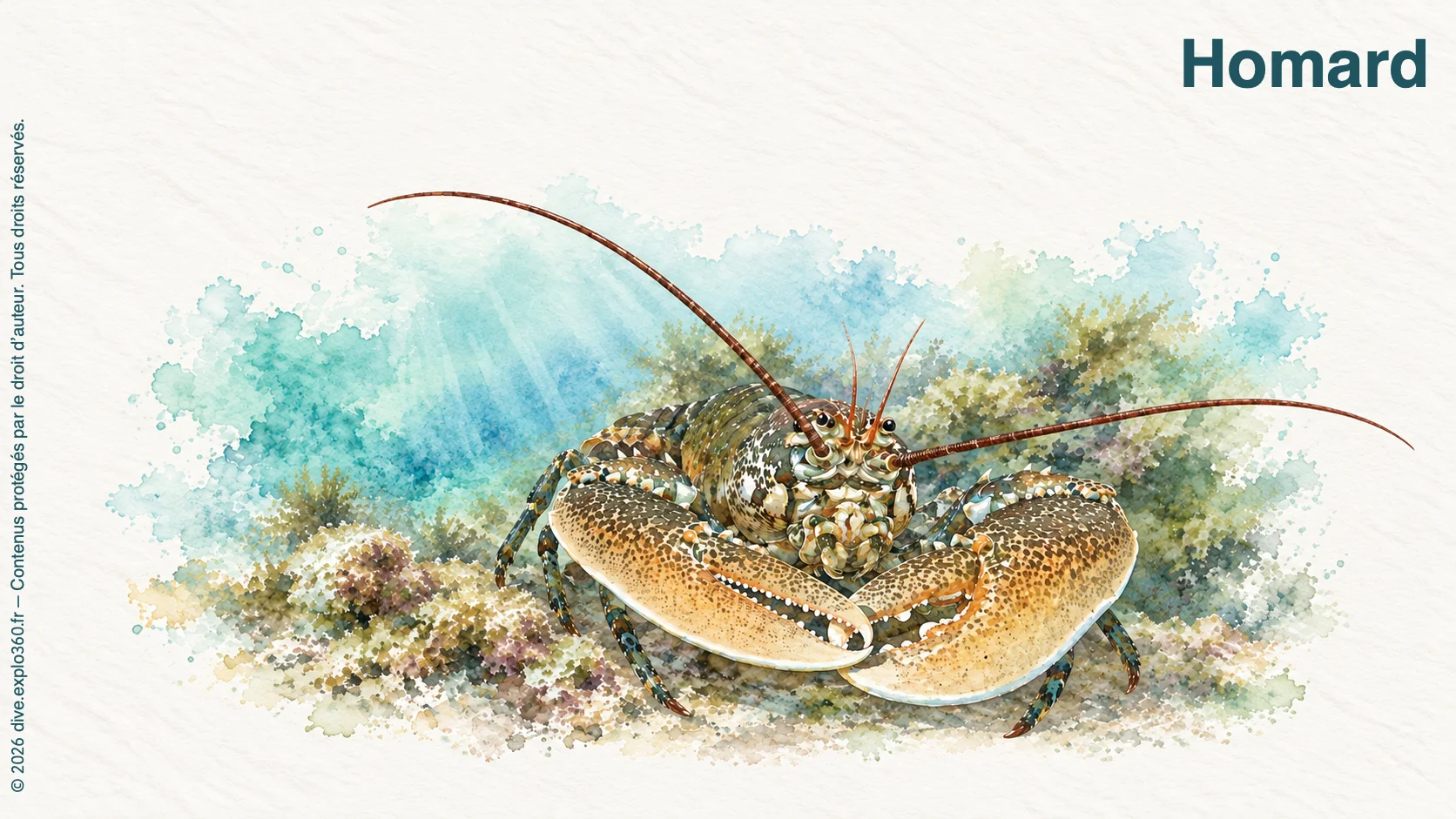
The shell spines and extremely long antennae shape the European spiny lobster (Palinurus elephas). Two strong triangular spines rise above the eyes, which rest on short movable stalks.
The rounded shell continues into a red to violet-brown body with paler areas. The abdomen, the jointed rear portion, ends in a fan. At the front, the legs do not carry large claws like those of the European lobster.
WHERE DOES IT LIVE?
It mainly lives on rocky seabeds, where it finds refuge in cracks, crevices or beneath boulders.
It occurs in the Mediterranean and the eastern Atlantic, generally from a few metres down to several tens of metres deep, sometimes deeper depending on the area.
WHAT DOES IT EAT?
The European spiny lobster uses its strong mouthparts to open shellfish. Molluscs and echinoderms, notably sea urchins, are important foods. Worms, crustaceans, algae and various attached organisms can also enter its menu. Their contribution varies between locations. It also scavenges animal remains, using both live prey and dead food. Handling movements near the mouth are central to understanding how it prepares these varied meals.
GO FURTHER WITH AMIGANSEAU
Unlock the full profile
Deepen your knowledge with the exclusive chapters and interactive resources included in an AMIGANSEAU licence.
Subscribing to Dive.Explo360 means supporting a different way to discover marine life.
Our independent platform is entirely self-funded and relies solely on subscriptions. Every licence helps us continue our work, create new content, and share what we know about the marine world with as many people as possible.
Starting at €80 per year, your support makes all the difference.






 Understand the species