


 Habitat
 Depth
 Group
 Role
 Average size
WHAT DOES IT LOOK LIKE?
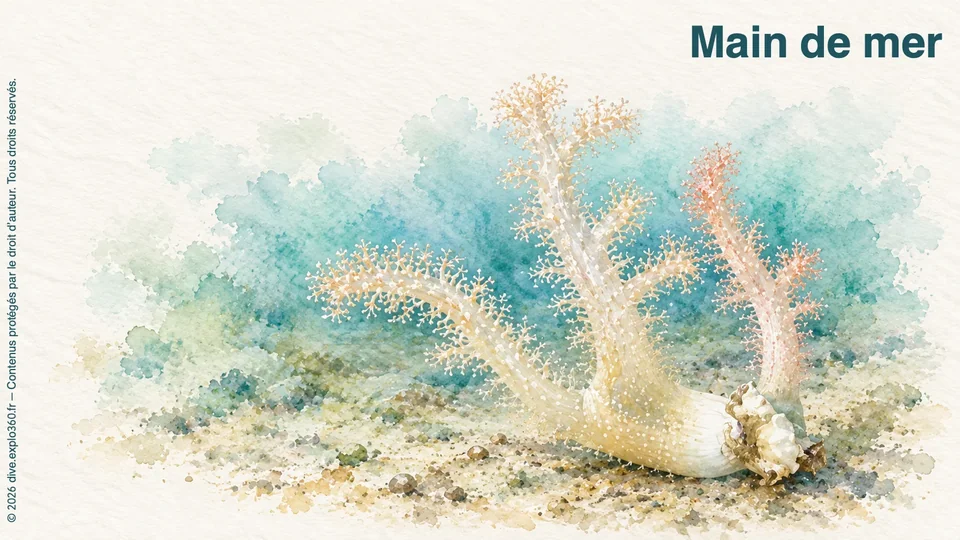
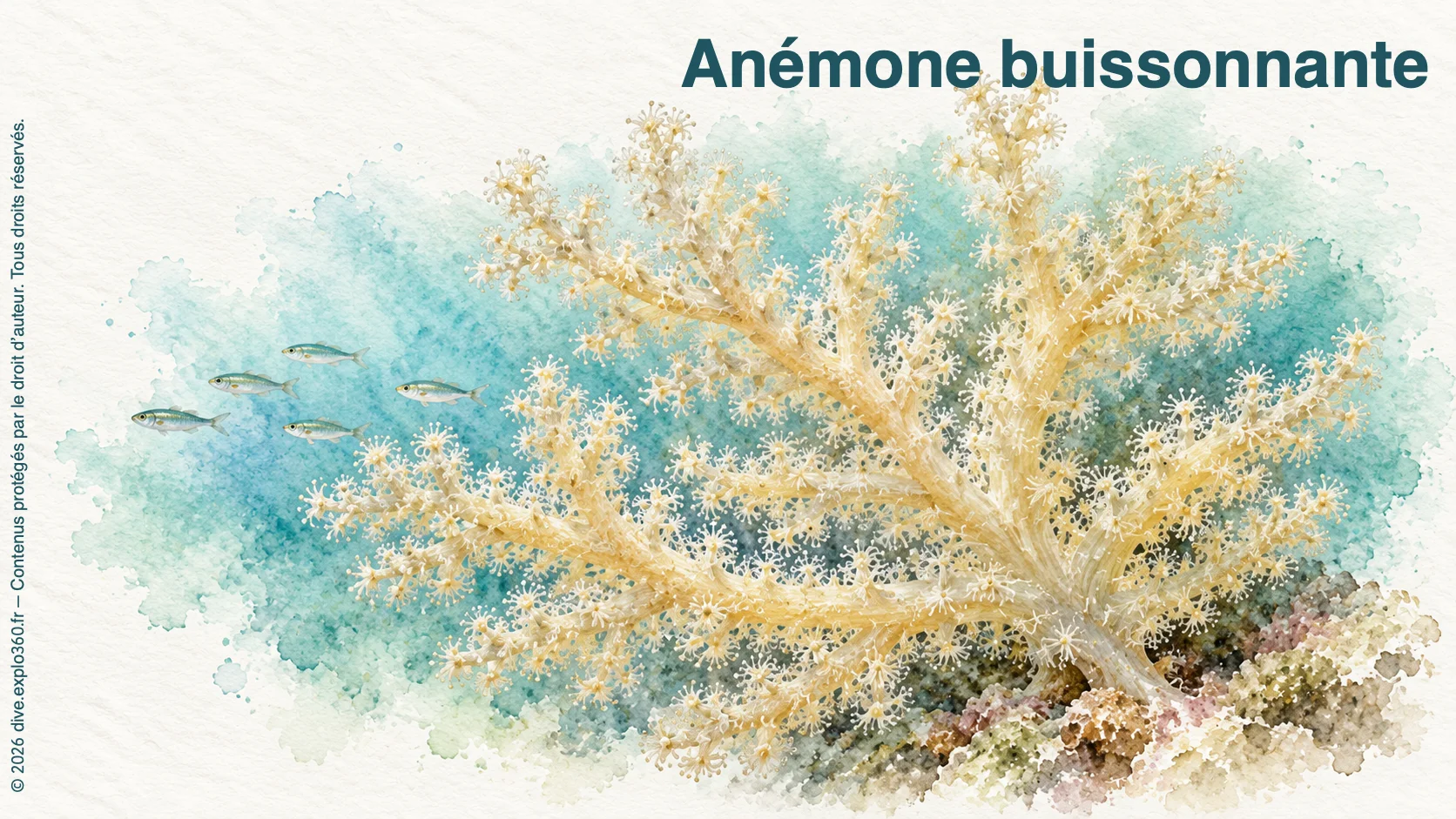
The lobes of sea fingers (Alcyonium palmatum) rise from a shared thick trunk and resemble irregular fingers. The colony is fleshy, often white to cream or pale yellow; orange and red are rarer.
When extended, the polyps, the small animals covering the lobes, are white and translucent. They give the upper portion a fluffy appearance. The smoother base carries no polyps.
WHERE DOES IT LIVE?
It lives attached to hard supports. On sandy or detrital seabeds, it can settle on small solid objects such as pebbles, shell fragments or other debris, sometimes partly buried in the sediment. It also occurs on rocky seabeds with flowing water.
WHAT DOES IT EAT?
Sea fingers inflate and expose their polyps to the food-bearing flow. Each opens eight feathery tentacles whose branches carry stinging cells useful in capture. Small planktonic prey are retained and guided towards the polyp’s mouth. Feeding occurs on many little surfaces distributed over the fleshy colony. Behind its hand-like outline, numerous individuals take animals delivered by water. Expansion reveals feeding structures that are much less conspicuous when the polyps are withdrawn.
GO FURTHER WITH AMIGANSEAU
Unlock the full profile
Deepen your knowledge with the exclusive chapters and interactive resources included in an AMIGANSEAU licence.
Subscribing to Dive.Explo360 means supporting a different way to discover marine life.
Our independent platform is entirely self-funded and relies solely on subscriptions. Every licence helps us continue our work, create new content, and share what we know about the marine world with as many people as possible.
Starting at €80 per year, your support makes all the difference.
 Understand the species