


 Habitat
 Depth
 Group
 Role
 Average size
WHAT DOES IT LOOK LIKE?
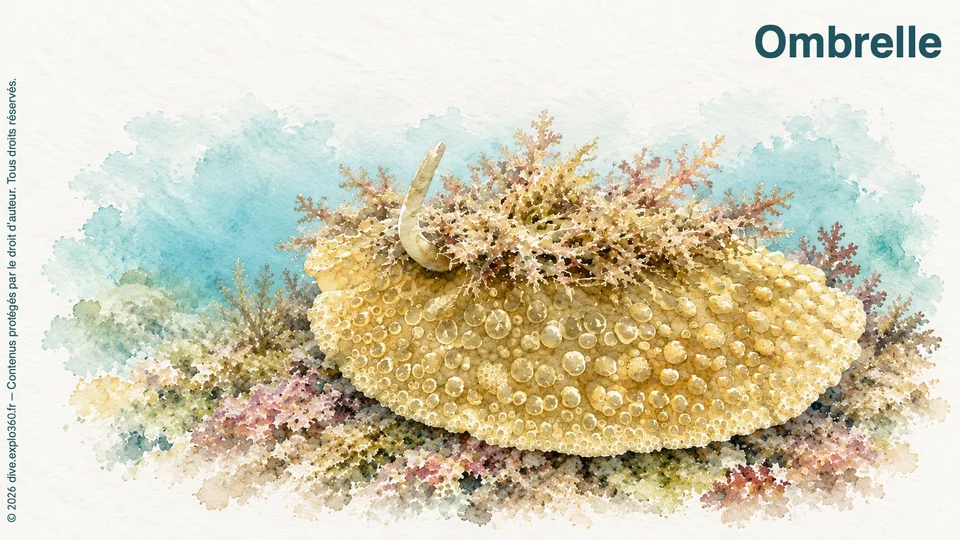
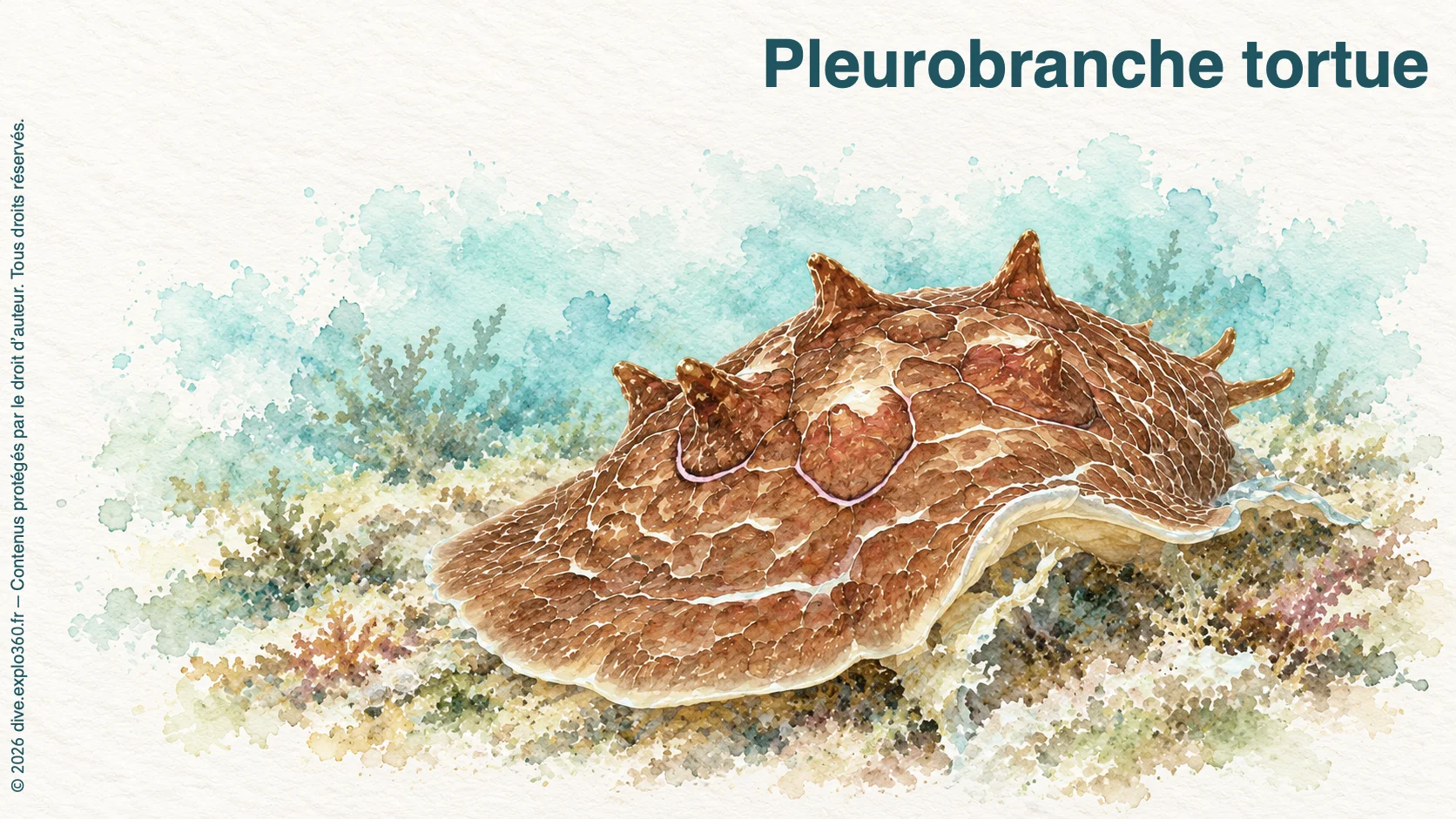
The small shell on the back of the umbrella slug (Umbraculum umbraculum) is external. Flat and rounded, it sits above a much broader fleshy body whose outline extends well beyond it.
Large irregular bumps give relief to the beige, brown or orange surface. The shell may blend visually with organisms covering it, but it is not hidden inside the body.
WHERE DOES IT LIVE?
The Umbrella slug lives on seabeds, mainly rocky ones, from shallow areas down to several dozen metres. It is often associated with sponge-rich environments. It can also occur on mixed seabeds combining sand and rock.
WHAT DOES IT EAT?
The umbrella slug can surround a sponge with the front of its mantle and rasp tissues using its radula. This grazing targets animal prey: sponges, particularly demosponges, provide its food. Several species are eaten, without a firmly established single preference. Processing leaves traces in casts, where mineral sponge spicules can form little mucus-bound packages. Feeding combines contact with the food surface, rasping and tissue ingestion.
GO FURTHER WITH AMIGANSEAU
Unlock the full profile
Deepen your knowledge with the exclusive chapters and interactive resources included in an AMIGANSEAU licence.
Subscribing to Dive.Explo360 means supporting a different way to discover marine life.
Our independent platform is entirely self-funded and relies solely on subscriptions. Every licence helps us continue our work, create new content, and share what we know about the marine world with as many people as possible.
Starting at €80 per year, your support makes all the difference.
 Understand the species