


 Habitat
 Depth
 Group
 Role
 Average size
 Good to know
WHAT DOES IT LOOK LIKE?
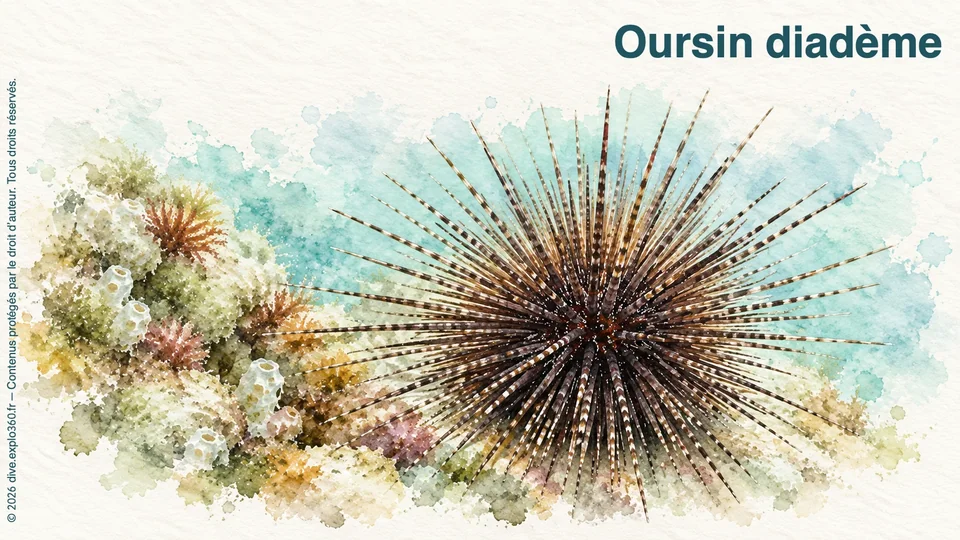
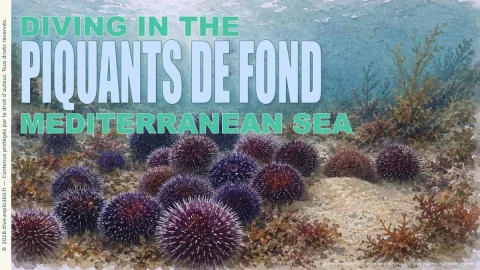
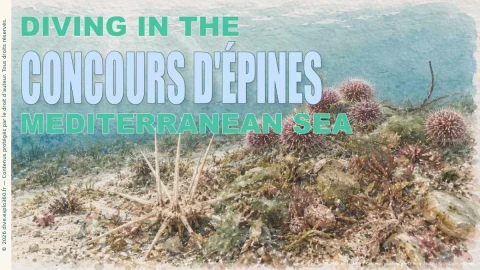
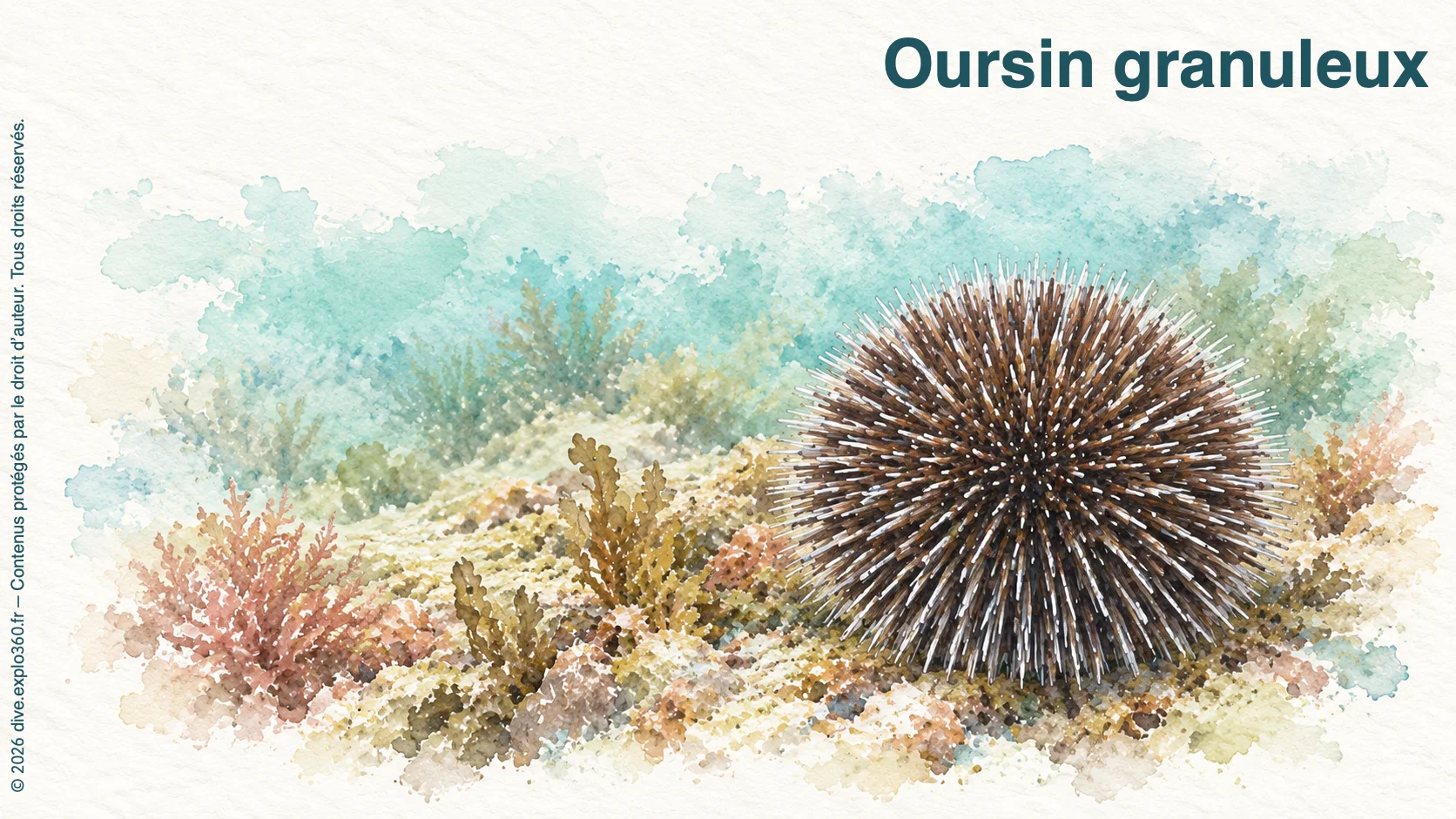
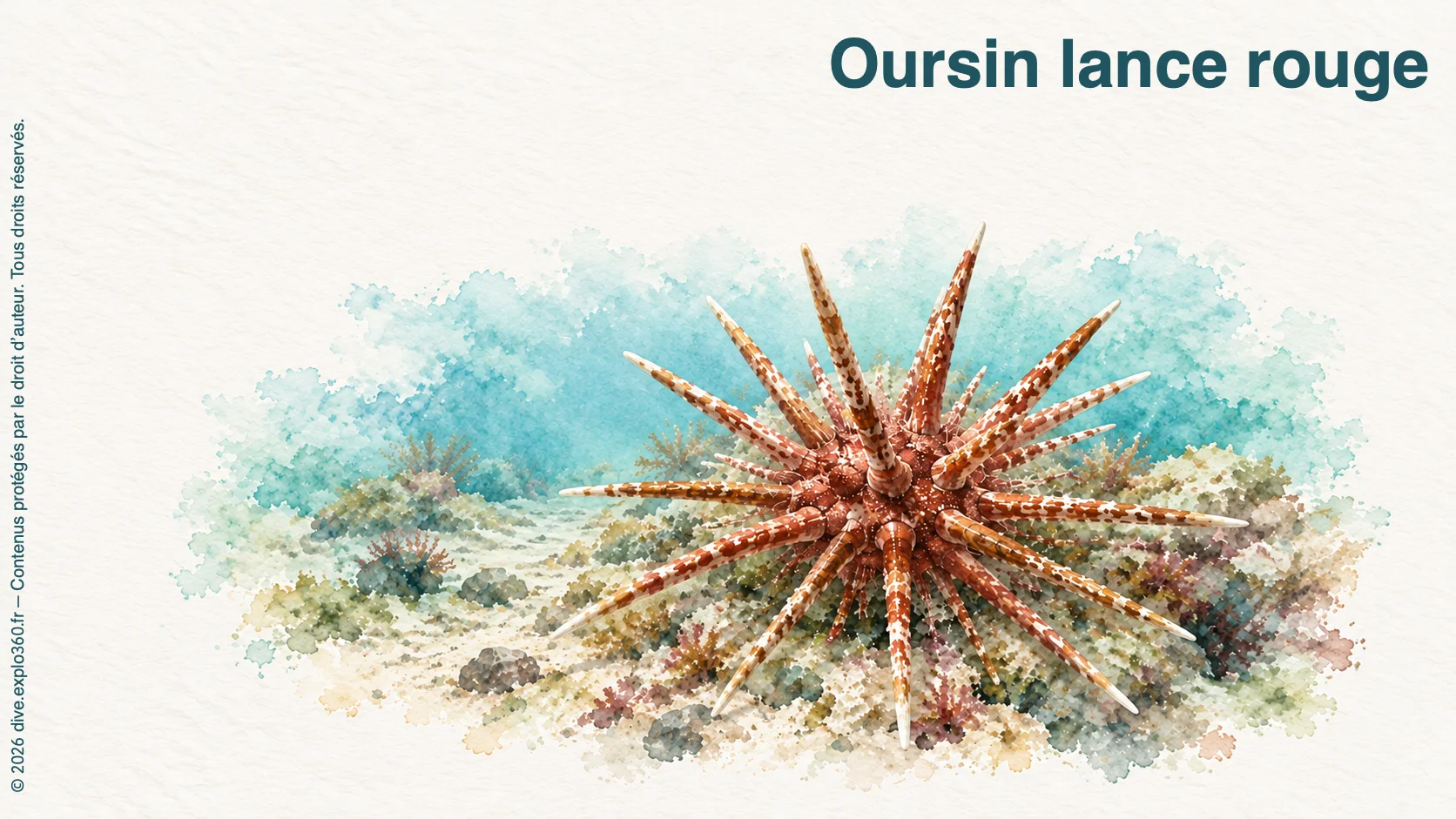
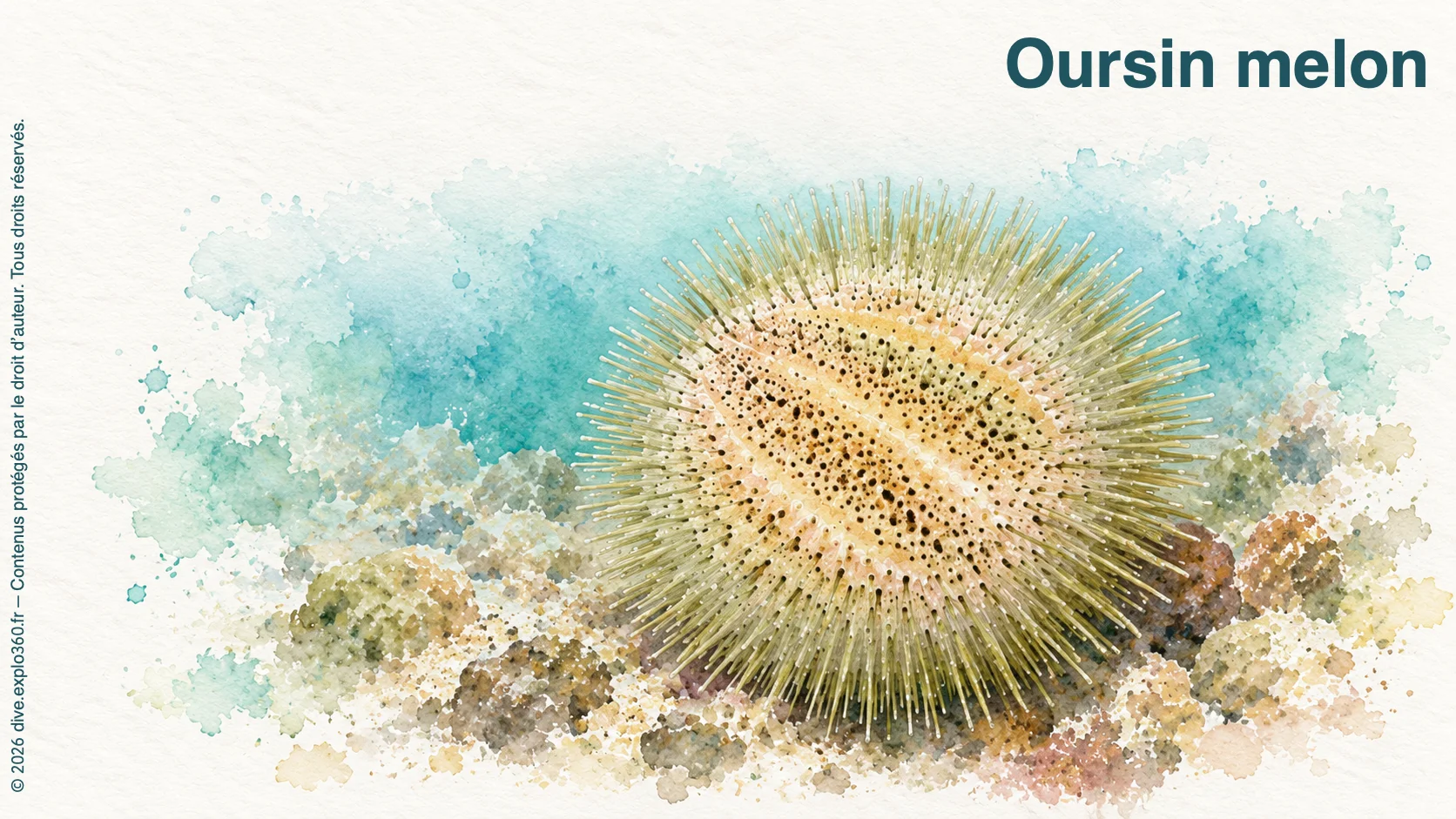
The spines of the long-spined sea urchin (Centrostephanus longispinus) far exceed the small test, the rigid shell at the body’s centre. Thin, very long and mobile, they form an open sphere much larger than that centre.
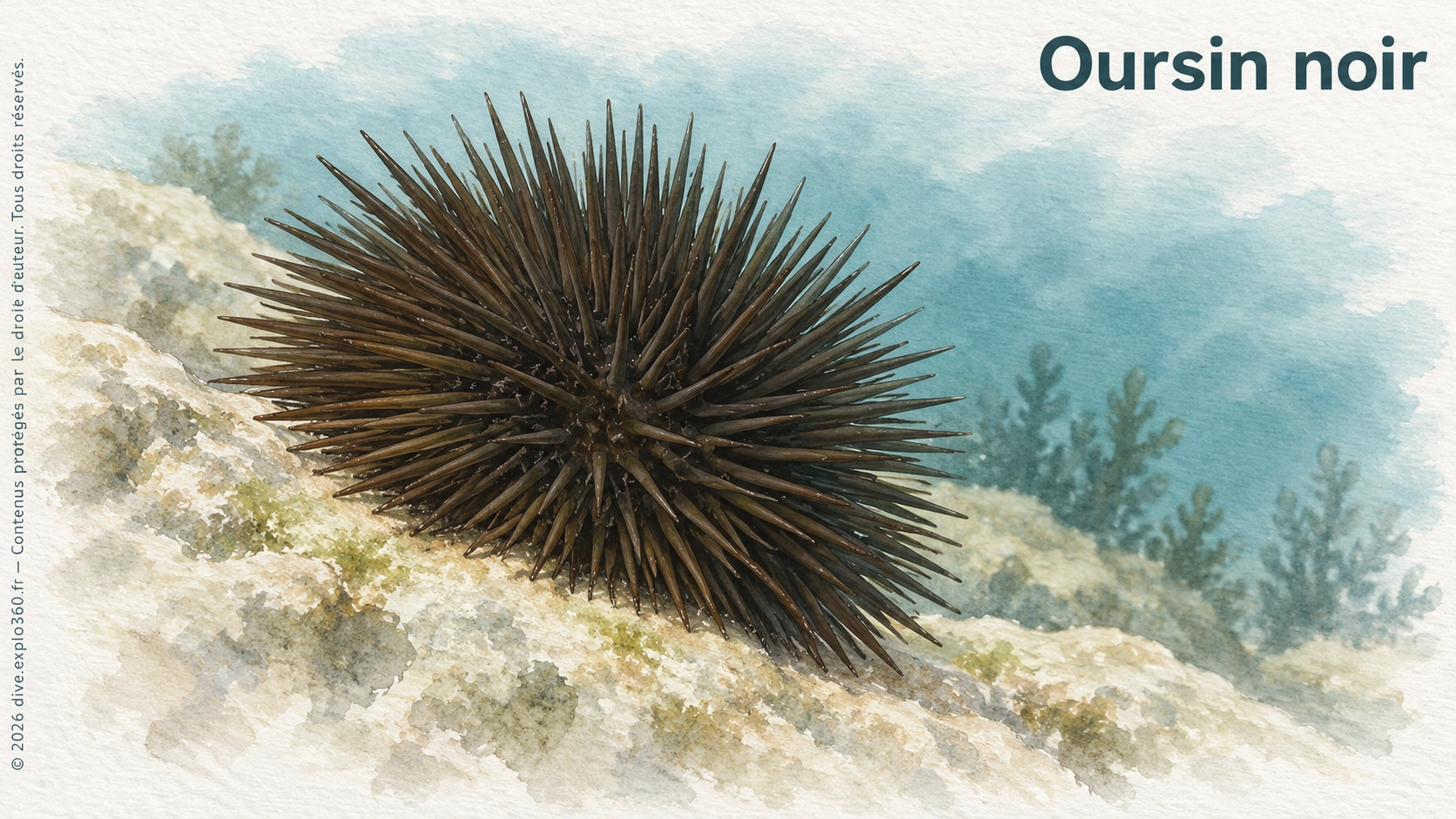
Brown to black characterises older individuals. In young ones, white and violet-brown rings on the spines may create a distinctly striped appearance. Their fragility adds to the delicate outline.
WHERE DOES IT LIVE?
It mainly lives on rocky seabeds, often sheltered from direct light. It is frequently found hidden in holes, beneath overhangs or in crevices, sometimes at considerable depths.
WHAT DOES IT EAT?
Beneath the long spines, the Mediterranean long-spined urchin’s mouth faces its food-bearing support. Its menu is mainly plant-based, notably algae and seagrass leaves. Animal remains, including mollusc or sponge material, and fine organic particles can supplement it. This variety reflects use of accessible resources around the urchin. Animal items do not displace the major plant contribution. Feeding is best understood at the contact between the underside and the support.
GO FURTHER WITH AMIGANSEAU
Unlock the full profile
Deepen your knowledge with the exclusive chapters and interactive resources included in an AMIGANSEAU licence.
Subscribing to Dive.Explo360 means supporting a different way to discover marine life.
Our independent platform is entirely self-funded and relies solely on subscriptions. Every licence helps us continue our work, create new content, and share what we know about the marine world with as many people as possible.
Starting at €80 per year, your support makes all the difference.
 Understand the species