


 Habitat
 Depth
 Group
 Role
 Average size
WHAT DOES IT LOOK LIKE?
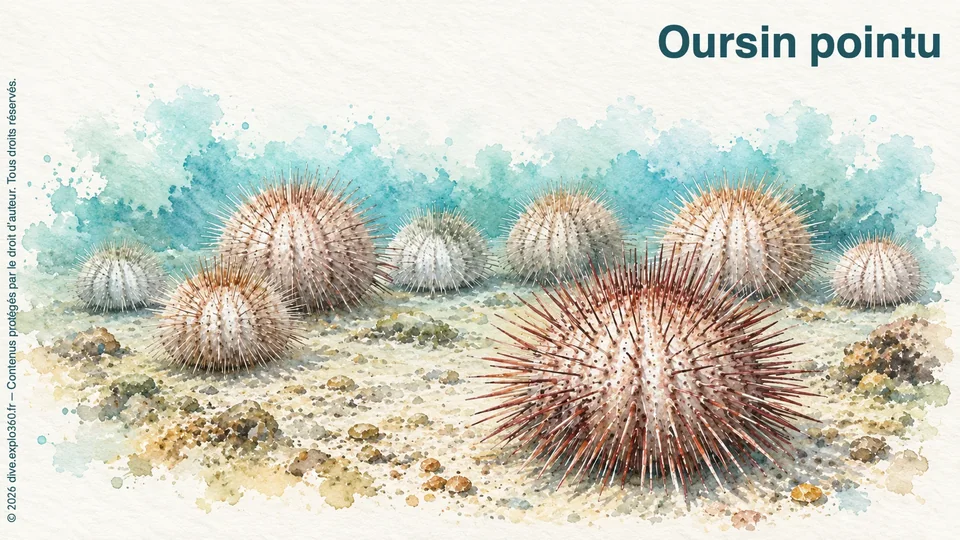
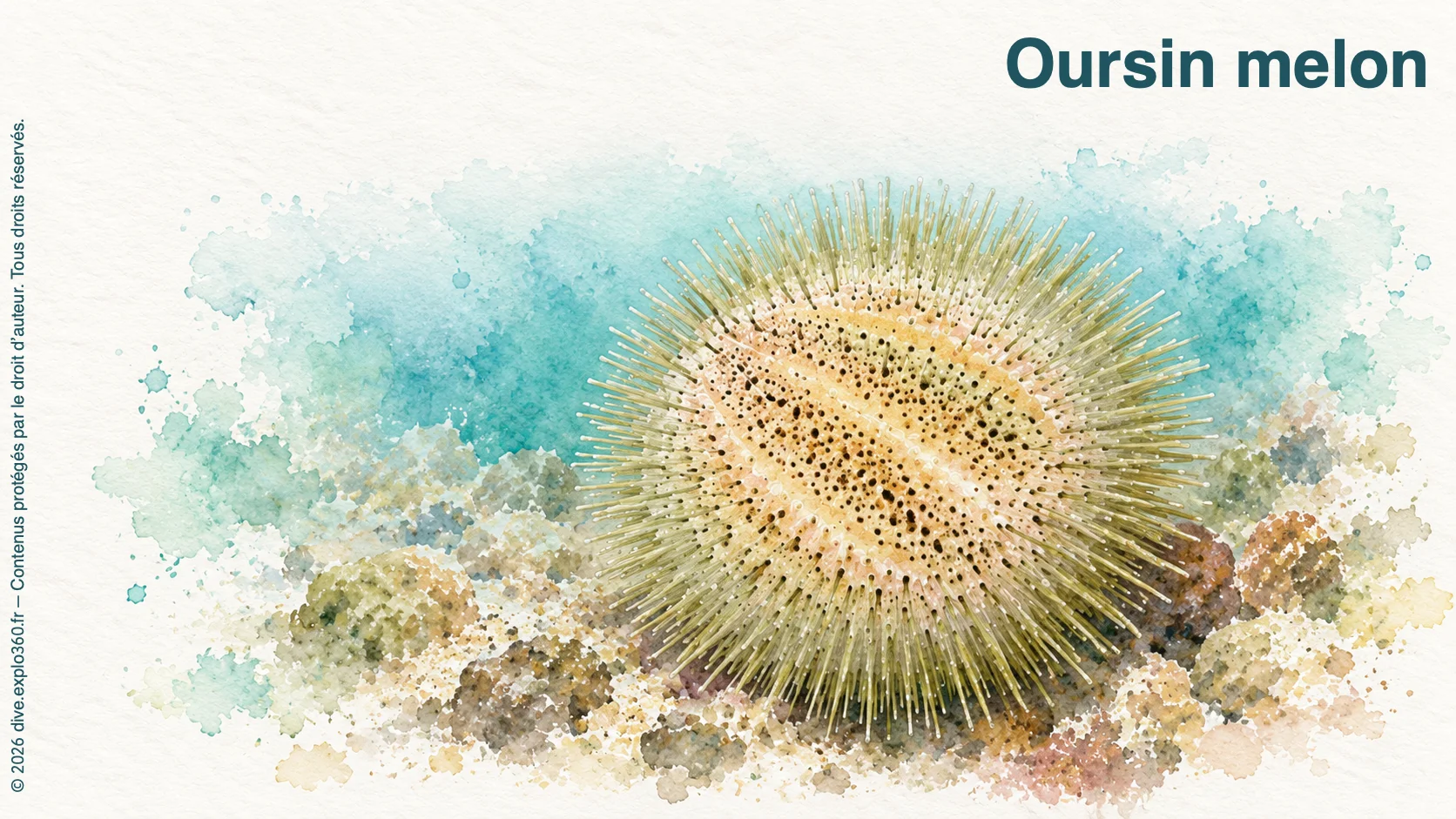
The slightly conical top of old individuals gives the pointed sea urchin (Gracilechinus acutus) one of its features. Its test, the rigid body shell, remains rounded but does not form the regular sphere of a melon urchin.
Long primary spines alternate with much shorter secondary spines. These two sizes create a full, bristling surface. The white to cream background may have reddish brown lines or reddish tinges.
WHERE DOES IT LIVE?
It mainly lives on soft seabeds composed of sand, mud or debris, often from several dozen metres deep. It may also be seen near rocky areas but remains mainly associated with loosely consolidated substrates.
WHAT DOES IT EAT?
The white sea urchin mainly grazes algae but can also use organic debris and small seabed organisms. Animal and detrital resources become more important in deep water. Its meals reflect different opportunities under different conditions. The mouth beneath the body takes food against the support. Dietary flexibility explains why it can be described as mainly herbivorous while feeding omnivorously in some situations.
GO FURTHER WITH AMIGANSEAU
Unlock the full profile
Deepen your knowledge with the exclusive chapters and interactive resources included in an AMIGANSEAU licence.
Subscribing to Dive.Explo360 means supporting a different way to discover marine life.
Our independent platform is entirely self-funded and relies solely on subscriptions. Every licence helps us continue our work, create new content, and share what we know about the marine world with as many people as possible.
Starting at €80 per year, your support makes all the difference.
 Understand the species