


 Habitat
 Depth
 Group
 Role
 Average size
WHAT DOES IT LOOK LIKE?
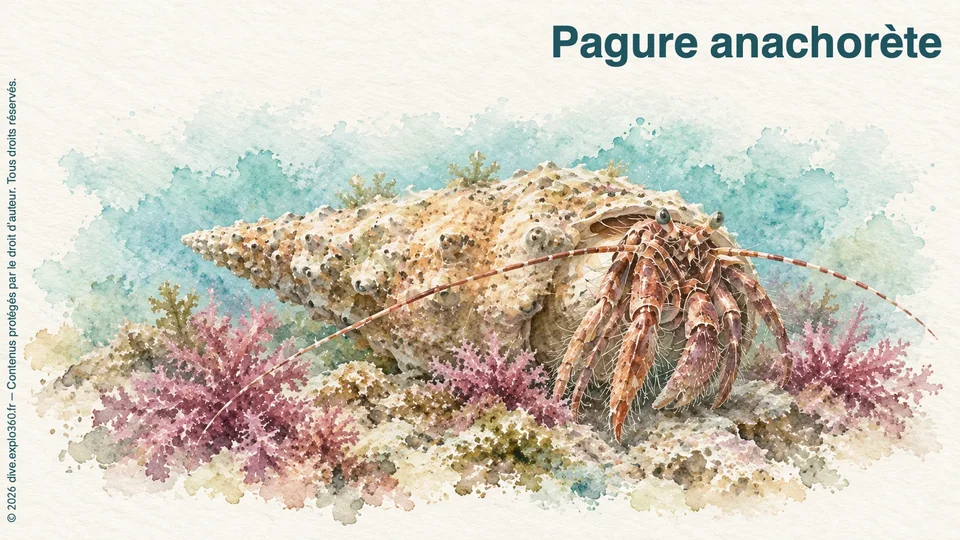
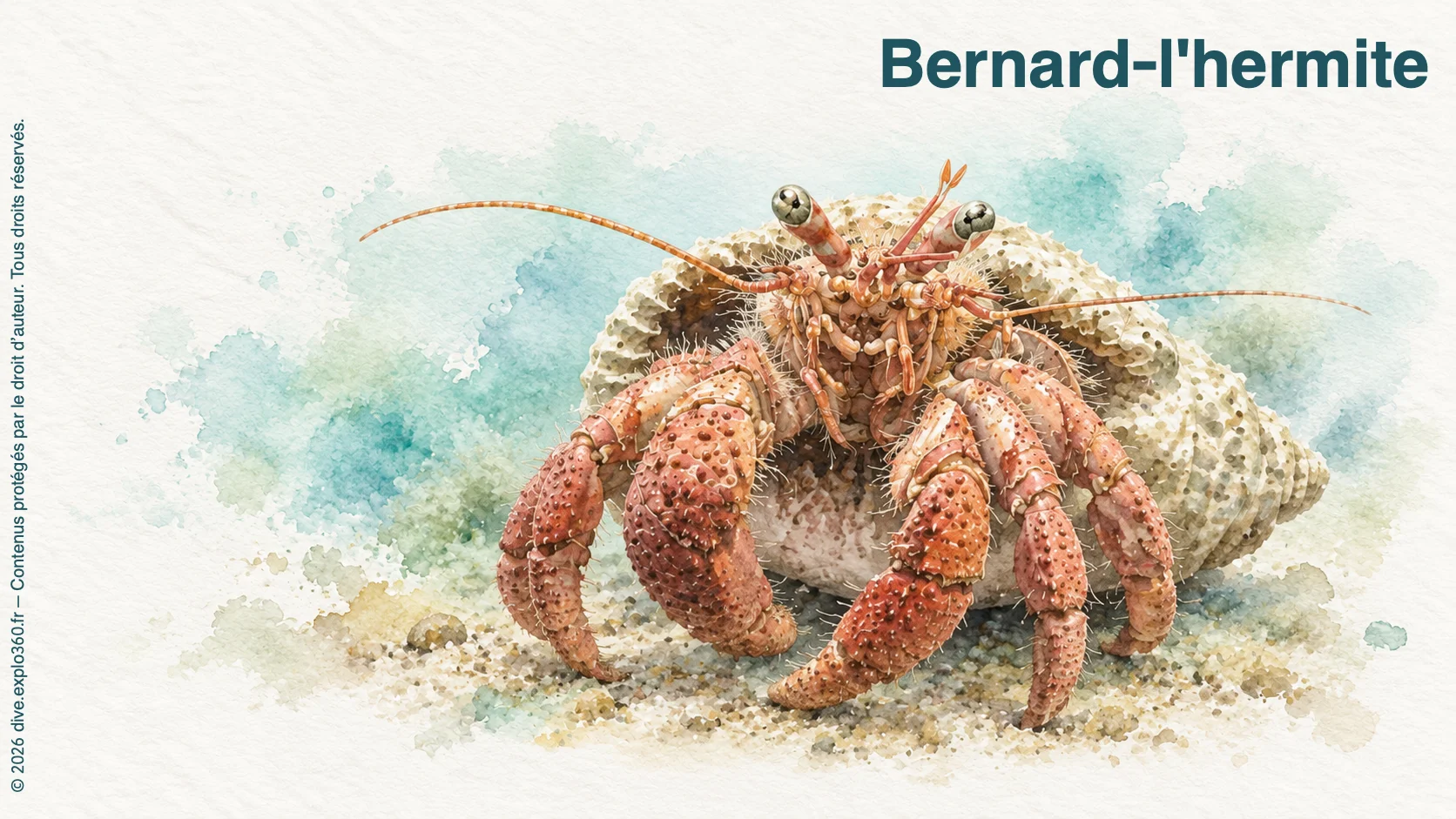
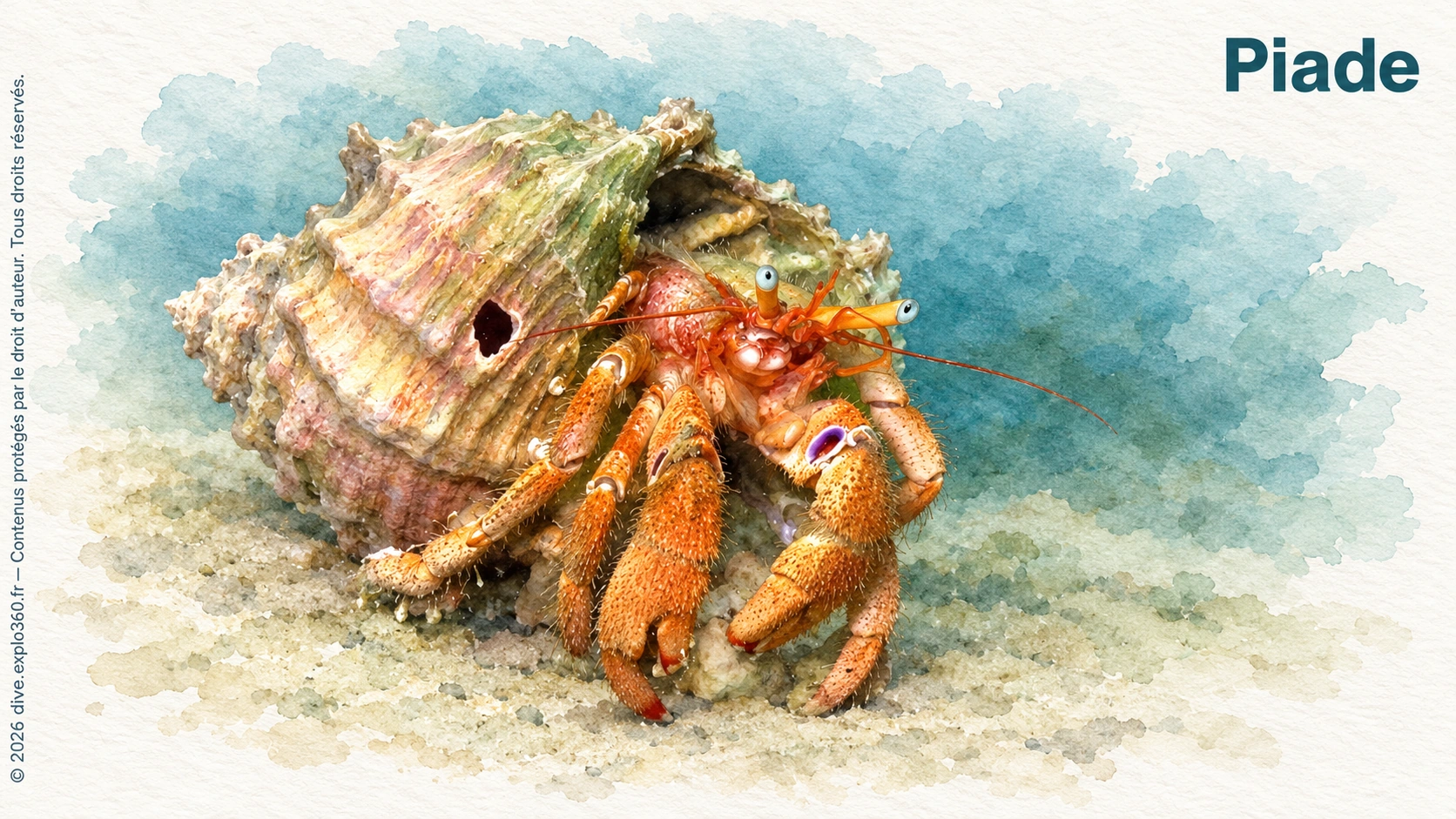
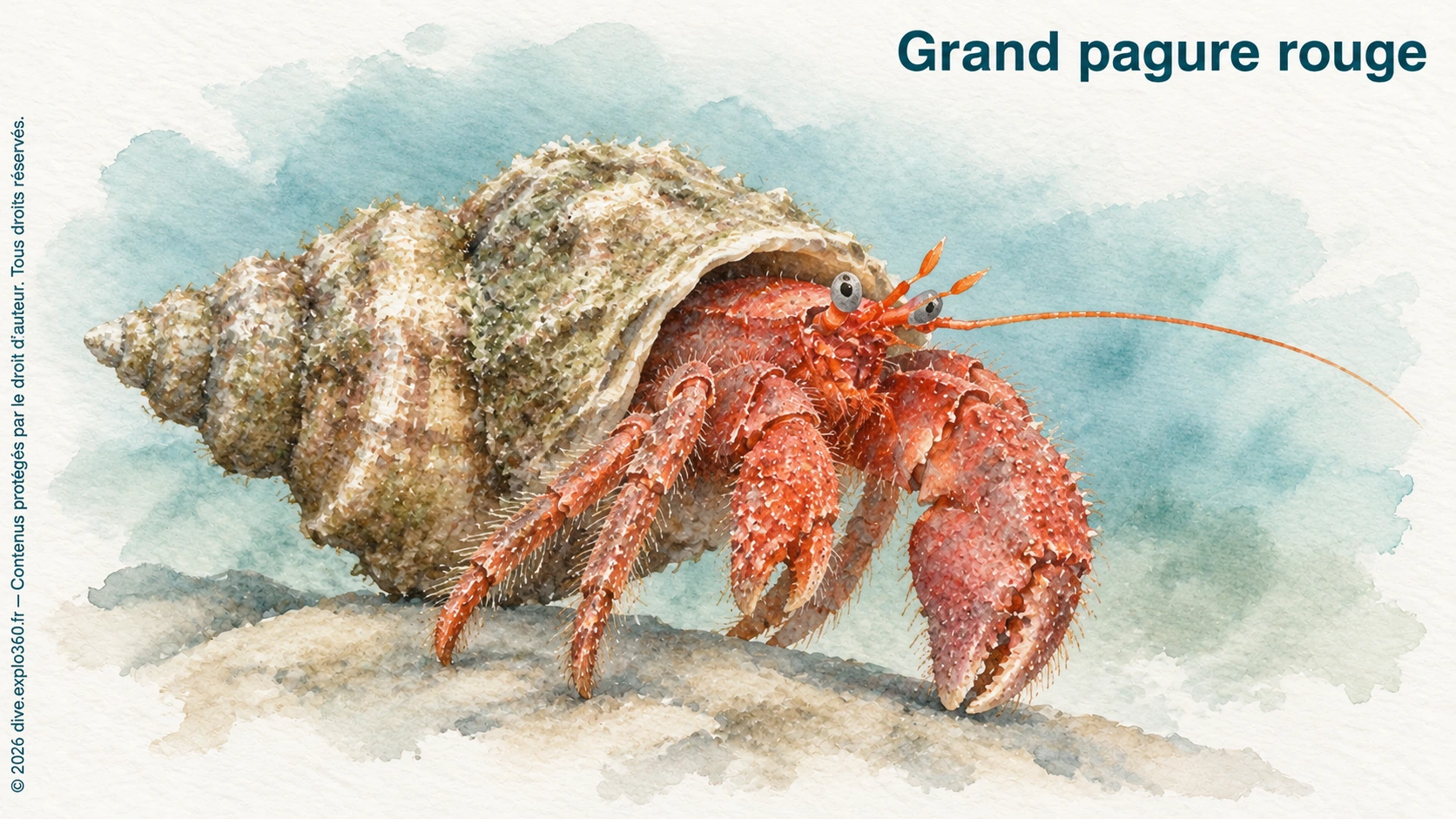
Its brown legs bear pale markings edged with fine blue lines, also visible on the claws. Green eyes on movable stalks and long, white-banded antennae provide further details for identification. The right claw is more developed than the left. Long, scattered hairs cover parts of the legs and claws, giving them a slightly tousled appearance. Its soft, curved abdomen remains tucked inside the gastropod shell it uses for shelter.
WHERE DOES IT LIVE?
You may encounter it on sandy seabeds, among rocks or between the leaves of seagrass meadows. It lives in both shallow water and areas several dozen metres below the surface. To look for it, examine the seabed and the spaces between raised features: the shell it carries can easily blend in with the empty shells lying nearby.
WHAT DOES IT EAT?
Among the debris scattered across the seabed, it feeds in part on small animal remains and fragments of plant material. It picks up these pieces with its claws and brings them to its mouthparts. You may sometimes watch it handling a tiny particle for several moments before eating it. Feeding on dead organic matter in this way is part of its detritivorous diet.
GO FURTHER WITH AMIGANSEAU
Unlock the full profile
Deepen your knowledge with the exclusive chapters and interactive resources included in an AMIGANSEAU licence.
Subscribing to Dive.Explo360 means supporting a different way to discover marine life.
Our independent platform is entirely self-funded and relies solely on subscriptions. Every licence helps us continue our work, create new content, and share what we know about the marine world with as many people as possible.
Starting at €80 per year, your support makes all the difference.

 Understand the species