


 Habitat
 Depth
 Group
 Role
 Average size
WHAT DOES IT LOOK LIKE?
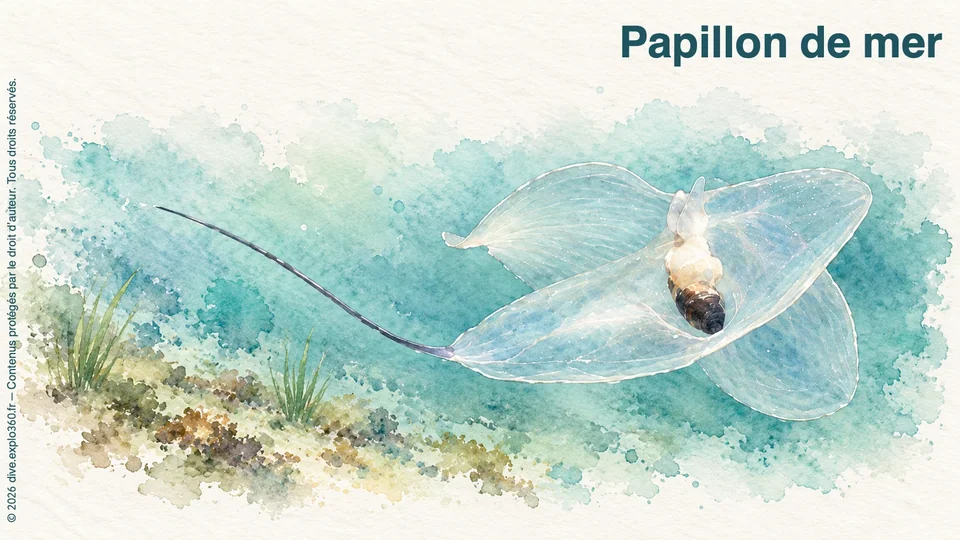
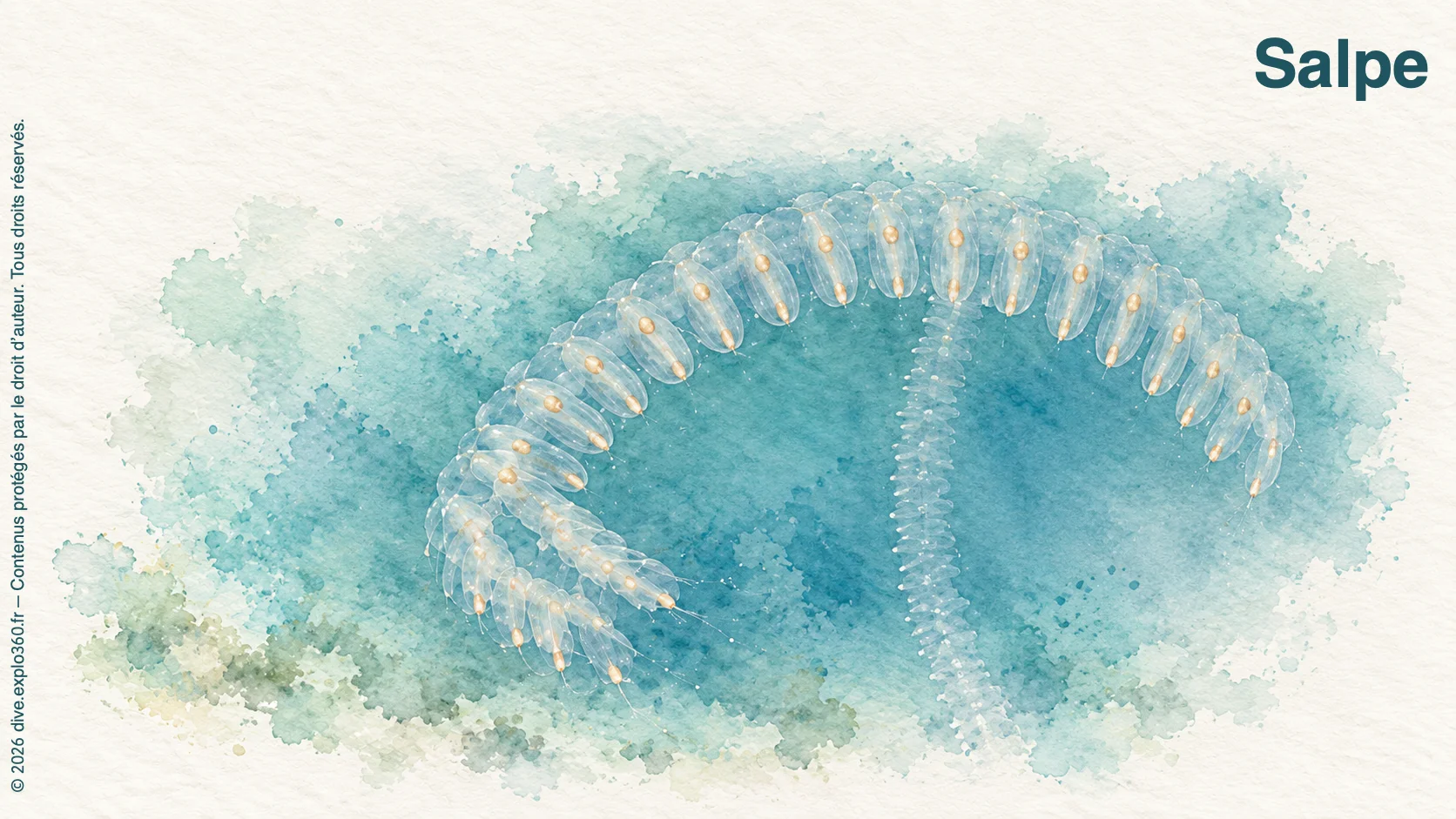
The beating of its two wings gives the sea butterfly (Cymbulia peronii) its appearance. These are the parapodia, the large side extensions of a translucent, sometimes bluish body. A small orange mass may show in the centre.
The pseudoconch, its firmer transparent slipper-shaped structure, carries toothed ridges. Its outline therefore differs from the flexible wings accompanying it.
WHERE DOES IT LIVE?
It lives in open water and forms part of the plankton. It mainly occurs in the water column, often near the surface, where it drifts with currents.
WHAT DOES IT EAT?
The sea butterfly uses a mucous web to gather food in open water. This transparent surface retains particles and planktonic organisms, including phytoplankton. Collected material is then brought towards the mouth. Feeding involves encounters between the web and suspended food rather than a pursuit of small prey. Watching wing movements alone can miss the almost invisible apparatus central to this mollusc’s feeding.
GO FURTHER WITH AMIGANSEAU
Unlock the full profile
Deepen your knowledge with the exclusive chapters and interactive resources included in an AMIGANSEAU licence.
Subscribing to Dive.Explo360 means supporting a different way to discover marine life.
Our independent platform is entirely self-funded and relies solely on subscriptions. Every licence helps us continue our work, create new content, and share what we know about the marine world with as many people as possible.
Starting at €80 per year, your support makes all the difference.
 Understand the species